
Sign up to save your podcasts
Or

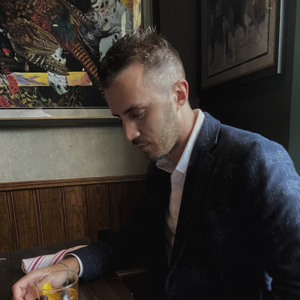


Fred Busch, PhD, discusses his recent book, How Does Analysis Cure? He talks through the core principles of psychoanalysis, focusing on the importance of representations, language action, and the role of the ego. Additionally, he explores how understanding unconscious processes and working with resistance can enhance therapeutic effectiveness.
How Does Analysis Cure?: https://www.routledge.com/How-Does-Analysis-Cure-Essays-on-a-Psychoanalytic-Method-Psychoanalytic-Organizations-and-Psychoanalysts/Busch/p/book/9781032658681
To donate to my PayPal (thank you): https://paypal.me/danieru22?country.x=US&locale.x=en_US
Note: Information contained in this video is for educational purposes only and is not intended as a substitute for treatment or consultation with a mental health professional or business consultant.
Roger Brooke, PhD, joins us to discuss his book, Jung and Phenomenology. Roger Brooke explores how a phenomenological lens changes our understanding of psychology and Jungian thought from the way guilt appears differently to a priest, a policeman, or a therapist, to why the “elephant in the room” may be the most important phenomenon present.
Daniel guides the conversation as Roger Brooke examines phenomenology as a method of setting aside assumptions and studying experience on its own terms. Brooke shares vivid clinical examples to explain how mood, interpretation, and unconscious patterns shape the world we inhabit.
Together, they explore:
What phenomenology is and how it can be used in psychotherapy
Why therapists should listen more and hold theory lightly
How guilt becomes a whole way of being in the world
The relationship between Jung and phenomenological psychology
The distinction between psyche and mind
How dreams and nightmares reveal what is calling for our attention
The transformative power of symbols
The embodied nature of psychological experience
Jung’s concept of synchronicity and its philosophical limitations
Ancestral presence, object relations, and the meaning of lived experience
This promises to be a thought-provoking listen for anyone interested in Jung, phenomenology, depth psychology, psychotherapy, symbolism, dreams, and the nature of the psyche.
Jung and Phenomenology: https://www.amazon.com/dp/0415097126?lv=shuf&channelId=500&plpRedirect=mhFallback
To donate to my PayPal (thank you): https://paypal.me/danieru22?country.x=US&locale.x=en_US
Note: Information contained in this video is for educational purposes only and is not intended as a substitute for treatment or consultation with a mental health professional or business consultant.
Psychoanalyst and Neuropsychologist Mark Solms discusses his new book, The Only Cure: Freud and the Neuroscience of Mental Healing. In this conversation, you will hear an argument for why talk therapy may be the only treatment that actually changes the cause of suffering. Solms explains why so many modern psychiatric treatments only suppress symptoms (leaving the symptoms to return when the treatment stops) and why psychological healing depends on learning better ways to meet your emotional needs. He breaks down why feelings are biological signals, how childhood strategies become automatic defenses, and why psychotherapy can create lasting change long after treatment ends.
He discusses:
- why symptoms are not the same as causes in psychiatry
- how fear, separation distress, rage, and guilt map onto basic emotional needs
- why some coping strategies are really defenses that temporarily mask pain
- how mourning, attachment, and ambivalence shape relationships and depression
- why neuroscience and psychoanalysis are not rivals, but different ways of understanding the same mind
If you want a sharper way to think about anxiety, depression, addiction, grief, and the real purpose of psychotherapy, this episode is essential listening.
Purchase your copy of The Only Cure here: https://www.amazon.com/Only-Cure-Neuroscience-Mental-Healing/dp/B0FWZXMHF1/ref=tmm_hrd_swatch_0
Grendon Haines, an Adlerian, critiques Mark Solms in The Only Cure in a post for The Guardian. You can find it here: https://www.theguardian.com/books/2026/jan/23/its-about-time-psychotherapists-started-to-ask-the-right-questions
To donate to my PayPal (thank you): https://paypal.me/danieru22?country.x=US&locale.x=en_US
Note: Information contained in this video is for educational purposes only and is not intended as a substitute for treatment or consultation with a mental health professional or business consultant.
To donate to my PayPal (thank you): https://paypal.me/danieru22?country.x=US&locale.x=en_US
Vera J. Camden is Professor of English at Kent State University, Clinical Assistant Professor of Psychiatry at Case Western Reserve University, and a training and supervising analyst at the Cleveland Psychoanalytic Center. Her work focuses on the intersection of literature and psychoanalysis, and she edited The Cambridge Companion to Literature and Psychoanalysis, bringing together leading scholars to explore how literary texts and psychoanalytic theory continue to illuminate one another. We hope you enjoy this conversation.
Note: Information contained in this video is for educational purposes only and is not intended as a substitute for treatment or consultation with a mental health professional or business consultant.
To donate to my PayPal (thank you): https://paypal.me/danieru22?country.x=US&locale.x=en_US
Jeffrey Berman's primary teaching and research interests are in literature and psychoanalysis, the twentieth century novel, trauma theory, suicide, self-disclosing writing and pedagogy.
Berman, Jeffrey (1985). The Talking Cure: Literary Representations of Psychoanalysis.
Berman, Jeffrey (1990). Narcissism and the novel.
Berman, Jeffrey (2012). Dying to Teach: A Memoir of Love, Loss, and Learning.
Berman, Jeffrey (2019). Writing the Talking Cure: Irvin D. Yalom and the Literature of Psychotherapy.
Berman, Jeffrey; Mosher, Paul W. (2019). Off the tracks: cautionary tales about the derailing of mental health care.
Berman, Jeffrey (2021). The art of caregiving in fiction, film, and memoir.
Berman, Jeffrey (2022). Norman N. Holland: The Dean of American Psychoanalytic Literary Critics.
Berman, Jeffrey (2024). Psychoanalytic Memoirs.
Berman, Jeffrey (2024). Psychoanalysis: An Interdisciplinary Retrospective.
Berman, Jeffrey (2024). Freudians and Schadenfreudians: Loving and Hating Psychoanalysis.
We hope you enjoy this conversation.
Note: Information contained in this video is for educational purposes only and is not intended as a substitute for treatment or consultation with a mental health professional or business consultant.
To donate to my PayPal (thank you): https://paypal.me/danieru22?country.x=US&locale.x=en_US
Karl Stukenberg, Ph.D., ABPP, has been a faculty member at Xavier for over 25 years. His undergraduate education was at St. John’s College – the Great Books school in Annapolis, Maryland and Santa Fe, New Mexico. He was trained as a Clinical Psychologist at The Ohio State University, with an Internship at Baylor College of Medicine in Houston, Texas. His three years of post-doctoral training were in psychological assessment and treatment in tertiary care settings at the Menninger Clinic in Topeka, Kansas. Once at Xavier, he trained to become a psychoanalyst at the Cincinnati Psychoanalytic Institute.
We hope you enjoy this conversation.
Note: Information contained in this video is for educational purposes only and is not intended as a substitute for treatment or consultation with a mental health professional or business consultant.
To donate to my PayPal (thank you): https://paypal.me/danieru22?country.x=US&locale.x=en_US
Sandra Steingard, M.D. is an American psychiatrist, long-time leader in community mental health, and Clinical Associate Professor of Psychiatry at the University of Vermont Larner College of Medicine. She served for many years as Chief Medical Officer at the Howard Center in Vermont and is a prominent voice in the critical psychiatry movement, editing the book Critical Psychiatry: Controversies and Clinical Implications and serving as Editor-in-Chief of the Community Mental Health Journal. Her work focuses on re-examining mainstream psychiatric assumptions, integrating lived experience, and promoting thoughtful, humane approaches to care.
Note: Information contained in this video is for educational purposes only and is not intended as a substitute for treatment or consultation with a mental health professional or business consultant.
To donate to my PayPal (thank you): https://paypal.me/danieru22?country.x=US&locale.x=en_US
Joanna Moncrieff is a psychiatrist, researcher, and author based at University College London. Her work examines the foundations of modern psychiatric practice, especially our assumptions about how psychiatric drugs work and why we use them.
For decades, the dominant idea has been the disease-centred model: the view that mental disorders are caused by underlying chemical abnormalities, and medications correct those abnormalities. Moncrieff's research challenges this perspective. Instead, she proposes the drug-centred model, which understands psychiatric drugs as substances that create altered mental and emotional states. She views these as states that may sometimes suppress or shift distress, but do not “fix” an underlying chemical imbalance.
She is the author of several books, including
The Myth of the Chemical Cure,
The Bitterest Pills,
A Straight Talking Introduction to Psychiatric Drugs,
and her most recent, Chemically Imbalanced: The Making and Unmaking of the Serotonin Myth. You can find this here: https://www.amazon.com/Chemically-Imbalanced-Making-Unmaking-Serotonin-ebook/dp/B0F6PV3KDW/ref=tmm_kin_swatch_0?_encoding=UTF8&dib_tag=se&dib=eyJ2IjoiMSJ9._zaXX8KNlICSU-AUiQzNDq7bgfP19KkXt4L2eCTNmrg.DbyYPE6F4dskAkKDMhKIOqnSJHBeZWjCUnL6pw-BZEM&qid=1764018539&sr=8-2
Her website: https://joannamoncrieff.com/
Critical Psychiatry Network (of which she is a co-chair): https://www.criticalpsychiatry.co.uk/about-us/
Note: Information contained in this video is for educational purposes only and is not intended as a substitute for treatment or consultation with a mental health professional or business consultant.
To donate to my PayPal (thank you): https://paypal.me/danieru22?country.x=US&locale.x=en_US
Dr. Ashok Bedi is a Jungian psychoanalyst and board-certified psychiatrist, trained in India, Great Britain, and the United States. He serves as Clinical Professor of Psychiatry at the Medical College of Wisconsin, a faculty member at the Carl G. Jung Institute of Chicago, and a psychiatrist within the Aurora Health Care Network. With over thirty years of practice in Milwaukee, he specializes in adult psychotherapy and Jungian analysis, integrating spirituality and healing in his work. Dr. Bedi is the author of several books on psychology and spirituality and lectures internationally, also leading Jungian training programs and study groups in India.
Amazon Author Page: https://www.amazon.com/stores/Ashok-Bedi/author/B001K8AWZE?ref=ap_rdr&isDramIntegrated=true&shoppingPortalEnabled=true&ccs_id=50f31ee6-3086-449a-a224-6b5eda1e1d3d
Note: Information contained in this video is for educational purposes only and is not intended as a substitute for treatment or consultation with a mental health professional or business consultant.
To donate to my PayPal (thank you): https://paypal.me/danieru22?country.x=US&locale.x=en_US
Mark Solms is a South African neuropsychologist and psychoanalyst best known as a founder of the field of neuropsychoanalysis. His work focuses on integrating Freudian psychoanalytic theory with modern neuroscience to understand consciousness and the brain mechanisms of dreaming.
LINKS More on neuropsychoanalysis here: https://npsa-association.org/
Note: Information contained in this video is for educational purposes only and is not intended as a substitute for treatment or consultation with a mental health professional or business consultant.
From the publisher's feed
If you are interested in psychology and psychoanalysis, you might enjoy some of the content on this channel. This is a space where I post conversations with mental health professionals, review…
You can find transcripts being posted on my website: danieltbourne.com

14,920 Listeners

1,651 Listeners

201 Listeners
235 Listeners