
Sign up to save your podcasts
Or

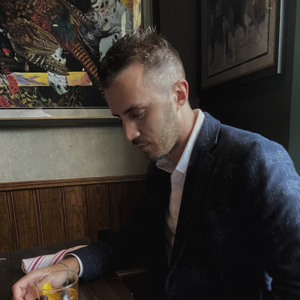


In this conversation, Dr. Ternes discusses her work as a clinical psychologist for CHKD (Children's Hospital of the King's Daughters). Dr. Ternes currently works in the Child Advocacy Center where she works with children who have experienced trauma. She utilizes both Parent-Child Interaction Therapy (PCIT) and Trauma-Focused Cognitive Behavioral Therapy (TF-CBT). We close this interview with Dr. Ternes discussing burnout and compassion fatigue within psychology and ways to prevent against them. Enjoy.
Note: Information contained in this video is for educational purposes only and is not intended as a substitute for treatment or consultation with a mental health professional or business consultant.
Zach is a Clinical Psychology student at Yeshiva University's Ph.D. program. I am a Clinical Psychology student at Regent University's Psy.D. program. Join us as we discuss the differences/similarities between our programs.
Ph.D. = Doctor of Philosophy in Clinical Psychology
Psy.D. = Doctor of Psychology in Clinical Psychology
Note: Information contained in this video is for educational purposes only and is not intended as a substitute for treatment or consultation with a mental health professional or business consultant.
Christopher Ferguson, PhD, is a psychologist who has served as a co-chair of psychology at Stetson University in Florida and is currently a professor there. In 2014, Dr. Ferguson was named a fellow of the American Psychological Association. He further served as president of the APA’s Society for Media and Technology, and at the end of 2021, Dr. Ferguson resigned from the APA due to concerns that the organization is no longer dedicated to science and good clinical practice. Dr. Ferguson has written extensively on the effects of media - ranging from video game violence, to the television series 13 Reasons Why, to role-playing games. Dr. Ferguson is also a published author who has written both fiction and nonfiction.
His book, How Madness Shaped History: https://www.amazon.com/How-Madness-Shaped-History-Narcissists/dp/1633885747
Chris on Psychology Today: https://www.psychologytoday.com/us/contributors/christopher-j-ferguson-phd
Note: Information contained in this video is for educational purposes only and is not intended as a substitute for treatment or consultation with a mental health professional or business consultant.
Christine Sefein, MA, LMFT, is a director for the Foundation Against Intolerance and Racism (FIAR) and a Diversity, Equity, and Inclusion consultant. We discuss her resignation as a clinical psychology professor with Antioch University and the situations that influenced this decision. I hope you enjoy this conversation. Let me know what you think in the comments below.
\\ Here is the video that introduced me to Christine //
Christine Sefein: An Alarming Trend in Psychotherapy https://youtu.be/6Pyb5wJGRus
The TED Talk Christine Mentioned: https://www.ted.com/talks/jan_rader_in_the_opioid_crisis_here_s_what_it_takes_to_save_a_life?utm_source=tedcomshare&utm_medium=social&utm_campaign=tedspread
Note: Information contained in this video is for educational purposes only and is not intended as a substitute for treatment or consultation with a mental health professional or business consultant.
Join us as Dr. Greenberg explores his life journey from South Africa to Canada, from an engineer to a psychologist, and from one who practiced Rogerian therapy to one who developed and practiced Emotion Focused Therapy. I hope you enjoy this conversation as much as I did. Thanks
\\ Books //
The Outsider: https://www.amazon.com/Outsider-Colin-Wilson/dp/0874772060
Emotion Focused Therapy: Coaching clients to work through their feelings: https://www.amazon.com/Emotion-Focused-Therapy-Coaching-Clients-Feelings/dp/1557988811
Emotion Focused Therapy (Theories of Psychotherapy Series): https://www.amazon.com/Emotion-Focused-Therapy-Theories-Psychotherapy-%C2%AE/dp/1433826305
Changing Emotion with Emotion: A practitioner's guide: https://www.amazon.com/Emotion-Focused-Therapy-Theories-Psychotherapy-%C2%AE/dp/1433826305
Note: Information contained in this video is for educational purposes only and is not intended as a substitute for treatment or consultation with a mental health professional or business consultant.
Okay, you got me - it's 4 minutes and 33 seconds.
I have found this meditation is a great way to bring your awareness back to the present moment. I always feel grateful afterwards. I hope you enjoy it.
Thank you to my good friends who made this possible.
Genesis 2:7: "And the LORD God formed man of the dust of the ground, and breathed into his nostrils the breath of life; and man became a living soul."
Note: Information contained in this video is for educational purposes only and is not intended as a substitute for treatment or consultation with a mental health professional or business consultant.
Welcome to the second part of my interview with Dr. Nina Silander. The conversation has transitioned to discussing some of Dr. Silander's research interests regarding ideological bias in psychology. I hope you enjoy this conversation.
You can read a short excerpt of her work, here: https://div12.org/ideological-bias-in-social-sciences-and-implications-for-clinical-practice/
The article we mentioned, of which she was the primary author: Silander, N. C., Geczy, B., Marks, O., & Mather, R. (2020). Implications of ideological bias in social psychology on clinical practice. Clinical Psychology: Science and Practice, e12312.1
Nina's Recommended Readings: Wright, R. H., & Cummings, N. A. (2005). Destructive trends in mental health: The well-intentioned path to harm. New York, NY: Routledge
Frisby, C., O’Donohue, W., Redding, R., & Lilienfeld, S. O. (in press). Political bias in psychology: Nature, scope, and solutions. Springer. - anticipated release: May 2022
Frisby C. L., & O’Donohue, W. T. (2018). Cultural competence in applied psychology: An evaluation of current status and future directions. Springer. (especially the first ~6 chapters and that on viewpoint bias)
Tarescavage, A. M. (2020). Science Wars II: The insidious influence of postmodern ideology on clinical psychology (Commentary on “Implications of ideological bias in social psychology on clinical practice”). Clinical Psychology: Science and Practice, 27(2). Article ID e12319. http://dx.doi.org/10.1111/cpsp.12319
Tetlock, P. E. (1994). Political psychology or politicized psychology: Is the road to scientific hell paved with good moral intentions? Political Psychology, 15(3), 509–529.
Some Valuable Organizations:
Critical Therapy Antidote Network (CTA Network; international organization concerned with critical theory in mental health professions)
International Association for Psychology and Counseling (IAPC; recommitment to objective scientific inquiry)
Society for Open Inquiry in Behavioral Science (SOIBS) - to launch soon with its own journal)
Heterodox Academy (Psychology division) Foundation Against Intolerance & Racism (provides alternative, pro-human approach to DEI)
Braver Angels (workshops, lectures, resources for learning to effectively engage with ideologically diverse individuals)
Relevant YouTube Videos:
Dr Nina Silander: Ideological Bias in Psychology: https://www.youtube.com/watch?v=8QeXbP1xDHA
What to Know About Ideological Bias in Psychological Research & Its Clinical Implications: https://youtu.be/WPfMnwlN_4Y
Note: Information contained in this video is for educational purposes only and is not intended as a substitute for treatment or consultation with a mental health professional or business consultant.
In this interview, Dr. Nina Silander speaks with me about her early career experiences working with the Division of Trauma, University of Florida Health, level 1 trauma center. She also covers her current positions as a clinical rehabilitation psychologist at Brooks Rehabilitation Center in Jacksonville, Florida.
The blog post Nina mentioned regarding processing her work at a level 1 trauma center: https://www.psychotherapy.net/article/silander-trauma-center
Note: Information contained in this video is for educational purposes only and is not intended as a substitute for treatment or consultation with a mental health professional or business consultant.
Dr. Elayne Lansford is a licensed Clinical Psychologist practicing at her private practice in Austin, Texas. She graduated from the University of Michigan where she was trained psychoanalytically in psychology. We discuss her time at an inpatient hospital, her discovery of Control Mastery Theory and how she uses it in practice, and her private practice. Thank you for listening and I hope you enjoy the conversation.
Find her website here: http://www.elaynelansford.com/
Note: Information contained in this video is for educational purposes only and is not intended as a substitute for treatment or consultation with a mental health professional or business consultant.
Dr. Kenneth James joins us again to discuss the DSM-5, diagnosing, and therapy from a Jungian perspective.
Making us Crazy on Amazon: https://www.amazon.com/Making-Us-Crazy-Psychiatric-Disorders/dp/0743261208
The Book of Woe on Amazon: https://www.amazon.com/Book-Woe-DSM-Unmaking-Psychiatry/dp/0399158537
Dr. James' personal website: http://soulworkcenter.org/
Note: Information contained in this video is for educational purposes only and is not intended as a substitute for treatment or consultation with a mental health professional or business consultant.
From the publisher's feed
If you are interested in psychology and psychoanalysis, you might enjoy some of the content on this channel. This is a space where I post conversations with mental health professionals, review…
You can find transcripts being posted on my website: danieltbourne.com

14,920 Listeners

1,651 Listeners

201 Listeners
235 Listeners