
Sign up to save your podcasts
Or

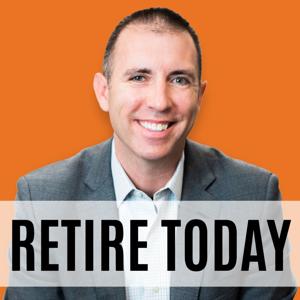

The retirement mindset mentor George Jerjian explains how a second chance at life inspires him to help coach people into retirement.
When George Jerjian was 52 years old, he was diagnosed with a bone tumor and given six months to live.
For three weeks, he believed that was it.
Then he was told he belonged to what he calls “the 2% club.” The cancer hadn’t spread. He would live.
That experience didn’t just save his life. It reframed it.
“Too often we just drift,” George said. “Even in retirement, we drift.”
That word — drift — captures something many retirees feel but rarely articulate.
For decades, retirement is the goal. You save. You invest. You plan. You finally reach the day when work stops.
But then what?
George calls it the “retirement mirage.”
Culturally, we’ve been sold an image: golf, travel, grandchildren, freedom from responsibility. And for a season, those things can be wonderful.
But George challenges that assumption directly:
“If you retire at 65, you could last till 90 and beyond these days… but what people don’t realize is that no matter how much money they’ve saved, longevity has kind of wrecked the retirement equation.”
Retirement used to be short. Now it can last 20, 25, even 30 years.
That’s not a vacation. That’s a life stage.
In the Retire Today framework, we talk about SPEND, MAKE, KEEP, INVEST, and LEAVE. But underneath all five steps is identity. Who are you when the title on your business card disappears?
George put his experience plainly:
“When you retire, who am I now? I’m a nobody. I’m useless.”
That identity vacuum is where drifting begins.
George doesn’t dismiss the bucket list. He just reframes it.
“Don’t delay that. Get on to that. Do the stuff you want to do. Because once you’re satiated, you’ll start looking for something more meaningful to do.”
Travel. Play golf. Visit family. Do the things you’ve postponed.
But don’t confuse activity with purpose.
Retirement, he argues, is a rite of passage. A hero’s journey.
He references Joseph Campbell’s idea that “the cave you fear to enter holds the treasure you seek.” In other words, the discomfort you avoid may contain the growth you need.
That’s why one of the first exercises George gives clients is confronting mortality:
“On your deathbed, what is it you haven’t yet done that you always wanted to do?”
It’s uncomfortable. But clarity often lives on the other side of discomfort.
To guide retirees through this transition, George created the D.A.R.E. method:
Discover – Understand what retirement truly is (and what it isn’t).
Assimilate – Learn how your mind works. Shift from a fixed mindset (“I can’t do this”) to a growth mindset (“I can’t do this yet”).
Rewire – Build new habits through repetition. The subconscious mind thrives on stability and patterns.
Expand – Step into growth rather than contraction.
That last one is particularly interesting.
Traditionally, retirement advice has focused on shrinking. Reduce risk. Cut expenses. Preserve capital. Prepare for decline.
George pushes back:
“With 20 years to go, this is not the time to settle in safe investments… your life has to match your investments.”
He isn’t dismissing prudent planning. But he is challenging the mindset of slow fade.
Retirement, in his view, is not about “drifting into oblivion.” It’s about repurposing.
Another distinction George made is between happiness and joy.
“Happiness is ephemeral… it comes and goes. But joy is something you can still have even if you’re going through challenging times.”
Retirement won’t remove hardship. Health issues, family stress, and loss still occur.
But joy — rooted in gratitude and meaning — can persist.
“If you’re not thankful, you’re not thinking,” he said, connecting gratitude to awareness.
Gratitude expands possibility. Resentment contracts it.
Perhaps the most powerful shift in the conversation came near the end:
Move from the retirement mirage → to retirement meaning → to retirement repurpose.
Financial planning gives you options. But mindset determines whether you use them well.
You can save diligently and still drift. Or you can treat retirement as what it truly is: not an ending, but a new beginning.
And that beginning requires courage.
Because if you don’t choose who you’ll become in retirement, drift may choose for you.
Don’t forget to leave a rating for the “Retire Today” podcast if you’ve been enjoying these episodes!
Subscribe to Retire Today to get new episodes every Wednesday.
Apple Podcasts: https://podcasts.apple.com/us/podcast/retire-today/id1488769337
Spotify Podcasts: https://bit.ly/RetireTodaySpotify
About the Author:
Jeremy Keil, CFP®, CFA is a retirement financial advisor with Keil Financial Partners, author of Retire Today: Create Your Retirement Income Plan in 5 Simple Steps, and host of the Retirement Today blog and podcast, as well as the Mr. Retirement YouTube channel.
Jeremy is a contributor to Kiplinger and is frequently cited in publications like the Wall Street Journal and New York Times.
Additional Links:
Connect With Jeremy Keil:
Media Disclosures:
Disclosures
This media is provided for informational and educational purposes only and does not consider the investment objectives, financial situation, or particular needs of any consumer. Nothing in this program should be construed as investment, legal, or tax advice, nor as a recommendation to buy, sell, or hold any security or to adopt any investment strategy.
The views and opinions expressed are those of the host and any guest, current as of the date of recording, and may change without notice as market, political or economic conditions evolve. All investments involve risk, including the possible loss of principal. Past performance is no guarantee of future results.
Legal & Tax Disclosure
Consumers should consult their own qualified attorney, CPA, or other professional advisor regarding their specific legal and tax situations.
Advisor Disclosures
Alongside, LLC, doing business as Keil Financial Partners, is an SEC-registered investment adviser. Registration does not imply a certain level of skill or expertise. Advisory services are delivered through the Alongside, LLC platform. Keil Financial Partners is independent, not owned or operated by Alongside, LLC.
Additional information about Alongside, LLC – including its services, fees and any material conflicts of interest – can be found at https://adviserinfo.sec.gov/firm/summary/333587 or by requesting Form ADV Part 2A.
The content of this media should not be reproduced or redistributed without the firm’s written consent. Any trademarks or service marks mentioned belong to their respective owners and are used for identification purposes only.
Additional Important Disclosures
 View all episodes
 By Jeremy Keil

4.9
5858 ratings
The retirement mindset mentor George Jerjian explains how a second chance at life inspires him to help coach people into retirement.
When George Jerjian was 52 years old, he was diagnosed with a bone tumor and given six months to live.
For three weeks, he believed that was it.
Then he was told he belonged to what he calls “the 2% club.” The cancer hadn’t spread. He would live.
That experience didn’t just save his life. It reframed it.
“Too often we just drift,” George said. “Even in retirement, we drift.”
That word — drift — captures something many retirees feel but rarely articulate.
For decades, retirement is the goal. You save. You invest. You plan. You finally reach the day when work stops.
But then what?
George calls it the “retirement mirage.”
Culturally, we’ve been sold an image: golf, travel, grandchildren, freedom from responsibility. And for a season, those things can be wonderful.
But George challenges that assumption directly:
“If you retire at 65, you could last till 90 and beyond these days… but what people don’t realize is that no matter how much money they’ve saved, longevity has kind of wrecked the retirement equation.”
Retirement used to be short. Now it can last 20, 25, even 30 years.
That’s not a vacation. That’s a life stage.
In the Retire Today framework, we talk about SPEND, MAKE, KEEP, INVEST, and LEAVE. But underneath all five steps is identity. Who are you when the title on your business card disappears?
George put his experience plainly:
“When you retire, who am I now? I’m a nobody. I’m useless.”
That identity vacuum is where drifting begins.
George doesn’t dismiss the bucket list. He just reframes it.
“Don’t delay that. Get on to that. Do the stuff you want to do. Because once you’re satiated, you’ll start looking for something more meaningful to do.”
Travel. Play golf. Visit family. Do the things you’ve postponed.
But don’t confuse activity with purpose.
Retirement, he argues, is a rite of passage. A hero’s journey.
He references Joseph Campbell’s idea that “the cave you fear to enter holds the treasure you seek.” In other words, the discomfort you avoid may contain the growth you need.
That’s why one of the first exercises George gives clients is confronting mortality:
“On your deathbed, what is it you haven’t yet done that you always wanted to do?”
It’s uncomfortable. But clarity often lives on the other side of discomfort.
To guide retirees through this transition, George created the D.A.R.E. method:
Discover – Understand what retirement truly is (and what it isn’t).
Assimilate – Learn how your mind works. Shift from a fixed mindset (“I can’t do this”) to a growth mindset (“I can’t do this yet”).
Rewire – Build new habits through repetition. The subconscious mind thrives on stability and patterns.
Expand – Step into growth rather than contraction.
That last one is particularly interesting.
Traditionally, retirement advice has focused on shrinking. Reduce risk. Cut expenses. Preserve capital. Prepare for decline.
George pushes back:
“With 20 years to go, this is not the time to settle in safe investments… your life has to match your investments.”
He isn’t dismissing prudent planning. But he is challenging the mindset of slow fade.
Retirement, in his view, is not about “drifting into oblivion.” It’s about repurposing.
Another distinction George made is between happiness and joy.
“Happiness is ephemeral… it comes and goes. But joy is something you can still have even if you’re going through challenging times.”
Retirement won’t remove hardship. Health issues, family stress, and loss still occur.
But joy — rooted in gratitude and meaning — can persist.
“If you’re not thankful, you’re not thinking,” he said, connecting gratitude to awareness.
Gratitude expands possibility. Resentment contracts it.
Perhaps the most powerful shift in the conversation came near the end:
Move from the retirement mirage → to retirement meaning → to retirement repurpose.
Financial planning gives you options. But mindset determines whether you use them well.
You can save diligently and still drift. Or you can treat retirement as what it truly is: not an ending, but a new beginning.
And that beginning requires courage.
Because if you don’t choose who you’ll become in retirement, drift may choose for you.
Don’t forget to leave a rating for the “Retire Today” podcast if you’ve been enjoying these episodes!
Subscribe to Retire Today to get new episodes every Wednesday.
Apple Podcasts: https://podcasts.apple.com/us/podcast/retire-today/id1488769337
Spotify Podcasts: https://bit.ly/RetireTodaySpotify
About the Author:
Jeremy Keil, CFP®, CFA is a retirement financial advisor with Keil Financial Partners, author of Retire Today: Create Your Retirement Income Plan in 5 Simple Steps, and host of the Retirement Today blog and podcast, as well as the Mr. Retirement YouTube channel.
Jeremy is a contributor to Kiplinger and is frequently cited in publications like the Wall Street Journal and New York Times.
Additional Links:
Connect With Jeremy Keil:
Media Disclosures:
Disclosures
This media is provided for informational and educational purposes only and does not consider the investment objectives, financial situation, or particular needs of any consumer. Nothing in this program should be construed as investment, legal, or tax advice, nor as a recommendation to buy, sell, or hold any security or to adopt any investment strategy.
The views and opinions expressed are those of the host and any guest, current as of the date of recording, and may change without notice as market, political or economic conditions evolve. All investments involve risk, including the possible loss of principal. Past performance is no guarantee of future results.
Legal & Tax Disclosure
Consumers should consult their own qualified attorney, CPA, or other professional advisor regarding their specific legal and tax situations.
Advisor Disclosures
Alongside, LLC, doing business as Keil Financial Partners, is an SEC-registered investment adviser. Registration does not imply a certain level of skill or expertise. Advisory services are delivered through the Alongside, LLC platform. Keil Financial Partners is independent, not owned or operated by Alongside, LLC.
Additional information about Alongside, LLC – including its services, fees and any material conflicts of interest – can be found at https://adviserinfo.sec.gov/firm/summary/333587 or by requesting Form ADV Part 2A.
The content of this media should not be reproduced or redistributed without the firm’s written consent. Any trademarks or service marks mentioned belong to their respective owners and are used for identification purposes only.
Additional Important Disclosures

1,989 Listeners

444 Listeners

810 Listeners
1,333 Listeners

455 Listeners
536 Listeners
750 Listeners

548 Listeners

700 Listeners
193 Listeners
833 Listeners

204 Listeners
584 Listeners
1,069 Listeners

359 Listeners