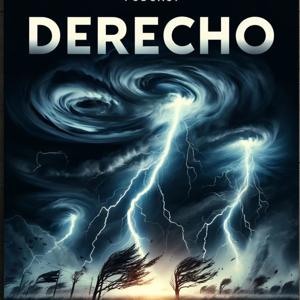
Derecho

Derecho

By Inception Point AIScience
Download on the App Store

Derecho episodes

  • Derechos: Powerful Windstorms Leaving Lasting Impact Across the U.S.
    Derechos are powerful and widespread windstorm events associated with bands of rapidly moving showers or thunderstorms. While they can occur in many parts of the world, they are most common in the interior of the United States during the warmer months. These storms are characterized by winds that are at least as violent as those found in most hurricanes and can cause significant damage, including downed trees and power lines, structural damage to buildings, and occasionally lead to human casualties.
    One notable derecho event took place on May 16, presumably affecting Kingwood, a neighborhood in Houston, Texas. This occurred two weeks after the area had already been dealing with flooding, exacerbating the damage and complicating recovery efforts. In response, the City of Houston laid out plans for debris pickup in the aftermath of these natural disasters, indicating a proactive effort to aid affected communities in cleaning up and restoring normalcy.
    The term "derecho" even made it into international headlines, not in the context of weather but in discussions of human rights and political actions. It is mentioned in reportage on Egypt's alleged massive deportations of Sudanese refugees, highlighting a misuse of governmental power potentially in violation of international law. The term "derechos," meaning "rights" in Spanish, emphasizes the legal and ethical implications of such actions, as noted by commentators and activists voicing concerns over Egypt’s handling of refugee populations.
    Moreover, the repercussions of derechos can be long-lasting. For instance, in Tulsa, reminders of a devastating Father's Day derecho can still be observed a year after the event. Communities must deal with the physical reminders like debris and damaged infrastructure but also the lingering emotional and financial effects of these powerful natural events.
    Understanding derechos and their impacts helps in disaster preparedness and recovery strategies, and can guide policy decisions aimed at mitigating the effects of similar extreme weather events in the future. From Tulsa to Houston, it's clear that while derechos are a meteorological phenomenon, their true influence is deeply human, affecting lives, cities, and the discourse around human rights and governmental responsibility.
    This content was created in partnership and with the help of Artificial Intelligence AI.
    3 min
  • Diverse Meanings of "Derecho": From Water Rights to Severe Storms to Civil Liberties
    The term "derecho" is multifaceted, appearing in different contexts ranging from environmental discussions to political promises. In Garfield County, the word ties specifically to the rights over water resources, where a significant financial pledge of $3 million was made to preserve water rights. This commitment ensures that 1,408 cubic feet per second, or approximately 1 million acre-feet of water per year, flows through Glenwood. This initiative is crucial in areas facing water scarcity and contested water rights, aiming to secure sustainable water supplies for agricultural, residential, and ecological needs.
    Switching to meteorology, "derecho" takes on an entirely different meaning, referring to a rare and powerful line of storms characterized by intense, straight-line winds spread over hundreds of miles. A recent focus by WOAY-TV has highlighted the meteorological phenomenon, noting its capability of causing widespread destruction similar to that of tornadoes, but along a much broader path. The term's growing attention reflects increasing occurrences or awareness of severe weather patterns, which meteorologists attempt to forecast with as much lead time as possible. However, due to the complexity and sudden development of derechos, accurate predictions are notably challenging.
    In a political context, "derecho" refers to the inherent rights of citizens, such as the right to water in Lerdo, Durango. Mexican officials, including Claudia Sheinbaum, have expressed commitments to uphold these rights amid governmental changes. Such promises are vital in regions where water access is not only a utility but also a fundamental aspect of welfare and public health, underscoring the broader implications of governance on everyday life.
    These varying uses of "derecho" across different sectors reflect the complexity and importance of the term, emphasizing the necessity of context to fully understand its implications. Whether discussing water rights, weather phenomena, or civil entitlements, the significance of "derecho" is deeply embedded in regulatory, environmental, and social dimensions, and its relevance continues to grow in each of these areas as challenges and demands evolve.
    This content was created in partnership and with the help of Artificial Intelligence AI.
    3 min
  • Powerful 'Derechos' Unleash Widespread Destruction Akin to Hurricanes and Tornadoes
    Derechos are powerful and formidable weather phenomena that, while less known than hurricanes or tornadoes, can unleash devastating impacts. A "derecho" is a widespread, long-lived windstorm that is associated with a band of rapidly moving showers or thunderstorms. The term "derecho" comes from the Spanish word meaning "straight," which is fitting since the storm’s damaging winds are typically directed in a straight line, unlike the swirling winds of a tornado. These storms can produce destruction similar to that of hurricanes and tornadoes, leading to significant damage over large areas.
    One notable instance of such a storm is the Phillips Wisconsin Independence Day Derecho of 1977, which exemplifies how intense and destructive these weather events can be. This particular derecho formed in western Minnesota and embarked on a relentless, 12-hour journey across the landscape, leaving a wide path of destruction in its wake. The extensive damage associated with this event included downed trees, damaged buildings, and widespread power outages, resembling the aftermath of a Category 3 hurricane.
    Derechos are relatively rare phenomena, but when they strike, the effects can be crippling. For example, another recent derecho impacted Houston's housing market adversely, as noted in the aftermath of a storm that barreled through the region. While the storm caused disruptions and damage, it intriguing as to how it contrasted with economic resilience—Houston's housing prices still reached record highs despite the setbacks caused by the storm. This underlines the complex interplay between natural disasters and economic metrics, such as real estate markets.
    The reach and impact of derechos can also unexpectedly contribute to business developments. For instance, following the derecho that hit Cedar Rapids in August 2020, a Paul Davis Restoration franchise opened its doors. This company, known for property damage restoration services, capitalized on the unfortunate increase in demand due to the storm's impact, illustrating how businesses can grow and thrive in direct response to the challenges posed by natural disasters.
    Derechos, therefore, not only represent significant meteorological phenomena but also have broader implications for disaster preparedness, economic resilience, and business opportunities. These storms highlight the importance of robust emergency planning and response strategies, as well as the adaptive responses of markets and industries to environmental shocks. While they might not be as frequently discussed as other types of storms, the historical and potential impact of derechos on communities and economies makes them a critical topic for study and preparedness in meteorology and related fields.
    This content was created in partnership and with the help of Artificial Intelligence AI.
    3 min
  • Derechos: Powerful Windstorms Wreak Havoc Across the Heartland
    Derechos, a term less familiar to many compared to hurricanes or tornadoes, are powerful, widespread windstorms associated with bands of rapidly moving showers or thunderstorms. Although these storms might lack the swirling majesty of a hurricane's eye or the stark, funnel-shaped danger of a tornado, they are no less formidable. Capable of producing hurricane-force winds, derechos can cause significant damage, comparable to that of other more well-known storms.
    The concept of a "derecho" – derived from the Spanish word meaning "straight ahead" – specifically refers to a widespread, long-lived wind event. These storms are characterized by rapidly moving bands of thunderstorms and can result in significant straight-line winds over distances of hundreds of miles.
    One of the more notorious historical examples occurred on July 4, 1977, known as the Phillips Wisconsin Independence Day Derecho. This massive storm system originated in western Minnesota and embarked on a 12-hour journey across multiple states, leaving a trail of destruction in its wake. Among its impacts, it slashed through Wisconsin with the force of a Category 3 hurricane, an unwelcome Independence Day memory for those in its path.
    Derechos, while primarily known for their winds, can also lead to other dangerous conditions suchating fast-moving thunderstorms. The damage they inflict can be severe and wide-reaching, affecting everything from individual homes and vehicles to entire ecosystems and power grids.
    These storm events are often linked with significant economic impacts as well. For instance, a derecho that swept through Houston affected the local housing market notably. The storm coincided with record-setting home prices, yet it managed to disturb sales activities due to the damage and uncertainty it caused. Such economic disruptions often follow in the wake of derechos, as communities require time for recovery and rebuilding.
    In Cedar Rapids, a place quite familiar with the harsh realities of derechos, businesses such as Paul Davis Restoration have found substantial opportunity amidst the chaos. Following the August 2020 derecho, which coincided with the opening of their southwest Cedar Rapids franchise, the company has reportedly experienced significant growth. Their rapid response to disaster scenarios highlights both the community's resilience and the ongoing demand for restoration services in areas frequently hit by such intense storms.
    Derechos illustrate the unpredictable fury of nature and the resilience of the communities that prepare and respond to them. Their impacts remind us of the importance of meteorological awareness and preparedness, hallmarks necessary to mitigate damage and hasten recovery in the face of such relentless natural phenomena.
    This content was created in partnership and with the help of Artificial Intelligence AI.
    3 min
  • Derecho Devastation: Houston Battles Extended Recovery After Powerful Storm
    Derechos, a Spanish term meaning "straight," are powerful, widespread, and fast-moving lines of thunderstorms accompanied by high winds that can cause a swath of destruction similar to that of a tornado, though the damage typically follows a straight path rather than a twisting one. These massive storm systems, which can extend for hundreds of miles, have recently made their presence markedly felt in the United States, particularly affecting Houston, Texas.
    In Houston, the impact of a recent derecho nearly a month ago has left the city in a prolonged state of recovery. The intensity of this storm was striking, with winds that reached up to 100 mph, forcibly hurling tree branches and debris through the air and even shattering glass as structures succumbed to the storm's might. These powerful winds are not only destructive but also notably sudden, escalating within moments to a violent peak. Derechos are often accompanied by other severe weather events, adding to their potential for calamity.
    Following the initial impact of the derecho in Houston, the city has continued to face challenges. Numerous streets remained shuttered for weeks as cleanup crews worked tirelessly to clear the aftermath of broken limbs and other debris scattered extensively across the urban landscape. The prolonged closure of roads has further complicated the daily operations of local businesses and the routines of the general public, contributing to economic strains in the area.
    The situation has been exacerbated by subsequent weather challenges, including a heat dome that has enveloped Texas, taking further tolls on the economy and daily life. Small businesses, still grappling with the physical and financial damages wrought by the derecho, are now also battling the financial strain caused by oppressive heat. This scorching weather affects business operations, alters customer behavior, and increases operational costs, leading to compounded difficulties for recovery.
    The recurring and severe nature of such weather events highlights the broader challenge of climate-related phenomena, which appear to be increasing in frequency and intensity. Houston's ordeal with both the derecho and subsequent heatwave provides a stark example of the compounded effects of extreme weather, underscoring the urgent need for preparedness and adaptive strategies to mitigate such impacts.
    This series of events also serves as a critical reminder of the importance of weather forecasting and emergency preparedness. Advanced warnings and preparedness for derechos and similar severe weather conditions can significantly reduce the risks to life and property. As the climate continues to generate more unpredictable and severe weather patterns, cities like Houston will need to consider innovative and sustainable ways to bolster their resilience against the formidable force of nature.
    This content was created in partnership and with the help of Artificial Intelligence AI.
    3 min
  • "Devastating Winds: Unraveling the Power of Derechos, Nature's Overlooked Windstorms"
    A derecho is a widespread, long-lived windstorm that is associated with a band of rapidly moving showers or thunderstorms. While the term "derecho" might be less familiar than tornado or hurricane, the damage caused by this atmospheric phenomenon can be just as severe. The word "derecho" comes from the Spanish term meaning "straight ahead," reflecting the straight-line nature of the wind damage typically associated with these events, as opposed to the swirling damage pattern of tornadoes.
    Derechos are characterized by swift-moving storms that sweep across vast areas, sometimes extending over several states and spanning hundreds of miles in width. These storms can produce winds comparable to those of hurricanes, reaching speeds of over 100 miles per hour. What distinguishes a derecho from a typical storm front is its scale and speed, coupled with the immense area of wind damage left in its wake.
    The mechanics of a derecho involve complex atmospheric conditions. They often occur with bow echoes—arcs of thunderstorms on radar that resemble an archer's bow. These echoes indicate severe squalls that can lead to the formation of a derecho. Another concept integral to their formation is the rear inflow notch, where cool air entering the storm system causes the thunderstorms to bow out, hence accelerating the winds associated with the derecho.
    The formation of a derecho requires a pre-existing warm environment with ample moisture and atmospheric instability, often furnished by hot, humid weather. They are primarily driven by the interaction of cold air descending from the upper levels of a thunderstorm with its warmer, surrounding environment. This differential leads to the development of strong and sustained winds that descend and rush outward upon reaching the ground, plowing ahead of the storm like a colossal atmospheric bulldo
    Because of their sudden onset and expansive impact, derechos pose significant forecast challenges. They typically occur during the warm months, particularly from May through August in the northern hemisphere, when the conditions for severe weather are most favorable. Although they can occur at almost any time if atmospheric conditions align, they are most common in the Midwest and Great Lakes regions of the United States.
    The impact of a derecho can be devastating due to the swath of extensive wind damage that typically accompanies it. For instance, trees and power lines can be downed over a considerable area, leading to prolonged power outages, damage to buildings, and occasionally fatalities. Secondary effects, such as flooding from accompanying heavy rains, can exacerbate the initial damage.
    In summary, a derecho is a powerful meteorological event marked by its rapid movement and extensive linear wind damage. Understanding and forecasting such storms is crucial, as they have the potential to cause significant environmental and societal impacts. Despite their power, derechos remind us of the dynamic and sometimes perilo
    This content was created in partnership and with the help of Artificial Intelligence AI.
    4 min
  • Powerful Derecho Storms: Mastering Preparation and Response
    Derecho, a term derived from the Spanish word for "straight," is used to categorize a widespread, long-lived windstorm associated with bands of rapidly moving showers or thunderstorms. Although the term might not be as commonly known as "tornado" or "hurricane," derechos are formidable events that can result in devastating consequences similar to those of their more famous counterparts.
    A typical derecho develops during warm seasons, particularly from May through August, in the Midwestern to the eastern regions of the United States. These storms can traverse a wide geographical area, extending laterally over 250 miles and persist for several hours or even up to a day. This wide-reaching span of turmoil makes derechos particularly destructive.
    Derechos are characterized by their "bow echo" radar patterns; such patterns indicate a bowing line of intense storms, resembling an archer's bow. This shape is indicative of very strong winds at the surface that push out ahead of the storm, hence the bow-like curve that appears on radar screens.
    Wind speeds in a derecho can rival those of hurricanes, reaching upwards of 100 miles per hour. Unlike tornadoes that typically produce localized damage along a relatively narrow path, the straight-line winds of a derecho fan out across a vast area, indiscriminately damaging almost anything in their path. These winds are capable of uprooting trees, flipping vehicles, and peeling roofs off buildings.
    The mechanism driving a derecho involves the interaction between a robust, convective system and the surrounding atmospheric conditions. These storms usually commence with air currents uplifting in an environment where there is significant atmospheric instability. This is often supplemented by high humidity, which is critical as it provides the moisture needed for storm sustenance. Additionally, the presence of strong jet stream winds aloft aids in maintaining the storm's momentum.
    One of the more infamous examples of a derecho occurred in June 2012, widely known as the Super Derecho. This event swept across a substantial portion of the Eastern United States, from Indiana to the Atlantic coast, causing widespread damage and power outages that affected millions of people. The high wind speeds not only knocked down trees and power lines but also resulted in several fatalities and numerous injuries.
    Given their rapid onset and extensive impact, derechos pose significant challenges to forecasters and emergency management professionals. The relatively sudden development and movement of these storm systems often leave little time for warning, posing risks to unprepared communities and residents.
    In the face, or rather the path, of a derecho, it is crucial for individuals to seek shelter in sturdy, well-constructed buildings. The best precaution is to stay informed through weather alerts and updates, which can provide critical information to help mitigate the effects of these powerful storms.
    Understanding derecho dyna
    This content was created in partnership and with the help of Artificial Intelligence AI.
    4 min
  • Derecho Defined
    A derecho is a widespread, long-lived, straight-line windstorm that is associated with a fast-moving group of severe thunderstorms. The term "derecho" comes from the Spanish word meaning "straight ahead" or "direct," which is fitting because these storms often leave a swath of destruction in a relatively straight line.
    Derechos were first identified and named by Dr. Gustavus Hinrichs, a physics professor at the University of Iowa, in a paper published in 1888. He used the term to distinguish these straight-line wind events from the more common circular winds of tornadoes.
    For a storm system to be classified as a derecho, it must include a band of storms that produces a swath of particularly damaging winds, extending more than 240 miles and including wind gusts of at least 58 mph along most of its length. These severe winds can sometimes exceed 100 mph, causing significant damage equivalent to that of a strong tornado.
    Derechos are most common in the late spring and summer months, particularly from May through August. They are more likely to occur in the Midwestern United States, especially in an area known as "derecho alley," which includes parts of Oklahoma, Kansas, Nebraska, Iowa, Illinois, Indiana, and Ohio. However, derechos can occur in other parts of the United States and the world.
    These storms are typically caused by a combination of very hot and humid conditions, along with strong upper-level winds. They often form along the leading edge of a strong cold front or in the warm sector of a low-pressure system. The most severe derechos are usually associated with a curved band of rapidly moving showers or thunderstorms called a bow echo, which can sometimes take on a comma-like shape.
    One of the most destructive derechos in recent history was the June 2012 Mid-Atlantic and Midwest derecho. This storm traveled over 600 miles in just 10 hours, causing widespread damage across several states and leaving millions without power. Wind speeds in excess of 90 mph were recorded, and the storm was responsible for 22 deaths and millions of dollars in damage.
    Other notable derechos include the July 1995 derecho that affected parts of Canada and the northeastern United States, the May 2009 "Super Derecho" that traveled over 1,000 miles from Kansas to Kentucky, and the August 2020 Midwest derecho that caused widespread damage in Iowa and Illinois.
    In addition to the damaging winds, derechos can also bring heavy rain, large hail, and even tornadoes. They can be particularly dangerous because they often occur at night when people are sleeping and may not be aware of the approaching storm.
    While derechos are relatively rare compared to other types of severe weather, they can be extremely dangerous and destructive. It's important for people living in areas prone to these storms to stay informed about weather conditions and have a plan in place to seek shelter if a derecho warning is issued.
    This content was created in partnership and with the help of Artificial Intelligence AI.

    4 min

About Derecho

From the publisher's feed

Welcome to "Derecho," the podcast where we delve deep into the awe-inspiring and often destructive weather phenomenon known as a derecho. Join us as we explore the science behind these powerful storms, their impact on communities, and the thrilling stories of those who have experienced them firsthand. Whether you're a weather enthusiast or just curious about the forces of nature, "Derecho" offers insightful discussions with meteorologists, climate scientists, and storm chasers who bring you closer to the heart of these incredible weather events. Tune in to understand the dynamics of derechos and their significance in the world of extreme weather.