
Sign up to save your podcasts
Or

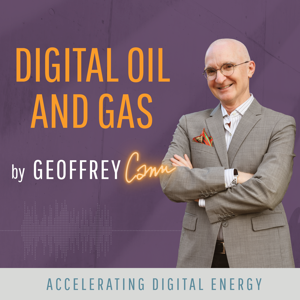


"There's a gap currently between the way the small startup companies would think about how to get investment dollars and grant dollars to keep their company alive, and what the big operators need to have a deployable project."
In this episode, I'm in conversation with Bradley Wamboldt, who is the principal associate of Hawk and Squirrel Innovation. Bradley specialises in helping industrial companies innovate with hard technologies such as new industrial equipment and processes. Innovations in hard technology have strong parallels with soft technology (digital), and hard technology these days is usually accompanied by some kind of digital overlay.
"If you look to move to a more distributed energy generation and consumption model, there's going to be a tremendous amount of infrastructure required. We're talking about 20 terawatts of energy used by the planet. Currently, about 85% of that is fossil fuel. So the scale of this energy transition, we're really just starting to scratch the surface."
Bradley Wamboldt is the Principal Associate at Hawk & Squirrel Innovation, a boutique consultancy and technology development practice in Calgary. Bradley has over 30 years of experience in oil and gas operations, project development, commissioning, operations, and technology development with both Shell Canada and Suncor Energy.
"Every day you go to work you think about three things, and none of them have to do with change. Number one is safety. Safety is always making sure everybody comes home. Number two is how many barrels did you produce today. Number three is keeping the costs in line."
He is currently focusing his efforts on assisting large and small companies in advancing new energy transition and decarbonization technologies from research through to commercial deployment. Bradley has a Bachelor of Chemical Engineering from McGill University and an MBA (with distinction) from Ivey School of Business at Western University.
Here are some of the key questions addressed in the episode:
Is there more than one way to roll out industrial infrastructure? What are they?
Who is good at introducing change to brownfield infrastructure?
What are the key incentives that drive the energy industry?
Where should innovation be placed in an organization? Operations?
What tactics work well in driving business improvements and disruptive change?
What changes do we need to see implemented to accelerate the pace of change?
LinkedIn profiles (personal, business):
Personal: https://www.linkedin.com/in/bradley-wamboldt-54890a16/
LinkedIn Newsletter: https://www.linkedin.com/newsletters/6962843417353543682/
The World Petroleum Congress is just around the corner, and it's coming to Calgary.
n the global landscape of oil and gas events, a few stand out because they are truly global in that they change venues rather like the Olympics, they're infrequent (perhaps every three or four years, allowing the passage of time to provide for fresh insight on the latest topics), and they're large. My most recent personal experience at such an event was LNG18, held in Perth, Australia in 2016, with a focus (obviously) on the global liquefied natural gas trade. Australia had arisen, from the ashes of the 2008-09 global financial crisis, to become one of the world's largest producers of LNG, and Australia's experiences were the topic of considerable global interest.
Well, Calgary is about to experience something quite rare, which is a return visit of the World Petroleum Congress (WPC), in September of 2023. This is a big deal, and not just because of the inflow of tourism dollars into the local economy. Only four cities have ever hosted the WPC more than once.
Now is the time to get this on your business calendar for 2023.
"Europe is building a bunch of regasification plants on their end. So the demand is going to be high for people to start filling that pipeline, for LNG."
In this episode, I'm in conversation with Mark Smith, the President and co-founder of CleanConnect.ai. In a prior life, Mark launched Windows NT Magazine, an international publication about the fast evolving technology called Windows NT. I remember reading the magazine!
"Instead of us being able to buy carbon credits from say trees in Africa and offset, the actual suppliers are going to need to prove their provenance and their carbon intensity just to sell into the gas supply chain. It's going to shift from a voluntary to much more of a mandatory deal."
Mark Smith is the President and co-founder of CleanConnect.ai. Our software suite is the only government-approved AI solution that can replace human leak-detection-and-repair operators for oil & gas companies. Mark is also the host of Digital Roughnecks, a video podcast for energy executives. Mark previously launched Windows NT Magazine, with 1.5M IT professionals subscribers in 160 countries.
"[EPA regulations will] add at least 1.4 to 1.6 million more inspections across all the operators, which is a 471% increase. I estimate it'll cost them about $831 million to do that. So that's a biggie, right? 3500 new trained LDAR inspectors."
Mark is quite used to putting out predictions about the future, and in this episode we discuss five predictions that Mark forecasts for the oil and gas industry.
Here are the 5 predictions:
Energy demand will continue to grow, but some energy products, notably LNG, will experience hypergrowth.
Energy regulations coming on stream will drive a huge ramp up of energy inspections, and with it, the need for inspectors.
Talent shortages will not only persist but will worsen as US industry reacts to the Inflation Reduction Act, pulling talent into new sectors.
Proof of emissions will become mandatory for anyone selling energy products (gas, oil, LNG)
Energy companies embrace new technologies, notably AI-enabled computer vision, to cope with the talent shortfall and regulatory growth.
Mark elaborates on these predictions with examples and anecdotes from his ongoing work and experiences in the industry.
USEFUL LINKSLinkedIn profiles (personal, business):
Personal: https://www.linkedin.com/in/markhoustonsmith/
Business: https://www.linkedin.com/company/clean-connect/
Website:
https://www.EPACheatSheet.com
A town in British Columbia can't seem to muster the business case to purchase electric vehicles. What lessons does this hold for business leaders facing similar technology upgrade decisions?
After the usual fiscal deliberations, Administration has recommended to Council that the town stick with the status quo gasoline models for now, rather than plunking down for newer more expensive electric vehicles, based on the acquisition cost of the vehicles. It's not a big purchase, just two trucks, but the saga illustrates the challenges that await all businesses, not just small municipalities, about facing up to the pressures of decarbonization and digitalization.
The CFO, and their organization define the swim lanes, set the rules, dictate the parameters (such as interest rates and carbon prices), and manage the overall process.
At what point do you make jump from dirty to clean and from dumb to smart? For businesses, that decision is clearly hard to make. It's going to be up to the CFOs to change the way capital decisions are taken so that we accelerate our way to a digital energy future.
"The way we're looking at it right now is to bring balance by not consuming. That means that your car has been planned to charge during the night. But the grid operator says that there's an imbalance on the market. And then by not charging those 500,000 cars, we're actually delivering energy to the markets and therefore a gas fired plant doesn't have to turn on."
In this episode, I'm in conversation with Nick Verhoeven who is the strategic accounts manager for Jedlix. The energy stored in the battery in the average vehicle is 10 days worth of power for the average house if you exclude energy for heat.
"Power within your house for a whole day is just 10% of your car battery. And then the day after, you can just ride back to work, charge your car, again, probably solar power from the roof of your office and do the same thing again, tomorrow if necessary."
EVs both expand the demand on the grid but also create an entirely new energy customer relationship, which is up for grabs. We talk through what this means, and the implications for fuel retailers.
"Imagine you're a car brand and you want to really encapsulate your customer, and you want to really be close to them, and you sell them an electric vehicle that you want to help them charge as clean as possible. Because if not, he's going to find it somewhere else, and you lose this customer touchpoint."
Nick Verhoeven is a Strategic Accounts Manager with Jedlix, a smart meter technology company based in the Netherlands. From his first career in energy sales at an oil and gas major, Nick became increasingly exposed to renewable energy, and transitioned to the world of electric vehicles (EV) which do not use hydrocarbon fuels.
"Don't forget, an electric car uses pretty much the same amount of power in a year as a house does. So having a household with an electric car pretty much means two clients [for a power utility]."
His energy background is an asset in navigating the world of EV, which is more complex and multi-party than fossil fuel markets. At Jedlix he is responsible for building out the market for vehicle energy management solutions.
USEFUL LINKSLinkedIn profiles (personal, business):
Personal: http://www.linkedin.com/in/nickverhoeven90
Business: https://www.linkedin.com/company/10317294/admin/
Facebook pages:
https://www.facebook.com/Jedlix/
Website:
For businesses: https://www.jedlix.com/
For consumers: https://www.jedlix.com/evdrivers
An ad campaign asks the provocative question: if oil and gas came with a label, what would it say?
The Canadian Energy Center (CEC), a government-owned corporation, is tasked with promoting Canada as a supplier of choice for responsibly produced energy. The country's energy industry (oil, gas, power) prides itself on its ability to meet the highest regulatory standards, its track record on environmental performance, and the general transparency of its operations, but lacks a means to give voice to these accomplishments without sounding self-serving. The CEC helps solve for this gap, and to counter the many voices keen to sway public and political opinion to oppose the energy industry in all aspects of its business.
Fortunately, the wave of digital innovations that have transformed many other markets (financial services, telecoms, entertainment), is about to have the same positive impacts on energy. The building blocks that enable democratic choice for energy products enabled by labelling energy are falling into place. These components—internet of things, cloud computing, blockchain—allow for the tracking and tracing of energy products completely throughout their independent and increasingly interconnected value chains.
I ask why energy doesn't come with a label, and how to give it one.
Digital transformation has been sweeping across society for over a decade now, and has finally arrived in oil and gas. Digital has been a thing in our society now for over a decade. Digital businesses and models have so thoroughly permeated our daily personal lives that we are startled when we encounter the odd business that is still operating as if smart phones and websites don't exist.
For oil and gas companies, the industrial logic of digital adoption is now both economic and existential. Digital pays for itself in cost, productivity and emissions gains, and without it, industry has little chance to attract the talent and capital it needs to evolve and adopt new business models.
If oil and gas doesn't actuate its culture to embrace digital with urgency, it becomes increasingly difficult to attract capital, and impossible to attract talent. Fortunately, capital markets have not declared any energy company yet in a break out from the pack, so there is time. There is no Tesla yet among energy majors. New business models await.
Our sluggish response so far needs a boost of urgency.
Plug And Play, a well regarded technology incubator from Silicon Valley has announced a new cohort of Sustainability start ups that they will guide through their process. They help run innovation programs for corporates and accelerator programs for startups, across a suite of industries, including energy. You might recognize some of the small brands that they've nurtured — Google, PayPal, and Dropbox. Plug And Play has hundreds of corporate partners, billions in accessible capital, and access to thousands of startups.
Of the cohort, the majority, if not all, have some kind of hard technology component (sensors, vessels, charging stations, reactors, windmills, solar panels). This makes sense—the energy industry is all about molecules and electrons, chemistry and physics, steel and cement, heat, pressure and force.
For most of the plays, you have to read between the lines to detect whether there is a digital layer to the solution.
Here's a handful of items that you might want to keep an eye on during the upcoming quarter.
My first book, 'Bits, Bytes, and Barrels: The Digital Transformation of Oil and Gas', set out the business case for the oil and gas industry to adopt digital innovations to lower costs and improve asset productivity. It described a way for oil and gas companies to develop digital strategy, but was relatively light on the how of digital adoption, reflecting the industry's relatively low level of adoption.
'Carbon, Capital, and the Cloud: A Playbook for Digital Oil and Gas' picks up the story where 'Bits, Bytes, and Barrels' ended, with the current state of the industry, the rapidly evolving technologies, the emerging business models, and the pressures on change management. To make the book practical, it includes nine case studies of companies drawn from across the oil and gas industry who are moving ahead with digital adoption.
I believe every company working in oil and gas, and energy more broadly, can find their own version of the sweet spot, and claim it for their own. It's not too late. The real challenge is not even technical, but rather the gap between our ability to innovate and the pace by which we can help people adopt innovation. The winners are going to be those that figure out how to close that gap, at scale.
An oft-identified barrier to adopting digital innovations in oil and gas is that the data is too 'dirty'. But is it true?
It's not at all surprising that the data assets of oil and gas companies are viewed with suspicion by those tasked with figuring out how to exploit digital, and by extension, data. Much of that data originates in places that are cold, dark, wet and muddy. It's easy to assume that it's the conditions that make for poor quality data. But that's not the whole story.
Questionable data looks all but inevitable in an industry that works where it is cold, dark, wet and muddy. However, the reaction to, and treatment of, dirty data is well within the control of leaders in oil and gas charged with digital deployment. Immediate tactics are helpful, but we are only going to be more digital in the future, so longer term changes are the way to go.
From the publisher's feed

227,576 Listeners

142 Listeners

225 Listeners
537 Listeners

365 Listeners

404 Listeners

111,852 Listeners

16 Listeners
28 Listeners
18 Listeners
1,150 Listeners