
Sign up to save your podcasts
Or

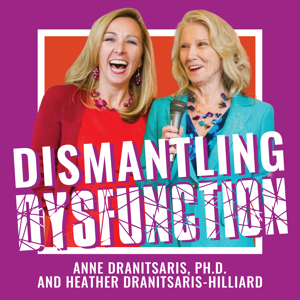


Does this sound familiar? Despite doing all you can to hold your relationship together, and everything you've sacrificed to make it work, it's still dysfunctional and you're still miserable. The more you try to "fix" your partner or figure out new ways of approaching them to change their behavior, the worse it gets. Frustrating, isn't it? That's because while we try to rescue our partner, child or friend and fix the relationship, we should actually be focusing on ourselves and how we are contributing to the codependent relationship, recognizing the developmental delay that has us acting like the only power we have is to decide to submit and conform.
There are 8 distinct codependent strategies in total: 4 are strategies used to dominate in the relationship (if you curious to learn more about them, make sure you check out episode #40 – Dominant Dysfunctional Codependent Strategies) and 4 are submissive strategies. Those who tend to be submissive in a codependent relationship, will act out from one of the four Codependent Submissive Strategies: Compliant, People Pleasing, Self-devaluing and Self-deception.
In today's episode, we explore the different Submissive Strategies, talk about how each of them manifests in relationships and reveal that they are actually survival coping strategies that begin in our childhood. We'll also recount many stories (our own and of our clients') and share tips and tricks for dismantling Submissive Behavioral Strategies used in codependent relationships that you can start implementing today. Tune in to make sure you don't miss out on the gems we share this week!
If you want to know more about Anne & Heather's work with dismantling dysfunctions, check out:
https://www.dranitsaris-hilliard.com
Make sure you sign up for our weekly newsletters for tips on how to dismantle dysfunction and develop your leaders: https://bit.ly/dismantlingdysfunction
IN THIS EPISODE:
KEY TAKEAWAYS:
Narcissists aren't the only people who are manipulative. It's a primary Codependent Strategy used to control and dominate in a codependent relationship. The use of indirect communication and manipulation to get their own way, including pouting, guilting, becoming outraged or indignant, devaluing and gaslighting to name a few tactics make the other person submit because they feel so bad about themselves.
We don't often think of it this way, but how people behave in relationships is very brain dependent. Our psychological type (for example, our MBTI® type or Striving Style®) plays a large role in determining the self-protective position we're most likely to take in relationships – most of the time we do it without even realizing it! Those who tend to dominate in a codependent relationship, will act out from one of the four Codependent Dominant Strategies: Controlling, Caretaking, Disrupting and Personalizing.
In today's episode, we explore the different Dominant Strategies, talk about how each of them manifests in relationships and reveal that they are actually survival coping strategies that begin in our childhood. We'll also recount many stories (our own and of our clients') and share tips and tricks for dismantling Dominant Behavioral Strategies used in codependent relationships that you can start implementing today. Tune in to make sure you don't miss out on the gems we share this week!
If you want to know more about Anne & Heather's work with dismantling dysfunctions, check out:
https://www.dranitsaris-hilliard.com
Make sure you sign up for our weekly newsletters for tips on how to dismantle dysfunction and develop your leaders: https://bit.ly/dismantlingdysfunction
IN THIS EPISODE:
KEY TAKEAWAYS:
Would you consider yourself codependent? When asked that question, some people will say yes, and others will say, no, but I think my partner is. Most of the time we equate Codependency with a clingy, needy person who takes a lot of abuse from their partner, boss, children, and friends. We may think of Codependency as the peacekeeper in relationships, putting needs aside and taking care of others or of someone who constantly blabbers or complains about their partner and never talks about themselves or their own needs. Even worse, people like that never accept advice.
As they say, it takes two to tango and if two people form a relationship with one being a dominant and one a submissive person, as with most role-driven patriarchal, traditional marriages, both people are codependent. As a general needs a soldier to boss around and a caretaker needs a patient to care for, both are meeting psychological survival needs.
In today's episode, we explore the Dysfunction of Codependent Relationships, talk about multiple myths surrounding this Dysfunction (did you know it is not a mental illness?), uncovering less talked about realities that can empower anyone hiding out behind the shield of Codependency. We'll also recount numerous stories (our own and of our clients') and share tips and tricks for developing from Codependency that you can start implementing today. Tune in to make sure you don't miss out on the gems we share this week!
If you want to know more about Anne & Heather's work with dismantling dysfunctions in organizations and leadership behavior at Caliber Leadership Systems, check out:
https://dismantlingdysfunction.com
https://www.dranitsaris-hilliard.com
https://caliberleadership.com
Tired of feeling, thinking and acting like you are 'not enough'? Pick up your copy of Power Past the Imposter Syndrome: A Brain-Building Framework for Changing Painful, Self-Limiting Beliefs & Habits of Mind.
Make sure you sign up for our weekly newsletters for tips on how to dismantle dysfunction and develop your leaders: https://bit.ly/dismantlingdysfunction
Do you have a story you would like to share on our show? Contact us at [email protected].
IN THIS EPISODE:
KEY TAKEAWAYS:
Some people identify as procrastinators, some as perfectionists. And still, others - as risk averse. These proclamations are usually made when someone is asked to do something that feels scary or out of their comfort zone. They expect others to simply accept that this is who they are and to respect their "boundaries" despite the commitments they may have made. These same people feel powerless to do anything about their own self-limiting and often destructive beliefs and tendencies. They say they can't help themselves, and act as though they have no power to even try.
Little do they know that they are in the grip of the Saboteur, that nasty little self-protective Archetype that takes the fun out of trying new things, speaking up or interviewing for a job you've been lusting after for months. Catastrophizing, instead of being optimistic about possibilities. Giving up instead of going for it.
In today's episode, we explore the Saboteur Archetype, its tendency to keep us stuck in the "safe" status quo, whilst also making us believe we are never good enough to even try. We'll also recount numerous Saboteur Archetype stories (our own and of our clients') and share tips and tricks we use to get out of the comfort zone – while it's a nice place to visit, it is no place to live your life. Tune in to make sure you don't miss out on the gems we share this week!
If you want to know more about Anne & Heather's work with dismantling dysfunctions in organizations and leadership behavior at Caliber Leadership Systems, check out:
https://dismantlingdysfunction.com
https://www.dranitsaris-hilliard.com
https://caliberleadership.com
Tired of feeling, thinking and acting like you are 'not enough'? Pick up your copy of Power Past the Imposter Syndrome: A Brain-Building Framework for Changing Painful, Self-Limiting Beliefs & Habits of Mind.
Make sure you sign up for our weekly newsletters for tips on how to dismantle dysfunction and develop your leaders: https://bit.ly/dismantlingdysfunction
Do you have a story you would like to share on our show? Contact us at [email protected].
IN THIS EPISODE:
KEY TAKEAWAYS:
We are sure most people would agree that it's absolutely horrifying when competent and accomplished adults resort to childish behavior, like having temper tantrums, sulking, pretending nothing is their fault, or shifting the blame to others for their mistakes, to name a few. Yet we all do it - and don't think for a moment you don't!
All of us can abdicate responsibility or blame others in situations that make us feel insecure or embarrass us. When we see leaders fly into a rage because they are confronted or insist defensively that it isn't their fault when employees miss deadlines, it's hard to know what to do. Or when parents complain about their children's behavior, yelling and arguing with them, calling them bad and shaming them for who they are, it's not just dysfunctional… it's destructive.
In today's episode, we explore the Child Archetype, its skewed relationship to responsibility and constant need for approval – be it from their families, friends or managers. We'll also recount numerous Child Archetype stories (our own and of our clients') and share tips and tricks we use to stop making ourselves safe and small and so that we regain the driver's seat in our lives. Tune in to make sure you don't miss out on the gems we share this week!
If you want to know more about Anne & Heather's work with dismantling dysfunctions in organizations and leadership behavior at Caliber Leadership Systems, check out:
https://dismantlingdysfunction.com
https://www.dranitsaris-hilliard.com
https://caliberleadership.com
Tired of feeling, thinking and acting like you are 'not enough'? Pick up your copy of Power Past the Imposter Syndrome: A Brain-Building Framework for Changing Painful, Self-Limiting Beliefs & Habits of Mind.
Make sure you sign up for our weekly newsletters for tips on how to dismantle dysfunction and develop your leaders: https://bit.ly/dismantlingdysfunction
Do you have a story you would like to share on our show? Contact us at [email protected].
IN THIS EPISODE:
KEY TAKEAWAYS:
If there is anyone in your life who tends to agree with you when you know they disagree, you're acquainted with the Prostitute Archetype (before you say anything – as you likely got caught off guard after reading that - when we talk about the Prostitute Archetype it's NOT related to sex!). People using this Archetype believe it's a whole lot safer if they just keep their mouths shut. It's true that everyone does this to a certain extent - we go along to get along, pick our battles, and might not speak up when we really aren't invested one way or another, however, the Prostitute Archetype does it ALL THE TIME!
People who live from this Persona don't even bother negotiating for what they want, instead rationalizing, doing mental gymnastics, and finding workarounds to get what they need in secret. The problem is that at the same time they whine they aren't being respected or if it's being used by a parent or leader, that they aren't listened to. They don't see how their permissive behavior and willingness to sell out their integrity are at the root of their dysfunctional relationships.
In today's episode, we explore the Prostitute Archetype, the tendency to sell out its integrity for the sake of security, and the loss of self-esteem that occurs as a result. We'll also recount numerous Prostitute Archetype stories (our own and of our clients) and share tips and tricks for empowering yourself and gaining the courage to live up to your own values. Tune in to make sure you don't miss out on the gems we share this week!
If you want to know more about Anne & Heather's work with dismantling dysfunctions in organizations and leadership behavior at Caliber Leadership Systems, check out:
https://dismantlingdysfunction.com
https://www.dranitsaris-hilliard.com
https://caliberleadership.com
Pick up your copy of So, You Think You Can Lead?: A Guide to Developing Your Leadership Authority and Potential
Make sure you sign up for our weekly newsletters for tips on how to dismantle dysfunction and develop your leaders: https://bit.ly/dismantlingdysfunction
Do you have a story you would like to share on our show? Contact us at [email protected].
IN THIS EPISODE:
KEY TAKEAWAYS:
We all know people who always seem to be victims of someone or some situation. People who blame others when disappointing or frustrating things happen to them or even when they make a mistake. They don't discriminate and will blame their boss, peers, direct reports, family, partner, children - anyone is subject to their ability to spin a story to make it look like they are the victims while they in fact are victimizing others.
But don't try rescuing them, because if you have ever tried helping someone who is trapped in the Victim Persona, you've discovered that they really don't want help - they want you to side with their exaggerated version of whatever story they are telling. If any of these observations apply, you may be dealing with people who suffer from the Victim Syndrome.
In today's episode, we explore the Drama Triangle and the three personas associated with it: the Victim, the Persecutor / Victimizer, and the Rescuer / Hero (if you are interested in learning more about these roles that keep you stuck and how to power past them, make sure you check out our book, Power Past the Imposter Syndrome by clicking here!). We'll also recount personal and client Victim stories and share tips and tricks for empowering yourself and leaving the Drama Triangle behind for good. Tune in to make sure you don't miss out on the gems we share this week!
If you want to know more about Anne & Heather's work with dismantling dysfunctions in organizations and leadership behavior at Caliber Leadership Systems, check out:
https://dismantlingdysfunction.com
https://www.dranitsaris-hilliard.com
https://caliberleadership.com
Stop contributing to organizational dysfunction. Pick up your copy of So, You Think You Can Lead?: A Guide to Developing Your Leadership Authority and Potential
Make sure you sign up for our weekly newsletters for tips on how to dismantle dysfunction and develop your leaders: https://bit.ly/dismantlingdysfunction
Are you dealing with an organizational dysfunction you need help with? Or do you have a story you would like to share on our show? Contact us at [email protected].
IN THIS EPISODE:
KEY TAKEAWAYS:
Complain, complain, complain... We hear an endless myriad of complaints these days from leaders who believe that disengagement, lack of quality, poor work ethic, and entitled behaviors are the employee's fault, and they have no power to do anything about it. When and why did leaders become so disempowered?
It seems that leadership powerlessness may have slowly crept in over the last decade on the heels of the popularity of the extreme version of laisse-faire leadership, otherwise known as Permissive Leadership (if you haven't already, you must check out our Episode #13 – Dysfunctions of Permissive Leadership to learn more!). Clearly, if leaders want to play 'good' guys or gals and will keep abdicating or giving away their authority to decide, define, and hold employees accountable out of some notion that employees will be more productive, they will continue to have lots to whine about.
In today's episode, we share some practical tips for dismantling the Dysfunction of Disempowerment that you can use if your organization suffers from this dysfunction. We'll also talk about some of the common consequences to the organizations when leaders disempower themselves, reveal real client stories that illustrate just how common it is to find this type of leadership behavior in organizations today and teach you how to recognize the symptoms in yourself and your workplace! Tune in to make sure you don't miss out on the gems we share this week.
If you want to know more about Anne & Heather's work with dismantling dysfunctions in organizations and leadership behavior at Caliber Leadership Systems, check out:
https://dismantlingdysfunction.com
https://www.dranitsaris-hilliard.com
https://caliberleadership.com
Stop contributing to organizational dysfunction. Pick up your copy of So, You Think You Can Lead?: A Guide to Developing Your Leadership Authority and Potential
Make sure you sign up for our weekly newsletters for tips on how to dismantle dysfunction and develop your leaders: https://bit.ly/dismantlingdysfunction
Are you dealing with an organizational dysfunction you need help with? Or do you have a story you would like to share on our show? Contact us at [email protected].
IN THIS EPISODE:
KEY TAKEAWAYS:
Why is it that leaders keep themselves so busy that they don't have time to deal with their people? And why, despite their position of power, do leaders struggle with asserting their authority and managing the performance of their employees?
It is all too common for employees to bring their personal issues to work with the expectation that their boss will take special care of them. This form of employee entitlement has some leaders avoiding their employees out of fear that they will not know how to handle the situation. Leaders are giving away their power to lead and are instead choosing the seemingly easier route, namely, to be "liked" by their employees. Yet these are the same leaders that end up drowning in employee and performance issues and are frustrated by employee entitlement, resistance, and opposition. Because leadership is fraught with challenges, leaders are abdicating their authority and giving away their power. After all, why would anyone spend time doing something that made them feel impotent?
In today's episode, we discuss how leaders contribute to the Dysfunction of Disempowerment and share some practical tips you can use if your organization suffers from this dysfunction. We'll also share real client stories that illustrate just how common it is to find this type of leadership behavior in organizations today. Tune in to learn about how leaders contribute to the Dysfunction of Disempowerment and how to recognize the symptoms in yourself and your organization!
If you want to know more about Anne & Heather's work with dismantling dysfunctions in organizations and leadership behavior at Caliber Leadership Systems, check out:
https://dismantlingdysfunction.com
https://www.dranitsaris-hilliard.com
https://caliberleadership.com
Stop contributing to organizational dysfunction. Pick up your copy of So, You Think You Can Lead?: A Guide to Developing Your Leadership Authority and Potential
Make sure you sign up for our weekly newsletters for tips on how to dismantle dysfunction and develop your leaders: https://bit.ly/dismantlingdysfunction
Are you dealing with an organizational dysfunction you need help with? Or do you have a story you would like to share on our show? Contact us at [email protected].
IN THIS EPISODE:
KEY TAKEAWAYS:
In today's workplaces, accountability has become part of a leader's role they increasingly avoid. They avoid difficult conversations, let employees miss deadlines and waste precious time and resources, all to the detriment of the organization. Impulsiveness, entitlement and emotions which create more drama than results are no longer held in check by leaders who are supposed to be managing and developing performance. Everyone is noticing the bar slipping from high to mediocre performance as a result, with leaders doing nothing to stop the decline.
Recent research conducted by the Futures Company found that the average worker spends over 2 hours per day engaged in drama of some sort– arguing, venting, resisting change, or just not aligning with the organization's needs. A lack of accountability has proven to be one of the key sources of workplace drama. This behavior zaps the happiness of staff while costing the organization millions of dollars annually. Imagine how much more beneficial it would be if that time and energy could be recaptured and put toward issue resolution, performance mastery and productivity!
In today's episode, we discuss the Dysfunction of Accountability and share some practical tips that you can start using today if this dysfunction is causing your organization to suffer. We'll also share real client stories that illustrate just how common this dysfunction is. Tune in to find out tips on how you and your organization can help dismantle the Dysfunction of Accountability especially if it's suffocating your organization's success.
If you want to know more about Anne & Heather's work with dismantling dysfunctions in organizations and leadership behavior at Caliber Leadership Systems, check out:
https://dismantlingdysfunction.com
https://www.dranitsaris-hilliard.com
https://caliberleadership.com
Stop contributing to organizational dysfunction. Pick up your copy of So, You Think You Can Lead?: A Guide to Developing Your Leadership Authority and Potential
Make sure you sign up for our weekly newsletters for tips on how to dismantle dysfunction and develop your leaders: https://bit.ly/dismantlingdysfunction
Are you dealing with an organizational dysfunction you need help with? Or do you have a story you would like to share on our show? Contact us at [email protected].
IN THIS EPISODE: Are their more points than this?
KEY TAKEAWAYS:
From the publisher's feed