
Sign up to save your podcasts
Or




Based on Podcast App listening data
In the 1970s Barry Mehler started tracking race scientists and he noticed something funny: they all had the same funding source. One wealthy man was using his incredible resources to prop up any scientist he could find who would validate his white supremacist ideology—and make it seem like it was backed by a legitimate scientific consensus.
About Innate: How Science Invented the Myth of Race"Keepers of the Flame" is Episode 3 of Innate: How Science Invented the Myth of Race, a podcast and magazine project that explores the historical roots and persistent legacies of racism in American science and medicine. Published through Distillations, the Science History Institute's highly acclaimed digital content platform, the project examines the scientific origins of support for racist theories, practices, and policies. Innate is made possible in part by the National Endowment for the Humanities: Democracy demands wisdom.
CreditsHosts: Alexis Pedrick and Elisabeth Berry Drago Senior Producer: Mariel Carr Producer: Rigoberto Hernandez Associate Producer: Padmini Raghunath Audio Engineer: Jonathan Pfeffer
"Innate Theme" composed by Jonathan Pfeffer. Additional music by Blue Dot Sessions.
Resource List'The American Breed': Nazi eugenics and the origins of the Pioneer Fund, by Paul Lombardo
The Funding of Scientific Racism: Wickliffe Draper and the Pioneer Fund, by William Tucker
The New Eugenics: Academic Racism in the U.S. Today, by Barry Mehler
The Phil Donahue Show
Superior: The Return of Race Science, by Angela Saini
In 1793 a yellow fever epidemic almost destroyed Philadelphia. The young city was saved by two Black preachers, Richard Allen and Absalom Jones, who organized the free Black community in providing essential services and nursing the sick and dying. Allen and Jones were assured of two things: that stepping up would help them gain full equality and citizenship, and that they were immune to the disease. Neither promise turned out to be true.
About Innate: How Science Invented the Myth of Race"Calamity in Philadelphia" is Episode 2 of Innate: How Science Invented the Myth of Race, a podcast and magazine project that explores the historical roots and persistent legacies of racism in American science and medicine. Published through Distillations, the Science History Institute's highly acclaimed digital content platform, the project examines the scientific origins of support for racist theories, practices, and policies. Innate is made possible in part by the National Endowment for the Humanities: Democracy demands wisdom.
CreditsHosts: Alexis Pedrick and Elisabeth Berry Drago Senior Producer: Mariel Carr Producer: Rigoberto Hernandez Associate Producer: Padmini Raghunath Audio Engineer: Jonathan Pfeffer Richard Allen voiceover by Jason Carr
"Innate Theme" composed by Jonathan Pfeffer. Additional music by Blue Dot Sessions.
Resource ListHow the Politics of Race Played Out During the 1793 Yellow Fever Epidemic, by Alicia Ault
A short account of the malignant fever, lately prevalent in Philadelphia: with a statement of the proceedings that took place on the subject in different parts of the United States, by Mathew Carey
Medicalizing Blackness: Making Racial Difference in the Atlantic World, 1780-1840, by Rana A. Hogarth
A narrative of the proceedings of the black people, during the late awful calamity in Philadelphia, in the year 1793, by Absalom Jones and Richard Allen
Freedom's Prophet: Bishop Richard Allen, the AME Church, and the Black Founding Fathers, by Richard Newman
Observations upon the origin of the malignant bilious, or yellow fever in Philadelphia, and upon the means of preventing it: addressed to the citizens of Philadelphia, by Benjamin Rush
Bishop Richard Allen: Apostle of Freedom, produced by Dr. Mark Tyler
TranscriptIn 2018 ancient DNA researchers revealed their analysis of a 10,000 year old skeleton called Cheddar Man. He was the oldest complete skeleton ever discovered in England, and the revelation that he had dark skin challenged assumptions many people had about what the earliest people in Britain looked like.
It might seem as though the way we think about race now is how we've always thought about it—but it isn't. Race was born out of the Enlightenment in Europe, along with the invention of modern western science. And it was tied to the politics of the age—imperialism and later slavery. This episode traces the origins of race science to the Enlightenment, examines how the Bible influenced racial theories, and considers how we still have a hard time letting go of the idea of race.
About Innate: How Science Invented the Myth of Race"Origin Stories" is Episode 1 of Innate: How Science Invented the Myth of Race, a podcast and magazine project that explores the historical roots and persistent legacies of racism in American science and medicine. Published through Distillations, the Science History Institute's highly acclaimed digital content platform, the project examines the scientific origins of support for racist theories, practices, and policies. Innate is made possible in part by the National Endowment for the Humanities: Democracy demands wisdom.
CreditsHosts: Alexis Pedrick and Elisabeth Berry Drago Senior Producer: Mariel Carr Producer: Rigoberto Hernandez Associate Producer: Padmini Raghunath Audio Engineer: Jonathan Pfeffer
"Innate Theme" composed by Jonathan Pfeffer. Additional music by Blue Dot Sessions. Special thanks to our colleagues, Jacqueline Boytim and James Voelkel, for their help with this episode.
Resource ListArchaeology under the Blinding Light of Race, by Michael Blakey
Breathing Race into the Machine: the Surprising Career of the Spirometer from Plantation to Genetics, by Lundy Braun
Divine Variations: How Christian Thought Became Racial Science, by Terence Keel
Fatal Invention: How Science, Politics, and Big Business Re-create Race in the Twenty-first Century, by Dorothy Roberts
"Jesus Loves the little Children," song by Cedarmont Kids
Medicalizing Blackness: Making Racial Differences in the Atlantic World, 1780-1840, by Rana Hogarth
The Nuremberg Chronicle, by Hartmann Schedel
Superior: The Return of Race Science, by Angela Saini
Find the full transcript here.
Our new season, Innate: How Science Invented the Myth of Race, drops on February 7th.
What comes to mind when you think of a chemistry lab? Maybe it's smoke billowing out of glassware, or colorful test tubes, or vats of toxic substances. Chemistry and hazardous solvents just seem to go hand in hand. But chemists like James Mack think there's a greener way: It's called mechanochemistry, a kind of chemistry that uses physical force to grind materials instead of solvents. And it's getting the attention of such huge corporations as Exxon Mobil. Still, some chemists are not ready to give up their traditional techniques. "I thought they were married to the molecules," says Mack, who is pictured above placing vials into a machine that uses fast-spinning ball bearings to pulverize molecules. "Little did I know they were actually married to the flask."
CreditsHost: Elisabeth Berry Drago Reporter, Producer, and Audio Engineer: Jonathan Pfeffer Senior Producer: Mariel Carr Producer: Rigoberto Hernandez Associate Producer: Padmini Raghunath
"I thought they were married to the molecules, little did I know they were actually married to the flask."
Host: Elisabeth Berry Drago
Reporter, Producer, and Audio Engineer: Jonathan Pfeffer
Senior Producer: Mariel Carr
Producer: Rigoberto Hernandez
Associate Producer: Padmini Raghunath
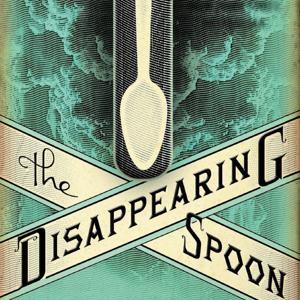
The Disappearing Spoon, a podcast collaboration between the Science History Institute and New York Times best-selling author Sam Kean, returns for its third season on March 8, 2022.
To celebrate, our producer, Padmini Parthasarathy, sat down with Kean to talk about his book The Violinist's Thumb: And Other Lost Tales of Love, War, and Genius, as Written by Our Genetic Code. This interview is a great companion piece for the new season of The Disappearing Spoon, which tackles all sorts of strange and interesting stories about the geniuses we know well—from Einstein and his great scientific blunder that turned out to be correct, to Monet and the cataracts that almost made him put down his brush forever.
Listen as Kean talks about violin protégé Niccolo Paganini, whose genes were both a blessing and a curse, the scientific arms race that led to the mapping of the human genome, and the sometimes-murky lines between human and non-human.
Credits
Hosts: Alexis Pedrick and Elisabeth Berry Drago
Senior Producer: Mariel Carr
Producer: Rigoberto Hernandez
Associate Producer: Padmini Parthasarathy
Audio Engineer: Jonathan Pfeffer
Photo: Wikimedia Commons
In this episode of The Disappearing Spoon, Sam Kean talks about Alessandro Moreschi, the so-called Angel of Rome. His voice earned him fame and money. So what's the secret behind the voice? What was his trick? It turns out that his trick can also make you taller and prevent baldness. The only catch: it requires castration.
CreditsHost: Sam Kean Senior Producer: Mariel Carr Producer: Rigoberto Hernandez Audio Engineer: Jonathan Pfeffer
In this episode of The Disappearing Spoon, Sam Kean talks about the strange origin story of the American Medical Association. The creation of this powerful medical society can be traced back to a duel between two doctors at Transylvania University in Kentucky.
CreditsHost: Sam Kean Senior Producer: Mariel Carr Producer: Rigoberto Hernandez Audio Engineer: Jonathan Pfeffer
From the publisher's feed
Ranked by our users in the last 21 days

90,869 Listeners

78,338 Listeners

43,815 Listeners

31,909 Listeners

43,314 Listeners

38,653 Listeners

26,178 Listeners

539 Listeners

12,178 Listeners

6,435 Listeners

16,322 Listeners

297 Listeners
1,324 Listeners

2,318 Listeners

1,622 Listeners