Disturbing History

Disturbing History

By Disturbing History-True StoriesSociety & CultureTrue CrimeHistory
Download on the App Store

Disturbing History episodes

  • The Silver Bridge Collapse
    On December 15, 1967, ten days before Christmas, the Silver Bridge at Point Pleasant, West Virginia collapsed into the Ohio River during rush hour, killing 46 people. Federal investigators traced the disaster to a single cracked steel bar, eyebar 330, with a hidden flaw about one tenth of an inch deep that had been growing for four decades inside a joint no inspector could see. That's the documented story.

     The other story says a winged creature with red eyes had been warning the town for thirteen months.In this episode, Brian takes apart the Mothman legend and puts the real history back in the middle. Drawing on his sixteen years in law enforcement, he walks through the original November 1966 sighting by the Scarberry and Mallette couples, the deputy who vouched for their sincerity, and the newspaper headline that couldn't decide what to call the thing.

    He follows the story through the abandoned World War II munitions plant known as the TNT area, the armed crowds that nearly turned a monster hunt into a tragedy, the sandhill crane and owl explanations, and the national UFO hysteria of 1966 that primed the whole country for a mystery in West Virginia.

    Then the episode turns to the two writers who welded the monster to the disaster years after the fact. Gray Barker, a documented hoaxer from Clarksburg who invented much of the men in black mythology, published the first book connecting the creature to the collapse in 1970. 

    John Keel followed in 1975 with The Mothman Prophecies, built around a prediction that, by his own account, foretold the wrong disaster entirely. Brian examines why the prophecy fails as evidence, what the engineering record actually shows about why the bridge fell, how the collapse rewrote bridge inspection law for the entire country, and how a grieving river town eventually turned its strangest inheritance into an economy.

    The episode closes with Mary Hyre, the local reporter who documented everything as it happened and died before any of it became a legend.


    Email Brian

    Join Our FREE Newsletter

    Get Brian's Books

    Leave Us A Voicemail

    Visit Our Website


    Have a forgotten historical mystery, disturbing event, unsolved crime, or hidden conspiracy you think deserves investigation?

    Send your suggestions to [email protected].

    Disturbing History is a dark history podcast exploring unsolved mysteries, secret societies, historical conspiracies, lost civilizations, and the shadowy stories buried beneath the surface of the past.

    Follow the show and enable automatic downloads so you never miss a deep dive into history’s most unsettling secrets.

    Because sometimes the truth is darker than fiction.

    1 hr 1 min
  • The Oklahoma City Bombing
    78 minutes after the front of the Alfred P. Murrah Federal Building came off, an Oklahoma Highway Patrol trooper named Charles Hanger pulled over a yellow Mercury on Interstate 35 because there was no license plate on the back bumper.

    He wasn't looking for a bomber. He was running hard toward a wreck scene he'd worked in the dark the Sunday before, and he'd already been ordered to Oklahoma City and then told to turn around. Ten minutes later he had Timothy McVeigh handcuffed in the front seat of his patrol car on a tag violation and a concealed weapon charge, and neither man on that shoulder had any reason to connect it to what had happened 80 miles south.

    Almost everybody knows the outline of this case, and almost all of it is true, which is what makes it unusual. The wrong man didn't go to prison. The evidence against Timothy McVeigh is about as complete as any case Brian has ever read — a partial VIN stamped on a truck axle found 575 feet from the crater, a fingerprint on a fertilizer receipt, six months of calls consolidated onto one prepaid card under a false name, a motel register signed in his own handwriting. But the summary most people carry around makes a movement look like a man, and it leaves out most of what's actually in the file. 

    The two years between Ruby Ridge in August 1992 and Waco in April 1993 that built an American militia movement almost from nothing. A journalism student from Southern Methodist who interviewed McVeigh outside the Branch Davidian siege in March 1993, got his real name, and kept the clipping until it became evidence. 4,000 pounds of ammonium nitrate bought for cash under an alias in McPherson, Kansas, on September 30 and October 18, 1994. A racing fuel salesman who heard a stranger at a Kansas drag strip ask for the two chemicals that make a bomb and had nowhere to take it.

    A gun dealer's robbery in Royal, Arkansas, on November 5, 1994, that funded the plot and produced two witnesses the defense took apart on the stand. And the Fortiers in Kingman, Arizona, who watched McVeigh lay soup cans out on their living room floor in a triangle to show them how the barrels would sit in the truck, then went about their lives for five months.

    Then the parts that never closed. Tom Kessinger conceded he'd described the wrong man as John Doe No. 2 and never conceded there wasn't one, and Eldon Elliott and Vicki Beemer kept believing two men walked into that shop on April 17. Somebody used a calling card registered in a false name to call a white separatist compound in eastern Oklahoma on April 5, 1995, and ask for its German chief of security, while an ATF informant living inside that compound was reporting talk of bombing federal buildings around the April 19 anniversary of Waco.

     A paramilitary group in the Arkansas Ozarks had put the same building on a target list in October 1983, and one of the men behind that plan was executed by the state of Arkansas roughly 12 hours after it came down. A cooperating bank robber tied to that compound was found hanged in a Kentucky cell on July 12, 1996, nine days after pleading guilty.


    Brian also takes the technical objections head-on, because they come up in every conversation about this case and most people have never heard the answers — what the seismographs actually recorded and how the May 23, 1995 demolition of the building settled it, what the FEMA engineers found when they traced the collapse column by column, and why a transfer girder is the reason 168 people died instead of a dozen.  

    The government's own failures get the same treatment, including the April 1997 Justice Department Inspector General finding that the FBI Laboratory's explosives report reached conclusions incriminating the defendants without a scientific basis, and more than 3,100 pages of case file the Bureau couldn't locate until six days before it executed a man on June 11, 2001.

    None of that makes Timothy McVeigh innocent. All of it makes the story bigger than him.


    Email Brian

    Join Our FREE Newsletter

    Get Brian's Books

    Leave Us A Voicemail

    Visit Our Website


    Have a forgotten historical mystery, disturbing event, unsolved crime, or hidden conspiracy you think deserves investigation?

    Send your suggestions to [email protected].

    Disturbing History is a dark history podcast exploring unsolved mysteries, secret societies, historical conspiracies, lost civilizations, and the shadowy stories buried beneath the surface of the past.

    Follow the show and enable automatic downloads so you never miss a deep dive into history’s most unsettling secrets.

    Because sometimes the truth is darker than fiction.
    55 min
  • Operation Sea Spray
    In September 1950, a United States Navy vessel spent eight days off the San Francisco coastline spraying clouds of live bacteria into the wind, and nobody on shore was told.

    The operation was called Sea-Spray, and it was designed to answer a question that terrified early Cold War planners: could an enemy attack an American city with a biological weapon delivered from a small boat, invisibly, without ever being detected? The answer, recorded in a classified document called Special Report No. 142, was yes.

    Forty-three monitoring stations around the Bay measured the result, and the Army concluded that every one of the city's 800,000 residents exposed to the cloud was inhaling five thousand or more particles every minute they breathed. The material was tracked as far as twenty-three miles inland. Three weeks later, an unprecedented outbreak began at Stanford's hospital, then located in San Francisco. 

    Eleven patients developed infections caused by Serratia marcescens, an organism so rarely seen in clinical practice that the doctors published the cases in the Archives of Internal Medicine, where they remain the first documented hospital outbreak of that bacterium anywhere in the world. One patient died: Edward J. Nevin, seventy-five years old, an Irish immigrant who had kept his naturalization papers framed on the wall.

    This episode traces the whole arc, from the doctrine of the "harmless" simulant and the Pentagon test that came before San Francisco, through the twenty-six years of silence, the 1977 Senate hearings that revealed 239 open-air tests over American soil, and the federal lawsuit brought by Nevin's grandson that ended with a court ruling the question was not one an American court had jurisdiction to decide.

     It widens to the zinc cadmium sulfide dispersals, the New York subway experiment, the crates sent to Norfolk, and the radiation and syphilis studies that shared the same logic — and it stays honest about what was never proven and now never can be, because the hospital isolates were thrown away before anyone knew they mattered.


    Email Brian

    Join Our FREE Newsletter

    Get Brian's Books

    Leave Us A Voicemail

    Visit Our Website


    Have a forgotten historical mystery, disturbing event, unsolved crime, or hidden conspiracy you think deserves investigation?

    Send your suggestions to [email protected].

    Disturbing History is a dark history podcast exploring unsolved mysteries, secret societies, historical conspiracies, lost civilizations, and the shadowy stories buried beneath the surface of the past.

    Follow the show and enable automatic downloads so you never miss a deep dive into history’s most unsettling secrets.

    Because sometimes the truth is darker than fiction.
    1 hr 8 min
  • Privacy Not Included
    You clicked “I Agree.” You never clicked anything for the camera on the pole outside your kid’s school. On May 9, 2025, a deputy with the Johnson County Sheriff’s Office in Texas typed “had an abortion, search for female” into a license plate reader network. 

    That single search swept across 83,000 cameras connected to 6,809 law enforcement networks, including cameras in states where the conduct being investigated was legal. No warrant. No judge.

    Just a login and a sentence in a search box.

    In this episode, I dig into two surveillance systems most Americans barely realize they’re part of: the computer you’re driving and the network watching it move.We start inside the car, tracing vehicle data collection from the earliest event data recorders to the 2006 federal rule that standardized them. 

    We revisit the Massachusetts lieutenant governor whose dashboard data contradicted his account of a 108-mph crash, then move into modern infotainment systems capable of copying contacts, text messages, call logs, and location history—and sometimes keeping that information long after the car changes hands.

    We also examine the Berla iVe forensic systems purchased by U.S. Customs and Border Protection for $456,073, Mozilla’s 2023 privacy review that failed all 25 car brands it examined, and the March 2024 revelation that General Motors had been sharing driving data with LexisNexis and Verisk, in some cases recording behavior at intervals of just a few seconds.

    Then we move outside the vehicle.Automatic license plate recognition began in 1976 with the British Home Office, became part of London’s Ring of Steel in 1993, and decades later evolved into a solar-powered camera network marketed to police departments, neighborhoods, businesses, and homeowners associations. That company is now valued at $8.4 billion, with more than 120,000 cameras operating across more than 5,000 communities.

    And the technology can work remarkably well. Plate-reader networks helped locate the Brown University shooting suspect and, in Galt, California, helped police find a kidnapping victim within five minutes.But the same system has also documented a very different kind of use. According to the Institute for Justice’s database of 147 incidents, a Georgia deputy searched one woman’s plate 1,639 times. A Florida officer searched for his estranged wife’s vehicle more than 700 times. 

    In Milwaukee, a detective assigned to investigate another officer’s misuse of the system was later discovered to be misusing it himself. Accuracy creates another problem. 

    Roseville, California police found that 71 percent of their plate-reader alerts came from misreads. In Morristown, Tennessee, grandparents were held at gunpoint after a camera mistook the letter O for the number zero.And then there’s Norfolk, Virginia.Discovery in a federal lawsuit revealed that among roughly 230,000 searches, the three most common justifications officers entered were simply “cj,” “stolen,” and “inv.”

    One officer repeatedly typed “la la la la” as the stated reason for searches—and apparently nobody noticed.Sixteen years in law enforcement taught me what a plate hit can be worth on a bad night. It also taught me what can happen when a powerful investigative tool operates with little oversight. Now the legal ground underneath these systems may be shifting. 

    The Supreme Court’s June 29, 2026 decision in Chatrie v. United States undercut the reasoning Norfolk relied on to prevail earlier in its case, and that fight is now before the Fourth Circuit.


    Email Brian

    Join Our FREE Newsletter

    Get Brian's Books

    Leave Us A Voicemail

    Visit Our Website


    Have a forgotten historical mystery, disturbing event, unsolved crime, or hidden conspiracy you think deserves investigation?

    Send your suggestions to [email protected].

    Disturbing History is a dark history podcast exploring unsolved mysteries, secret societies, historical conspiracies, lost civilizations, and the shadowy stories buried beneath the surface of the past.

    Follow the show and enable automatic downloads so you never miss a deep dive into history’s most unsettling secrets.

    Because sometimes the truth is darker than fiction.

    1 hr 24 min
  • The Massacre At Son My
    On the morning of March 16, 1968, an American helicopter pilot named Hugh Thompson dropped a smoke grenade to mark a wounded Vietnamese woman so a medic could reach her. He flew a circuit and came back a few minutes later. She was dead, and an American officer was standing over her.

    Within the hour, Thompson would land his helicopter between armed American infantry and a bunker full of civilians and tell his own door gunner to open fire on Americans if they opened fire on the villagers.Almost everyone has heard of My Lai.

    Almost everything most people believe about it is wrong or badly incomplete. It wasn't one village. It was a village complex called Son My made up of four hamlets, and the place we call My Lai 4 was actually a sub-hamlet named Xom Lang that American mapmakers mislabeled. It wasn't one company, because two separate American infantry units killed civilians in Son My that morning, several kilometers apart, under the same task force headquarters. And it wasn't one man, because the Army's own inquiry identified roughly 30 officers and enlisted men who either committed crimes or helped bury them afterward, up to and including a major general commanding a division.This episode walks the whole operation from the beginning.

    The attrition strategy and the body-count culture that made dead Vietnamese the measure of a good officer. Quang Ngai Province, the free-fire zones, and why American troops called the area Pinkville. Task Force Barker, an ad hoc unit thrown together from three companies that had never worked with each other, under a colonel who had commanded the brigade for exactly one day when the massacre happened. Charlie Company's three months of losing men to mines and booby traps without ever getting a fight, including the February 25 minefield and the booby trap that killed Sergeant George Cox on March 14.

    The memorial service on March 15, and the briefing Captain Ernest Medina gave that night, which remains the most disputed half hour in the case.Then the morning itself. Artillery preparation beginning around 7:22 a.m., a landing zone that turned out to be completely cold, and a company that came off the aircraft firing at people who were not shooting back. Charlie Company took no incoming fire that day and captured 3 weapons. The only American casualty shot himself in the foot. What they reported afterward was 128 enemy killed.

    The episode covers the irrigation ditch, where somewhere between 70 and 80 people were gathered and shot, and the trail junction to the south where another 20 to 30 were killed. The men who refused to fire, and what happened to them, which was nothing. The rapes and mutilations documented by the Peers Inquiry. Hugh Thompson, Lawrence Colburn, and Glenn Andreotta in detail, including the child Andreotta carried out of the ditch alive, and the 30 years it took the Army to award those three men the Soldier's Medal. Andreotta was killed in action on April 8, 1968, three weeks after the massacre.

    There is a substantial section on My Khe 4, the second massacre, which almost nobody has heard of. Bravo Company, a different battalion, different officers, men who never attended Medina's briefing and had never met William Calley, killing roughly 90 civilians in a coastal sub-hamlet on the same morning and reporting 38 enemy dead. It only came to light because investigators digging into My Lai tripped over it.The back half is the concealment and the reckoning. Colonel Oran Henderson's April 1968 investigation, which concluded about 20 civilians had been killed inadvertently.

    The Viet Cong leaflet that was substantially accurate and was used as proof the whole thing was fabricated. Tom Glen's letter to General Abrams in late 1968 and the young major who reviewed it. Ronald Ridenhour, a door gunner who heard about it secondhand in April 1968, spent months quietly interviewing witnesses, and mailed a letter on March 29, 1969, to some 30 officials in Washington. Seymour Hersh and the story no major magazine would buy, which ran on November 13, 1969, in roughly three dozen newspapers. Paul Meadlo on the CBS Evening News on November 24. Ronald Haeberle's color photographs, carried around for a year and a half before anyone acted on them, published in the Cleveland Plain Dealer on November 20, 1969, and in Life on December 5. The Peers Inquiry, delivered in March 1970, and what it found about command failure at four levels.

    Then the trials. Roughly two dozen men charged, 5 court-martialed for the killings, and 14 officers charged with suppressing information. Sergeant David Mitchell, acquitted. Sergeant Charles Hutto, acquitted. Captain Eugene Kotouc, acquitted. Captain Ernest Medina, acquitted on September 22, 1971. Colonel Oran Henderson, the only officer tried for the cover-up, acquitted on December 17, 1971. Major General Samuel Koster, charges dismissed, censured, demoted one grade, and out as Superintendent of West Point.

    Calley was charged with 109 murders, convicted on March 29, 1971, of the premeditated murder of not fewer than 22 Vietnamese civilians, and sentenced two days later to life at hard labor. Within days the White House had received something on the order of 100,000 letters and telegrams running overwhelmingly in his favor. Flags flew at half-staff. A novelty record sold in the hundreds of thousands. On April 1, 1971, President Nixon ordered him out of the stockade and into an apartment at Fort Benning.

    The sentence came down to 20 years in August 1971, then to 10 years in April 1974, and he was paroled in November 1974 after about three and a half years, nearly all of it under house arrest.Roughly 500 dead across two hamlets. One conviction.The Criminal Investigation Division found at least 347 killed at My Lai 4. The Peers Inquiry added roughly 90 at My Khe 4.

    The memorial at Son My carries 504 names, arranged by household so you read them in family groups. 182 women, 17 of them pregnant. 173 children, 56 of them infants. 60 people over the age of 60.

    And Pham Thanh Cong, who was 11 years old and lay under his mother and his four brothers and sisters in a bunker until the shooting stopped, and who spent much of his adult life walking American visitors through the ground where his family died.


    Email Brian

    Join Our FREE Newsletter

    Get Brian's Books

    Leave Us A Voicemail

    Visit Our Website


    Have a forgotten historical mystery, disturbing event, unsolved crime, or hidden conspiracy you think deserves investigation?

    Send your suggestions to [email protected].

    Disturbing History is a dark history podcast exploring unsolved mysteries, secret societies, historical conspiracies, lost civilizations, and the shadowy stories buried beneath the surface of the past.

    Follow the show and enable automatic downloads so you never miss a deep dive into history’s most unsettling secrets.

    Because sometimes the truth is darker than fiction.

    1 hr 9 min
  • The Tory War
    In June of 1780, on a hill outside what's now Lincolnton, North Carolina, more than a thousand men killed each other in fog so thick you couldn't see fifty feet. There was no British army there. There was no Continental army there.

    Every man on that field was an American, and the only thing separating one side from the other was a scrap of white paper pinned to a hat or a green twig stuck in a hatband. When it was over, nobody could tell the dead apart, so they stopped trying and put them in a hole together.

    That mass grave is still up there, next to an elementary school, and nobody knows the names. This episode is about the half of the American Revolution we left off the monuments. In the Carolina backcountry between 1780 and 1782, the war wasn't a fight against a foreign occupier.

     It was neighbors hunting neighbors through their own counties, and the National Park Service, NCpedia, and the North Carolina Department of Natural and Cultural Resources all use the same word for it without flinching. Civil war. Brian traces it back to where it actually starts, which isn't 1775 at all. It's 1771, when royal governor William Tryon crushed a farmers' revolt at Alamance and then hanged six men outside Hillsborough and made the townspeople stand there and watch.

    Four years later, the same eastern gentry who had ridden with Tryon came to the backcountry asking those farmers to take up arms for liberty. A lot of them declined, and some of them did considerably more than decline.

    From there the episode moves through the greased bridge at Moore's Creek, where Highland Scots who had already lost one war against King George's family charged across two soap-slicked logs into cannon fire, and eight hundred and fifty of them went into captivity. 

    Through Ramsour's Mill, and the two-hundred-year-old story that Thomas Costner killed his own brother Peter on that hill and buried him under a pile of stones rather than let him go into the mass grave.

    Brian digs into a piece of research published this past March by a Costner descendant that takes the story apart, finds Thomas's own 1832 pension statement doesn't put him at the battle at all, and can't quite close the case either way.

     What survives the scrutiny is stranger than the legend: not whether it happened, but that for two centuries nobody who heard it ever said it couldn't have.

    Then Kings Mountain, the largest all-American fight of the entire war, where exactly one man on the field held a British commission, and where the shooting continued into groups of men who had already surrendered.

    The drumhead court held in a field a week later at the Biggerstaff plantation, where North Carolina magistrates convicted three dozen of their neighbors under North Carolina law and hanged nine of them from an oak tree, three at a time. Pyle's Hacking Match, where Henry Lee's green-coated Legion was mistaken for Tarleton's dragoons and let the mistake stand, and several hundred Loyalists were cut down at arm's length while shouting that they were the king's men — ninety-three dead against one American wounded and one horse killed.

    The House in the Horseshoe, where Temperance Alston walked out the front door carrying a white cloth in front of eighty armed men to keep them from killing her husband, and where you can still put your hand in the bullet holes today. David Fanning riding into the state capital under fog and kidnapping the governor and most of the General Assembly. And the Quakers of Cane Creek walking out onto the field at Lindley's Mill in the dark to collect the men who were still breathing, joined by Dr. John Pyle himself, seven months after his own command was slaughtered, treating the wounded on both sides.Yorktown didn't end it.

    In Randolph County, on a Sunday morning in March of 1782, five months after Cornwallis surrendered, Fanning and twenty-five men dragged a colonel's sister and young daughter off him and shot him in the head on the floor of his own house. The peace treaty was still a year away.Brian brings sixteen years of law enforcement experience to the sourcing here, and it shows in how carefully the episode separates what's documented from what's tradition, where the numbers genuinely disagree, and where the record simply runs out.

    This is the Revolution as the people who lived through it in Lincoln, Orange, Randolph, and Chatham counties actually experienced it — not a war against somebody else, but a war against each other, with no neutral ground left to stand on.

    Disturbing History is written, produced, and narrated by Brian King-Sharp for Paranormal World Productions. If the show means something to you, the best thing you can do is tell one person about it. Contact and full show archive at paranormalworldproductions.com.

    Have a forgotten historical mystery, disturbing event, unsolved crime, or hidden conspiracy you think deserves investigation?

    Send your suggestions to [email protected].

    Disturbing History is a dark history podcast exploring unsolved mysteries, secret societies, historical conspiracies, lost civilizations, and the shadowy stories buried beneath the surface of the past.

    Follow the show and enable automatic downloads so you never miss a deep dive into history’s most unsettling secrets.

    Because sometimes the truth is darker than fiction.
    1 hr 5 min
  • The Silence Of Empires
    Around 1200 BC, a king named Ammurapi dictated a letter from the port city of Ugarit describing seven enemy ships, burned towns, and an army that was somewhere else. That tablet was still sitting in the ruins more than 3,000 years later when a French archaeologist pulled it out of the ash. It's the only case in this entire episode where somebody put the emergency on the record while it was still happening.

    Everywhere else, the silence is the story. In this episode we work through the civilizations that flourished for 30 generations and then simply stopped, and we look at what the evidence actually shows rather than the version most of us got in school.We cover the Late Bronze Age collapse and the Sea Peoples, including the 3 consecutive drought years that Cornell researchers dated to roughly 1198 through 1196 BC using juniper tree rings, and the discovery that the Hittite capital at Hattusa was emptied of its archives and valuables before anyone set fire to it.

    We go to Minoan Crete, to the town at Akrotiri that was buried in ash with no bodies and no valuables left in it, and to the disputed sanctuary at Anemospilia, destroyed around 1700 BC, where 4 skeletons were found and no full excavation report was ever published. We take apart Mortimer Wheeler's massacre at Mohenjo-daro, which never happened, and look at what the weakening monsoon and the shifting rivers actually did to the Indus cities between about 2600 and 1900 BC.We spend real time on Rome. 

    The denarius falling from roughly 98 percent silver under Augustus to a coin under 5 percent silver by the 260s AD, copper with a wash thin enough to rub off in your pocket. Something like 26 claimants to the throne in the 50 years between 235 and 284. The pottery, roof tiles, and coffins that vanish from the archaeological record across the western provinces. Odoacer shipping the imperial regalia to Constantinople in 476 while nobody alive treated it as an ending. And the year 536, when the sun went dim across three continents and stayed that way, followed by volcanic eruptions in 540 and 547 and a cold period that ran until about 660.

    Then the Maya, where we can read the dates carved on the monuments and watch the lights go out city by city, from the unfinished altar at Copán with two blank faces, commissioned in 822, to the last Long Count date anywhere, carved at Toniná in January of 909. Along the way, the royal court at Cancuén, 31 people found dismembered in a palace cistern around the year 800 with their jade still on them. Chaco Canyon, where a dynasty traced through mothers was buried in one room roughly 6 feet square for about 330 years.

    Cahokia, and the 53 young women laid out in two orderly rows inside Mound 72, all of them local. Angkor, where the people who ran the waterworks left a century before the waterworks failed. And Rapa Nui, where the collapse everybody has heard about did not happen, and the one that did was documented in writing by the people who carried it out, ending with a recorded population of 111 in 1877.


    Email Brian

    Join Our FREE Newsletter

    Get Brian's Books

    Leave Us A Voicemail

    Visit Our Website


    Have a forgotten historical mystery, disturbing event, unsolved crime, or hidden conspiracy you think deserves investigation?

    Send your suggestions to [email protected].

    Disturbing History is a dark history podcast exploring unsolved mysteries, secret societies, historical conspiracies, lost civilizations, and the shadowy stories buried beneath the surface of the past.

    Follow the show and enable automatic downloads so you never miss a deep dive into history’s most unsettling secrets.

    Because sometimes the truth is darker than fiction.
    1 hr 15 min
  • John D. Rockefeller Junior
    Part one left the old man under an obelisk in Cleveland, ninety-seven years old, the richest human being who had ever lived, and remembered by most of America as a kindly figure who handed out dimes and beat hookworm in the South.

    That reputation did not build itself. Somebody constructed it, deliberately, over decades — and it was not John D. Rockefeller Senior. He was too rigid and too contemptuous of the public to bother. It was his son.This is the part of the story that is harder to tell, because the man at the center of it was not a robber baron. John D. Rockefeller Junior was shy, dutiful, terrified of doing wrong, and by every account sincere. He gave away more than five hundred million dollars.

    He never took a drink or a cigarette in ninety-six years. He collapsed at thirty from the weight of a name he had not chosen. And in the spring of 1914 that name was on a coal company in southern Colorado when the militia set up a machine gun above a tent colony full of immigrant families.We start at his birth in 1874, in a house where the children shared one bicycle and kept ledgers of their chore money, and where the only son wore his sisters' hand-me-down dresses and was teased about the photograph for the rest of his life.

     We follow him through Brown, through his marriage to a senator's daughter who would go on to found the Museum of Modern Art over his objections, through the Hearst letters and the exposure of his grandfather's double life, and out of the boardroom entirely in 1910.Then Colorado. The company towns where the firm owned your house and your store and your church and the man who weighed your coal. The armored car the strikers called the Death Special.

    Mother Jones held nine weeks in a hospital basement without charge. Junior's testimony to Congress that the open shop was worth the lives of every employee in the company, sixteen days before the shooting started. Louis Tikas with a rifle stock broken across his skull and three bullets in his back, left along the railway tracks for three days. And the pit under a burning tent where four women and eleven children were sheltering, and what a telephone linesman found when he lifted the bedstead the next morning.What happened after is the real inheritance.

    A publicity man named Ivy Lee, a chairman named Frank Walsh who took Junior apart on the witness stand, a future Prime Minister of Canada hired to design an answer, and a two-week trip to Colorado that ended with the richest young man in America in his shirtsleeves, dancing with miners' wives while the photographers worked.

    The union was destroyed. The reputation recovered inside a month. And the arrangement that replaced the union became the national model for keeping unions out for the next twenty years.The episode also goes where I said it would, into the Rockefeller Foundation's money in Germany — the Munich institute, the Berlin race-science laboratories, and the twin research the Foundation funded from 1932 to 1935 by a scientist named Otmar von Verschuer, who a decade later was receiving blood and human eyes from Auschwitz sent by his former assistant Josef Mengele.

    I draw that line carefully and narrowly, because the version that circulates online is wrong in ways that do not need the help.Then Grand Teton, bought under a false company name from neighbors who were never told. Colonial Williamsburg with the slavery left out. Diego Rivera's revenge. 

    Email Brian

    Join Our FREE Newsletter

    Get Brian's Books

    Leave Us A Voicemail

    Visit Our Website


    Have a forgotten historical mystery, disturbing event, unsolved crime, or hidden conspiracy you think deserves investigation?

    Send your suggestions to [email protected].

    Disturbing History is a dark history podcast exploring unsolved mysteries, secret societies, historical conspiracies, lost civilizations, and the shadowy stories buried beneath the surface of the past.

    Follow the show and enable automatic downloads so you never miss a deep dive into history’s most unsettling secrets.

    Because sometimes the truth is darker than fiction.
    58 min
  • John D. Rockefeller Sr. The Man Who Bought the Story
    In February of 1908, a reporter for Joseph Pulitzer's New York World walked into a drugstore in Freeport, Illinois, put a photograph on the counter, and finally closed a manhunt that had run for seven years. The man in the picture had died there two years earlier under the name Doctor William Levingston. He had a wife in Illinois and a wife he had never divorced back in New York, and the son he walked away from was John Davison Rockefeller, the richest man in the world.

    This is part one of a two-part series, and it covers the father and the son who spent seventy years being his opposite in every visible way and identical to him in the one way that made him rich. We start with Devil Bill, the traveling con man who kept his mistress under his wife's roof, fathered children by both women in the same two years, sold cancer cures for twenty-five dollars a consultation, and was indicted for rape in Cayuga County in 1849 before running ahead of the sheriff.

    Then we follow his second son from a ten-cent account book called Ledger A to the Cleveland Massacre, where the fear of a secret railroad scheme emptied twenty-two of twenty-six refineries into his hands in six weeks.Along the way there is the drawback, the contract clause that made a competitor pay his own executioner every time he shipped a barrel.

    There is the war Rockefeller declared on the largest railroad in America and won in nine months. There is the paid informant network inside the freight offices that the Interstate Commerce Commission found still running twenty-eight years after it was exposed. There is the sabotage trial in Buffalo that most accounts get wrong, and I explain exactly how, including the part where Rockefeller stood up in that courtroom and shook his fist at the plaintiff.

    There are the Merritt brothers of Duluth, who found the Mesabi Range and were made to sign a paper saying they had been treated fairly as the price of the money they needed to live on.And there is the family nobody saw. A daughter dead at forty in Cannes. Another who went to Zurich to be analyzed by Carl Jung, stayed eight years, and quietly paid James Joyce a monthly stipend while he wrote Ulysses. A brother who dug his own children out of the family plot rather than leave them under his brother's monument.

    And a ranch bought in North Dakota in 1881 on one condition, which proves the richest man alive knew his father was a bigamist and managed that secret for twenty-seven years without saying a single public word about it.The episode ends where the Supreme Court broke Standard Oil into thirty-four companies in 1911 and made him the first billionaire in American history. Part two takes up his son, Ludlow, and the invention of public relations as a paid profession.

    Email Brian

    Join Our FREE Newsletter

    Get Brian's Books

    Leave Us A Voicemail

    Visit Our Website


    Have a forgotten historical mystery, disturbing event, unsolved crime, or hidden conspiracy you think deserves investigation?

    Send your suggestions to [email protected].

    Disturbing History is a dark history podcast exploring unsolved mysteries, secret societies, historical conspiracies, lost civilizations, and the shadowy stories buried beneath the surface of the past.

    Follow the show and enable automatic downloads so you never miss a deep dive into history’s most unsettling secrets.

    Because sometimes the truth is darker than fiction.
    1 hr 11 min
  • Say My Name
    A man in Zhengzhou spent eight years living in a $42-a-month rental and sending every spare yuan home to his wife so she'd feel secure. When he finally asked to see the bank account, she refused. Then she broke down and told him it was gone — roughly $94,000 of it wired to a livestreamer she'd never met, in small amounts, over several years, in exchange for having her name read out loud on camera.

    The court finalized the divorce on November 20, 2025. Under Chinese law those gifts count as money already spent, so there was nothing left to recover.Almost nobody in this episode broke a law. That's what makes it worse.

    This is the story of what happens when the feeling of being known gets turned into a product with a price tag, a payment processor, and a percentage.

    It starts with a Canadian landscaper who lip-synced to Barry Manilow in the spring of 2020 and accidentally built a fandom of middle-aged women who called themselves the Grotto Girls — one of whom sent him something close to $200,000 just to hear him say her name on a livestream. 

    When he slept with one of them, the whole thing detonated into jealousy, blackmail, leaked photographs, and women showing up at his parents' house. He left the country. Most of them didn't get to leave anything.

    From there it widens out. The BBC investigation that found families in Syrian refugee camps livestreaming for gifts while the platform kept as much as 70% of the money. The Reuters reporting that revealed the intimate messages men buy on OnlyFans are frequently written by contractors in the Philippines working eight-hour shifts at four dollars an hour, reading from a file on the customer. 

    The FBI's 2025 numbers, where Americans over 60 lost more than $7.7 billion, and confidence and romance fraud alone took $584 million from them. A Twitch moderator who has now been arrested three times across six years for stalking the streamer whose chat he used to help run. A hoax phone call over a $1.50 video game bet that put Andrew Finch dead on his own porch in Wichita. Christina Grimmie, killed at her own signing table by a man who had never once sent her a message.

    And the newest version of all of it, where the company can simply switch the other person off.Underneath the cases sits a number that isn't in dispute. In 2003, the average American spent about an hour a day with friends. By 2023 it was 26 minutes. The hours didn't move to family or coworkers. They moved to being alone.The stalkers aren't the disturbing part. The living rooms are.


    Email Brian

    Join Our FREE Newsletter

    Get Brian's Books

    Leave Us A Voicemail

    Visit Our Website


    Have a forgotten historical mystery, disturbing event, unsolved crime, or hidden conspiracy you think deserves investigation?

    Send your suggestions to [email protected].

    Disturbing History is a dark history podcast exploring unsolved mysteries, secret societies, historical conspiracies, lost civilizations, and the shadowy stories buried beneath the surface of the past.

    Follow the show and enable automatic downloads so you never miss a deep dive into history’s most unsettling secrets.

    Because sometimes the truth is darker than fiction.
    1 hr 3 min

About Disturbing History

From the publisher's feed

Disturbing History is a dark history podcast uncovering the strange, sinister, and little-known stories the past tried to bury. Each week, we explore unsolved mysteries, secret societies, forgotten…

Best of Disturbing History

Ranked by our users in the last 21 days

  1. Number 3: Halley's Comet
    1 hr 2 min

More shows like Disturbing History

Astonishing Legends by Astonishing Legends Productions

Astonishing Legends

9,471 Listeners

Sasquatch Chronicles by Sasquatch Chronicles - Bigfoot Encounters

Sasquatch Chronicles

9,371 Listeners

Bigfoot Eyewitness Radio by Vic Cundiff

Bigfoot Eyewitness Radio

1,409 Listeners

Bigfoot Society by Jeremiah Byron

Bigfoot Society

506 Listeners

Bigfoot and Beyond with Cliff and Bobo by Bigfoot and Beyond LLC

Bigfoot and Beyond with Cliff and Bobo

1,851 Listeners

Bigfoot Terror in the Woods Sightings and Encounters by W.J. Sheehan

Bigfoot Terror in the Woods Sightings and Encounters

1,431 Listeners

From The Shadows by Shane Grove

From The Shadows

346 Listeners

Sasquatch Tracks by Micah Hanks, Dakota Waddell and Jeff Smith

Sasquatch Tracks

535 Listeners

Sasquatch Odyssey by Sasquatch Odyssey-Bigfoot Encounters

Sasquatch Odyssey

1,020 Listeners

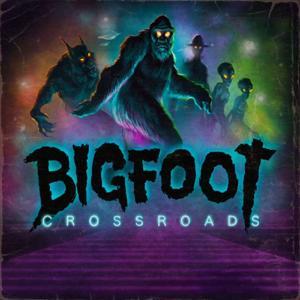
Bigfoot Crossroads by Matt Knapp

Bigfoot Crossroads

372 Listeners

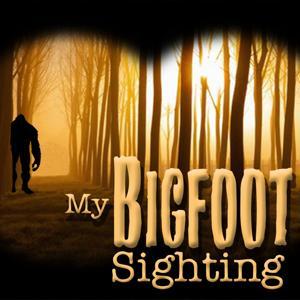
My Bigfoot Sighting by Vic Cundiff

My Bigfoot Sighting

523 Listeners

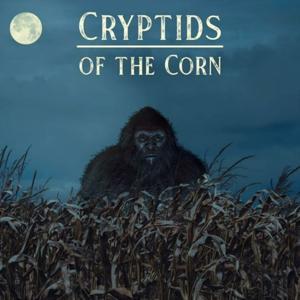
Cryptids Of The Corn by Cryptids of the Corn Podcast

Cryptids Of The Corn

522 Listeners

Scared All The Time by Scared All The Time, Mystery, History, Horror

Scared All The Time

459 Listeners

Backwoods Bigfoot Stories by Backwoods Bigfoot Stories-Bigfoot Encounters

Backwoods Bigfoot Stories

113 Listeners

SASQUATCH THEORY by SASQUATCH THEORY

SASQUATCH THEORY

87 Listeners