
Sign up to save your podcasts
Or



Co-founder of Rocket Learning, Namya Mahajan, joins us to share an extraordinary journey and remarkable work.
Rocket Learning is a non-profit organization on a mission to revolutionise early childhood education (ECE) and early childhood development (ECD) in India by working closely with governments, parents and caregivers to create strong digital content that helps children develop during their early years.
In this episode, we explore Rocket Learning's remarkable journey, from their idea to the impact they have today. Namya Mahajan's personal and professional journey is compelling: growing up in India, gaining both an undergraduate degree in applied mathematics and an MBA from Harvard University, followed by a return to India to work at McKinsey & Co and then venturing into the social impact space, first at the Self Employed Women's Association (SEWA) and then co-founding Rocket Learning.
With a mission to help children aged 3 to 8 years, Rocket Learning creates strong digital content for parents and caregivers to engage in useful and playful learning experiences with their children.
Leveraging WhatsApp as their communication platform, they currently serve one million children in seven states in India, but despite this they still sometimes refer to themselves as a "pilot at scale" due to the immense need for their services in the country.
In this episode, we explore their successful market entry, digital content creation, and scaling strategies, as well as their remarkable journey from idea to impact.
They have successfully secured funding and support from a range of organizations, including the Central Square Foundation, ACT Grants, the Veddis Foundation, the Harvard University Impact Fellowship Fund, MIT Solve, World Economic Forum, Google.org, Microsoft, Amazon, and Capgemini, among others.
Join us for an inspiring conversation on the power of digital solutions for early childhood education and development, with Rocket Learning.
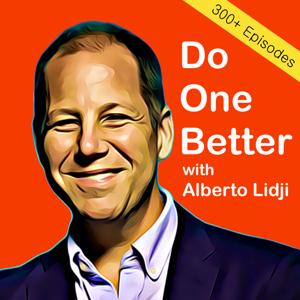
Thank you for downloading this episode of the Do One Better Podcast. Visit our Knowledge Hub at Lidji.org for information on 200+ case studies and interviews with remarkable leaders in philanthropy, sustainability and social entrepreneurship.
Darshita Gillies is Founder and CEO of Maanch, an impact management platform. They inform asset managers, corporations, philanthropists and funders on impact tracking and impact management within an ESG and sustainability context.
Maanch is a B Corp that is leveraging technology for good and embracing an innovative approach. The focus in this episode is on mobilising capital towards sustainability and the conversation is of interest to a wide audience.
Thank you for downloading this episode of the Do One Better Podcast. Visit our Knowledge Hub at Lidji.org for information on 200+ case studies and interviews with remarkable leaders in philanthropy, sustainability and social entrepreneurship.
Jehiel Oliver, Founder and CEO of Hello Tractor explains how they’re leveraging technology and innovative financing to help Africa’s farmers close the yield gap between what they grow versus what the global averages are across key commodities.
Hello Tractor is an agricultural technology company connecting small-holder farmers to farm equipment owners with excess capacity.
Their technology involves a small tracking device that goes onto the tractor; it gives the farm equipment owner the ability to remotely monitor and manage all aspects of their tractor, including location, how much the tractor is being used, fuel consumption, theft protection —which is a big issue — and maintenance needs of the tractor.
Farm equipment owners can opt into entering their equipment into a marketplace and improve efficiencies for all concerned.
This is a fascinating episode shedding light on how business can be a force for good and address a range of issues from more efficient food production to empowering local communities and helping to transform Africa into a global breadbasket.
Thank you for downloading this episode of the Do One Better Podcast. Visit our Knowledge Hub at Lidji.org for a full transcript and for information on 200+ case studies and interviews with remarkable leaders in philanthropy, sustainability and social entrepreneurship.
Felix Brooks-Church is Co-Founder and CEO of Sanku, a social enterprise and non-profit focused on combatting malnutrition through food fortification in East Africa. They operate out of Tanzania and Kenya.
Sanku works with local stakeholders in rural and marginalised communities to fortify staple foods by adding nutrients, vitamins and minerals; aiming to improve health outcomes in the process.
In this episode we get behind-the-scenes insight into Sanku’s work and the value of food fortification. We learn how they’re able to reach the ‘last mile’ in rural settings through a ‘small-scale’ food fortification approach; we look at their business model, and the technology and logistics that underpin the work they do.
Thank you for downloading this episode of the Do One Better Podcast. Visit our Knowledge Hub at Lidji.org for information on 200+ case studies and interviews with remarkable leaders in philanthropy, sustainability and social entrepreneurship.
Habitat for Humanity International’s CEO, Jonathan Reckford, sheds light on their efforts to tackle housing poverty in more than 70 countries by looking at the challenge through both equity and climate lenses.
Jonathan provides insight on how former US President Jimmy Carter became a key supporter of their work and gives us a behind-the-scenes overview of this transformative non-profit with $2 billion in annual revenues.
Habitat’s work involves innovative finance, extensive volunteering, philanthropy, advocacy and much more. They work with families who can’t get a conventional bank mortgage and who are often in highly marginalised communities.
We learn about volunteering and the concept of “sweat equity”; we get an overview of the ethical investments that support Habitat’s work; and we are presented with the dynamics of today’s global housing crisis.
Housing affordability has become shockingly out of reach for many and this episode is for anyone who wishes to understand the solutions being deployed to address this crisis and how they can get involved in making a positive difference.
Thank you for downloading this episode of the Do One Better Podcast. Visit our Knowledge Hub at Lidji.org for information on 200+ case studies and interviews with remarkable leaders in philanthropy, sustainability and social entrepreneurship.
There is a robust body of research on 'what' donors fund. However, many questions around ‘how’ to fund need to be researched and explored more thoroughly.
If you have $100 million available to fund a cause, do you give it all in one grant, do you make a handful of large grants or do you make a high number of small grants?
In this episode we explore some of the big questions on how to fund; consider a range of dynamics, such as transaction costs and grantee perceptions; and call for more research in this field.
Thank you for downloading this episode of the Do One Better Podcast. Visit our Knowledge Hub at Lidji.org for information on 200+ case studies and interviews with remarkable leaders in philanthropy, sustainability and social entrepreneurship.
Peter Kaye AM ESM and Stephen De-Wint, CEOs of the Duke of Edinburgh’s International Award in Australia and Canada respectively, talk about the work of the Award locally and across more than 100 countries.
They provide first-hand insight into how the Award embraces non-formal education and transforms lives. This broad conversation looks at diversity, equity and inclusion; volunteering and mentoring; alumni engagement and connecting with the corporate world.
Thank you for downloading this episode of the Do One Better Podcast. Visit our Knowledge Hub at Lidji.org for information on 200+ case studies and interviews with remarkable leaders in philanthropy, sustainability and social entrepreneurship.
Mike Adamson is Chief Executive of the British Red Cross, an organisation with 4,000 employees, 15,000 volunteers and an annual income in 2022 of £400M.
In this episode we explore the British Red Cross’ key focus areas, their roll in systems change and their approach to driving forward strategic partnerships.
We also explore the importance of fostering trust between diverse organisations and stakeholders so as to create strong, collaborative impact.
Thank you for downloading this episode of the Do One Better Podcast. Visit our Knowledge Hub at Lidji.org for information on 200+ case studies and interviews with remarkable leaders in philanthropy, sustainability and social entrepreneurship.
Nidhi Bhasin, CEO of the NASSCOM Foundation, joins us to talk about tech for good in India and initiatives to drive digital literacy. The NASSCOM Foundation is part of the NASSCOM ecosystem — the biggest industry body representing the tech industry in India.
Much of their focus is on going deep into rural areas and reaching that ‘last mile’. Inclusion is at the core of their strategic thinking.
Digital literacy is a broad area and is of relevance to a range of segments including the elderly, girls and women, and those of limited resources. Many elderly individuals in rural India don’t know how to use a smart phone or make online payments. And, many women from marginalised communities are poorly informed about their rights and have a limited understanding of government information and schemes designed to help them.
This episode provides insight into how technology and philanthropy come together in India to improve digital literacy and social outcomes.
Thank you for downloading this episode of the Do One Better Podcast. Visit our Knowledge Hub at Lidji.org for information on 200+ case studies and interviews with remarkable leaders in philanthropy, sustainability and social entrepreneurship.
This episode looks at modern-day slavery and we host Nick Grono, CEO of the Freedom Fund — a collaborative fund tackling slavery and human trafficking globally.
Many people think of slavery as something from 200 years ago but, in reality, it is a serious problem plaguing our world today — not just in developing countries but in the UK and US as well. The scale and prevalence of the problem is eye-opening.
Nick Grono shares insight on key trends and statistics, and causes and solutions to this problem -- indeed, slavery takes many forms and we explore some of the most common issues.
We also look at how the Freedom Fund works with grassroots organisations, collaborates with diverse stakeholders, and fosters knowledge-sharing to raise awareness, improve advocacy and encourage effective policy.
Thank you for downloading this episode of the Do One Better Podcast. Visit our Knowledge Hub at Lidji.org for information on 200+ case studies and interviews with remarkable leaders in philanthropy, sustainability and social entrepreneurship.
From the publisher's feed
Listen to 400+ interviews on philanthropy, sustainability and social entrepreneurship. Guests include Paul Polman, David Lynch, Siya Kolisi, Cherie Blair, Chiwetel Ejiofor, Bob Moritz, David…

16,061 Listeners

8,334 Listeners

164,501 Listeners

7,124 Listeners
1,808 Listeners

10,679 Listeners

935 Listeners

2,296 Listeners