
Sign up to save your podcasts
Or

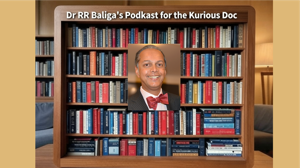


🧠🦠 Why does abdominal pain affect women more? Science offers a cellular answer.
A new Science study uncovers an estrogen-tuned gut pain circuit in which peptide YY–secreting enteroendocrine cells activate serotonin-releasing cells, sensitizing gut sensory nerves—especially in females. Hormones, microbes, and diet converge locally in the colon to amplify visceral pain, offering a biologically grounded explanation for menstrual-cycle variability and female-predominant disorders like irritable bowel syndrome.
📖 Venkataraman et al., Science (Dec 2025)
Precision medicine begins by taking sex seriously.
📚🇩🇰 Søren Kierkegaard (1813–1855): the philosopher of choice, anxiety, and becoming
Kierkegaard argued that the highest human task isn't just knowing the good—it's embodying it: becoming a self through commitment, responsibility, and inwardness. His framing of "existence" as the lived work of becoming helped spark what we now call existentialism. 🧭✨
In health care, his lens feels especially modern: moral distress, burnout, and "decision-fatigue" often intensify when we drift into autopilot—or when we outsource conscience to the "crowd." Kierkegaard's counter is tough-love and oddly hopeful: choose deliberately, live authentically, and let anxiety be a signal of freedom—not a verdict
🧬 When immunity saves—and harms—at the same time
A striking NEJM correspondence reveals that patients receiving immune checkpoint inhibitors often sustain molecularly detectable multiorgan damage—weeks to months before symptoms appear. Using cell-free DNA methylation mapping, investigators show that immune-related adverse events are systemic, not isolated organ toxicities—the visible clinic finding is just the tip of the iceberg 🧊🧬
This work reframes irAEs as a global loss of immune tolerance and opens the door to early, molecular surveillance—particularly relevant for cardio-oncology and precision medicine.
📍 Source: The New England Journal of Medicine, December 2025
#Immunotherapy #CardioOncology #PrecisionMedicine #cfDNA #NEJM #TranslationalScience
🍷⏳ Why Hangovers Get Worse as We Age — Science, Not Sentiment
Ever wondered why the same drink that once sparkled now punishes? A Well Informed piece from The Economist explains how aging physiology—less body water, slower metabolism, disrupted sleep, and toxic metabolites—turns modest indulgence into a morning reckoning. 🧠💤☠️
The takeaway is not abstinence, but wisdom: sip slowly, hydrate deliberately, respect sleep, and never underestimate biology. Aging, like good scholarship, rewards those who read the fine print. 📖🍸
🧬✨ Can we make the ageing immune system young again?
A fascinating Nature study shows that a three-part mRNA cocktail (DFI) can temporarily rejuvenate T cells in aged mice, improving responses to vaccines and cancer immunotherapy—without breaking immune tolerance. By turning the liver into a short-term factory for key immune signals (DLL1, FLT3L, IL-7), the authors demonstrate that immune ageing is modifiable, not fixed.
This elegant work—covered by Heidi Ledford in Nature—opens provocative questions about immune resilience, ageing biology, and the future of mRNA beyond vaccines. 🧠🛡️
📄 Friedrich MJ et al., Nature 2025 | News & Views: Ledford H.
🔗 doi:10.1038/s41586-025-09873-4 | doi:10.1038/d41586-025-04082-5
🧬 Protein Restriction, Aging, and Longevity ⏳
A remarkable new study in Cell shows that moderate protein restriction—especially when started in midlife—can reprogram aging biology across 41 organs, improving metabolic and cardiovascular health. 🫀⚙️
Using deep multi-organ proteomics in mice and human plasma validation, the authors demonstrate benefits mediated through ↓ IGF-1, ↓ mTOR, ↑ AMPK, and activation of brown adipose tissue. Importantly, the data also caution that extreme protein restriction may provoke inflammation, underscoring that moderation matters. ⚠️🎯
A powerful example of how nutrition shapes the biology of aging—organ by organ, pathway by pathway.
📖 Cell (2025)
#Aging #Longevity #ProteinRestriction #MetabolicHealth #CardiovascularHealth #Proteomics #PrecisionNutrition
🧬 Rethinking Neutrophils: From Lone Cells to Living Systems 🧠⚔️
For over a century, neutrophils were seen as short-lived foot soldiers of immunity.
This new Cell review reframes them as something far more interesting: a coordinated, adaptive collective.
✨ Key ideas:
• Short-lived cells, long-term memory
• Two compartments: granulopoietic + mature
• Plastic, circadian, tissue-adaptive behavior
• Major implications for inflammation, cancer, and immunotherapy
A powerful example of how systems thinking can transform classical immunology.
📖 Worth a deep read: The Neutrophil Collective — Cell (2025)
#Immunology #Neutrophils #InnateImmunity #SystemsBiology #CancerImmunology #MedicalEducation #TranslationalScience
⏰🫀 Does the heart care about the time of day? Yes—profoundly.
A new study in the Journal of Experimental Medicine reveals a circadian checkpoint in neutrophils that determines how much damage occurs after myocardial infarction. Morning ischemia triggers more injury, while nighttime CXCL12–CXCR4 signaling reprograms neutrophils, relocating them into the infarct core and sparing healthy myocardium—without impairing antimicrobial defense. 🌙🧬
This work reframes infarct biology from how much ischemia to when it happens and opens the door to chronotherapy for cardiovascular disease. Timing, it seems, is tissue. 🕰️✨
Exploring Hegel's Vision of Progress and Freedom 🌍🔄✨
Reflecting on Georg Wilhelm Friedrich Hegel's remarkable insight that history is a dynamic journey toward greater human freedom. His dialectical lens — the idea that contradictions are not dead ends but engines of development — offers a powerful way to think about institutions, leadership, and change. 🔍💡
From Phenomenology of Spirit to Philosophy of Right, Hegel challenges us to see ourselves as part of a larger unfolding story where reason, community, and ethical life evolve together. His work continues to influence modern political thought, social theory, and the way we understand progress itself. 📚🌱
A timely reminder: growth often emerges through tension, dialogue, and transformation — not avoidance.
#Hegel #Philosophy #GermanIdealism #Leadership #History #Ethics #IntellectualLeadership #Progress
🫀🧬 Cardio-Oncology: where modern cancer cures meet the heart
As cancer survival improves, cardiovascular toxicity has emerged as a defining challenge of our time. From BTK inhibitor–associated atrial fibrillation ⚡, to immune checkpoint inhibitor myocarditis 🔥, to VEGF-driven hypertension 🩸, the heart increasingly pays the price of precision oncology.
This FAQ-driven, clinician-ready Cardio-Oncology resource, grounded in the 2025 ACC Concise Clinical Guidance published in the Journal of the American College of Cardiology (JACC), translates complexity into clarity—highlighting permissive cardiotoxicity, multidisciplinary care 🤝, and practical decision-making that protects both survival and the heart ❤️.
Because in modern medicine, we should never have to choose between curing cancer and caring for the heart.
From the publisher's feed
893 Listeners
3,347 Listeners

19,223 Listeners