
Sign up to save your podcasts
Or

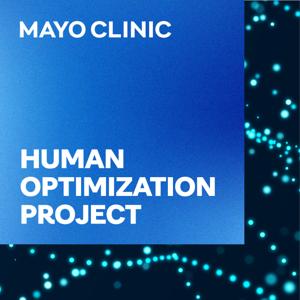

Host: Christopher L. Camp, M.D., Creator & Guide | Mayo Clinic Human Optimization Project
Guest: Kimberly D. Collins M.A., ACC, Owner/Founder, Executive Coach, Enneagram Consultant | Enneagram Reflections
If you don’t first understand yourself, you’ll never be able to understand and interact with the world around you. We’ve talked about the concept of emotional intelligence a lot on the Human Optimization Project, with the four main components being 1) Self-Awareness; 2) Self-Management; 3) Social-Awareness, and 4) Social-Management. Today, we are going to focus on all things related to “Self-Awareness.” Our expert to help us with this is executive coach, Kimberly Collins.
The three big questions we have for her are:
1. What is Self-Awareness, and how does it fit into the bigger picture of “Emotional Intelligence”?
2. Why is true Self-Awareness rare, and what modern traps keep us from understanding ourselves?
3. What steps can one take to start improving their Self-Awareness in a meaningful way?
How to start a Mayo Clinic Human Optimization Project “Pod-Club”:
Discussion Questions for this Episode:
Kimberly Collins defines self-awareness as "conscious knowledge of our inner workings for the purpose of managing ourselves better and understanding ourselves better." How did you think about self-awareness before listening to this episode? How do you think about it now? What specific "inner workings" (fears, desires, values, emotions) do you feel you understand well, and which would you like to better understand?
The podcast emphasizes that self-awareness is the foundational cornerstone for all other aspects of emotional intelligence. How do you see a lack of self-awareness potentially hindering your self-management, social awareness, or social management in your daily life?
Kimberly highlights that only 36% of people worldwide are considered “highly emotionally intelligent.” Does this statistic surprise you? What are some strategies you want to use to strengthen your own emotional intelligence?
The discussion identifies emotional triggers as "hotbeds of fantastic information" about ourselves, often linked to core fears (e.g., not feeling loved, belonging, or safe). Reflect for a moment: identify one of your emotional triggers. What core fear might it be protecting you from?
The podcast explores cognitive biases like the fundamental attribution error ("if I mess up, it's your fault") and the Dunning-Kruger effect (overestimating our own abilities). How might these biases be subtly impacting your self-perception?
Kimberly suggests that "time scarcity" is often a perceived barrier, and that self-awareness primarily requires "intention, not necessarily time." What is one small, intentional moment in your day (e.g., commute, a few minutes before a meeting) where you could practice pausing and noticing your inner state?
The episode discusses the ego's role in distracting us from self-awareness through defensiveness, denial, or comparison. How do you observe your ego playing these "games" in your own life? With your group, identify one or two strategies to compassionately acknowledge these inner thoughts without letting them derail your self-awareness journey.
The call to action encourages reflecting on "Why did I say what I say? Why did I do what I did? And why did I feel how I felt?" without judgment. Think about a recent interaction. Reflect on your experience by considering these questions. What new insights did you gain by approaching it as an "emotional scientist" rather than a judge? What is one thing you will do differently next time?
Learn more about the Human Optimization Project at: https://ce.mayo.edu/optimize
 View all episodes
 By Mayo Clinic School of Continuous Professional Development

4.6
2828 ratings
Host: Christopher L. Camp, M.D., Creator & Guide | Mayo Clinic Human Optimization Project
Guest: Kimberly D. Collins M.A., ACC, Owner/Founder, Executive Coach, Enneagram Consultant | Enneagram Reflections
If you don’t first understand yourself, you’ll never be able to understand and interact with the world around you. We’ve talked about the concept of emotional intelligence a lot on the Human Optimization Project, with the four main components being 1) Self-Awareness; 2) Self-Management; 3) Social-Awareness, and 4) Social-Management. Today, we are going to focus on all things related to “Self-Awareness.” Our expert to help us with this is executive coach, Kimberly Collins.
The three big questions we have for her are:
1. What is Self-Awareness, and how does it fit into the bigger picture of “Emotional Intelligence”?
2. Why is true Self-Awareness rare, and what modern traps keep us from understanding ourselves?
3. What steps can one take to start improving their Self-Awareness in a meaningful way?
How to start a Mayo Clinic Human Optimization Project “Pod-Club”:
Discussion Questions for this Episode:
Kimberly Collins defines self-awareness as "conscious knowledge of our inner workings for the purpose of managing ourselves better and understanding ourselves better." How did you think about self-awareness before listening to this episode? How do you think about it now? What specific "inner workings" (fears, desires, values, emotions) do you feel you understand well, and which would you like to better understand?
The podcast emphasizes that self-awareness is the foundational cornerstone for all other aspects of emotional intelligence. How do you see a lack of self-awareness potentially hindering your self-management, social awareness, or social management in your daily life?
Kimberly highlights that only 36% of people worldwide are considered “highly emotionally intelligent.” Does this statistic surprise you? What are some strategies you want to use to strengthen your own emotional intelligence?
The discussion identifies emotional triggers as "hotbeds of fantastic information" about ourselves, often linked to core fears (e.g., not feeling loved, belonging, or safe). Reflect for a moment: identify one of your emotional triggers. What core fear might it be protecting you from?
The podcast explores cognitive biases like the fundamental attribution error ("if I mess up, it's your fault") and the Dunning-Kruger effect (overestimating our own abilities). How might these biases be subtly impacting your self-perception?
Kimberly suggests that "time scarcity" is often a perceived barrier, and that self-awareness primarily requires "intention, not necessarily time." What is one small, intentional moment in your day (e.g., commute, a few minutes before a meeting) where you could practice pausing and noticing your inner state?
The episode discusses the ego's role in distracting us from self-awareness through defensiveness, denial, or comparison. How do you observe your ego playing these "games" in your own life? With your group, identify one or two strategies to compassionately acknowledge these inner thoughts without letting them derail your self-awareness journey.
The call to action encourages reflecting on "Why did I say what I say? Why did I do what I did? And why did I feel how I felt?" without judgment. Think about a recent interaction. Reflect on your experience by considering these questions. What new insights did you gain by approaching it as an "emotional scientist" rather than a judge? What is one thing you will do differently next time?
Learn more about the Human Optimization Project at: https://ce.mayo.edu/optimize

43,898 Listeners

32,100 Listeners
39,153 Listeners
12,912 Listeners

4,345 Listeners

1,657 Listeners

111,948 Listeners

56,508 Listeners
1,152 Listeners

7,995 Listeners
4,802 Listeners

6,089 Listeners

5,530 Listeners

29,207 Listeners

11,157 Listeners