
Sign up to save your podcasts
Or

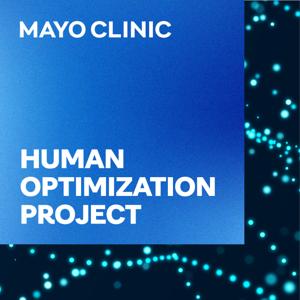

Host: Christopher L. Camp, M.D., Creator & Guide | Mayo Clinic Human Optimization Project
Guest: Chrissy Holm Haider, Ed.D., MSc, MS, LPCC, CMPC, Athletic Counselor, Certified Mental Performance Consultant | Premier Sport Psychology
We all need to improve our emotional intelligence, and one of the main pillars of that is learning to manage ourselves. We’ve said before that first step of Emotional Intelligence is “Understanding Ourselves.” After that, the next step is “Managing Ourselves.” This concept of self-management is critical to improving our emotional intelligence and interacting with the world. Our expert here to help us with this today is Dr. Chrissy Holm Haider.
The three big questions we have for her are:
1. What is “Self-Management” and how does it fit into “Emotional Intelligence?”
2. What makes self-management so challenging in our modern lives?
3. What are the actual steps I can take to finally master my ability to manage myself?
How to start a Mayo Clinic Human Optimization Project “Pod-Club”:
Discussion Questions for this Episode:
Chrissy Holm Haider defines self-management as the "action piece" that follows self-awareness, emphasizing using emotions to guide behavior rather than blocking them out. How often do you consciously use your emotions as signals to inform your actions, rather than trying to suppress or ignore them?
The podcast distinguishes self-management from rigid discipline, highlighting flexibility and adaptability. Think about a time when a rigid approach to a goal backfired. With your pod club members, discuss alternate approaches- what are some more flexible, self-managed approaches that may have yielded a better outcome?
Chrissy notes that 85% of our daily thoughts are negative and repetitive, rooted in survival. Have you observed this negativity bias impacting your daily life? Identify one small, intentional step you will take to prevent it from affecting your actions this week.
The discussion links the modern struggle with self-management to a lack of genuine social connection, despite increased electronic connectivity. How do you prioritize and cultivate real-life, face-to-face interactions to support your emotional well-being and self-management? What is one additional way that you and your pod club teammates agree is a feasible approach for you to try as a group?
Chrissy introduces the "awareness, acceptance, action" framework for self-management. When faced with strong emotions, which of these three steps do you find most challenging? Select one small practice to help you strengthen it.
The "wheel of emotions" is suggested as a tool to expand emotional vocabulary beyond "happy, sad, mad." This week, commit to being more precise in naming your feelings to enhance your ability to manage them and to communicate your needs to those around you!
The podcast emphasizes the mind-body connection in emotional regulation, suggesting practices like slow breathing and increasing your "stress threshold" through sleep, nutrition, and movement. Which of these physical strategies do you find most effective in managing your emotional state?
The challenge encourages listeners to practice the "awareness, acceptance, action" framework by pausing and reflecting on their emotions during a daily routine. What specific routine (e.g., commute, brushing teeth) could you integrate this practice into this week? What do you hope to learn about your emotional landscape?
Learn more about the Human Optimization Project at: https://ce.mayo.edu/optimize
 View all episodes
 By Mayo Clinic School of Continuous Professional Development

4.6
2828 ratings
Host: Christopher L. Camp, M.D., Creator & Guide | Mayo Clinic Human Optimization Project
Guest: Chrissy Holm Haider, Ed.D., MSc, MS, LPCC, CMPC, Athletic Counselor, Certified Mental Performance Consultant | Premier Sport Psychology
We all need to improve our emotional intelligence, and one of the main pillars of that is learning to manage ourselves. We’ve said before that first step of Emotional Intelligence is “Understanding Ourselves.” After that, the next step is “Managing Ourselves.” This concept of self-management is critical to improving our emotional intelligence and interacting with the world. Our expert here to help us with this today is Dr. Chrissy Holm Haider.
The three big questions we have for her are:
1. What is “Self-Management” and how does it fit into “Emotional Intelligence?”
2. What makes self-management so challenging in our modern lives?
3. What are the actual steps I can take to finally master my ability to manage myself?
How to start a Mayo Clinic Human Optimization Project “Pod-Club”:
Discussion Questions for this Episode:
Chrissy Holm Haider defines self-management as the "action piece" that follows self-awareness, emphasizing using emotions to guide behavior rather than blocking them out. How often do you consciously use your emotions as signals to inform your actions, rather than trying to suppress or ignore them?
The podcast distinguishes self-management from rigid discipline, highlighting flexibility and adaptability. Think about a time when a rigid approach to a goal backfired. With your pod club members, discuss alternate approaches- what are some more flexible, self-managed approaches that may have yielded a better outcome?
Chrissy notes that 85% of our daily thoughts are negative and repetitive, rooted in survival. Have you observed this negativity bias impacting your daily life? Identify one small, intentional step you will take to prevent it from affecting your actions this week.
The discussion links the modern struggle with self-management to a lack of genuine social connection, despite increased electronic connectivity. How do you prioritize and cultivate real-life, face-to-face interactions to support your emotional well-being and self-management? What is one additional way that you and your pod club teammates agree is a feasible approach for you to try as a group?
Chrissy introduces the "awareness, acceptance, action" framework for self-management. When faced with strong emotions, which of these three steps do you find most challenging? Select one small practice to help you strengthen it.
The "wheel of emotions" is suggested as a tool to expand emotional vocabulary beyond "happy, sad, mad." This week, commit to being more precise in naming your feelings to enhance your ability to manage them and to communicate your needs to those around you!
The podcast emphasizes the mind-body connection in emotional regulation, suggesting practices like slow breathing and increasing your "stress threshold" through sleep, nutrition, and movement. Which of these physical strategies do you find most effective in managing your emotional state?
The challenge encourages listeners to practice the "awareness, acceptance, action" framework by pausing and reflecting on their emotions during a daily routine. What specific routine (e.g., commute, brushing teeth) could you integrate this practice into this week? What do you hope to learn about your emotional landscape?
Learn more about the Human Optimization Project at: https://ce.mayo.edu/optimize

43,898 Listeners

32,100 Listeners
39,153 Listeners
12,912 Listeners

4,345 Listeners

1,657 Listeners

111,948 Listeners

56,508 Listeners

1,152 Listeners

7,995 Listeners
4,802 Listeners

6,089 Listeners

5,530 Listeners

29,207 Listeners

11,157 Listeners