
Sign up to save your podcasts
Or

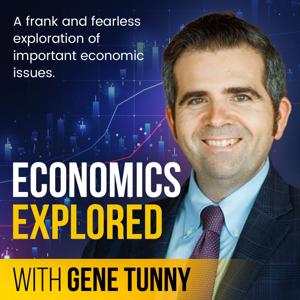


What happens when a town runs out of money? During the Franco-Prussian War of 1870, the French town of Sedan faced an economic crisis as gold and silver coins disappeared from circulation. Yet, as Émile Zola recounts in his novel The Debacle, an ingenious solution helped keep commerce alive: locally issued emergency paper money. Show host Gene Tunny explores this remarkable story and what it reveals about the nature of money, the importance of trust, and the ability of communities to improvise when conventional financial systems break down.
Gene would love to hear your thoughts on this episode. You can email him via [email protected].
Takeaways from this episode1. Money has three essential functions. It serves as a medium of exchange, a unit of account, and a store of value. Different objects have performed these roles throughout history, from cattle and shells to gold, silver and paper currency.
2. War can disrupt the circulation of money. During the Franco-Prussian War, hoarding, disrupted banking operations and the movement of precious metals contributed to severe shortages of coinage in towns such as Sedan.
3. Emergency money can keep local economies functioning. Locally issued paper notes can provide a temporary means of payment when conventional currency becomes scarce, provided people have confidence in the issuer.
4. The money supply is not entirely under central bank control. Nicholas Kaldor's critique of monetarism highlights how banks, businesses and households can develop alternative payment and credit arrangements when cash is restricted.
5. Trust is fundamental to any monetary system. Whether money consists of gold coins, emergency paper notes or modern fiat currency, its usefulness ultimately depends on people believing it will be accepted in exchange.
Timestamps00:06 - Introduction: Émile Zola, The Debacle, and the nature of money
01:45 - The Battle of Sedan and the collapse of Napoleon III's empire
06:48 - Zola's account of emergency paper money in Sedan
09:30 - What does the story tell us about money?
10:00 - Sponsor message: Lumo Coffee
12:46 - What is money? From cattle and shells to cigarettes and stone discs
15:30 - Money's three functions: exchange, accounting and saving
20:30 - Why gold and silver coins disappear during crises
24:12 - How war disrupted Sedan's monetary system
27:30 - Necessity money: how local paper notes could keep trade going
29:59 - Trust and the acceptance of emergency currency
31:00 - Nicholas Kaldor's critique of monetarism
33:30 - How people find substitutes when cash becomes scarce
35:18 - Historical examples of necessity money
38:00 - Local currencies, including the Bristol Pound and Swiss WIR
39:00 - What emergency money teaches us about trust
40:26 - Could emergency money work in a future crisis?
42:30 - The future of fiat money and concluding reflections
Links relevant to the conversationÉmile Zola, The Debacle:
https://www.amazon.com.au/Debacle-1870-71-Classics-%C3%89mile-Zola-ebook/dp/B00358VHSI
BNP Paribas, history of necessity money:
https://histoire.bnpparibas/en/a-necessity-note-of-1871-from-comptoir-descompte-de-paris/
Les Echos, historical account of the Bank of France's wartime evacuation. The episode discusses an account of gold, banknotes and valuables being transported to safety in 1870:
https://www.lesechos.fr/finance-marches/banque-assurances/stocks-dor-6-cachettes-de-la-banque-de-france-1154241
Nicholas Kaldor’ “The New Monetarism”:
https://www.scribd.com/document/516900044/Kaldor
Lumo Coffee promotion10% off Lumo Coffee’s Seriously Healthy Organic Coffee.
Website: https://www.lumocoffee.com/10EXPLORED
Promo code: 10EXPLORED
Australia's latest Intergenerational Report assumes productivity growth will rebound significantly over coming decades, with AI potentially playing a major role. Is that reasonable? Professor Chris Berg of RMIT joins Gene Tunny and John Humphreys for a wide-ranging discussion of AI's economic potential and risks. They explore lessons from the computer and internet revolutions, AI's huge energy requirements, whether its benefits will appear in GDP, the cybersecurity threat from autonomous agents, and why competition may be a better safeguard than heavy-handed regulation.
Gene would love to hear your thoughts on this episode. You can email him via [email protected].
Takeaways from this episodeFull ATA livestream - Albanese bets everything on AI || #52:
https://www.youtube.com/live/Knec2ULWCfA?si=gw7fpzRJo7kk1Kvl
Chris Berg’s Substack:
https://chrisbergaus.substack.com/
Lumo Coffee promotion10% off Lumo Coffee’s Seriously Healthy Organic Coffee.
Website: https://www.lumocoffee.com/10EXPLORED
Promo code: 10EXPLORED
When the award-winning Springfield café Screamin’ Beans announced its closure, Gene Tunny saw it as a symptom of a bigger problem: wage and regulatory costs rising faster than many small businesses can absorb. In this episode, Gene looks at a landmark Australian Fair Work Commission decision that could reshape pay for gig economy delivery drivers, and shares a conversation with John Humphreys of the Australian Taxpayers’ Alliance on why the net benefit of a minimum wage rise to a worker is often very different from the gross headline number. Drawing on Thomas Sowell's concept of the "zero-sum fallacy" and a recent dispute at BHP's Port Hedland, Gene makes the case for weighing the trade-offs of labour market regulation rather than assuming good intentions guarantee good outcomes.
Gene would love to hear your thoughts on this episode. You can email him via [email protected].
Australian Taxpayers’ Alliance livestream, Thursday 9 July, “Greens set to keep balance of power || #49”:
https://www.youtube.com/live/_snxV9CzvRk?si=DXVtaaXhu3cqL8O7
Gene Tunny's CIS paper: Closing Opportunities, Not Closing Loopholes:
https://www.cis.org.au/publication/closing-opportunities-not-loopholes/
Thomas Sowell’s Economic Facts and Fallacies:
https://www.hachettebookgroup.com/titles/thomas-sowell/economic-facts-and-fallacies/9780465022038/?lens=basic-books
CIS’s Michael Stutchbury: “We’re punching ourselves in the face”:
https://www.cis.org.au/commentary/opinion/were-punching-ourselves-in-the-face/
10% of Lumo Coffee’s Seriously Healthy Organic Coffee.
Website: https://www.lumocoffee.com/10EXPLORED
Promo code: 10EXPLORED
Most tax debates focus on the what: rates, base, and who pays. This episode is about the how: the process by which economic policy gets made. Drawing on his time in the Australian Treasury, host Gene Tunny argues that the latest changes to capital gains tax and negative gearing reflect a breakdown in good policymaking. They were announced on budget night without the consultation, published modelling, or public mandate that major reform deserves. As a contrast, Gene revisits the Howard government's GST process of the late 1990s: a detailed white paper, published modelling, and a policy taken to an election for a fresh mandate. With clips from a recent Death and Taxes livestream featuring co-host John Humphreys and guest Derek Francis, the episode asks a question that reaches well beyond Australia: what does good policy process look like, and what does it cost us when governments skip it?
Gene would love to hear your thoughts on this episode. You can email him via [email protected].
Australian Taxpayers’ Alliance livestream, Thursday 25 June, “Labor's new tax disaster, with Derek Francis || #47”:
https://www.youtube.com/live/vqz_hEVyg70?si=F8DS2GxdUz_-PkmJ
Previous episode on capital gains tax, “Taxing Capital More in a Productivity Slump? Perverse Policy in Australia”:
https://economics-explained.simplecast.com/episodes/taxing-capital-more-in-a-productivity-slump-perverse-policy-in-australia
Howard Government White Paper on “A New Tax System”:
https://treasury.gov.au/sites/default/files/2019-03/Whitepaper.pdf
10% of Lumo Coffee’s Seriously Healthy Organic Coffee.
Website: https://www.lumocoffee.com/10EXPLORED
Promo code: 10EXPLORED
Housing affordability, congestion and rising living costs are putting pressure on Australia's major cities. Could stronger regional development provide part of the solution? Gene Tunny shares highlights from a recent discussion with Nationals leader Senator Matt Canavan on his "Hyper Australia" agenda. They explore regional infrastructure, public investment, economic concentration, GST distribution and the case for decentralisation, while asking an important economic question: do regional development projects pass the cost-benefit test?
Gene would love to hear your thoughts on this episode. You can email him via [email protected].
Australian Taxpayers’ Alliance livestream, Thursday 18 June, “Future of the Nationals, with Matt Canavan || #46”:
https://www.youtube.com/live/D0Xpho1mxsk?si=1IWFiDOKZpTIdjNy
Senator Canavan’s website:
https://mattcanavan.com.au/
10% of Lumo Coffee’s Seriously Healthy Organic Coffee.
Website: https://www.lumocoffee.com/10EXPLORED
Promo code: 10EXPLORED
Australia has endured nearly a decade of weak productivity growth, and living standards are under pressure. In this episode, Gene Tunny and John Humphreys explore the common thread connecting several major economic debates: investment and incentives. They discuss Australia's productivity slump, the Federal Government’s proposed capital gains tax changes, Brisbane’s Olympics infrastructure plans, and the challenges facing the National Disability Insurance Scheme (NDIS). Along the way, they explain why economists place so much emphasis on incentives and what current policy settings could mean for Australia's future prosperity.
Gene would love to hear your thoughts on this episode. You can email him via [email protected].
Australian Taxpayers’ Alliance livestream, Thursday 11 June, “Tax blunders & shrinking economy || #45”:
https://www.youtube.com/live/K1Fsnjeg3mM?si=jKrxraJJlT0DzLfd
Richard Holden’s opinion piece “There is no economic case for taxing work and investment the same” (paywalled):
https://www.afr.com/policy/economy/there-is-no-economic-case-for-taxing-work-and-investment-the-same-20260528-p601ke
10% of Lumo Coffee’s Seriously Healthy Organic Coffee.
Website: https://www.lumocoffee.com/10EXPLORED
Promo code: 10EXPLORED
Debt and deficits used to be political dealbreakers. So why don’t they seem to matter anymore? In this episode, Gene Tunny explores the concept of fiscal illusion with John Humphreys and Professor Sinclair Davidson. They examine whether Australia is “sleepwalking” into a more precarious fiscal position, and what could happen if a crisis hits. A thought-provoking discussion on debt, accountability, and economic literacy.
Sinclair Davidson is Professor of Institutional Economics in the School of Economics, Finance and Marketing at RMIT University. John Humphreys is Chief Economist at the Australian Taxpayers’ Alliance.
Gene would love to hear your thoughts on this episode. You can email him via [email protected].
Australian Taxpayers’ Alliance livestream, Thursday 23 April, “New Taxes and Rising Debt”:
https://www.youtube.com/live/6sc7wU8vKpo?si=QG4tmu8ntyb6dspL
10% of Lumo Coffee’s Seriously Healthy Organic Coffee.
Website: https://www.lumocoffee.com/10EXPLORED
Promo code: 10EXPLORED
Free trade has long been a cornerstone of economic thinking, but is it still fit for purpose in a more dangerous and uncertain world? Gene Tunny is joined by Dan Ryan and John Humphreys to debate tariffs, industrial policy, and economic resilience. They explore whether Australia has gone too far in opening its economy, the risks of fragile global supply chains, and the perceived trade-offs between efficiency and national security.
Dan Ryan is Executive Director of the National Conservative Institute of Australia, and John Humphreys is Chief Economist at the Australian Taxpayers’ Alliance.
Gene would love to hear your thoughts on this episode. You can email him via [email protected].
Australian Taxpayers’ Alliance livestream, Thursday 16 April:
https://www.youtube.com/live/fyukScFysDs?si=FwDjygolodDUQVRz
10% of Lumo Coffee’s Seriously Healthy Organic Coffee.
Website: https://www.lumocoffee.com/10EXPLORED
Promo code: 10EXPLORED
What happens when geopolitical tensions collide with domestic economic pressures? In this episode, Gene Tunny is joined by John Humphreys and Tom Switzer to unpack the economic fallout from escalating tensions with Iran. The conversation then turns to Australia’s housing affordability crisis—examining whether government policies, population growth, or supply constraints are to blame.
Gene would love to hear your thoughts on this episode. You can email him via [email protected].
Australian Taxpayers’ Alliance livestream, Thursday 9 April:
https://www.youtube.com/live/hoRKqJhBhUQ?si=_1uHKUG6zCO7vBP1
Tom Switzer’s show, Switzerland:
https://www.youtube.com/@TomSwitzerMedia
10% of Lumo Coffee’s Seriously Healthy Organic Coffee.
Website: https://www.lumocoffee.com/10EXPLORED
Promo code: 10EXPLORED
Are fears of fuel shortages in Australia overblown—or are we underestimating the risks? Gene Tunny is joined by Dr John Humphreys and farmer Peter Rothwell to explore how rising diesel prices, fertiliser shortages, and supply chain stress could ripple through the economy. From supermarket prices to farm viability, this episode breaks down how a global energy shock could hit households and businesses—and whether markets can cope.
Gene would love to hear your thoughts on this episode. You can email him via [email protected].
Dr John Humphreys is Chief Economist at the Australian Taxpayers’ Alliance and an experienced economist with a background spanning academia, government, consulting and think tanks, including roles at the Australian Treasury, the Centre for International Economics and the Centre for Independent Studies. He holds a PhD in economics from the University of Queensland, where he has lectured in advanced microeconomics, and has also taught in Cambodia, where he founded an education charity and research institute. John is the founder of the Australian Libertarian Society and the Liberal Democrats (Libertarian Party), and has published widely on tax, welfare, public finance and international trade. He was awarded a knighthood in the Cambodian Royal Order of Moniseraphon for his contributions to education.
Peter Rothwell is a farmer and former Liberal Democrats candidate based in regional New South Wales. He has contested the federal seat of Parkes, covering much of western NSW including Dubbo and surrounding areas. Peter describes himself as having grown up on the land and as an “old school Liberal,” entering politics out of concern about national economic challenges including high government debt, inflation and rising interest rates.
ATA livestream “Real situation in rural Australia”:
https://www.youtube.com/live/MczcHEBXXIY?si=cLVJ3EWjserUeXNU
Charts that Gene talks about:
https://drive.google.com/file/d/1siZwkNV7QLF1PXdeg6mZJt_uomZuRpZN/view?usp=sharing
10% of Lumo Coffee’s Seriously Healthy Organic Coffee.
Website: https://www.lumocoffee.com/10EXPLORED
Promo code: 10EXPLORED
From the publisher's feed

31,924 Listeners

272 Listeners
20 Listeners
88 Listeners

150 Listeners
61 Listeners

26 Listeners
152 Listeners
15,606 Listeners
46 Listeners
36 Listeners

2,457 Listeners
21 Listeners

29 Listeners
140 Listeners