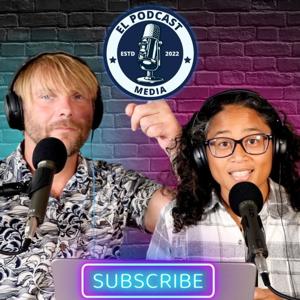
El Podcast
Download on the App Store

El Podcast episodes

  • E150: Why AI Isn’t the Future We Were Sold – Dr. Jeff Funk Explains

    A deep dive with Dr. Jeffrey Funk on AI hype, startup bubbles, Gen Z’s job struggles, and the broken higher education system.

    Guest Bio

    Dr. Jeffrey Funk is a retired technology economist and former university professor in Japan and Singapore. He specializes in innovation, startup bubbles, and the economic effects of emerging technologies, and is the author of Unicorns, Hype, and Bubbles: A Guide to Spotting, Avoiding, and Exploiting Bubbles in Tech.

    Topics Discussed
    • The hype and financial unsustainability of OpenAI, Anthropic, and cloud providers
    • Microsoft and Anthropic’s pricing strategies and looming AI bubble collapse
    • Gen Z job market struggles, declining college enrollment, and university failures
    • AI “boosters vs. doomers” vs. skeptics on the “edge of the coin”
    • AI hype, fraud, and legal risks of “AI washing”
    • Why AI fails at coding, medicine, and self-driving cars
    • Zero interest rate policy (ZIRP) and its role in fueling startup and AI bubbles
    • The dead internet theory, bots, and the collapse of online authenticity
    • Higher education’s decline, misplaced incentives, and need for reform
    Main Points
    • AI hype is financially unsustainable—companies like OpenAI and Anthropic are pricing their products below cost, subsidizing massive cloud bills.
    • College graduates, especially Gen Z, are struggling in the job market due to declining education quality, reliance on ChatGPT, and employer skepticism.
    • The AI “booster vs. doomer” debate misses the point; most real-world applications are limited, overhyped, and decades away from true impact.
    • Many supposed “AI breakthroughs” (self-driving cars, AI doctors, coding copilots) hide human intervention or show slower results than advertised.
    • Universities focus on publishing papers rather than solving problems, producing entitled graduates unprepared for real-world work.
    • The internet itself is degrading, with bots, fake engagement, and algorithm manipulation creating a hollow online experience.
    • The future belongs to those who solve problems, not those who hype technology.
    Top 3 Quotes
    • “Altman wants to talk about how everybody uses it—well, everybody uses it because he’s pricing it below cost.”
    • “AI isn’t replacing coders; it’s making them 19% slower because debugging AI’s mistakes takes longer than fixing your own.”
    • “Don’t just talk about problems—solve them. If you focus on solving problems, you will succeed, because most people aren’t.”

    🎙 The Pod is hosted by Jesse Wright
    💬 For guest suggestions, questions, or media inquiries, reach out at https://elpodcast.media/
    📬 Never miss an episode – subscribe and follow wherever you get your podcasts.
    ⭐️ If you enjoyed this episode, please rate and review the show. It helps others find us.

    Thanks for listening!

    1 hr 12 min
  • E149: Mass Incarceration Is a Myth — The Shocking Truth EXPOSED

    An in-depth discussion with legal scholar Jeffrey Seaman debunking popular myths about mass incarceration, examining crime clearance rates, sentencing trends, and exploring justice-focused reforms.

    Guest bio:
    Jeffrey Seaman is a Levy Scholar at the University of Pennsylvania Law School, researcher, and co-author of Confronting Failures of Justice. His work focuses on criminal justice policy, sentencing reform, and aligning the system with community standards of justice.

    Topics discussed:

    • Myths vs. facts about U.S. incarceration rates
    • The small role of low-level drug offenders in prison populations
    • Declining crime clearance rates and their public safety impact
    • Sentencing trends since the 1960s and public opinion on appropriate punishment
    • Repeat offenders, leniency, and juvenile justice failures
    • International comparisons and moral credibility of the law
    • Potential of “electronic prison” as a cost-effective alternative to incarceration
    • Balancing defendants’ rights with victims’ rights
    • Political shifts in crime policy and public opinion
    • Historical parallels with Prohibition and lessons for modern reform

    Three best quotes:

    • “The average offender doesn’t feel deterred until they perceive a 30% chance of being caught—and for most crimes, we’re nowhere near that.”
    • “Most people in prison today have had five, ten, even fifteen prior chances; the idea that they’re first-time offenders is a myth.”
    • “If the law gets out of sync with what the community believes is just, you lose moral credibility—and with it, compliance, cooperation, and safety.”

    🎙 The Pod is hosted by Jesse Wright
    💬 For guest suggestions, questions, or media inquiries, reach out at https://elpodcast.media/
    📬 Never miss an episode – subscribe and follow wherever you get your podcasts.
    ⭐️ If you enjoyed this episode, please rate and review the show. It helps others find us.

    Thanks for listening!

    54 min
  • E148: From Student-Athlete to Influencer-Athlete: The Future of College Sports

    Graham Hillard, editor at the James G. Martin Center for Academic Renewal, discusses the rapid professionalization of college sports under NIL, the legal chaos reshaping athletics, and the uncertain future of the NCAA’s role.

    Guest bio:
    Graham Hillard is the editor at the James G. Martin Center for Academic Renewal and a contributing writer for Washington Examiner magazine. He writes on higher education, athletics, and public policy, with a focus on costs, governance, and legal trends.

    Topics discussed:

    • NIL (Name, Image, Likeness) payments and the House v. NCAA settlement
    • Professionalization of college football and men’s basketball
    • Antitrust rulings (NCAA v. Alston) and their ripple effects
    • Potential spinoffs of athletic programs into for-profit entities (e.g., Kentucky model)
    • Title IX implications for revenue sharing
    • Economic sustainability of non-revenue sports
    • The growing role of courts in regulating college athletics
    • Fan experience in the NIL era
    • Potential super leagues and conference realignment
    • Employee status for athletes and possible collective bargaining
    • Donor influence and university politics in athletic decisions

    Main points:

    • College football and men’s basketball are moving toward an NFL-style salary cap model, with NIL and direct university payments legalizing player compensation.
    • The NCAA’s authority is eroding, and many governance questions are now being decided in the courts through high-profile lawsuits.
    • Only a small percentage of athletes will significantly benefit from NIL, while most may lose the scholarship-based perks they previously enjoyed.
    • Title IX could require revenue-sharing with women’s sports, creating complex financial and recruiting implications.
    • Schools may eventually split: a “super league” for money sports, and an amateur model for others.

    Top 3 quotes:

    • “College football has to start where the NFL was in 1930—none of the business rules are in place yet, and it’s the wild west out there.”
    • “We just ruined the whole thing to make 1,000 eighteen-year-olds millionaires, and it wasn’t worth it.”
    • “If we’re going to treat high-dollar college athletes as professionals, then they have to honor their contracts—this fast-and-loose system is not tenable.”

    🎙 The Pod is hosted by Jesse Wright
    💬 For guest suggestions, questions, or media inquiries, reach out at https://elpodcast.media/
    📬 Never miss an episode – subscribe and follow wherever you get your podcasts.
    ⭐️ If you enjoyed this episode, please rate and review the show. It helps others find us.

    Thanks for listening!

    1 hr 19 min
  • E147: Let Colleges Fail! 84-Year-Old Professor Exposes the Truth

    Economist Richard Vedder argues that U.S. colleges are bloated, inefficient, and increasingly out of touch with students and the job market. He explains why creative destruction is necessary—and inevitable—in higher education.

    👤 Guest Bio

    Richard Vedder is Professor of Economics Emeritus at Ohio University, Director of the Center for College Affordability and Productivity, Senior Fellow at the Independent Institute, and author of Let Colleges Fail: The Power of Creative Destruction in Higher Education. He has taught since 1963 and is one of the most prominent critics of administrative bloat and inefficiency in academia.

    🎙️ Topics Discussed
    • Declining college enrollment and public trust
    • Administrative bloat and faculty workload
    • The rise of useless degrees and “make-work” programs
    • Adjunctification and the academic underclass
    • The sorting function of college (and its failure)
    • Alternatives to traditional degrees
    • Creative destruction in higher ed
    • AI’s impact on the knowledge economy and higher education
    • How higher ed became disconnected from market forces and students
    • Ideas for reform: 3-year degrees, college equivalency exams, credit portability
    📌 Main Points
    • Enrollment is dropping for the first time in modern U.S. history, even as the population grows—reflecting broad disenchantment with higher education.
    • Administrative bloat is one of the most destructive trends: some universities now employ more administrators than faculty.
    • Adjunctification has created an academic underclass: a two-tier system where elite tenured professors publish unread papers while low-paid adjuncts teach most students.
    • College no longer sorts talent effectively—grade inflation and credential inflation make it harder for employers to assess student value.
    • AI is disrupting white-collar work, challenging the basic rationale for many college degrees.
    • Solutions include shorter degree programs, reduction of admin staff, greater use of technology, modular degrees, and creative destruction through institutional failure.
    💬 Top 3 Quotes
    • “Universities are in the knowledge business—but the one thing they don’t want you to know is what they’re actually doing.”
    • “There are more administrators in diversity, equity, and inclusion today at some universities than there are history professors.”
    • “We used to replace muscle with machines. Now we’re replacing brains—and that should terrify the higher ed establishment.”

    🎙 The Pod is hosted by Jesse Wright
    💬 For guest suggestions, questions, or media inquiries, reach out at https://elpodcast.media/
    📬 Never miss an episode – subscribe and follow wherever you get your podcasts.
    ⭐️ If you enjoyed this episode, please rate and review the show. It helps others find us.

    Thanks for listening!

    58 min
  • E146: Can Dementia Actually Be Reversed? Neurologist Explains

    Neurologist Dr. Robert P. Friedland discusses how lifestyle choices influence aging and Alzheimer's risk.

    Guest Bio:
    Dr. Robert P. Friedland is a neurologist at the University of Louisville, specializing in Alzheimer's research, brain health, and aging. He is the author of Unaging: The Four Factors That Impact How You Age.

    Topics Discussed:

    • Alzheimer's disease
    • Dementia and polypharmacy
    • Cognitive, physical, psychological, and social reserves
    • Lifestyle factors influencing brain health
    • Genetic testing and Alzheimer's risk
    • Aging, longevity, and evolution
    • Social connectedness and aging

    Main Points:

    • Up to 20% of dementia cases could be reversible, often linked to polypharmacy or treatable conditions.
    • Aging well involves optimizing four reserve factors: cognitive, physical, psychological, and social.
    • Lifestyle changes, including diet, exercise, and social engagement, can significantly reduce Alzheimer's risk.
    • Genetic predispositions don’t guarantee Alzheimer's; lifestyle choices play a larger role.
    • Alzheimer's incidence is declining proportionally due to improved lifestyle habits despite an aging population.
    • Social connectedness and maintaining purpose dramatically impact longevity and cognitive health.
    • Human bodies are not evolutionarily optimized for extreme old age; longevity is a modern opportunity.

    Top 3 Quotes:

    • “Aging itself is not inevitable...getting old is an opportunity denied to many.”
    • “It matters what we do...our lifestyle factors significantly influence the risk of cognitive impairment.”
    • “Social activity and psychological resilience are just as crucial as physical and cognitive health in preventing Alzheimer's.”

    Disclaimer: This podcast is for informational purposes only and does not constitute medical advice; always consult a healthcare professional for personal medical guidance

    🎙 The Pod is hosted by Jesse Wright
    💬 For guest suggestions, questions, or media inquiries, reach out at https://elpodcast.media/
    📬 Never miss an episode – subscribe and follow wherever you get your podcasts.
    ⭐️ If you enjoyed this episode, please rate and review the show. It helps others find us.

    Thanks for listening!

    56 min
  • E145: How Survivor Explains Office Politics — Former Marlins President David Samson Explains

    Former Marlins president and Survivor contestant David Samson breaks down how the game mirrors office politics, alliances, and power dynamics in everyday life and the workplace.

    👤 Guest Bio:
    David Samson is the former president of the Miami Marlins (2002–2017) and a contestant on Survivor: Cagayan (Season 28), where he was the first person voted out. He's now the host of the daily podcast Nothing Personal with David Samson, a regular MLB analyst on CBS Sports, and a frequent guest on The Dan Le Batard Show and Pablo Torre Finds Out.

    🧩 Topics Discussed:

    • Survivor as a metaphor for office politics
    • Building alliances in corporate life
    • The burden and benefits of having a target on your back
    • Recognizing ceilings and "goats" in workplace hierarchies
    • Lessons from Wall Street and Major League Baseball
    • Personal reflections on leadership, loyalty, and self-awareness
    • Behind-the-scenes Survivor insights, including pregame isolation and casting dynamics
    • The social game vs. the performance game
    • How to identify who’s rising in an organization—and ride with them

    📌 Main Points:

    • Survivor reflects real life: You see the same dynamics in workplaces, relationships, and family structures—power struggles, alliances, betrayals, and perception management.
    • Leadership = Target: If you're truly leading, people are looking at your back. That's a good sign.
    • Alliance > Talent: Advancement often depends more on strategic alliances than pure competence.
    • Goats exist everywhere: Not everyone is meant to rise—some people excel exactly where they are. That’s not failure; it’s fit.
    • Know your ceiling: Great leaders identify who has growth potential and who is already operating at their peak effectiveness.
    • Adapt or perish: Whether in Survivor or the office, those who adapt, observe, and align strategically survive and thrive.

    💬 Top 3 Quotes:

    • “If you have a target on your back, it means people are looking at your back—which means you're in front.”
      — Samson on why being noticed (even hated) is a marker of success.
    • “In Survivor and in the workplace, alliances matter more than raw talent. The social game beats the technical game.”
      — Jesse, summarizing one of the core takeaways.
    • “You can’t be surprised by the results you get from the effort you didn’t put in.”
      — Samson on accountability and outcomes, whether in Survivor or the boardroom.

    🎙 The Pod is hosted by Jesse Wright
    💬 For guest suggestions, questions, or media inquiries, reach out at https://elpodcast.media/
    📬 Never miss an episode – subscribe and follow wherever you get your podcasts.
    ⭐️ If you enjoyed this episode, please rate and review the show. It helps others find us.

    Thanks for listening!

    32 min
  • E144: Tequila’s Kingpin: The José Cuervo Story - w/ Ted Genoways

    Journalist Ted Genoways reveals the untold, action-packed history behind Jose Cuervo and the birth of Mexico’s tequila industry—and how it became the country’s first cartel.

    👤 Guest Bio:
    Ted Genoways is a two-time James Beard Award-winning journalist, senior editor at the Food and Environment Reporting Network (FERN), and author of Tequila Wars: Jose Cuervo and the Bloody Struggle for the Spirit of Mexico. A veteran of longform investigative work, Genoways has spent over a decade researching the political, cultural, and economic roots of tequila in Mexico.

    📚 Topics Discussed:

    The real Jose Cuervo and the town of Tequila

    • Differences between tequila and mezcal
    • How tequila’s boom was fueled by Prohibition and WWII
    • Cuervo's ties to Mexican revolutionaries and early cartel formation
    • The risks of agave monoculture and authenticity battles in today’s market
    • Lupe Gallardo’s lost diaries and research challenges
    • The Beckman family’s modern stewardship of the Cuervo empire
    • Best tequilas, cocktails, and restaurants in Mexico

    📌 Main Points:

    • Tequila’s rise isn’t just a story of booze—it’s one of war, politics, and survival.
    • Jose Cuervo was more than a name on a bottle—he helped electrify towns, navigate revolutions, and pioneered cartel-like business practices.
    • U.S. Prohibition and World War II drove tequila's global expansion by creating gaps in the liquor market.
    • Lupe Gallardo’s rare journals provided an intimate, near-lost window into Cuervo’s household.
    • The Cuervo brand remains family-run and central to preserving the legacy and economy of the Tequila region.

    💬 Top 3 Quotes:

    • “By the end, the challenge wasn’t adding action—it was finding moments to breathe between people shooting at each other.”
    • “Lupe became the historian of Cuervo’s world in a way he never could be—she observed everything and wrote it all down.”
    • “Tequila is more than a drink. It’s a history of survival, ingenuity, and reinvention—Mexico in a bottle.”

    🎙 The Pod is hosted by Jesse Wright
    💬 For guest suggestions, questions, or media inquiries, reach out at https://elpodcast.media/
    📬 Never miss an episode – subscribe and follow wherever you get your podcasts.
    ⭐️ If you enjoyed this episode, please rate and review the show. It helps others find us.

    Thanks for listening!

    1 hr 8 min
  • E143: From Student-Athlete to Employee: The NCAA’s New Era

    Indiana University professor John T. Holden explains how lawsuits, NIL deals, and direct payments are transforming college sports—and why athletes may soon be recognized as employees.

    👤 Guest Bio

    John T. Holden is a business professor at Indiana University specializing in sports betting, gambling regulation, and legal issues in college athletics. His research focuses on the intersection of sports, law, and policy.

    📚 Topics Discussed
    • The 2021 Alston Supreme Court ruling and its ripple effects
    • Name, Image, and Likeness (NIL) law and state competition
    • The 2025 House v. NCAA settlement and direct athlete payments
    • Roster caps and the future of walk-ons
    • Legal risks, employee classification, and collective bargaining
    • Winners and losers of the new system
    • Impact on coaching, recruiting, and smaller programs
    • The future of academics for paid athletes
    📌 Main Points
    • Alston & House Cases: These opened the door for athlete compensation and more antitrust litigation.
    • Direct Payments Begin: Starting in 2025, schools can pay athletes up to $20.5M—but they must fund it themselves.
    • Rising Inequality: Star players in football and men’s basketball will benefit most; walk-ons and niche sports may disappear.
    • Legal Uncertainty: The NCAA is resisting employee classification, but labor peace likely requires unionization and collective bargaining.
    • College Sports Will Survive: Holden believes the system is evolving, not collapsing, and employee recognition may stabilize it long-term.
    💬 Top 3 Quotes
    • “The NCAA is basically providing all the benefits of employment—minus actually calling them employees.”
    • “No one's tuning in to watch university presidents in skyboxes—it's the players on the field who create the value.”
    • “This is not the end of college sports—it’s just the end of pretending it’s still amateur.”

    🎙 The Pod is hosted by Jesse Wright
    💬 For guest suggestions, questions, or media inquiries, reach out at https://elpodcast.media/
    📬 Never miss an episode – subscribe and follow wherever you get your podcasts.
    ⭐️ If you enjoyed this episode, please rate and review the show. It helps others find us.

    Thanks for listening!

    54 min
  • E142: How to Lie With Research (Even If You’re Not Trying) - Alex Edmans

    Finance professor Alex Edmans joins to expose how research, statistics, and stories are often weaponized to mislead us—and what we can do to resist confirmation bias in a post-truth world.

    👤 Guest Bio

    Alex Edmans is a Professor of Finance at London Business School, a former investment banker, TED speaker, and the author of May Contain Lies: How Stories, Statistics, and Studies Exploit Our Biases—and What We Can Do About It.

    🧠 Topics Discussed
    • CEO pay, testimony before UK Parliament, and research misrepresentation
    • The problem with cherry-picked or manipulated studies
    • Diversity, ESG, and performance: what research really shows
    • Why “smart” people still fall for bad ideas (e.g., Theranos)
    • How confirmation bias affects policymakers, businesses, and parents
    • The myth of breastfeeding and IQ
    • Using ChatGPT and AI tools more critically
    • Why post-truth thinking is dangerous—and how to fight back
    📌 Main Points
    • Misquoting research is rampant—even in government policymaking.
    • Studies can be cherry-picked or selectively framed to “prove” anything.
    • Diversity and ESG don’t always lead to better performance, especially when oversimplified.
    • Smart investors, policymakers, and academics are just as vulnerable to bias.
    • AI tools like ChatGPT can reinforce misinformation unless prompted with skepticism.
    • It's not about learning statistics—it’s about applying common sense and open-mindedness.
    • Be as skeptical of studies you like as those you dislike.
    💬 Top 3 Quotes
    • “Even if a statistic is 100% correct, the interpretation of it can still be completely misleading.”
    • “We know how to poke holes in studies we disagree with. The challenge is doing the same when we agree with the findings.”
    • “AI can’t fix misinformation—it reflects it. You need to know how to interrogate it.”

    🎙 The Pod is hosted by Jesse Wright
    💬 For guest suggestions, questions, or media inquiries, reach out at https://elpodcast.media/
    📬 Never miss an episode – subscribe and follow wherever you get your podcasts.
    ⭐️ If you enjoyed this episode, please rate and review the show. It helps others find us.

    Thanks for listening!

    35 min
  • E141: Alcohol Is Good for You – And Science Backs It

    Tony Edwards, author of The Good News About Booze, argues that moderate alcohol consumption—especially wine—offers significant health benefits that public health authorities deliberately downplay.

    Guest Bio:
    Tony Edwards is a medical research journalist and author of The Good News About Booze and The Very Good News About Wine. A self-described "research nerd," he draws from hundreds of peer-reviewed studies to argue that moderate alcohol consumption—especially red wine—has significant health benefits, including reduced risk of heart disease, dementia, and arthritis.

    Topics Discussed:

    • The “J-curve” relationship between alcohol and health outcomes
    • WHO’s anti-alcohol messaging and comparisons to tobacco
    • Obesity, processed food, and deflection from real public health issues
    • Alcohol’s impact on the liver, heart, cholesterol, and weight
    • Wine vs. beer vs. spirits: What’s healthiest?
    • Alcohol and the microbiome (“second brain”)
    • Historical and social roots of alcohol demonization
    • Alcohol’s role in aging, community, and social bonding
    • Publishing censorship around “positive” alcohol science

    Main Points:

    • Moderate drinking is associated with better health outcomes than abstaining, especially regarding cardiovascular disease, dementia, and longevity.
    • Health authorities suppress or ignore nuanced evidence, promoting a binary “alcohol is poison” message similar to tobacco fear campaigns.
    • Red wine is particularly beneficial due to its high polyphenol content and synergistic effects with alcohol.
    • Social drinking strengthens community bonds and psychological well-being through endorphin activation and routine social rituals.
    • The real health threats—processed foods, pharmaceutical overuse, and poor lifestyle habits—are often overshadowed by anti-alcohol messaging.

    3 Best Quotes:

    • “Alcohol is actually good for your health—up to a certain level. It’s a paradoxical substance.”
    • “You will die five years earlier if you drink nothing but water compared to people who drink wine.”
    • “They won’t tell you the truth because they think people are too stupid to understand that a little of something is good for you—and a lot is not.”

    🎙 The Pod is hosted by Jesse Wright
    💬 For guest suggestions, questions, or media inquiries, reach out at https://elpodcast.media/
    📬 Never miss an episode – subscribe and follow wherever you get your podcasts.
    ⭐️ If you enjoyed this episode, please rate and review the show. It helps others find us.

    Thanks for listening!

    55 min

About El Podcast

From the publisher's feed

In El Podcast, anything and everything is up for discussion. Grab a drink and join us in this epic virtual happy hour!

More shows like El Podcast

The Michael Shermer Show by Michael Shermer

The Michael Shermer Show

939 Listeners

Better Offline by Cool Zone Media and iHeartPodcasts

Better Offline

610 Listeners

Healing with Confidence by Natalie Earle

Healing with Confidence

5 Listeners