
Sign up to save your podcasts
Or

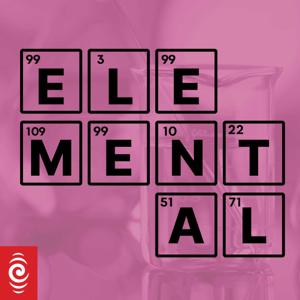


The metal manganese is a vital part of photosynthesis and is found in aluminium drink cans, says Prof Allan Blackman from AUT in ep 48 of Elemental.
The metal manganese performs a vital role in the oxidation of water to oxygen during photosynthesis - without it, life would be very different
Pure manganese metal is brittle, but it is often alloyed with other metals to add strength and workability.
Ordinary steel contains about one percent manganese, and it is also used in similar quantities in aluminium drink cans.
Manganese steel contains about 13 percent and is extremely strong. It is used in railway tracks and gun barrels where strength is very important.
The Lascaux cave paintings in France were painted with manganese dioxide.
Manganese (symbol Mn, atomic number 25) occurs as nodules on the sea floor. These numerous onion-like balls form around a tiny object such as shark's teeth and whale ear bones. The nodules could be an important source of manganese in the future, according to Professor Allan Blackman from AUT.
Go to this episode on rnz.co.nz for more details
Magnesium is loved by plants, folk suffering constipation and boy-racers, as Allan Blackman reveals in ep 47 of Elemental.
Magnesium is a crowd favourite, loved by everything from plants to people suffering from constipation, as well as boy-racers.
Magnesium (symbol Mg, atomic number 12), is an essential element for most living things. In plants, a Mg²⁺ ion is at the heart of the chlorophyll molecule, putting the element at the base of the food chain.
In the human body, it is involved in the synthesis of ATP, DNA and RNA.
Magnesium ribbon burns with a brilliant white light and continues burning even after the oxygen in the air is used up. It can burn in an atmosphere of carbon dioxide and even in water.
It is often alloyed with aluminium to make a strong, light alloy that is used in mag wheels as well as bikes, cars and aircraft. These alloys are able to be cast, resulting in items that are very strong, says Professor Allan Blackman from AUT.
Go to this episode on rnz.co.nz for more details
After a fierce struggle for naming rights, the last lanthanoid element to be discovered was eventually named after Paris, says Allan Blackman in ep 46 of Elemental.
The element lutetium was named after Lutetia, the Roman name for a small town which grew to become the modern city of Paris.
It was the last lanthanoid element to be discovered, and its naming was hotly contested by the three scientists who independently discovered it in 1907. There is also ongoing debate over whether it is actually a lanthanoid.
It has a few, mostly medical, uses. Lutetium tantalite, for example, is the densest known white material which makes it good for use in x-ray detectors, as it phosphoresces when hit by x-rays.
Lutetium was briefly the most expensive element on the planet, with a value six times that of gold, but while it remains the most valuable lanthanoid it is now only a quarter of the price of gold, according to Professor Allan Blackman from AUT.
Go to this episode on rnz.co.nz for more details
Lithium is the lightest metal, and it is used in batteries and for the treatment of bipolar disorder, says Prof Allan Blackman from AUT in ep 45 of Elemental.
Lithium is the lightest metal on the periodic table and the lightest solid element.
Lithium (symbol Li, atomic number 3) is also the most reducing element - it has a single outer electron that it is desperate to give away so it can form lithium ions. This characteristic makes it invaluable in lithium ion batteries such as those used in electric vehicles.
It is useful in light aluminium-lithium alloys that are important components of bikes, planes and high-speed trains.
Lithium carbonate is widely used in the treatment of bipolar disorder, although we remain unsure exactly how it works in the human brain, says Allan Blackman from AUT in episode 45 of Elemental.
Go to this episode on rnz.co.nz for more details
Lead is the element that took down an empire, and its sweet taste belies a metal that is dangerous for human & animal health. All this and more with Prof Allan Blackman from AUT in ep 44 of Elemental.
Lead is the toxic element that helped build - and then bring down - the Roman Empire. The Romans used lots of lead, which is soft and corrosion-resistant, for plumbing.
Plumbing, by the way, is a word that has lead's symbol Pb, from the Latim plumbun, as its root.
The Romans also used lead in pewter drinking vessels, and red and white lead for decorating.
They also used lead pans to boil down grape juice to a sweet-tasting sapa, or what we now know as lead acetate. Lead bioaccumulates in the human body, especially in the brain, and as well as causing intellectual disabilities it is a poison that eventually causes death.
Lead has been phased out of widespread use in house paints and as a petrol additive, but even so, in 2016 it was implicated in half a million deaths worldwide.
In episode 44 of Elemental, Allan Blackman from AUT talks about the many uses and dangers of lead, and reads a poem about lead by Emily Dickinson: 'After great pain, a formal feeling comes.'
Go to this episode on rnz.co.nz for more details
Despite giving its name to a whole group on the periodic table, chemists can't agree if lanthanum even belongs in that group, says Prof Allan Blackman from AUT in ep 43 of Elemental.
Lanthanum is a bit of a 'lost' element, as chemists can't agree amongst themselves exactly where it belongs.
Even though it gives its name to a group of elements known as the lanthanoids, some chemists think it should instead be one of the Group 3 elements, along with scandium and yttrium.
Discovered in 1839, the element was hard to find, which is why its name comes from the Greek lanthanein, meaning 'to be hidden.'
Lanthanum (symbol La and atomic number 57) doesn't have many uses, but it is a key part of metal hydride batteries which are used in hybrid cars.
A Toyota Prius battery, for example, requires 10-15 kilograms of lanthanum, says Professor Allan Blackman from AUT, in episode 43 of Elemental.
Go to this episode on rnz.co.nz for more details
In real life krypton is a noble gas which is commonly used in neon signs and laser light shows, says Allan Blackman from AUT in ep 42 of Elemental.
The make-believe planet of Krypton is well-known in popular culture as Superman's home planet. But in real life krypton is an element on the periodic table.
Its name comes from the Greek word kryptos, meaning hidden.
Krypton, chemical symbol Kr and atomic number 36 - is a mostly unreactive noble gas, discovered in 1898 by William Ramsay, who also found helium and argon.
Between 1960 and 1983, krypton was the basis for the definition of the metre.
During the Cold War, levels of the radioactive Kr 85 isotope in the atmosphere indicated how much nuclear material was being produced possible use as weapons from nuclear reactors and nucelar fuel reprocessing plants.
Red 'neon' lights and high-powered red laser lights often use krypton, says Professor Allan Blackman from AUT.
Go to this episode on rnz.co.nz for more details
Iron is formed in stars, makes up most of the Earth's core & as a result enables life as we know it to exist, says Prof Allan Blackman from AUT, in ep 41 of Elemental.
Iron is the only chemical element on the periodic table to have one of the Ages of humanity named after it. Iron ornaments dating back to 3500 BCE have been found in Egyptian tombs, but the Iron Age started at different times in other civilisations.
The first use of iron by humans was probably iron found in meteorites, as although Earth is home to lots of iron it is not found as elemental iron, except in meteorites.
The discovery of steel - iron containing a small amount of carbon - ushered in the Industrial Revolution that led to the modern world as we know it.
Iron is, by mass, the most common element on earth, because the inner and outer core of the planet are mostly made of iron.
Molten iron in the core moves, creating an electrical current that causes the magnetic field which shields living creatures from harmful solar radiation.
Iron is important to life on earth in other ways, too - in humans, iron is a vital component of haemoglobin and myoglobin which move oxygen around our bodies. And iron is the reason our blood is red, says Professor Allan Blackman from AUT.
Go to this episode on rnz.co.nz for more details
Iridium is the second-densest element on the periodic table and the most erosion-resistant metal. A layer of iridium in rocks marks the demise of the dinosaurs, according to Allan Blackman from AUT, in ep 40 of Elemental.
Iridium played an important role in a geological whodunnit - the demise of the non-avian dinosaurs.
Iridium is present at high levels in a thin band of rocks that marks the boundary between the Cretaceous and Paleogene geological periods. The theory is that the element came from a large meteor, about 10 kilometre across, the impact of which significantly changed the earth's climate for long enough to kill all the large dinosaurs (although of course avian dinosaurs - birds - survived).
Salts of iridium are very colourful, hence the name iridium, after the Greek messenger to the Gods, Iris, who was also the Goddess of the rainbow.
Iridium is twice as dense as lead and the second densest element (after osmium). It is the most corrosion resistant metal.
It is rare and more valuable than gold, says Professor Allan Blackman from AUT.
Go to this episode on rnz.co.nz for more details
A lack of iodine causes goitre, and seafood and iodised salt are good sources of this important trace element, says Prof Allan Blackman from AUT, in ep 39 of Elemental.
The element iodine is often found in bathroom medicine cabinets, where it is used as an antiseptic for cuts and grazes.
It gets its name from the Greek work iodes, meaning violet.
Iodine (chemical symbol I, atomic number 53) is a non-metal, and shares a group with astatine, bromine, chlorine and fluorine.
Seaweeds have the ability to concentrate iodine from seawater which is why seaweeds, fish and shellfish are a good dietary source of this vital trace element.
The human thyroid gland concentrates iodine in the human body where it is used in two important hormones. A lack of iodine leads to goitre, and to prevent this it is added to table salt. In New Zealand, bakers must use iodised salt in bread, says Professor Allan Blackman from AUT.
Go to this episode on rnz.co.nz for more details
From the publisher's feed

357 Listeners

1 Listeners

1 Listeners

1 Listeners

1 Listeners
42 Listeners

102 Listeners

14,112 Listeners
1 Listeners
328 Listeners

7 Listeners

4 Listeners

3 Listeners

0 Listeners

31 Listeners

0 Listeners

4 Listeners

4 Listeners

2 Listeners

0 Listeners
3 Listeners

2 Listeners

1 Listeners