
Sign up to save your podcasts
Or

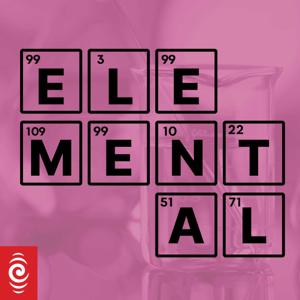


Radium was famously found by the Curies, and was once widely used in face creams, drinks and luminous watch dials, despite being highly radioactive, says Allan Blackman in ep 68 of Elemental.
Radium was first isolated as an element from pitchblende by Marie and Pierre Curie in 1898, just two years after Henri Becquerel discovered radioactivity, although the dangers of radioactivity were not recognised at that time.
Radium salts glow in the dark and were infamously used on luminous clock and watch dials in the early twentieth century. The workers who painted the dials, later known as the 'Radium Girls', were encouraged to lick the tips of their paint brushes and later successfully sued their employer when many of them began dying from cancer and radiation-induced illnesses.
Radium was also added to water, coffee, beer and even face creams, before its dangers were realised.
Radium is dangerous to humans because it behaves similarly in our bodies to calcium, says Professor Allan Blackman from the Auckland University of Technology in episode 68 of Elemental.
Go to this episode on rnz.co.nz for more details
Protactinium is a rare, radioactive element that has no uses and may be the most boring element, says Prof Allan Blackman from AUT in ep 67 of Elemental.
Protactinium is rare, radioactive and one of the ten least abundant chemical elements in the Earth's crust.
It was an element whose existence was predicted by Dmitri Mendeleev in the first periodic table in 1869, although it took 40 years for its existence to be confirmed.
Little work was done on it until about 100 grams of the element were isolated in the early 1960s which allowed a small amount of research to be carried out.
This may be the most boring chemical element, but Prof Allan Blackman from AUT suggests you listen to the 'Most boring chemical element' episode of Elemental to find out for certain.
Go to this episode on rnz.co.nz for more details
Despite its gruesome mythical name, the radioactive element promethium has no particular claim to fame, says Prof Allan Blackman from AUT in ep 66 of Elemental.
The element promethium is named for Prometheus, who stole fire from the Greek Gods and was gruesomely punished.
The name was suggested by the wife of one of the Oak Ridge laboratory discovery team. Her reasoning was that the name reflects the power and peril of nuclear energy, by symbolising 'both the daring and the possible misuse of mankind's intellect.'
All isotopes of promethium are highly radioactive and unstable with very short half-lives, so there is virtually none on earth.
Promethium was used for a while in the Apollo Lunar Modules, in luminous paint used to illuminate some switches. However its glow ran out after just a couple of years so it was replaced with tritium-based paints, says Allan Blackman in episode 66 of Elemental.
Go to this episode on rnz.co.nz for more details
Praseodymium is a metal wirh the second longest name on the periodic table and not many uses, says Prof Alan Blackman from AUT in ep 65 of Elemental.
Praseodymium is the second-longest name on the periodic table. The prize for the longest element name goes to rutherfordium, named after the famous New Zealand physicist Lord Ernest Rutherford who won a Nobel Prize in chemistry.
Praseodymium means 'green twin', a name that relates to confusion over the supposed element didymium. Didymium appeared on Mendeleev's original periodic table but turned out to be a mixture of elements, one of which was praseodymium.
There are not many uses for this lanthanoid. It is used with neodymium in a form of glass known as didymium glass, that is used in welder's glasses.
As well as protecting against light, it can be used to produce light such as searchlights, and it is used in magnets that have a role in wind turbines and hybrid cars.
Go to this episode on rnz.co.nz for more details
From levitating burnt buttocks, to excitable nerves and sure-to-rise baking, potassium is highly reactive and vital to life, says Prof Allan Blackman in ep 64 of Elemental.
Potassium is a fundamental building block of life that pops up all over the place.
The name comes from the English word potash, an old term for potassium salts obtained from wood ash. The chemical symbol K comes from kalium, an Arabic term for alkaline - or al-kali- plant ashes. Germanic countries went with the common name kalium for element 19 for many years.
Potassium was discovered by the prolific element discoverer Humphrey Davy in 1807, who found it to be highly reactive with water. It also added a lovely violet colour to a flame, the same colour that is seen in the familiar potassium permanganate or Condy's crystals.
Along with sodium, potassium is a critical part of the sodium-potassium pump, which is crucial for the transmission of nerve signals.
Bananas are a good dietary source of potassium, which is an essential element.
Industrially, most potassium is used in fertilisers as well as in soaps and detergents.
Go to this episode on rnz.co.nz for more details
Polonium will be forever linked with the names Curie and Litvinenko and has negligible desirable features, says Prof Allan Blackman in ep 63 of Elemental.
Polonium will be forever linked with the names Curie and Litvinenko and has negligible desirable features.
Polonium (symbol Po and atomic number 84) is a radioactive metal, discovered by the Curies and named after Marie's home country of Poland, in 1898, a period when the country didn't actually exist.
Po210 accumulates in tobacco and as a result cigarettes contain quite high levels of it, says Prof Allan Blackman, in ep 63 of Elemental.
Go to this episode on rnz.co.nz for more details
A radioactive heavyweight associated with nuclear bombs & power, which is powering the Voyager spacecraft, says Prof Allan Blackman from AUT in ep 62 of Elemental.
Plutonium is a radioactive heavyweight associated with nuclear bombs & power generation.
It is mostly a synthetic element, although there are trace amounts in nature.
Plutonium (symbol Pu, atomic number 94) was discovered and named in 1940 after the dwarf planet Pluto. Alternative names considered by the discovery team were 'ultimium' or ''extremium, because of the mistaken belief they had found the last possible element on the periodic table. Its discovery wasn't announced until the end of the second world war.
The isotope 239Pu is a fissile isotope that has led to its use in nuclear reactions.
238Pu is powering the Voyager spacecrafts, which have left our solar system, says Prof Allan Blackman from AUT, in ep 62 of Elemental.
Go to this episode on rnz.co.nz for more details
Platinum is useful in catalytic convertors, is used to treat testicular cancer and will be useful in hydrogen fuel cells, says Prof Allan Blackman from AUT in ep 61 of Elemental.
Platinum is a rare precious metal, that doesn't corrode in oxygen.
It occurs in its native state in nature and was used in burial goods by South Americans about 2000 years ago.
Platinum is useful in catalytic convertors, along with palladium.
It is used to treat testicular cancer and will be useful in hydrogen fuel cells, says Prof Allan Blackman from AUT, in ep 61 of Elemental.
Go to this episode on rnz.co.nz for more details
Phosphorus, chemical symbol P, was first isolated as an element from thousands of litres of urine. Also found in guano, aka bird poo. Allan Blackman from AUT has the full story in ep 60 of Elemental.
Phosphorus, from the Greek phosphoros meaning light-bearing, was the old name for Venus.
It is the first element for which we know the exact year of discovery: 1669. Hennig Brand made 120 grams of phosphorus by boiling down 5,500 litres of urine, ending up with a waxy white solid that glowed in the dark without giving off heat. However, it wasn't recognised as an element until more than a century later.
As well as white phosphorus, there are allotropes of red and black phosphorus.
It is very flammable and was used in early matchsticks.
Phosphates are important fertilisers, and one source of it is guano, aka bird poo. Allan Blackman from AUT has the full story, in ep 60 of Elemental.
Go to this episode on rnz.co.nz for more details
Palladium is a pricey precious metal most commonly used in catalytic convertors on car exhausts, says AUT's Allan Blackman in ep 59 of Elemental.
Palladium is a pricey precious metal that is one of a group of metals known as platinum group metals. Of these, palladium is the least dense and has the lowest melting point.
It is named after the asteroid Pallas, which was discovered around the same time; Pallas was the Greek God of wisdom.
White gold is alloyed with palladium.
Palladium (symbol Pd, atomic number 46) is most commonly used in catalytic convertors on car exhausts, says AUT's Allan Blackman, in ep 59 of Elemental.
Go to this episode on rnz.co.nz for more details
From the publisher's feed

357 Listeners

1 Listeners

1 Listeners

1 Listeners

1 Listeners

42 Listeners

102 Listeners

14,112 Listeners
1 Listeners
328 Listeners

7 Listeners

4 Listeners

3 Listeners

0 Listeners

31 Listeners

0 Listeners

4 Listeners

4 Listeners

2 Listeners

0 Listeners
3 Listeners

2 Listeners

1 Listeners