
Sign up to save your podcasts
Or

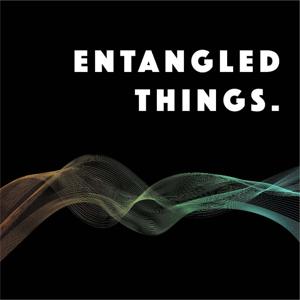


In Episode 21, Patrick and Ciprian speak with Dr. Todd Brun of the University of Southern California.
Topics covered include the interdisciplinary nature of quantum computing, the importance of error correction and fault tolerance, and the narrowing gap between theory and experiment.
Todd Brun is a Professor of Electrical and Computer Engineering, Physics, and Computer Science at the University of Southern California. He does research on quantum theory, especially on the problems of quantum computing and quantum information science. Prof. Brun received his Ph.D. in Physics from Caltech in 1994, and did postdoctoral work at the University of London (Queen Mary and Westfield College), the Institute for Theoretical Physics in Santa Barbara, Carnegie Mellon University, and the Institute for Advanced Study in Princeton, before starting at USC in 2003.
In Episode 20, Patrick and Ciprian speak with Fred Chong of the University of Chicago.
The team discuss the equivalent timelines between Quantum Computation and classical computing, the emergence of market opportunities for Quantum Computing, and the need to be ready for new disruptions as technologies continue to develop.
Fred Chong is the Seymour Goodman Professor in the Department of Computer Science at the University of Chicago and the Chief Scientist at Super.tech. His work focuses on accelerating the timeline for practical quantum computing by developing software techniques that optimize for the physical properties of quantum hardware. He leads the EPiQC Project (Enabling Practical-scale Quantum Computing), a $10M flagship national research project funded by the National Science Foundation's Expeditions in Computing program. Chong received his Ph.D. from MIT in 1996 and is a recipient of the NSF CAREER award, the Intel Outstanding Researcher Award, and 10 best paper awards.
In Episode 19, Patrick and Ciprian speak with Peter McMahon of Cornell University.
Among other topics, the team discuss from an academic perspective, the different ways to build a physical Quantum Computer and the qualifying characteristics of Quantum Computers according to the DiVincenzo criteria.
Peter McMahon is an assistant professor in Applied and Engineering Physics at Cornell University. His lab researches the physics of computation, including quantum computing. He received his Ph.D. in Electrical Engineering from Stanford University in 2014, and was a postdoctoral researcher in Applied Physics at Stanford until joining Cornell in 2019. Lab website: http://mcmahon.aep.cornell.edu
Teaching a complex and vast topic such as Quantum Computing is a difficult task. Combining the right ingredients the right way is even more difficult. In Episode 19, Patrick and Ciprian debate over if and how topics like the postulates of quantum mechanics, the fundamental mathematical model, the qubits model, the algorithms, the gate vs. annealing approach, the development ecosystems, error correction, or building quantum hardware should be part of a one day workshop that introduces Quantum Computing. The outcomes of the discussion will not remain theoretical only, as Ciprian will apply them a real Quantum Computing workshop he will be delivering on December 10th at the Microsoft Azure + AI Conference in Las Vegas www.azureaiconf.com
In Episode 17, Patrick and Ciprian discuss how their views and understanding of the Quantum world have changed throughout the process of recording Entangled Things.
Topics covered in this retrospective include the difficulties of translating quantum computing concepts into easily understood ways, market disruption, optimization, and material design.
In Episode 16, Patrick and Ciprian speak with Srinjoy Ganguly, author of Quantum Computing with Silq Programming.
The team discuss the challenges of Quantum programming, the benefits of automatic decomputing, the future of machine learning in Quantum Computing, and the way that high level abstracted Quantum Computing languages will affect the landscape of Quantum programming.
Srinjoy Ganguly is the founder & CEO of AdroitERA an EdTech firm which provides training on cutting edge technologies and IBM recognized Quantum Educator. He possesses a Masters in Quantum Computing Technologies from Technical University of Madrid, Spain and an MSc in Artificial Intelligence from University of Southampton, UK. He has over 4+ years of experience in Quantum Computing and 5+ years of experience in Machine Learning, Deep Learning, AI.
He has completed research-based courses on 5G signal processing systems from IIT Kanpur. He led, mentored and taught Quantum Machine Learning (QML) study space at QResearch QWorld and authored a book on Quantum Computing with Silq Programming. He has conducted Faculty Development Training at IIIT Pune by special invitation, gave expert talks on QML at IEEE SPS and has conducted several webinars at various institutes related to QML and Quantum Computing. He has been specially appointed and invited by Woxsen University as a Visiting Faculty to teach Quantum Computing to MBA students. He has also supervised research interns on QNLP, ZX calculus and Quantum Music as a part of QIntern 2021. His research interests include Quantum Machine Learning, Quantum Natural Language Processing (QNLP), Graphical Calculus for Quantum Computing (ZX Calculus) and Quantum Image Processing.
In Episode 15, Patrick and Ciprian speak with Dr. Andrew King of D-Wave Systems and Dr. Cristiano Nisoli of Los Alamos National Laboratory.
This engaging conversation covers topics including artificial spin ice, nanomagnets, programmatic manipulation of quasiparticles, the new D-Wave Advantage Processor, and how Quantum developments can clarify our perception of fundamental physics.
Dr. Andrew King is Director of Performance Research at D-Wave, the practical quantum computing company. His work on quantum annealing ranges from studying hybrid performance and applications of D-Wave processors to quantum simulation of magnetic spin systems. His recent research has demonstrated a computational scaling advantage over classical Monte Carlo methods in the quantum simulation of geometrically frustrated lattice, offering the clearest look yet at relaxation dynamics of an open quantum system on over a thousand Ising spins. Andrew received his Ph.D in Computer Science at McGill University and has been with D-Wave since 2013.
Cristiano Nisoli is a theoretical physicist in the T-division at LANL, where he has been since 2008. He works on frustrated, artificial magnetic systems, so called artificial spin ices, of which his group has proposed various geometries which are then realized at the magnetic nanoscale or with trapped colloids or with skyrmions in liquid crystals. The idea behind the program is to generate new exotic emergent behaviors from the collective dynamics of binary variables, such as magnetic moments of nanoislands, or in this case qubits.
In Episode 14, Patrick and Ciprian discuss experiments that reveal the mysterious nature of the Quantum world.
In several past episodes, they mentioned such experiments, and this episode focuses on them. Light polarization, single-molecule fluorescence, nanoscale electrical conduction (a variant of the double-slit experiment), the Stern-Gerlach are the four experiments covered by the discussion.
In episode 13, Patrick and Ciprian speak with Elisabetta Valiante of 1QBit.
Among other topics, the team discuss Quantum problem solving from a hardware agnostic approach, the limitations of Quadratic Unconstrained Binary Optimization problems (QUBO), and the differences between logical and physical qubits.
Elisabetta Valiante has been a member of the Optimization Solutions Team at 1QBit since 2018. She is experienced in optimization problems in chemistry, biochemistry, and finance, as well as benchmarking quantum and quantum-inspired optimization algorithms and hardware.
Elisabetta graduated in Physics in her home country at the Sapienza University of Rome. She earned a PhD from the Ludwig Maximilian University with a dissertation on galaxy evolution, and had postdoctoral appointments at the University of British Columbia and Cardiff University. She was the leader of the first major world data release of the Herschel Astrophysical Terahertz Large Area Survey (H-ATLAS).
Elisabetta has published and co-authored scientific articles in peer-reviewed journals, and has presented at many international conferences (for example, the XXIX International Astronomical Union General Assembly) and colloquia.
A passionate mentor, she recently participated in the “Girls and STEAM” event at Science World in Vancouver, BC.
Elisabetta currently resides in Vancouver, BC with her partner and her cat.
In Episode 12, Patrick and Ciprian speak with Noson Yanofsky of Brooklyn College.
The team discuss ways of learning Quantum computing, foundations of Quantum mechanics, the existing and non-existing Quantum algorithms, and the limitations of human knowledge.
Noson S. Yanofsky has a Ph.D. in mathematics from The Graduate Center of The City University of New York. He held a post-doctoral research position in McGill University in Montreal. Currently, he is a professor of computer science at Brooklyn College and The Graduate Center. In addition to writing research papers, he has authored Quantum Computing for Computer Scientists with Mirco Mannucci (Cambridge University Press), The Outer Limits of Reason: What Science, Mathematics, and Logic Cannot Tell Us (MIT Press), and Theoretical Computer Science for the Working Category Theorist (accepted for publication by Cambridge University Press). He is currently working on a book titled Monoidal Categories: A Unifying Concept in Mathematics, Physics, and Computers.
Noson lives in Brooklyn with his wife and four children.
To hear more from Noson, please check out his book, Quantum Computing for Computer Scientists, or his many other publications.
Links to the books can be found here.
http://www.sci.brooklyn.cuny.edu/~noson/
From the publisher's feed

227,534 Listeners

8,751 Listeners

9,606 Listeners
3,157 Listeners

111,866 Listeners

4,166 Listeners
1,834 Listeners

12,500 Listeners

6,581 Listeners

10,179 Listeners

5,549 Listeners
21 Listeners
18 Listeners
40 Listeners

125 Listeners