
Sign up to save your podcasts
Or

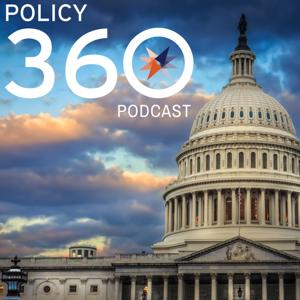

The end of the Cold War is often considered a bit of a geopolitical anomaly. In 1980 the increasing antagonistic relations between the U.S. and the Soviet Union caused many to fear that the conflict was once again on the path to nuclear fallout. President Regan famously characterized the Soviet Union as the "evil empire" and while Soviet media described U.S. foreign policy as "nuclear insanity."
Then suddenly, things quickly shifted. The two superpowers started cooperating and even more surprisingly the Soviet Union collapsed by the end of the decade and just like that the Cold War ended. As historian John Lewis Gaddis has observed "Wars, hot or cold, do not normally end with the abrupt but peaceful collapse of a major antagonist." So what changed in those 5 years that brought about the end of the Cold War?
Simon Miles is an Assistant Professor in the Sanford School of Public Policy, and his recently released book Engaging the Evil Empire: Washington, Moscow, and the Beginning of the End of the Cold War seeks to answer this question among several others. The book focuses on the often overlooked period of the early 1980s. Was this shift in relations as abrupt as it appeared? To what extent did popular perception of the conflict reflect the reality of the situation?
Grab a copy of Simon's book: https://www.cornellpress.cornell.edu/book/9781501751691/engaging-the-evil-empire/
Subscribe to the Policy 360 podcast: social.sanford.duke.edu/Policy360_ApplePodcasts
Music: Blue Dot Sessions freemusicarchive.org/music/Blue_Dot_Sessions/
Music licensed under Creative Commons Attribution creativecommons.org/licenses/by/3.0/us/
 View all episodes
 By Sanford School of Public Policy, Duke University

4.9
1717 ratings
The end of the Cold War is often considered a bit of a geopolitical anomaly. In 1980 the increasing antagonistic relations between the U.S. and the Soviet Union caused many to fear that the conflict was once again on the path to nuclear fallout. President Regan famously characterized the Soviet Union as the "evil empire" and while Soviet media described U.S. foreign policy as "nuclear insanity."
Then suddenly, things quickly shifted. The two superpowers started cooperating and even more surprisingly the Soviet Union collapsed by the end of the decade and just like that the Cold War ended. As historian John Lewis Gaddis has observed "Wars, hot or cold, do not normally end with the abrupt but peaceful collapse of a major antagonist." So what changed in those 5 years that brought about the end of the Cold War?
Simon Miles is an Assistant Professor in the Sanford School of Public Policy, and his recently released book Engaging the Evil Empire: Washington, Moscow, and the Beginning of the End of the Cold War seeks to answer this question among several others. The book focuses on the often overlooked period of the early 1980s. Was this shift in relations as abrupt as it appeared? To what extent did popular perception of the conflict reflect the reality of the situation?
Grab a copy of Simon's book: https://www.cornellpress.cornell.edu/book/9781501751691/engaging-the-evil-empire/
Subscribe to the Policy 360 podcast: social.sanford.duke.edu/Policy360_ApplePodcasts
Music: Blue Dot Sessions freemusicarchive.org/music/Blue_Dot_Sessions/
Music licensed under Creative Commons Attribution creativecommons.org/licenses/by/3.0/us/

91,131 Listeners

32,079 Listeners

30,748 Listeners

43,677 Listeners
16,224 Listeners

3,510 Listeners
26,273 Listeners
61 Listeners

87,555 Listeners

112,347 Listeners

56,648 Listeners

5,084 Listeners

7,244 Listeners
139 Listeners

16,383 Listeners
5,798 Listeners

12 Listeners

63 Listeners

11 Listeners

16,327 Listeners

0 Listeners
10,820 Listeners