
Sign up to save your podcasts
Or

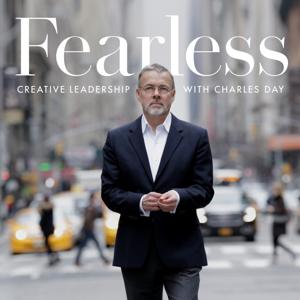

Edited highlights of our full conversation.
Stephanie Mehta is the Editor-in-Chief of Fast Company. They study, explore, analyze and report on innovation like no other media brand.
Stephanie has been a writer almost since birth. Like the rest of us, she's learned how to lead through trial and error and experience and asking and listening.
Leadership used to be a two dimensional, top down, hierarchical practice. I say. You do.
Today, it is a three dimensional role, powered by a leader's ability to use influence and in which they are the visionary, guide, architect, storyteller, as well as the supporter of multiple constituencies.
Today, the leader is expected to have a point of view or to be clear - and credible - about why they don't.
The best way and, in fact, the only way, for leaders to navigate this complexity, is to establish a set of principles that guide them in moments of crisis and consternation.
If you take the time to define your principles now - when things are quiet and the microphone isn't being pushed in your face - you will dramatically increase the chances that what you come up with when the heat is on, will be clear, consistent and compelling.
Three words by which to measure anyone's leadership.
And which increase the chances that whatever you say, you can live with the consequences of having said it.
 View all episodes
 By Charles Day

4.9
8282 ratings
Edited highlights of our full conversation.
Stephanie Mehta is the Editor-in-Chief of Fast Company. They study, explore, analyze and report on innovation like no other media brand.
Stephanie has been a writer almost since birth. Like the rest of us, she's learned how to lead through trial and error and experience and asking and listening.
Leadership used to be a two dimensional, top down, hierarchical practice. I say. You do.
Today, it is a three dimensional role, powered by a leader's ability to use influence and in which they are the visionary, guide, architect, storyteller, as well as the supporter of multiple constituencies.
Today, the leader is expected to have a point of view or to be clear - and credible - about why they don't.
The best way and, in fact, the only way, for leaders to navigate this complexity, is to establish a set of principles that guide them in moments of crisis and consternation.
If you take the time to define your principles now - when things are quiet and the microphone isn't being pushed in your face - you will dramatically increase the chances that what you come up with when the heat is on, will be clear, consistent and compelling.
Three words by which to measure anyone's leadership.
And which increase the chances that whatever you say, you can live with the consequences of having said it.
9,642 Listeners

112,193 Listeners

8,580 Listeners
9,104 Listeners

47 Listeners
5,489 Listeners

130 Listeners

58,191 Listeners

15,686 Listeners

16,216 Listeners

3,516 Listeners

1,091 Listeners

817 Listeners

506 Listeners

1,493 Listeners