
Sign up to save your podcasts
Or

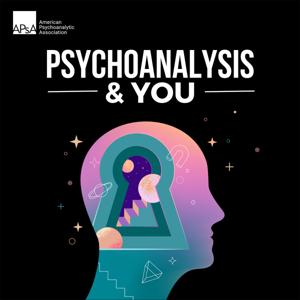

In episode 23 of Psychoanalysis & You, host Gail Saltz speaks with Sue Kolod, president of the North American Psychoanalytic Confederation and co-leader of the Depolarization Project, about understanding and addressing polarization in our personal and political lives.
Kolod and Salts discuss what happens when disagreement becomes toxic, like when you dash into a store to avoid walking past a person you fundamentally oppose, and asks what psychoanalysis has to offer in response. Drawing on concepts from Vanik Volkan about "chosen trauma" and "large group identity," she examines why deeply held beliefs feel so personal, and why curiosity about ourselves and others becomes nearly impossible under polarization.
Through vivid examples—including her own experience with the Boston Conversations Project where pro-life and pro-choice women found unexpected common ground—Kolod illustrates how human connection, empathy, and an understanding of the historical and family experiences shaping our convictions can help us maintain relationships across deep disagreement.
This episode offers concrete insights into the defense mechanisms (splitting, projection) that drive polarization and explores how leaders and "surprising validators" can create the safety necessary for dialogue.
 View all episodes
 By APsA American Psychoanalytic Association

4.8
2121 ratings
In episode 23 of Psychoanalysis & You, host Gail Saltz speaks with Sue Kolod, president of the North American Psychoanalytic Confederation and co-leader of the Depolarization Project, about understanding and addressing polarization in our personal and political lives.
Kolod and Salts discuss what happens when disagreement becomes toxic, like when you dash into a store to avoid walking past a person you fundamentally oppose, and asks what psychoanalysis has to offer in response. Drawing on concepts from Vanik Volkan about "chosen trauma" and "large group identity," she examines why deeply held beliefs feel so personal, and why curiosity about ourselves and others becomes nearly impossible under polarization.
Through vivid examples—including her own experience with the Boston Conversations Project where pro-life and pro-choice women found unexpected common ground—Kolod illustrates how human connection, empathy, and an understanding of the historical and family experiences shaping our convictions can help us maintain relationships across deep disagreement.
This episode offers concrete insights into the defense mechanisms (splitting, projection) that drive polarization and explores how leaders and "surprising validators" can create the safety necessary for dialogue.

195 Listeners
1,389 Listeners

111,948 Listeners
14,880 Listeners

1,665 Listeners
354 Listeners
164 Listeners
27 Listeners

15,950 Listeners