
Sign up to save your podcasts
Or

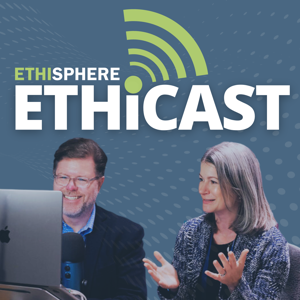


KPMG Australia has made repeated headlines over the last two years for an ongoing scandal involving the misuse of confidential client information, whistleblower retaliation, internal investigations gone wrong, toxic culture, and wayward leadership. In recent days, this has culminated in extraordinary organizational tumult, as KMPG Australia faces lost business, governmental investigation, leadership departures, and a massive loss of trust.
In this special episode, Ethisphere Chief Strategy Officer, Erica Salmon Byrne dives into the ongoing whistleblower scandal that has enveloped KPMG Australia and unpacks what organizations can take from this to improve their speak-up culture, anti-retaliation measures, investigations processes, executive accountability, and organizational justice.
For plenty of free ethics and compliance resources, especially around speak-up culture, anti-retaliation, internal investigations, psychological safety, and organizational justice , please visit the Ethisphere Resource Center at www.ethisphere.com/resources.
The World’s Most Ethical Companies recognizes enterprises that have demonstrated best-in-class ethics and compliance programs, corporate governance practices, and cultures of integrity. The 2027 application period begins tomorrow, July 29, and the final submission deadline is Thursday, October 29 at 8:00 p.m. ET.
As returning applicants know, the application process is always a little different from year to year as the landscape of ethics and compliance itself never stops changing. So let’s get into some of the ways that applicants can set themselves up for success.
In this episode, Ethisphere Chief Strategy Officer, Erica Salmon Byrne, shares her insights on some best practices to keep in mind when applying for the 2027 World’s Most Ethical Companies® recognition. Including:
To learn more about the World’s Most Ethical Companies, visit worldsmostethicalcompanies.com.
The 2027 application period runs from July 29 to October 29 at 8:00 p.m. ET.
To take a deep dive into the application process itself, register for our free webinar, Guide to Applying for the 2027 World’s Most Ethical Companies®, at https://ethisphere.com/webinars
Grupo Bimbo is the world's largest baking company — 130,000 employees, nearly 200 plants, and 13,000 products sold across 3 million points of sale worldwide. In 2026, it was named a World's Most Ethical Companies® Honoree for the 10th time, a milestone few organizations ever reach even once.
On this episode of the Ethicast, host Bill Coffin sits down with Ignacio Stepancic, Global Compliance Leader at Grupo Bimbo, for a candid conversation about what it actually takes to sustain a decade of ethical leadership. Ignacio talks about how artificial intelligence has transformed third-party due diligence, why the company treats its Code of Conduct as a living document that gets revisited every year, and how a genuine "speak-up" culture has become a recruiting and retention advantage. He closes with straight talk for any organization considering its first World's Most Ethical Companies application.
Western Digital has earned World’s Most Ethical Companies® honors eight times — a streak that doesn’t happen by treating ethics and compliance (E&C) as a finished project.
In this episode of the Ethicast, host Bill Coffin sits down with Joe Santosuosso, Vice President and Chief Compliance Officer at Western Digital, to unpack how his team keeps a large, complex organization performing at that level year after year. They cover how Western Digital uses external recognition as a benchmarking tool rather than a trophy, how a risk-based approach lets a lean team cover more ground, and how the company’s newest set of values builds ethics into the definition of excellence instead of treating it as a separate track.
What happens when you stop treating investigations like a black box — and start treating them like a tool for cultural transformation?
Scott Sullivan, former Chief Integrity & Compliance Officer at Newmont Corporation, the world's largest gold mining company, did exactly that. The result: a 385% increase in reporting over four years, a radical rethinking of speak-up culture, and a model for how ethics and compliance leaders can build trust with the entire organization — not just manage risk for the few.
In this episode, Scott breaks down how the 2021 Rio Tinto report on workplace behavior prompted Newmont to lift the hood on its own investigations process, how shifting from "speak up" to "ask, listen, act" moved accountability to leadership, and how the Organizational Justice and Integrity Dashboard (OJID) gave employees and executives alike a clear, honest picture of what was actually happening inside the organization.
He also makes a case that culture doesn't have to be expensive. It just takes guts — and the right allies.
If you're a compliance leader looking to drive real culture change, this one is worth your full attention.
Your AI is moving faster than your governance. That's not a future problem — it's a right-now problem.
In this episode, Bill Coffin sits down with Laura Jacobus, EVP of Strategic Advisory Services at Mitratech, to unpack why the AI governance frameworks most companies built 18 months ago are already struggling to keep up — and what AI Governance 2.0 actually looks like in practice.
From Board mandates pushing AI into the hands of first-time users, to agentic AI systems that can delete a database in seconds without a human in the loop, Laura brings sharp, practical perspective on where E&C programs need to evolve — and fast.
For a global organization with more than 500,000 team members, ethics and compliance cannot rely on policies alone. It takes leadership, structure, local connection, practical testing, and a culture of continuous improvement.
In this episode of Ethicast, host Bill Coffin speaks with Peter Blumberg, Vice President and Chief Compliance Officer at FedEx, about how FedEx continues to strengthen its corporate integrity and compliance program during a period of major business transformation.
Peter discusses the company’s One FedEx transformation, the value of maintaining regional compliance connection within a centralized structure, the importance of cyber incident exercises, and how FedEx is expanding its integrity ambassador program while exploring responsible uses of AI and automation.
Key takeaways:
For the latest thought leadership in ethics and compliance, including free videos, articles, research, and more, visit the Ethisphere Resource Center: https://www.ethisphere.com/resources
Subscribe to our biweekly newsletter, Ethisphere Insights: https://ethisphere.com/newsletter/
Someone set fire to a Kimberly-Clark distribution warehouse in California, caused $600 million in damage, and livestreamed the whole thing. The part that got less attention: he didn't work for Kimberly-Clark. He worked for a third-party logistics company they'd hired. Kimberly-Clark had a supplier code of conduct. They had compliance standards. They'd commissioned third-party audits. And it still happened.
That's the reality of third-party risk management — you can build a solid program and still get blindsided by something you couldn't have predicted. But that doesn't mean programs aren't worth building. It means they have to be built well, and most aren't.
In this episode, host Bill Coffin sits down with Emily Miner, Director on the Data & Services team at Ethisphere, to talk about where ethics and compliance programs fall short on third-party risk — and what strong ones actually look like. Emily draws on her work evaluating E&C programs across industries and her deep involvement in Ethisphere's World's Most Ethical Companies assessment process.
They cover:
Emily also discusses her article, "What Makes for a Good Third-Party Code of Conduct?" published in Ethisphere Magazine. Link below.
Read Emily's article: https://ethisphere.com/magazine/what-makes-an-effective-third-party-code-of-conduct/
Learn how Ethisphere can help you measure and strengthen your ethics and compliance program: https://ethisphere.com/solutions
Subscribe for new episodes every week on YouTube, Spotify, and Apple Podcasts. Follow Ethisphere on LinkedIn for more on ethics, compliance, and what it means to do business with integrity.
A Google information security engineer with access to the company's internal search trend data allegedly used that data to place 23 Polymarket bets — and won 22 of them, netting nearly $1 million. His handle was AlphaRaccoon. The CFTC and DOJ aren't laughing.
In this episode of Ethicast Reacts, host Bill Coffin and Ethisphere Chief Strategy Officer Erica Salmon-Byrne break down the charges — commodities fraud, wire fraud, and money laundering — and what the case reveals about a risk most ethics and compliance teams haven't fully mapped yet.
This is the fourth prediction market episode of Ethicast Reacts so far, and if the headlines are any indicator, it won't be the last.
Supply chain risk management is becoming more complex as companies move from linear supply chains to sprawling supply webs that include third, fourth, and fifth parties. At the same time, ethics and compliance teams are under pressure to perform deeper due diligence with limited resources.
In this episode of Ethicast, host Bill Coffin speaks with Craig Moss, Executive Vice President of Measurement at Ethisphere, about how AI data trading can help organizations close critical information gaps, improve supplier risk visibility, and create more value from the data they already have.
Craig explains why companies need to move beyond simply protecting or hoarding data, and instead think strategically about what data they can trade, what data they need, and how restricted-use legal frameworks can make those exchanges practical. He also shares a five-step pilot approach for data trading, including how to define the goal, assess data gaps, determine relative data value, prepare for negotiation, and govern the trade.
The conversation also explores the human side of AI-enabled risk management, including why problem definition, internal influence, partner negotiation, and governance still depend heavily on human judgment.
Key takeaways:
From the publisher's feed

43,315 Listeners

25,784 Listeners

4,335 Listeners

9,602 Listeners

144 Listeners
34 Listeners

111,791 Listeners

5,206 Listeners
56 Listeners

6,074 Listeners

57,580 Listeners

72 Listeners

670 Listeners

586 Listeners

1,435 Listeners