
Sign up to save your podcasts
Or

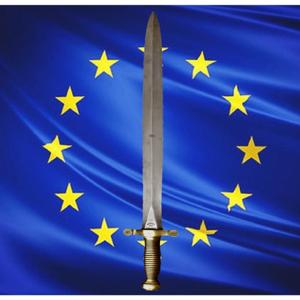


L'illusion 2026 : Pourquoi nous ne pouvons plus ignorer le « Tartuffe de la toundra » : Comment — et surtout pourquoi — devrions-nous continuer à décortiquer les éructations quotidiennes de Donald Trump ? S’intéresser à un personnage de cet acabit, dont la rhétorique grossière et décousue s’évapore aussi vite qu’elle est contredite, ressemble à une perte de temps massive — une participation forcée à un cirque de télé-réalité de bas étage.
Après trois semaines de silence délibéré sur les dernières divagations du bouffon républicain, European Security brise ce mutisme avec une dose massive de satire. En guise de remerciement à notre lectorat toujours plus nombreux, nous offrons cette mise en scène théâtrale du 1er avril pour disséquer la personnalité de Trump et sa politique étrangère désastreuse.
À travers un dialogue imaginaire entre Molière et Michel Audiard, nous avons structuré cette critique en six scènes, parodiées pour exposer une dynamique de pouvoir ancrée dans l'hypocrisie et le narcissisme. Nous plongeons au cœur de la désinformation, de sa fascination flagrante pour le régime autocratique russe et de la dégradation de la diplomatie mondiale en un simple marchandage de coin de rue.
En le qualifiant de « Tartuffe de la toundra », nous dénonçons une imposture politique où l'ego et le spectacle ont officiellement étranglé la dignité de l'État.
La question brûle chaque jour davantage : Combien de temps encore le peuple américain et ses élus attendront-ils pour envoyer cet homme — qui se moquait si joyeusement de l'âge de son prédécesseur — là où il sa place est vraiment : dans un asile ou une prison ?. Après 14 mois de tension croissante, combien de temps devrons-nous encore attendre que la vérité éclate enfin concernant le scandale Epstein et les complices de haut rang de ce criminel et voyou de classe internationale ?
Die Illusion 2026: Warum wir den „Tartuffe der Tundra“ nicht länger ignorieren können : Wie — und vor allem warum — sollten wir weiterhin die täglichen Tiraden von Donald Trump analysieren? Sich mit einem Charakter dieses Schlages zu befassen, dessen plumpe, zusammenhanglose Rhetorik ebenso schnell verfliegt, wie sie widerrufen wird, fühlt sich wie eine massive Zeitverschwendung an — eine erzwungene Teilnahme an einem zweitklassigen Reality-TV-Zirkus.
Nach drei Wochen bewussten Schweigens über die neuesten Wahnvorstellungen des republikanischen Possenreißers bricht European Security dieses Schweigen mit einer kräftigen Dosis Satire. Als Dankeschön an unsere stetig wachsende Leserschaft bieten wir diese theatralische Inszenierung zum 1. April an, um Trumps Persönlichkeit und seine katastrophale Außenpolitik zu sezieren.
Durch einen imaginären Dialog zwischen Molière und Michel Audiard haben wir diese Kritik in sechs Szenen gegliedert, parodiert, um eine in Heuchelei und Narzissmus verwurzelte Machtdynamik offenzulegen. Wir tauchen tief in die Desinformation ein, in seine unverhohlene Faszination für das russische autokratische Regime und in die Herabwürdigung der globalen Diplomatie zu einem simplen Straßenecken-Handel.
Indem wir ihn als den „Tartuffe der Tundra“ brandmarken, prangern wir einen politischen Betrug an, bei dem Ego und Spektakel die Würde des Staates offiziell erdrosselt haben.
Die Frage brennt jeden Tag heißer: Wie lange werden das amerikanische Volk und seine Vertreter noch warten, um diesen Mann — der sich so hämisch über das Alter seines Vorgängers lustig machte — dorthin zu schicken, wo er wirklich hingehört: in eine Anstalt oder ein Gefängnis?. Wie lange müssen wir nach 14 Monaten wachsender Spannungen noch auf die volle Wahrheit über den Epstein-Skandal und die hochrangigen Komplizen dieses Weltklasse-Kriminellen und Schlägers warten?
The 2026 Illusion: Why We Can No Longer Ignore the "Tartuffe of the Tundra" : How—and more importantly, why—should we continue to parse the daily rants of Donald Trump? Engaging with a character of this ilk, whose crude, disjointed rhetoric evaporates as quickly as it is contradicted, feels like a massive waste of time—a forced participation in a bottom-tier reality TV circus.
After three weeks of deliberate silence regarding the Republican buffoon’s latest delusions, European Security is breaking that silence with a heavy dose of satire. As a thank-you to our ever-growing readership, we offer this April 1st theatrical "mise en scène" to dissect Trump’s persona and his disastrous foreign policy.
Through an imaginary dialogue between Molière and Michel Audiard, we have structured this critique into six scenes, parodied to expose a power dynamic rooted in hypocrisy and narcissism. We dive deep into disinformation, his blatant fascination with the Russian autocratic regime, and the degradation of global diplomacy into mere street-corner haggling.
By branding him the "Tartuffe of the Tundra," we are calling out a political fraud where ego and spectacle have officially strangled the dignity of the State.
The question burns brighter every day: How much longer will the American people and their representatives wait to send this man—who so gleefully mocked his predecessor’s age—to where he truly belongs: an asylum or a prison?. After 14 months of mounting tension, how much longer must we wait for the full truth to explode regarding the Epstein scandal and the high-level accomplices of this world-class criminal and thug?
L'illusion 2026 : Pourquoi nous ne pouvons plus ignorer le « Tartuffe de la toundra »
Comment — et surtout pourquoi — devrions-nous continuer à décortiquer les éructations quotidiennes de Donald Trump ? S’intéresser à un personnage de cet acabit, dont la rhétorique grossière et décousue s’évapore aussi vite qu’elle est contredite, ressemble à une perte de temps massive — une participation forcée à un cirque de télé-réalité de bas étage.
Après trois semaines de silence délibéré sur les dernières divagations du bouffon républicain, European Security brise ce mutisme avec une dose massive de satire. En guise de remerciement à notre lectorat toujours plus nombreux, nous offrons cette mise en scène théâtrale du 1er avril pour disséquer la personnalité de Trump et sa politique étrangère désastreuse.
À travers un dialogue imaginaire entre Molière et Michel Audiard, nous avons structuré cette critique en six scènes, parodiées pour exposer une dynamique de pouvoir ancrée dans l'hypocrisie et le narcissisme. Nous plongeons au cœur de la désinformation, de sa fascination flagrante pour le régime autocratique russe et de la dégradation de la diplomatie mondiale en un simple marchandage de coin de rue.
En le qualifiant de « Tartuffe de la toundra », nous dénonçons une imposture politique où l'ego et le spectacle ont officiellement étranglé la dignité de l'État.
La question brûle chaque jour davantage : Combien de temps encore le peuple américain et ses élus attendront-ils pour envoyer cet homme — qui se moquait si joyeusement de l'âge de son prédécesseur — là où il sa place est vraiment : dans un asile ou une prison ?. Après 14 mois de tension croissante, combien de temps devrons-nous encore attendre que la vérité éclate enfin concernant le scandale Epstein et les complices de haut rang de ce criminel et voyou de classe internationale ?
The 2026 Illusion: Why We Can No Longer Ignore the "Tartuffe of the Tundra"
How—and more importantly, why—should we continue to parse the daily rants of Donald Trump? Engaging with a character of this ilk, whose crude, disjointed rhetoric evaporates as quickly as it is contradicted, feels like a massive waste of time—a forced participation in a bottom-tier reality TV circus.
After three weeks of deliberate silence regarding the Republican buffoon’s latest delusions, European Security is breaking that silence with a heavy dose of satire. As a thank-you to our ever-growing readership, we offer this April 1st theatrical "mise en scène" to dissect Trump’s persona and his disastrous foreign policy.
Through an imaginary dialogue between Molière and Michel Audiard, we have structured this critique into six scenes, parodied to expose a power dynamic rooted in hypocrisy and narcissism. We dive deep into disinformation, his blatant fascination with the Russian autocratic regime, and the degradation of global diplomacy into mere street-corner haggling.
By branding him the "Tartuffe of the Tundra," we are calling out a political fraud where ego and spectacle have officially strangled the dignity of the State.
The question burns brighter every day: How much longer will the American people and their representatives wait to send this man—who so gleefully mocked his predecessor’s age—to where he truly belongs: an asylum or a prison?. After 14 months of mounting tension, how much longer must we wait for the full truth to explode regarding the Epstein scandal and the high-level accomplices of this world-class criminal and thug?
Die Illusion 2026: Warum wir den „Tartuffe der Tundra“ nicht länger ignorieren können
Wie — und vor allem warum — sollten wir weiterhin die täglichen Tiraden von Donald Trump analysieren? Sich mit einem Charakter dieses Schlages zu befassen, dessen plumpe, zusammenhanglose Rhetorik ebenso schnell verfliegt, wie sie widerrufen wird, fühlt sich wie eine massive Zeitverschwendung an — eine erzwungene Teilnahme an einem zweitklassigen Reality-TV-Zirkus.
Nach drei Wochen bewussten Schweigens über die neuesten Wahnvorstellungen des republikanischen Possenreißers bricht European Security dieses Schweigen mit einer kräftigen Dosis Satire. Als Dankeschön an unsere stetig wachsende Leserschaft bieten wir diese theatralische Inszenierung zum 1. April an, um Trumps Persönlichkeit und seine katastrophale Außenpolitik zu sezieren.
Durch einen imaginären Dialog zwischen Molière und Michel Audiard haben wir diese Kritik in sechs Szenen gegliedert, parodiert, um eine in Heuchelei und Narzissmus verwurzelte Machtdynamik offenzulegen. Wir tauchen tief in die Desinformation ein, in seine unverhohlene Faszination für das russische autokratische Regime und in die Herabwürdigung der globalen Diplomatie zu einem simplen Straßenecken-Handel.
Indem wir ihn als den „Tartuffe der Tundra“ brandmarken, prangern wir einen politischen Betrug an, bei dem Ego und Spektakel die Würde des Staates offiziell erdrosselt haben.
Die Frage brennt jeden Tag heißer: Wie lange werden das amerikanische Volk und seine Vertreter noch warten, um diesen Mann — der sich so hämisch über das Alter seines Vorgängers lustig machte — dorthin zu schicken, wo er wirklich hingehört: in eine Anstalt oder ein Gefängnis?. Wie lange müssen wir nach 14 Monaten wachsender Spannungen noch auf die volle Wahrheit über den Epstein-Skandal und die hochrangigen Komplizen dieses Weltklasse-Kriminellen und Schlägers warten?.
Eine Unterscheidung drängt sich auf – sie ist sowohl intellektuell ehrlich als auch politisch notwendig. Israels Engagement gegen den Iran folgt nicht derselben Logik wie das der Vereinigten Staaten, und es wäre ebenso unzutreffend wie bequem, diese beiden zu verwechseln.
Israel lebt seit Jahrzehnten unter der ausdrücklichen Bedrohung durch ein Regime, das seine Vernichtung in seine Staatsdoktrin aufgenommen hat. Das ist keine rhetorische Floskel: Es ist eine Realität, die durch Zehntausende von Raketen der Hisbollah im Norden, iranische Drohnen über seinem Territorium und die Finanzierung der Hamas im Gazastreifen jeden Tag greifbar wird.
Die israelische Operation gegen die iranischen Nuklearanlagen im Juni 2025 kam nicht aus dem Nichts. Sie war das Ergebnis mehrjähriger Vorbereitungen – Geheimdienstarbeit, Sabotage, ein umfassender Krieg gegen die ballistischen Fähigkeiten des Iran, die methodische Ausschaltung der Befehlskette der Stellvertreter. Israel verfolgt zudem eine klare Doktrin, die seit Begin unverändert ist: Keine feindliche Macht in der Region darf Zugang zu Atomwaffen erhalten. Diese Linie wurde 1981 im Irak, 2007 in Syrien und 2025 im Iran durchgesetzt. Man kann über die völkerrechtliche Rechtmäßigkeit dieser Präventivschläge diskutieren – die Debatte ist legitim. Aber man kann nicht leugnen, dass sie Teil einer kohärenten Strategie sind, die von einer realen existenziellen Bedrohung getragen und mit der Strenge vorbereitet wurde, die das Überleben eines Staates erfordert.
Der amerikanische Krieg im Iran wurde von einem einzigen Mann beschlossen, ohne rechtliches Mandat, ohne ernsthafte Vorbereitung und ohne Rücksicht auf seine Verbündeten, der die weltweit führende Militärmacht in diesen Krieg verwickelte – und der sich anschickt, die Folgen anderen zu überlassen.
Manchmal braucht es etwas Abstand, um das Ausmaß einer Katastrophe zu ermessen. Drei Wochen nach Ausbruch des Krieges im Iran hat der Abstand nichts gemildert – er hat alles noch verstärkt. Was Donald Trump seit dem 28. Februar 2026 im Nahen Osten angerichtet hat, ist kein Fehleinschätzung, kein strategisches Wagnis, das schiefgelaufen ist. Es ist das vorhersehbare, im Voraus dokumentierte Ergebnis eines Mannes, der schon immer den Instinkt des Augenblicks der Strenge des Denkens vorgezogen hat – und der nun über die größte Militärmacht der Welt verfügt, um seinen Impulsen Ausdruck zu verleihen.
Sein Problem ist nun: Wie lässt sich ein Fiasko, ja sogar eine Katastrophe, als „Trump-Sieg“ tarnen? Bislang hat Donald Trump nur eine Lösung gefunden: einen Krieg fortzusetzen, auf der Suche nach dem geringsten taktischen Erfolg, um einen Sieg für sich zu beanspruchen, bevor er die Verbündeten und Partner der USA im Stich lässt. Einmal mehr!
A distinction must be made—one that is both intellectually honest and politically necessary. Israel’s stance toward Iran does not follow the same logic as that of the United States, and it would be as inaccurate as it is convenient to confuse the two.
For decades, Israel has lived under the explicit threat of a regime that has enshrined its destruction in its state doctrine. This is not mere rhetoric: it is a reality made tangible every day by tens of thousands of Hezbollah missiles in the north, Iranian drones flying over its territory, and the funding of Hamas in Gaza.
The Israeli operation against Iranian nuclear sites in June 2025 did not come out of nowhere. It was the result of years of preparation—intelligence, sabotage, deep-strike operations against Iranian ballistic capabilities, and the methodical elimination of the proxy command chain. Israel also has a clear doctrine, consistent since Begin: no hostile power in the region may acquire nuclear weapons. This line was upheld in Iraq in 1981, in Syria in 2007, and it was upheld in Iran in 2025. One can debate the international legality of these preemptive strikes—the debate is legitimate. But one cannot deny that they are part of a coherent strategy, driven by a real existential threat, and prepared with the rigor demanded by the survival of a state.
The U.S. war in Iran was decided by a single man, without a legal mandate, without serious preparation, and without regard for his allies, dragging the world’s leading military power into this war—and who is now preparing to leave the consequences to others.
Sometimes it takes a little distance to gauge the scale of a disaster. Three weeks after the outbreak of war in Iran, that distance has not mitigated anything—it has amplified everything. What Donald Trump has done in the Middle East since February 28, 2026, is not an error of judgment, nor a strategic gamble that went wrong. It is the predictable, well-documented outcome of a man who has always prioritized gut instinct over rigorous thought—and who now has the world’s greatest military power at his disposal to act on his impulses.
His problem now: how to spin a fiasco—or even a disaster—into a Trump-style victory? For the moment, Donald Trump has found only one solution: to wage a war in search of the slightest tactical success to claim victory before abandoning the U.S. allies and partners. Once again!
Une distinction s'impose — elle est à la fois intellectuellement honnête et politiquement nécessaire. L'engagement d'Israël contre l'Iran ne relève pas de la même logique que celui des États-Unis, et il serait aussi inexact que commode de les confondre.
Israël vit depuis des décennies sous la menace explicite d'un régime qui a inscrit sa destruction dans sa doctrine d'État. Ce n'est pas une formule rhétorique : c'est une réalité que des dizaines de milliers de missiles du Hezbollah au nord, des drones iraniens au-dessus de son territoire et le financement du Hamas à Gaza ont rendue chaque jour concrète.
L'opération israélienne contre les sites nucléaires iraniens en juin 2025 n'a pas surgi de nulle part. Elle était le fruit d'une préparation de plusieurs années — renseignement, sabotage, guerre en profondeur contre les capacités balistiques iraniennes, élimination méthodique de la chaîne de commandement des proxys. Israël a en outre une doctrine claire, constante depuis Begin : aucune puissance hostile dans la région ne peut accéder à l'arme nucléaire. Cette ligne a été tenue en Irak en 1981, en Syrie en 2007, et elle l'a été en Iran en 2025. On peut débattre de la légalité internationale de ces frappes préventives — le débat est légitime. Mais on ne peut pas nier qu'elles s'inscrivent dans une stratégie cohérente, portée par une menace existentielle réelle, et préparée avec la rigueur que commande la survie d'un État.
La guerre américaine en Iran a été décidée par un homme seul, sans mandat légal, sans préparation sérieuse et sans égard pour ses alliés, embarquant la première puissance militaire du monde dans cette guerre — et qui s'apprête à en laisser les conséquences aux autres.
Il faut parfois un peu de distance pour mesurer l'ampleur d'un désastre. Trois semaines après le déclenchement de la guerre en Iran, la distance n'a rien atténué — elle a tout amplifié. Ce que Donald Trump a fait au Moyen-Orient depuis le 28 février 2026 n'est pas une erreur de jugement, pas un pari stratégique qui aurait mal tourné. C'est le résultat prévisible, documenté à l'avance, d'un homme qui a toujours substitué l'instinct du coup à la rigueur de la pensée — et qui dispose désormais de la plus grande puissance militaire du monde pour exprimer ses impulsions.
Son problème maintenant ; comment maquiller un fiasco, voire un désastre, en une victoire à la Trump ? Pour le moment, Donald Trump n'a trouvé qu'une solution poursuivre une guerre à la recherche du moindre succès tactique pour revendiquer une victoire avant de lâcher les Alliés et partenaires des USA. Une fois de plus !
Toward a New Security Architecture
There are conferences that confirm the world order, and others that announce it. Munich 2026 unquestionably belongs to the second category. Not because formal decisions were made there—security conferences are not decision-making summits—but because the language changed, and in diplomacy, language always precedes facts.
While the substance of the American message remains demanding, particularly with regard to financial burden sharing, Rubio’s approach has helped to restore a dialogue that seemed to have broken down. This American “strategic realism” now encounters a Europe in the midst of change, driven by the new dynamism of Chancellor Friedrich Merz and the desire for rearmament among its neighbors. Between the Ukrainian emergency highlighted by Volodymyr Zelensky and Emmanuel Macron’s ambitions for autonomy, MSC 2026 is shaping the contours of a Europe that is no longer content to observe, but is finally seeking its own voice as a power.
From the publisher's feed
42 Listeners