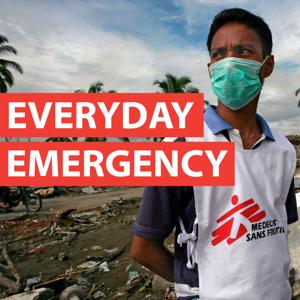
Everyday Emergency

Everyday Emergency

By Médecins Sans Frontières / Doctors Without Borders (MSF)BusinessNewsNon-Profit
Download on the App Store

Everyday Emergency episodes

  • Speaking Out - Chechnya - Episode 8: A Deliberate Strategy of Non-Assistance
    The situation in the North Caucasus is getting more and more violent as the Russian federal authorities is trying to forcibly repatriate Chechen refugees and force humanitarian organisations out of Ingushetia. When colleagues at other organisations are kidnapped in Chechnya, MSF closes down all operations in the country again. With a diminishing international presence in the warzone, MSF is once again faced with dilemmas - should it continue to speak out about human rights abuses its staff haven't witnessed? How can they help those in need in the region? And how long will it be before one of their own staff is once again held hostage?

    Hosted on Acast. See acast.com/privacy for more information.

    25 min
  • Speaking Out - Chechnya - Episode 7: Anti-terrorist rhetoric
    MSF’s operations have been closed down in Chechnya in response to the MSF Coordinator’s kidnapping. After his release, three weeks later, MSF tries to restart its operations in Chechnya but there are delays due to security issues, and for now, the only programmes in the country are run through remote control management from Dagestan, on Chechnya eastern border. Most of MSF’s Caucasus staff are behind the return and support MSF speaking out in the media. Meanwhile and in a statement after the September 11th attacks in New York and Washington, Vladimir Putin links Russian military operations in Chechnya with the anti-terrorist combat launched by the American government. These events completely change the landscape for western tolerance towards Russia.IMAGE: © Olivier Jobard/MYOP

    Hosted on Acast. See acast.com/privacy for more information.

    28 min
  • Speaking Out - Chechnya - Episode 6: 'Kidnapped by mistake'
    Kidnappings are becoming more commonplace in Chechnya and closer to home for MSF as various staff members are held for questioning. Then, a key member of the team in the North Caucasus is taken hostage and questions are asked as to whether there's a causal link between MSF’s decision to speak out in the media and the kidnapping? Other difficult questions are raised: should the organisation speak out in the media to create visibility and hopefully bring their colleague some much-needed protection? Or should MSF be as discreet as possible to avoid a rise in the hostage’s so-called ‘market value’? And is it a good idea to take active steps to secure the hostage’s release, such as publicly pointing out a government’s responsibilities, negligence, or even complicity?

    Hosted on Acast. See acast.com/privacy for more information.

    34 min
  • Speaking Out - Chechnya - Episode 5: All on the same page
    MSF’s operations in Chechnya are slowly starting back up again after 3 years of being run remotely. Although the bombing stops, general insecurity is pervasive and restarting these programmes is not without risks.With an international team back on the ground in Chechnya, everyone agrees on the need to document the situation more thoroughly. A collection of patients’ accounts in the report “Chechnya: The politics of terror” is handed over at a press conference. The various MSF sections agree on a coordinated media strategy for getting news out of Chechnya and into the press, in particular the Russian media.

    Hosted on Acast. See acast.com/privacy for more information.

    22 min
  • Speaking Out - Chechnya - Episode 4: A cautious re-entry to Chechnya
    Throughout the year 2000, MSF seizes every opportunity to raise the alarm on the Chechen’s fate with governments and institutions around the world, but to little concrete effect other than general condemnation. With still no international staff in the country, MSF sections resort to so-called ‘remote control’ management, using locally hired employees to deliver aid on the ground. Concerns over the organisation’s legitimacy in speaking out remain and soon one of the sections starts making unauthorised and dangerous trips over the border into Chechnya from Dagestan where they ran distributions of basic care items. Under attack in the Russian media, MSF wonders whether it should ignore or address the accusations of espionage regularly thrown at the organization?

    Hosted on Acast. See acast.com/privacy for more information.

    22 min
  • Speaking Out - Chechnya - Episode 3: Advocacy without access
    With hostilities in Chechnya flaring up again in what the Russian Federation terms as “anti-terrorist operations”, MSF leaders decide to use the ceremony of the reception of Nobel Peace Prize to call on the international community to intervene. But MSF teams are struggling to work in a Chechnya facing all-out war and dangerous security problems. Instead, MSF starts support refugees in the neighbouring republics where they collect first-hands accounts. Inside Chechnya, operations are run through staff members from the Caucasus who are trained, supported, and managed from afar by international teams in the region. MSF is in a difficult situation that raises many questions: Should MSF be speaking out based on refugees’ testimonies if there are no operational activities with international staff permanently on the ground sin Chechnya? When dealing with a regime in denial of the realities of a war, why is it important to use the word ‘war’? Is it up to MSF to call for this qualification?

    Hosted on Acast. See acast.com/privacy for more information.

    26 min
  • Speaking Out - Chechnya - Episode 2: A Far Cry from Peace
    While the Russian Federation President, Boris Yeltsin talks publicly about a peace plan, his forces carry out a ruthless bombing campaign on rebel-held villages in southern Chechnya. MSF sections are united in wanting to speak out about what their staff witnessed before being forced out of the region, but there’s vigorous debate on how best to draw attention to the atrocities. What is the best way to bring the world’s attention to the plight of the Chechen population? MSF national staff are still working on the ground in southern Chechnya, so will speaking out put their lives in even more danger?

    Hosted on Acast. See acast.com/privacy for more information.

    24 min
  • Speaking Out - Chechnya - Episode 1: The First War in Chechnya
    The first war of independence of Chechnya with the Russian Federation starts in 1994 and runs for two years. In 1999, while the country and its people are still struggling to recover, the Russian authorities start bombing Chechnya again. Through these tough years in the North Caucasus and when access is repeatedly blocked by the Russian forces, MSF staff continues to try to provide food and medical aid to people inside Chechnya and to Chechen refugees in the surrounding republics. From the start of the first war, MSF feeds the press with information on the rapidly deteriorating conditions and the Russian’s refusal to let them into many areas of the country.

    Hosted on Acast. See acast.com/privacy for more information.

    24 min
  • Special episode: "Between Two Fires" - Danger and Desperation in Al-Hol
    Warning: This episode contains testimony related to child deaths that some listeners may find distressing.A new report by MSF lays bare the cruelty of the long-term detainment of more than 50,000 people, the majority of whom are children, in Al-Hol, northeast Syria.The camp was once designed to provide safe, temporary accommodation and humanitarian services to civilians displaced by the conflict in Syria and Iraq. But the nature and purpose of the camp has long deviated and grown increasingly into an unsafe and unsanitary open-air prison after people were moved there from Islamic State group controlled territories in December 2018.Visit https://msf.org.uk/alhol to learn more.

    Hosted on Acast. See acast.com/privacy for more information.

    15 min

About Everyday Emergency

From the publisher's feed

Welcome to Everyday Emergency, a podcast by Médecins Sans Frontières / Doctors Without Borders (MSF).

We bring you true stories and expert insight from people on the frontline of humanitarian…

More shows like Everyday Emergency

This American Life by This American Life

This American Life

91,022 Listeners

Radiolab by WNYC Studios

Radiolab

43,852 Listeners

Fresh Air by NPR

Fresh Air

38,016 Listeners

The Moth by The Moth

The Moth

26,831 Listeners

Global News Podcast by BBC World Service

Global News Podcast

7,625 Listeners

Embedded by NPR

Embedded

12,028 Listeners

In The Dark by The New Yorker

In The Dark

28,549 Listeners

Pod Save America by Pod Save America

Pod Save America

87,116 Listeners

The Daily by The New York Times

The Daily

111,799 Listeners

The Nocturnists by The Nocturnists

The Nocturnists

598 Listeners

Throughline by NPR

Throughline

16,365 Listeners

The Rest Is History by Goalhanger

The Rest Is History

15,702 Listeners

The Ezra Klein Show by New York Times Opinion

The Ezra Klein Show

15,882 Listeners

The Rest Is Politics by Goalhanger

The Rest Is Politics

3,018 Listeners

The Rest Is Politics: US by Goalhanger

The Rest Is Politics: US

2,265 Listeners