
Sign up to save your podcasts
Or

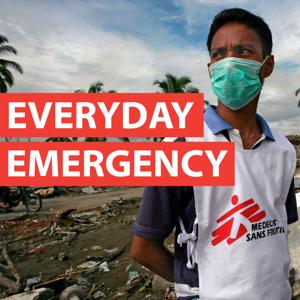


The word healing can mean different things.
Around the world, MSF teams are caring for people caught in conflict zones, escaping violence, or trying to rebuild their lives after being forced to flee.
However, the wounds that many carry with them are not always physical, and they are rarely simple. Mental health conditions like post-traumatic stress disorder (PTSD) can affect every aspect of a person's life. But recovery can take time and is rarely possible whilst a person is still living with uncertainty and fear.
This means that, for many refugees and people seeking asylum, healing might just seem impossible.
For today's episode of Everyday Emergency, we're joined by members of an MSF team who are treating PTSD in people who have sought refuge in the UK, around the city of Birmingham.
To find out more about MSF or to make a donation, please visit msf.org.uk
---
Presented by Amber Dowell
Edited by Sandy McKee
Series producer: Mark Lankester
Photo: MSF
Note: Due to the current rise of anti-refugee sentiment in the UK and incidents of our staff being harassed, we've changed the names of the team members we've interviewed for this episode.
Hosted on Acast. See acast.com/privacy for more information.
The current outbreak of Ebola disease in the Democratic Republic of the Congo (DRC) has become the third largest on record. It is also the fastest-growing.
As of 26 July 2026, more than 3,200 cases have been confirmed, of which 1,400 people have lost their lives.
Médecins Sans Frontières / Doctors Without Borders (MSF) teams have been on the ground since the early stages of the outbreak, working in partnership with local communities and the Congolese health authorities to treat critically ill patients and help contain the disease itself.
But what is it like to be part of the team on the frontline of this humanitarian emergency?
Dr Johnny Falconer is a medical doctor, currently completing his mandatory isolation after working in Ituri province, one of the areas hardest hit by the outbreak. He joined us from Kinshasa, capital of the DRC, to share his experience.
To find out more about MSF or to make a donation, please visit msf.org.uk
---
Presented by Amber Dowell
Edited by Sandy McKee
Series producer: Mark Lankester
Photo: Julien Dewarichet / MSF
Hosted on Acast. See acast.com/privacy for more information.
Right now, Médecins Sans Frontières / Doctors Without Borders (MSF) teams are working to provide life-saving care in crises around the world. But what about the lives that can’t be saved? Ciara Flood is an MSF nurse with a special interest in palliative care. She joins us today to talk about reducing suffering, crossing cultures, and putting patients first.
To find out more about MSF or to make a donation, please visit msf.org.uk
---
Presented by Amber Dowell
Edited by Sandy McKee
Associate producer: Kate Lee
Series producer: Mark Lankester
Photo: Victor Oriema, MSF supported MOH palliative care nurse checks the vitals of Monica Anyango Onduko, a patient in palliative care during a home-based care visit. MSF and MoH teams in Homa Bay currently manage 39 patients in home-based palliative care.
Copyright: Lucy Makori/MSF
Hosted on Acast. See acast.com/privacy for more information.
Every May in London, Médecins Sans Frontières / Doctors Without Borders (MSF) hosts Scientific Days, an annual innovation conference.
The event brings together medical and humanitarian experts from around the world to share the research they have been doing into the conditions and crises that they face every day.
In this episode of Everyday Emergency, we spoke to three specialists about their research and how it could help patients.
From a game-changing antivenom to new tools in malaria prevention and the science of documenting traumatic injuries in Gaza, this is a behind-the-scenes look at life-saving innovation.
Speakers:
Matt Coldiron
Alan de Lima Pereira
Jenna Hoyt
Sohaib Safi
Presented by Amber Dowell
Edited by Sandy McKee
Associate producer: Kate Lee
Series producer: Mark Lankester
Photo: Toks Adeola
Hosted on Acast. See acast.com/privacy for more information.
April marked a sobering milestone: the three-year anniversary of the ongoing war in Sudan. The scale of the crisis has become enormous, with 33 million people now in need of humanitarian aid – more than the entire population of Australia.
From the very first moments of the crisis, MSF teams have been responding, from running clinics in displacement camps to providing emergency surgery for people caught in the crossfire.
Today, we’re joined by Dr Oliver Yerby, an emergency medicine specialist who has recently returned from an MSF assignment in Darfur, a region which has seen some of the worst consequences of the war.
---
Presented by Amber Dowell
Edited by Sandy McKee
Associate producer: Kate Lee
Series producer: Mark Lankester
Photo: Cindy Gonzalez/MSF - Mustafa Omer Idriss, Sudanese doctor and MSF Medical Activities Manager, examines a child in Tawila Hospital.
Hosted on Acast. See acast.com/privacy for more information.
For the past weeks, the world’s media has been focused on the crisis in the Middle East.
The sharp escalation in violence has brought fear to the lives of millions of people. Airstrikes have hit densely populated areas with particular ferocity in Iran and in Lebanon, where hundreds of thousands of people have been forced to flee their homes.
Médecins Sans Frontières / Doctors Without Borders (MSF) teams across the region have been adapting their programmes to respond to the crisis.
However, behind the headlines, on the other side of the Greater Middle East Region, a long-term humanitarian crisis continues to play out in Afghanistan.
For this month’s podcast, we spoke to Dr Mohammad Qaher Poya, the deputy nursing director at MSF's specialist trauma centre in Kunduz, a city in northern Afghanistan.
The trauma centre was originally set up to meet the needs of people injured during the war in Afghanistan. Now, in this post-conflict environment, the team uses their long experience of dealing with what's known as 'mass casualty incidents' to save lives when the sheer number of patients threatens to overwhelm the hospital.
Dr Poya took a break between busy shifts to call us from Afghanistan.
If you would like to support our life-saving medical work around the world, please visit msf.org.uk to make a donation. Thank you.
Presented by Amber Dowell
Edited by Sandy McKee
Associate producer: Kate Lee
Series producer: Mark Lankester
Photo: Tasal Khogyani
Hosted on Acast. See acast.com/privacy for more information.
Last year in Gaza, MSF assisted in one in three births, supported one in five hospital beds, and provided 800,000 medical consultations. This year, however, our teams have faced the prospect that our operations in the Strip could be forced to close.
In this episode, we talk to nursing activity manager Steve Davidson and field communications officer Nour Alsaqqa: two people with firsthand knowledge of MSF’s work in Gaza, the life-saving impact it’s having, and what would be lost if it couldn’t continue.
Presented by Amber Dowell
Edited by Sandy McKee
Associate producer: Kate Lee
Series producer: Mark Lankester
Photo: Motassem Abu Aser
Hosted on Acast. See acast.com/privacy for more information.
In Northern Nigeria, the conflict between government forces and armed groups is hitting communities hard. Vast numbers have been forced to flee, grabbing what they can, leaving behind their homes and livelihoods.
Amid the fear, kidnapping and violence, another crisis is unfolding: the number of women dying in pregnancy or childbirth is among the highest in the world, with one woman dying of these complications every seven minutes according to figures from the UN.
In this episode of Everyday Emergency, we're joined by Hauwa Tanko Audu, a health promotion supervisor, who tells us how the MSF team in the city of Maiduguri are working to ensure women and newborns have access to life-saving care.
Presented by Amber Dowell
Edited by Sandy McKee
Associate producer: Kate Lee
Series producer: Mark Lankester
Photo: Eugene Osidiana / MSF
Hosted on Acast. See acast.com/privacy for more information.
For this special episode of Everyday Emergency, we’re taking a look back at MSF’s work over the last 12 months.
This year, MSF teams were on the ground during some of the world's biggest crises. We provided essential medical care as the wars in Gaza and Ukraine continued, violence escalated in Sudan, and millions of people across the globe were caught up in crises that didn’t always make the headlines - from deadly disease outbreaks and natural disasters, to growing malnutrition.
If you would like to support our life-saving medical work around the world, please visit msf.org.uk to make a donation. Thank you.
Presented by Amber Dowell
Sound production and editing by Sandy McKee
Written and produced by Kate Lee
Series production by Mark Lankester
Photo: MSF
Hosted on Acast. See acast.com/privacy for more information.
In almost any humanitarian crisis – from disease outbreaks to conflict zones – children are among the most vulnerable. Last year alone, almost half of all patients admitted to MSF hospitals around the world were children under the age of five.
But, while access to medical care is absolutely essential, for our youngest patients, there is something else that improves their health, promotes recovery and helps them develop: play.
In this episode of Everyday Emergency, we speak to Katherine Haciömeroğlu. She is a child life specialist who has been working with MSF teams around the world to harness the power of play and help children living through healthcare crises to access the benefits of this perhaps unexpected humanitarian work.
If you would like to support our life-saving medical work around the world, please visit msf.org.uk to make a donation. Thank you.
Presented by Amber Dowell
Edited by Sandy McKee
Photo: MSF
Hosted on Acast. See acast.com/privacy for more information.
From the publisher's feed
Welcome to Everyday Emergency, a podcast by Médecins Sans Frontières / Doctors Without Borders (MSF).
We bring you true stories and expert insight from people on the frontline of humanitarian…
If you would like to support our life-saving medical work around the world, please visit msf.org.uk to make a donation or get involved.
Hosted on Acast. See acast.com/privacy for more information.

91,022 Listeners

43,852 Listeners

38,016 Listeners

26,831 Listeners

7,625 Listeners
12,028 Listeners
28,549 Listeners

87,116 Listeners

111,799 Listeners
598 Listeners

16,365 Listeners

15,702 Listeners

15,882 Listeners

3,018 Listeners

2,265 Listeners