
Sign up to save your podcasts
Or



Based on Podcast App listening data
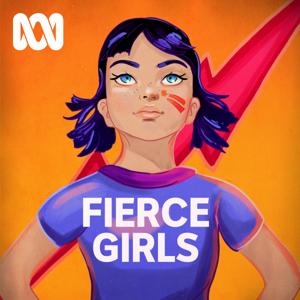
Elizabeth Kenny grew up in a time when women were rarely educated, so naturally, she trained herself to be a nurse. When her patients with polio were struggling with the pain of their treatment, she thought outside the box and came up with a new way to help them – The Kenny Method. Doctors saw her as an outsider, but Elizabeth stuck to her guns and eased the pain of people in need.
Written and narrated by nine-year-old Josie Davies.
Growing up Chinese Australian under the White Australia Policy was tough, but Mary wouldn't be underestimated. She became the first-known Chinese Australian to get a university degree and used her smarts to speak up for Chinese migrant families who were being kept apart by the government. She moved to China to work as a journalist and diplomat, but when she wanted to come back to Australia after World War 2, she wasn't allowed to bring her family back home. This wasn't good enough, so she pushed for all people to be able to call Australia home.
Written and narrated by 10-year-old Meike Chow.
We asked for your Fierce Girls stories, and wow, you delivered! You'll hear inspiring stories by Fierce listeners just like you about a polar explorer, a jockey, a marathon runner, and a robotics pioneer just to name a few! You'll hear five of the best stories spun by listeners on July 10, and another five on October 11, for International Day of The Girl.
Faith Thomas grew up throwing rocks at galahs. She'd only been playing proper cricket for a couple of weeks before she was picked to represent South Australia. Her phenomenal stats made headlines. So, it was no great surprise when Faith got called up to represent Australia against England in Brisbane.
When she stepped onto the Gabba cricket ground, she became the first Aboriginal person to play on any Australian team… not just cricket. But cricket was just a game to Faith. So, not long after that test, she left sport behind to dedicate herself to saving lives as a nurse.
Narrated by cricketer and Muruwari woman, Ashleigh Gardner.
Extra narration by Peggy Webber. Thanks to Daniel Browning and Tyson Baird.
Yukultji Napangati grew up with no contact with the outside world. Just her and her family, living on a shimmery salt lake. She learned how to live on Country, how to find food, water, and shelter. She was a particularly great hunter. When she turned 14, everything changed. She saw her first other humans, and saw a car for the first time. She had been brought to live with other people from her mob, and here she found out she was really good at something else too, painting. It used to be men’s only business, but by the time Yukultji picked up her first paintbrush, it was something women in her community would do too.
Her stroke was unique. It was special. It made her work shimmer just like the salt lake she grew up on. And her paintings now hang on the walls of some of the most famous people in the world.
Narrated by artist Atong Atem.
Queenie McKenzie grew up on a cattle station, staying away from the grasps of the authorities, who would take Aboriginal and Torres Strait Islander kids like her from their families at will. As she grew up, she solved problems everywhere she saw them. From building schools and teaching kids in her community, to saving a man’s life by repairing his scalp stitch by stitch.
But deep down, she wanted to tell the stories of her Country. To preserve their importance.
She started painting in her 70s — becoming the first woman in her community to do so — and realised the power of telling stories through art. And once she started, she never stopped.
Narrated by Wiradjuri poet and artist Jazz Money.
When Kath Ruska's dad told her white people would never recognise Aboriginal culture, she hoped he was wrong. She became a famous poet, using her pen as a weapon to fight for Indigenous rights.
Her words took her all the way to Parliament House, where she demanded the Prime Minister do more to improve the lives of Aboriginal and Torres Strait Islanders.
But she still had an English name, so she changed it to Aboriginal language -Oodgeroo, meaning paper bark, and Noonuccal, the name of her tribe.
Oodgeroo moved back to her island home — Minjerribah — and figured out the best way to make sure her culture was always remembered: she taught it to children, black and white.
Narrated by Gamilaroi and Dunghutti writer and podcast maker, Marlee Silva.
Extra narration by Peggy Webber.
Mary Ann Bugg was an Aboriginal woman who became a savvy bushranger and accomplice to Captain Thunderbolt. She was the bushranger's spy, riding ahead into towns to check for police. She also used her bush skills to gather and hunt food for the group of bushrangers she rode with. Mary Ann used her first-class education and stunning beauty to fool the troopers and avoid being caught.
Narrated by singer-songwriter Thelma Plum.
From the publisher's feed
Ranked by our users in the last 21 days

2,644 Listeners
1,738 Listeners
770 Listeners
759 Listeners

5,171 Listeners
460 Listeners
4,842 Listeners

6,142 Listeners
159 Listeners

14,125 Listeners
1,111 Listeners
10 Listeners
195 Listeners
114 Listeners

6,439 Listeners
267 Listeners
40 Listeners
18,656 Listeners

44 Listeners
1,008 Listeners
60 Listeners
223 Listeners
52 Listeners