
Sign up to save your podcasts
Or

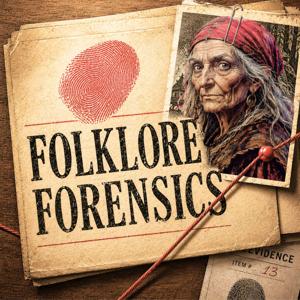


Witches. Hags. Sorceresses. Child-stealers. Monsters. This season, Folklore Forensics reopens the case files of history's most infamous wicked women.
You've heard the story. Now hear the case.
Coming in September, Season 3 of Folklore Forensics reopens the Wicked Women Docket.
Across folklore, mythology, fairy tales, and history, certain women are remembered in remarkably similar ways: they're dangerous, disruptive, supernatural, and impossible to control. They're witches, hags, sorceresses, monsters, and cautionary tales.
This season, we'll investigate the women behind the legends.
From Baba Yaga and Morgan le Fay to the Pendle witches and Isobel Gowdie, each episode treats a familiar story as a historical case file, reconstructing the evidence and asking what these enduring narratives might actually preserve.
Because sometimes the most frightening stories aren't about monsters. They're about women.
Folklore Forensics reopens myths, legends, and folklore as historical criminal cases. Listener discretion is advised.
Written and hosted by Danielle Christmas and produced by Audio Ellis.
Follow / subscribe for weekly storytelling investigations.
Follow the show on Instagram @folkloreforensics
Case suggestions and research inquiries: [email protected]
History remembers Lamia as the monster who stole children. But before she became every parent's nightmare, she was a mother who lost her own.
You've heard the story. Now hear the case.
For centuries, Lamia has been remembered as one of the most terrifying monsters in Greek mythology, a creature who steals children in the night and leaves grieving families behind.
But the oldest versions of the story remember something very different.
Before Lamia became the explanation for every unexplained disappearance, she was a queen, a mother, and the victim of divine vengeance. After Hera destroyed her family, Lamia's grief spread through generations of myth until the woman who lost her children became the monster accused of stealing everyone else's.
In this episode of Folklore Forensics, we reopen the Lamia case, tracing her transformation from bereaved queen to child-stealing legend and investigating how Greek mythology, folklore, and ancient history gradually reshaped one woman's tragedy into one of history's most enduring monsters.
Because sometimes the most revealing investigation isn't about who committed the crime.
It's about who inherited the blame.
Folklore Forensics reopens myths, legends, and folklore as historical criminal cases. Listener discretion is advised.
Written and hosted by Danielle Christmas and produced by Audio Ellis.
Follow / subscribe for weekly storytelling investigations.
Follow the show on Instagram @folkloreforensics
Case suggestions and research inquiries: [email protected]
The Odyssey remembers Scylla as one of Greek mythology's most terrifying monsters. But before the legend, there was a young woman whose life was stolen by someone else's obsession and revenge.
You've heard the story. Now hear the case.
Ancient storytelling—and Christopher Nolan’s new film—recount Scylla as a creature lurking between Italy and Sicily, devouring sailors who passed too close.
But the oldest sources remember something else first.
Before the cave, before the six heads, before the legend, there was a young sea nymph who rejected unwanted attention. What followed was not divine punishment, but a carefully planned act of magical violence that transformed her into something she never chose to become.
In this episode of Folklore Forensics, we reopen the Scylla case, tracing the roles of Glaucus and Circe, reconstructing the poisoning that destroyed a woman's life, and examining how Greek mythology gradually replaced the victim with the monster.
Why did generations remember the danger but almost forget the person? And what happens when violence becomes so complete that history remembers only what someone was forced to become?
Because sometimes the greatest crime isn't the transformation.
It's the erasure.
Folklore Forensics reopens myths, legends, and folklore as historical criminal cases. Listener discretion is advised.
Written and hosted by Danielle Christmas and produced by Audio Ellis.
Follow / subscribe for weekly storytelling investigations.
Follow the show on Instagram @folkloreforensics
Case suggestions and research inquiries: [email protected]
What if the real crime in Antigone wasn't burying the dead, but making burial a crime in the first place?
You've heard the story. Now hear the case.
Antigone is one of the defining figures of Greek mythology: a young woman who defies King Creon's decree, buries her brother, and accepts the death sentence that follows. But beneath the familiar story of civil disobedience lies a very different investigation.
In this episode of Folklore Forensics, we reopen the Antigone case by examining the surviving evidence from Greek mythology, Sophocles' tragedy, ancient Greek burial customs, and the political aftermath of civil war. Why did a king make burial a capital offense? Why did Antigone confess without hesitation? And was the true crime the burial—or the decree that made burial a crime?
Because sometimes the hardest cases aren't the ones where the facts are disputed. They're the ones where no one can agree where the first wrong occurred.
Folklore Forensics reopens myths, legends, and folklore as historical criminal cases. Listener discretion is advised.
Written and hosted by Danielle Christmas and produced by Audio Ellis.
Follow / subscribe for weekly storytelling investigations.
Follow the show on Instagram @folkloreforensics
Case suggestions and research inquiries: [email protected]
The greatest hero in Greek mythology survived monsters, wars, and impossible labors. In the end, the thing that killed him arrived as a gift from his wife.
You've heard the story. Now hear the case.
The evidence appears straightforward. Deianira sends Heracles a robe soaked in what she believes is a powerful love charm. Instead, it becomes a deadly poison that burns through his flesh, leaving the legendary hero begging to die on a funeral pyre. Deianira, horrified by what she has done, takes her own life.
In this episode of Folklore Forensics, we reopen one of Greek mythology's most famous deaths. We reconstruct the chain of events that led to the poisoned robe, examine the fragile marriage between Heracles and Deianira, and ask whether this was truly a tragic mistake or the inevitable consequence of betrayal, jealousy, and unequal power.
Why did Greek mythology remember the collapse of a marriage as a story about poison? And why does this ancient tragedy continue to shape the way we think about trust, love, and the people closest to us?
Because sometimes the deadliest weapon is the one given in love.
Folklore Forensics reopens myths, legends, and folklore as historical criminal cases. Listener discretion is advised.
Written and hosted by Danielle Christmas and produced by Audio Ellis.
Follow / subscribe for weekly storytelling investigations.
Follow the show on Instagram @folkloreforensics
Case suggestions and research inquiries: [email protected]
A young woman disappears while visiting her sister. When Philomela is finally found, she has been assaulted, imprisoned, and mutilated, her tongue removed to ensure she can never tell the truth.
But silence doesn't end the investigation.
You've heard the story. Now hear the case.
In this episode of Folklore Forensics, we reopen one of the most disturbing cases in Greek mythology. We follow the evidence surrounding Philomela's disappearance, examine King Tereus's attempt to conceal the crime, and investigate the extraordinary act of testimony that allowed the truth to emerge. We then reconstruct the shocking revenge carried out by Philomela and Procne, a revenge so brutal that it has unsettled audiences for more than two thousand years.
Why did Greek mythology preserve this story of violence, silence, weaving, and transformation? And what happens when someone destroys a witness's voice, only to discover that the truth can still find another way to speak?
Because some evidence refuses to stay buried.
Folklore Forensics reopens myths, legends, and folklore as historical criminal cases. Listener discretion is advised.
Written and hosted by Danielle Christmas and produced by Audio Ellis.
Follow / subscribe for weekly storytelling investigations.
Follow the show on Instagram @folkloreforensics
Case suggestions and research inquiries: [email protected]
After the murder of King Agamemnon, his son is sent into exile while the killers remain in power.
You've heard the story. Now hear the case.
In this episode of Folklore Forensics, we reopen one of the most famous trials in Greek mythology. We investigate the murders of Clytemnestra and Aegisthus, reconstruct the chain of violence that began with Agamemnon's death, and examine the case that transformed Orestes from avenging son into accused killer.
The facts seem straightforward. A king is murdered. A son returns. A mother dies.
But the deeper investigators looked, the more complicated the case became.
Was Orestes carrying out justice?
Or did one act of revenge simply create another crime?
Drawing on the ancient tradition surrounding Orestes, Clytemnestra, Agamemnon, Apollo, the Furies, and one of mythology's most famous courtroom trials, this episode explores why audiences have argued over the verdict for more than two thousand years.
Because some stories survive not because they provide answers.
They survive because the question never goes away.
Folklore Forensics reopens myths, legends, and folklore as historical criminal cases. Listener discretion is advised.
Written and hosted by Danielle Christmas and produced by Audio Ellis.
Follow / subscribe for weekly storytelling investigations.
Follow the show on Instagram @folkloreforensics
Case suggestions and research inquiries: [email protected]
After the fall of Troy, Queen Hecuba discovers that her youngest son has been murdered by the man entrusted with his protection.
You've heard the story. Now hear the case.
In this episode of Folklore Forensics, we reopen one of the most disturbing cases in Greek mythology. We investigate the murder of Prince Polydorus, reconstruct the betrayal that followed the fall of Troy, and examine the violent revenge that transformed a grieving mother into a suspect herself.
The facts seem straightforward. A trusted guardian betrays his oath. A prince is killed. A mother strikes back.
But the deeper investigators looked, the more complicated the case became.
Was Hecuba seeking justice?
Or did one crime simply create another?
Drawing on the ancient tradition surrounding Queen Hecuba, King Polymestor, and the aftermath of the Trojan War, this episode explores why audiences have argued over the case for more than two thousand years.
Because some stories survive not because they provide answers.
They survive because the question never goes away.
Folklore Forensics reopens myths, legends, and folklore as historical criminal cases. Listener discretion is advised.
Written and hosted by Danielle Christmas and produced by Audio Ellis.
Follow / subscribe for weekly storytelling investigations.
Follow the show on Instagram @folkloreforensics
Case suggestions and research inquiries: [email protected]
What if Greek mythology remembered Medusa as a monster because it forgot what happened to her first?
You've heard the story. Now hear the case.
Medusa is one of the most recognizable figures in Greek mythology: a monster with snakes for hair whose gaze could turn men to stone. But the oldest versions of the myth tell a very different story.
Before she became a monster, Medusa was a priestess serving in Athena's temple. According to later sources, she was assaulted by Poseidon in a place that should have been sacred and safe. Yet the consequences did not fall on the perpetrator. They fell on her.
In this episode of Folklore Forensics, we reopen the Medusa case and examine the surviving evidence from Greek mythology, classical literature, ancient history, and artistic tradition. We investigate the transformation that made Medusa a monster, the hero narrative that elevated Perseus, and the questions that artists and storytellers have continued asking for nearly three thousand years.
Was Medusa truly the villain of the story? Or did Greek mythology preserve a very different kind of crime beneath the monster tale we inherited?
Because sometimes the most enduring monsters begin as victims.
Folklore Forensics reopens myths, legends, and folklore as historical criminal cases. Listener discretion is advised.
Written and hosted by Danielle Christmas and produced by Audio Ellis.
Follow / subscribe for weekly storytelling investigations.
Follow the show on Instagram @folkloreforensics
Case suggestions and research inquiries: [email protected]
You've heard the story. Now hear the case.
Season 2 of Folklore Forensics investigates the crimes hidden inside Greek mythology. From murders and disappearances to betrayals, conspiracies, and acts of revenge, we reopen the ancient cases that became myths, legends, and folklore.
This season, we'll examine the stories of Medusa, Cassandra, Persephone, Philomela, Hecuba, Orestes, Lamia, and other figures whose cases have shaped Western storytelling for thousands of years.
What happened? Why did these stories survive? And what do they still reveal about us today?
New episodes weekly.
Folklore Forensics reopens myths, legends, and folklore as historical criminal cases. Listener discretion is advised.
Written and hosted by Danielle Christmas and produced by Audio Ellis.
Follow / subscribe for weekly storytelling investigations.
Follow the show on Instagram @folkloreforensics
Case suggestions and research inquiries: [email protected]