
Sign up to save your podcasts
Or

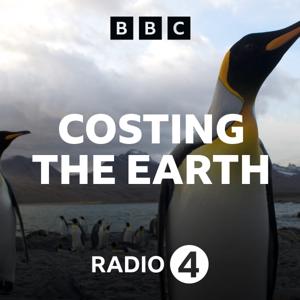

How should we eat to reduce our carbon footprint and save the planet? Should we all give up meat? Or eat only meat that's reared on grassland which couldn't be used for anything else? Or maybe eat intensively-reared meat that grows so fast that it has no time to emit a lot of methane before it's slaughtered?
Aside from meat, how important are food miles? Some argue that food grown in hot countries and transported here by boat has a lower overall carbon footprint than
Tom Heap chairs a debate from the Bristol Food Connections festival with four experts who have very different views, and present their own menus for low-carbon eating: Jasmijn de Boo, Chief Executive of the Vegan Society, Simon Fairlie, author of "Meat - A Benign Extravagance", Mark Lynas, environmental author, and Sean Rickard, agricultural economist.
Producer: Jolyon Jenkins.
 View all episodes
 By BBC Radio 4

4.7
5454 ratings
How should we eat to reduce our carbon footprint and save the planet? Should we all give up meat? Or eat only meat that's reared on grassland which couldn't be used for anything else? Or maybe eat intensively-reared meat that grows so fast that it has no time to emit a lot of methane before it's slaughtered?
Aside from meat, how important are food miles? Some argue that food grown in hot countries and transported here by boat has a lower overall carbon footprint than
Tom Heap chairs a debate from the Bristol Food Connections festival with four experts who have very different views, and present their own menus for low-carbon eating: Jasmijn de Boo, Chief Executive of the Vegan Society, Simon Fairlie, author of "Meat - A Benign Extravagance", Mark Lynas, environmental author, and Sean Rickard, agricultural economist.
Producer: Jolyon Jenkins.

7,665 Listeners

1,049 Listeners

5,536 Listeners

1,797 Listeners

1,763 Listeners

1,041 Listeners

1,923 Listeners

758 Listeners
110 Listeners

3,172 Listeners
1,003 Listeners
176 Listeners
2,049 Listeners