
Sign up to save your podcasts
Or



Tipper X is back.
Tom Hardin, former Wall Street analyst, convicted insider trader, and author, returns to Fraudish to talk about what happens after the scandal.
Most people in Tom’s position would disappear. Instead, he’s chosen to do the opposite: speak openly about his mistakes and turn his scars into service.
Tom joins Kelly to discuss his new book and the real story behind his insider trading conviction — including the pressures of Wall Street, accountability, redemption, and what the justice system gets right (and wrong).
They also dive into the mental health toll of public scandal, the gray areas of ethics in finance, and what Tom now teaches organizations about compliance, culture, and decision-making.
In this episode:
About Tom Hardin
Tom Hardin (aka Tipper X) is a former Wall Street analyst who became one of the most well-known insider trading cooperators in U.S. history. Today he is a public speaker on ethics, compliance, and decision-making in high-pressure environments — and the author of a new book about his experience and redemption.
Connect with Tom:
https://www.linkedin.com/in/tipperx/
📘 Get the book:
https://www.tipperx.com/book
🎧 Listen to Tom’s first Fraudish appearance:
https://podcasts.apple.com/us/podcast/episode-33-tom-hardin-aka-tipper-x/id1530413097?i=1000523021597
Before launching her own forensic accounting firm, Carla Blake CPA, CFE spent 15+ years with the IRS tracking down fraudsters. In this episode, she joins Kelly to break down how investigators actually follow the money—and the surprisingly simple red flags that expose embezzlement.
From ghost employees to Ponzi schemes, Carla breaks down how fraud really happens, how investigators catch it, and why understanding human behavior matters just as much as understanding numbers.
Spoiler: sometimes the biggest fraud control is simply not trusting the nicest person in the office with all the passwords.
What You’ll Learn
Resources Mentioned
Carla Blake
LinkedIn: https://www.linkedin.com/in/blakefiles/
Website: https://www.blakefiles.com/
Julia Cowley is a retired FBI agent/profiler, who hosts The Consult: Real FBI Profilers podcast. The one on the Isabella Stewart Gardner Museum heist was fantastic!
Cowley traces her path from chemistry and a forensic science master’s to the Tennessee Bureau of Investigation, then the FBI, where she was assigned to bank fraud and later public corruption/civil rights in Boston while serving on the Evidence Response Team, before applying to and joining the Behavioral Analysis Unit during research into high-level white-collar offenders. They found some interesting similarities between serious violent offenders and white-collar criminals.
Listen to The Consult: https://www.truecrimeconsult.com/
Art crime isn't like other crime. They aren't just stealing from one person or organization, when they steal a masterpiece from a museum, they're stealing from all of us.
A lot of former law enforcement officials write books. Not a lot of them write page turners.
I found Robert Wittman after reading about him in the news and reached out cold—because his book Priceless is just that good. We're talking kept-me-up-until-2-AM good. Art crime is fascinating, but it doesn't always grab me like this one did.
Robert was instrumental in the creation of the FBI’s rapid deployment Art Crime Team and spent his career going undercover to recover stolen masterpieces worth hundreds of millions of dollars. In this conversation, we get into what it's actually like to work art fraud cases, what differentiates it from other fraud, and how he turned those wild stories into a book that reads like a thriller.
Connect with Robert:
More from Robert:
A return guest on Fraudish who is a LAWYER? Shock & awe.
Rob Gardner is back, and technically he just went to law school (we'll let it slide). This time we're tackling something every investigator is bumping up against: the limitations of AI in research and the paywalls that keep getting in the way.
We dig into how public records access varies wildly from state to state—and why that matters more than ever when you're trying to piece together an investigation. Rob brings the practical, boots-on-the-ground perspective on what AI can actually do for investigators versus what it promises, and where good old-fashioned legwork still wins.
If you've ever hit a wall mid-investigation—literally or digitally—this conversation is for you.
Connect with Rob:
Rob's Writing:
Shows & Resources Mentioned:
What happens when someone needs a forensic accountant but can't afford one?
This week Kelly speaks with Austin Parris, forensic manager at IAG Forensics and Valuation, to talk about something that doesn't get nearly enough attention in our industry: access. Not everyone who needs forensic work can pay for it, but that doesn't mean they don't deserve it.
Austin shares his career journey and his work with the Atlanta Volunteer Lawyer Foundation, where forensic accounting meets real community impact. We dig into why pro bono work matters, how it can actually make you a better investigator, and the networking opportunities that come from showing up for causes bigger than your billable hours.
If you've ever wondered how to use your fraud skills for good or you're looking for meaningful ways to give back while building your career, this one's for you!
Connect with Austin:
Resources Mentioned:
What if AI could make you a better fraud investigator?
This week I sit down with JR Kunkle, an IT professional with over three decades of experience in IT risk and project management. JR isn't just talking theory—he's actually using AI tools like Claude and Gemini in his daily work, and he shares his hands-on approach to leveraging these tools for professional writing and analysis.
We dig into the cybersecurity trends that should be keeping fraud professionals up at night, why organizational transparency remains such a persistent challenge, and what's really going wrong in the accounting and audit sectors.
Whether you're curious about integrating AI into your investigative toolkit or you want to understand the IT risks that enable fraud in the first place, JR brings practical insights from someone who's been in the trenches for 30+ years.
Connect with JR: 🔗 https://www.linkedin.com/in/jrkunkle/
Does technology make fraud easier to commit OR easier to catch? Brian Levine has some strong opinions, and trust me, you'll want to hear them.
In this episode, I sit down with Brian, an attorney, former DOJ cybercrime prosecutor, entrepreneur, and #CyberYenta for one of the most entertaining conversations I've had on this show. We dive into his fascinating career journey from commercial litigation to his work fighting cybercrime at the Department of Justice, and what inspired him to build Former Gov, a directory connecting former government employees.
Brian brings the perfect combination of deep expertise and genuine humor (yes, he kept me laughing the entire recording).
Connect with Brian on Linkedin
Shows & Resources Mentioned:
What does it look like going from a massive international company to working with your husband on a family-owned business?
Liz Briggson, CPA joins Fraudish to discuss her career in the fraud world as a CPA and shares a lot about the differences between working for a big org and starting your own thing. No matter which side you are on, you will learn something!
Encoursa is a platform that provides insightful and engaging professional education for CPAs, accountants, and finance leaders all over the world.
Connect with Liz: https://www.linkedin.com/in/lizbriggsoncpa/
Check out Encoursa: https://encoursa.com/
Contemporary Auditing Book: https://www.abebooks.com/Contemporary-Auditing-Knapp-Michael-C-Cengage/32308578597/bd
https://www.cfo.com/news/doing-time/680742/
Leslie Fays: https://aaronhall.com/lessons-from-leslie-fays-bankruptcy-financial-controls-adaptability-and-leadership/
https://law.justia.com/cases/federal/district-courts/FSupp/918/749/1448157/
All the Cool Girls Get Fired book: https://www.simonandschuster.com/books/All-the-Cool-Girls-Get-Fired/Laura-Brown/9781668067451
Why do so many fraud victims choose to quietly move on rather than pursue criminal charges? In this episode, I explore this frustrating reality with Natalie Lewis, CPA and Certified Fraud Examiner, as we unpack why victims often choose the path of least resistance — and what this means for fraud prevention on a larger scale.
Natalie brings her forensic accounting expertise to our conversation, sharing what it's really like to work massive fraud cases with mountains of discovery and impossibly tight deadlines. We discuss how to stay sane when you're drowning in data, why prioritization and teamwork become your lifeline, and how data analytics can save the day — especially when company turnover threatens to derail an investigation.
If you've ever wondered why we don't see more fraud cases in court or how forensic accountants piece together complex financial crimes, this episode pulls back the curtain on the messy reality of fraud investigation and victim psychology.
Links:
From the publisher's feed
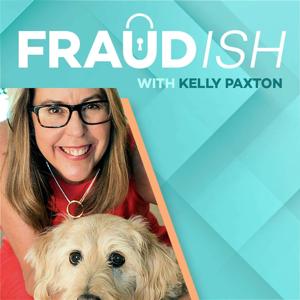
Fraudish is a podcast to help those working in fraud. Hosted by Kelly Paxton, Certified Fraud Examiner, Ex-Private Investigator, and Pink Collar Crime Expert. Kelly is a former special agent turned…
Ranked by our users in the last 21 days
2,186 Listeners

9,966 Listeners
369,597 Listeners

1,087 Listeners
2,121 Listeners

2,398 Listeners
10,882 Listeners
866 Listeners
46,924 Listeners
44 Listeners
32,368 Listeners
142 Listeners

10,795 Listeners

7,334 Listeners

6,168 Listeners