
Sign up to save your podcasts
Or

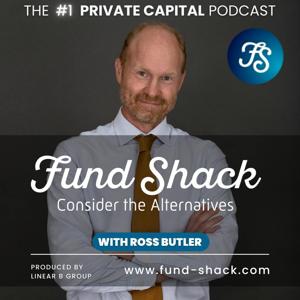


Can algorithms already outperform human decision-making in private equity?
In this episode of Private Markets Podcast, Fund Shack www.fund-shack.com, Ross Butler speaks with Oliver Gottschalg, Professor at HEC Paris and founder of Gottschalg Analytics, about how machine learning is already reshaping private equity fund selection and secondaries pricing.
Drawing on more than 25 years of empirical research and extensive real-world back-testing, Gottschalg explains why algorithmic decision support can improve outcomes using the same opportunity sets LPs invest in today. The discussion explores why private markets may be structurally better suited to machine learning than public markets, where human judgement still matters, and how lower-cost, more scalable private equity products could emerge.
🔹🔹🔹🔹🔹🔹
Topics covered include:
🔹🔹🔹🔹🔹🔹
Guest:
Oliver Gottschalg, Professor of Strategy and Business Policy at HEC Paris, Director of the HEC Private Equity Certificate, and Founder of Gottschalg Analytics.
🌐 Gottschalg Analytics: https://www.gottschalg.com/🔗
https://www.linkedin.com/in/oliver-gottschalg-b53b6261/
Host: Ross Butler, Founder and Host Fund Shack
🌐 www.fund-shack.com
🔗 CONNECT on LinkedIn https://www.linkedin.com/in/rossbutler1/
📘 Order Ross Butler’s book
👉 Invest Like a Barbarian: Share in the spoils of the Private Markets revolution
♾️ http://q-r.to/Invest-Like-A-Barbarian#investlikeabarbarian
🔹🔹🔹🔹🔹🔹
About Fund ShackPrivate Markets Podcast, Fund Shack www.fund-shack.comExplores private equity, private credit, infrastructure, secondaries and private wealth access through long-form, technical conversations with leading practitioners and thinkers.
💡 Suggest a guest: [email protected]
📩 Join our community Substack: https://privateequitypodcastfundshack.substack.com/
🎧 Listen on podcast platforms or watch the full episode on YouTube
📘 Explore episode summaries, transcripts and related content at www.fund-shack.com
🔔 Subscribe for more deep-dive private markets conversations
In this episode of the Private Markets Podcast, Fund Shack, Ross Butler is joined by Cyril Demaria-Bengochea, Head of Private Market Strategy at Julius Baer and Associate Professor at EDHEC Business School.
Cyril brings a rare combination of academic rigour and practical industry insight, shaped by his work with institutional investors, private banks, regulators, and industry bodies including Invest Europe and ILPA. Together, Ross and Cyril unpack what is really changing in private markets, why innovation is accelerating despite slower fundraising and exits, and why information quality, not liquidity or leverage, is now the industry’s biggest constraint.
The discussion explores how continuation funds have moved rapidly into the mainstream, why evergreen structures have become central to private-wealth portfolios, and where the real risks sit beneath commonly used labels like “semi-liquid”. Cyril also offers a measured, data-driven view on private credit, arguing that its growth reflects capital filling the void left by regional banks rather than an unchecked expansion of systemic risk.
The episode goes on to examine listed versus unlisted private equity, the limits of trading private shares without public-market disclosure, and how private markets increasingly compete with fixed income rather than public equities in long-term portfolio construction.
This is a technical, practitioner-focused conversation for allocators, advisers, wealth managers, and professionals navigating private markets at scale.
Topics covered include: Evergreen private equity funds, continuation vehicles and GP-led secondaries, private credit and direct lending, portfolio construction for private wealth, listed private equity vs unlisted structures, liquidity and redemption risk, transparency and due diligence, AI and venture capital cycles, and the role of information in market discipline.
🔹🔹🔹🔹🔹🔹
💼
Cyril Demaria-Bengochea
Head of Private Market Strategy at Julius Baer
Associate Professor at EDHEC Business School
Author and advisor to Invest Europe, ILPA, and the European Commission
🌐 https://www.juliusbaer.com/international/en/our-solutions/investing/other-solutions-and-products/private-markets-offering/
🔗 CONNECT on LinkedIn https://www.linkedin.com/in/cyril-demaria/
Ross Butler
Founder and Host Fund Shack
🌐 www.fund-shack.com
🔗 CONNECT on LinkedIn www.linkedin.com/in/rossbutler1/
🔹🔹🔹🔹🔹🔹
📘 Order Ross Butler’s book
👉 Invest Like a Barbarian: Share in the spoils of the Private Markets revolution
♾️ http://q-r.to/Invest-Like-A-Barbarian
🎬Meet the Author webinars
https://l.ead.me/BarbarianWebinar
#investlikeabarbarian
🔹🔹🔹🔹🔹🔹
Fund Shack is a podcast exploring private equity, venture capital, private credit, infrastructure and real assets, through in-depth conversations with the investors, founders and thought leaders shaping the future of private markets.
🔗 More episodes: www.fund-shack.com
💡 Suggest a guest: [email protected]
📩 Subscribe to our Substack: https://privateequitypodcastfundshack.substack.com/
🔹🔹🔹🔹🔹🔹
Will Dunham, President and CEO of the American Investment Council, joins Fund Shack to unpack one of the most misunderstood debates in modern finance: the real economic impact of private equity and private credit in the United States.
We explore how private capital supports 13 million American jobs, why online narratives around housing and healthcare often diverge from the data, and how private equity is funding manufacturing reshoring, AI infrastructure and national security. We also examine the policy shift opening 401(k) retirement plans to alternative investments, the controversy around private credit and systemic risk, and the broader question of whether private capital remains aligned with everyday Americans.
Topics include:
🔹private equity in US housing
🔹build-to-rent supply
🔹rent-to-own models
🔹healthcare access and innovation
🔹 the growth of private credit
🔹Federal Reserve research on systemic risk
🔹the shrinking US public markets
🔹pension fund returns
🔹the diversification challenge for retirement savers
🔹the SEC private fund adviser rule
🔹the political dynamics shaping private capital's licence to operate.
For investors, advisers, policymakers and allocators seeking a clear view of how private markets actually function on Main Street, this episode offers grounded analysis rather than headlines.
🔹🔹🔹🔹🔹🔹
Thank you to our episode partner, Brookfield’s Private Equity Group: A Global leader in acquiring and driving operational transformation in industrials and essential business services.
For more information, visit: www.brookfield.com/it-takes-industry
🔹🔹🔹🔹🔹🔹
💼 Learn more at: Will Dunham President and Chief Executive Officer
🌐 www.investmentcouncil.org
CONNECT on LinkedIn www.linkedin.com/in/dunhamwill/
Ross Butler
Founder and Host Fund Shack
🌐 www.fund-shack.com
CONNECT on LinkedIn www.linkedin.com/in/rossbutler1/
🔹🔹🔹🔹🔹🔹
📘 Pre-order Ross Butler’s book
👉 Invest Like a Barbarian: Share in the spoils of the Private Markets revolution
♾️ http://q-r.to/Invest-Like-A-Barbarian#investlikeabarbarian
🔹🔹🔹🔹🔹🔹
Fund Shack is the private equity podcast with in-depth conversations with investors, founders, and thought leaders shaping the future of private markets.
🔗 More episodes www.fund-shack.com
📩 Subscribe to our Substack:
https://privateequitypodcastfundshack.substack.com/
Suggest a guest: [email protected]
🔹🔹🔹🔹🔹🔹
Ross Butler speaks with David Nowak, President of Brookfield’s Private Equity Group. David leads Brookfield’s North American private equity business and its evergreen strategy. He brings a contrarian, operations-led viewpoint shaped by more than a decade working across one of the world’s most integrated alternative-investment platforms.
We explore how Brookfield focuses on essential-service businesses that are misunderstood, how it leverages information advantages drawn from its global infrastructure, real estate, renewables and energy-transition platforms, and why its dual-sponsorship model between investors and operators produces repeatable value creation across market cycles.
Brookfield’s approach is not thematic. Instead, it targets situations where perceived risk diverges from actual risk. David discusses the Westinghouse acquisition as an example: nuclear power was deeply out of favour, yet Brookfield’s renewables team demonstrated it remained indispensable to regional power grids. Operational work then doubled EBITDA. A similar framework guided the acquisition of Clarios, where market consensus around electric vehicles failed to reflect realistic adoption rates and operational improvement opportunities.
A large part of Brookfield’s private equity model centres on operations. Around 35 senior operators sit directly inside the investment floor, and every deal is jointly owned by an investor and an operator from diligence through exit. Over half of Brookfield’s private equity returns have come from operational improvement, not leverage. Investment professionals also spend a year inside a portfolio company before promotion, building practical judgement that informs decision-making back at headquarters.
David also unpacks Brookfield’s exit discipline, the benefits of long-dated and permanent capital, and why resilient, essential-service companies tend to attract strategic buyers regardless of market cycles. Finally, he discusses culture, humility and career progression, offering grounded advice for young professionals entering private markets.
Key themes
🔹🔹🔹🔹🔹🔹
💼 Learn more at:
🌐 www.brookfield.com/it-takes-industry
David Nowak: https://www.brookfield.com/about-us/leadership/david-nowak
Brookfield’s Private Equity Group: A Global leader in acquiring and driving operational transformation in industrials and essential business services.
Ross Butler: Founder and Host Fund Shack
🌐 www.fund-shack.com
CONNECT on LinkedIn www.linkedin.com/in/rossbutler1/
🔹🔹🔹🔹🔹🔹
📘 Pre-order Ross Butler’s book
👉 Invest Like a Barbarian: Share in the spoils of the Private Markets revolution
♾️ http://q-r.to/Invest-Like-A-Barbarian
#investlikeabarbarian
🔹🔹🔹🔹🔹🔹
Fund Shack is the private capital podcast with in-depth conversations with investors, founders, and thought leaders shaping the future of private markets.
Its were Private Markets meets private Wealth.
📩 Subscribe to our Substack: https://privateequitypodcastfundshack.substack.com/
🔹🔹🔹🔹🔹🔹
00:00 Why Brookfield avoids thematic investing
01:00 Evolution of Brookfield’s PE strategy
03:00 Essential-services focus; 06:00 Dual-sponsorship model
09:00 Integrated open-floor culture
12:00 Westinghouse case
15:00 Operational EBITDA gains
18:00 Investor secondments
20:00 Clarios and EV cycles
24:00 PE in higher rates
28:00 Strategic exits
31:00 Alignment and pricing discipline
33:00 Culture and apprenticeship
35:00 Career guidance
38:00 Closing reflections
Anthropologist and best-selling author Jack Weatherford, whose Genghis Khan and the Making of the Modern World redefined how we view empire and innovation, joins Ross Butler to explore how the Mongol world prefigured today’s private equity model.
When the Mongols swept across Eurasia in the thirteenth century, they destroyed old orders, but they also built new ones. In this conversation, Jack Weatherford explains how Genghis Khan combined conquest with institution-building, creating a meritocratic system that elevated productivity and aligned incentives in a way that modern investors would recognise.
We discuss how Mongol queens managed ortōq enterprises, private trading ventures that resemble early forms of private equity, how religious freedom became the first international law, and how the empire’s census, taxation and communication systems created transparency across continents.
As the empire matured, Kublai Khan’s experiments with paper money, movable type and naval technology expanded global trade and spread ideas that helped ignite the European Renaissance. The discussion links thirteenth-century portfolio thinking to today’s private markets, showing why creative destruction only endures when creation wins.
0:00 Creative destruction and leadership
1:26 Learning loops, humility and meritocracy
3:56 Parallels with private equity ownership
10:22 Building value through safety and trade
15:02 Census, taxation and the power of numbers
16:21 Queens as capital allocators – the ortōq system
19:19 Religious freedom as economic policy
26:59 A family-office view of the known world
31:49 Kublai Khan’s operating model
37:36 Paper money and the limits of fiat
45:02 Global trade and early financial flows
46:05 Europe’s asymmetric gains from knowledge transfer
52:13 Technology recombination in warfare
58:12 Naval trebuchets and siege innovation
1:01:27 Horse economies and resilience
1:05:22 Genghis Khan’s Western intellectual legacy
1:08:16 Enduring principles for modern investors
Jack Weatherford is an anthropologist, historian and author of Genghis Khan and the Making of the Modern World and The History of Money. His work explores how ideas, trade and governance evolved across civilisations and how they continue to shape modern institutions.
📘 Read Genghis Khan and the Making of the Modern World:
https://www.amazon.co.uk/Genghis-Khan-Making-Modern-World/dp/0609809644
private equity, private markets, Fund Shack, Ross Butler, Jack Weatherford, Genghis Khan, creative destruction, history of finance, financial history, ortōq, family office, meritocracy, value creation, governance, institutional investing, long-term capital, wealth management, portfolio construction, alternative investments, anthropology of markets, economic history, private equity podcast, private markets podcast
🔹🔹🔹🔹🔹🔹
Ross ButlerFounder and Host Fund Shack
🌐 www.fund-shack.com
CONNECT on LinkedIn www.linkedin.com/in/rossbutler1/
📘 Pre-order Ross Butler’s book
👉 Invest Like a Barbarian: Share in the spoils of the Private Markets revolution
♾️ http://q-r.to/Invest-Like-A-Barbarian
🔹🔹🔹🔹🔹🔹
Fund Shack is the private equity podcast with in-depth conversations with investors, founders, and thought leaders shaping the future of private markets.
🔗 More episodes www.fund-shack.com 📩 Subscribe to our Substack:
https://privateequitypodcastfundshack.substack.com/
Ross Butler speaks with Matteo Stefanel and Udayan (“Uday”) Goyal, Co-Founders and Managing Partners of Apis Partners, one of the world’s leading growth-equity investors in financial technology.
Founded in 2014, Apis Partners has built a global fintech franchise by applying M&A discipline to private equity: identify the likely acquirers first, then build the company to fit their strategic blueprint. In this conversation, Matteo and Uday explain how they turned two decades of deal-making experience, from DLJ and Deutsche Bank to advising on Visa, Mastercard, and Worldpay into one of the most distinctive investment models in growth capital.
They discuss:
How Apis built credibility as a first-time fund manager, raising $290m at launch and scaling to a multi-fund global platform.
The importance of the network as an asset, relationships forged over 20 years now drive sourcing, diligence, talent, and exits.
“Exit-first” investing, designing portfolio companies around known strategic buyers and building to a defined market demand.
Why 2025 marks the most disruptive moment in financial services history, as stablecoins, micropayments, and decentralised rails reshape how money moves.
The rise of agentic AI, where your personal financial assistant will soon negotiate directly with your bank’s AI.
Embedded finance and the subscription economy, from iPhones to autos, where distribution and customer ownership, not balance sheet, define value.
The democratisation of wealth, as technology opens private-market access to a broader investor base while raising new questions about fairness, data, and risk.
“Finance will be invisible, stitched into every product, every experience.”
This is a forward-looking discussion about what comes after banking, where technology, capital, and human behaviour converge to redefine how financial systems work and who benefits from them.
🎧 Watch the full conversation at www.fund-shack.com
Follow Fund Shack on YouTube, Spotify, and Apple Podcasts for more conversations with the people shaping private markets and the future of finance.
🔹🔹🔹🔹🔹🔹
Thank you to our episode partner, Brookfield’s Private Equity Group: A Global leader in acquiring and driving operational transformation in industrials and essential business services.
For more information, visit: www.brookfield.com/it-takes-industry
🔹🔹🔹🔹🔹🔹
💼 Learn more at:
🌐 www.apis.pe
🎙️Matteo Stefanel
Managing Partner & Co-Founder, Apis Partners
Linkedin: https://www.linkedin.com/in/matteostefanel/
🎙️Udayan Goyal
Managing Partner & Co-Founder, Apis Partners
Linkedin: https://www.linkedin.com/in/ugoyal/
Ross Butler
Founder and Host Fund Shack
🌐 www.fund-shack.com
CONNECT on LinkedIn www.linkedin.com/in/rossbutler1/
🔹🔹🔹🔹🔹🔹
📩 Subscribe to our Substack: https://privateequitypodcastfundshack.substack.com/
📘 Pre-order Ross Butler’s book Invest Like a Barbarian
http://q-r.to/Invest-Like-A-Barbarian
🔹🔹🔹🔹🔹🔹
00:00 Fintech revolution begins, Apis Partners ranked global #2
01:45 Meet Apis Partners, fintech growth investors Matteo Stefanel & Udayan Goyal
03:06 From Wall Street to growth capital, building a fintech platform
05:01 Relationships as alpha networks turned into exits
07:56 Exit-first model designing for strategic buyers
11:24 Value creation buy-and-build and customer access
16:21 Partnering with founders, trust and alignment
18:20 Stablecoins & 24-hour liquidity, treasury reinvented
23:54 Micropayments & continuous finance, real-time money flow
27:27 Agentic AI, automation reshaping financial services
31:15 Embedded finance & subscriptions, banking disappears
36:52 Who owns the customer, brands vs banks
42:46 Finance as social engine,from UBI to capital ownership
47:00 Democratising wealth, opening private-market access
50:20 Bitcoin vs stablecoins, new financial infrastructure
54:28 the future of finance
Brookfield is renowned for running the companies it owns, not just financing them. In this episode, Ross Butler speaks with Adrian Letts, Managing Partner in Brookfield’s Private Equity Group and Head of Business Operations, to explore how the firm’s operator-led model drives value creation from origination through exit.
Adrian explains how Brookfield embeds operators alongside investors, with shared carry, shared accountability, and a shared mandate to transform portfolio companies. He discusses organisational design as a true value lever, why smaller and senior operating teams outperform larger ones, and how AI and digital tools are reshaping performance management and working-capital efficiency across the Brookfield ecosystem.
From aligning incentives and structuring teams to deploying data and AI in real assets, this is a masterclass in how private equity really creates value.
#PrivateEquity #Brookfield #ValueCreation #FundShack #AdrianLetts #PrivateMarkets #OperationalExcellence #AI #AlternativeInvestments #Leadership
Private markets are no longer on the sidelines. With listed companies shrinking and private companies multiplying, alternatives are becoming a core component of diversified portfolios.
In this episode of Fund Shack, Ross Butler speaks with William Benjamin, Head of Alternative Solutions at HSBC Asset Management, about how alternatives are evolving and why investors haven’t “missed the boat” in the 2020s.
Benjamin discusses:
Why private equity, credit, infrastructure, and venture capital are central to HSBC’s $75bn alternatives platform
The growth of evergreen fund structures and what investors should look for in managers
The challenges and opportunities of democratizing access to private markets
How HSBC leverages its global footprint to source opportunities beyond New York and London
The cultural and career dynamics of talent in alternatives
This conversation explores how one of the world’s largest financial institutions is positioning itself in alternatives, and why Benjamin believes the next phase of growth will be defined not just by institutions, but by the increasing participation of high-net-worth investors.
🔹🔹🔹🔹🔹
👉 Subscribe to Fund Shack for more in-depth conversations on private markets and the future of investment.
🔹🔹🔹🔹🔹
💼 Learn more at:
HSBC Asset Management
🌐 www.assetmanagement.hsbc.co.uk
William Benjamin, Head of Alternative Solutions at HSBC Asset Management
🔗 https://www.linkedin.com/in/w-benjamin/
Ross Butler Founder and Host Fund Shack
🌐 www.fund-shack.com
CONNECT on Linkedin
www.linkedin.com/in/rossbutler1/
🔹🔹🔹🔹🔹
00:00 – Introduction: William Benjamin, HSBC Asset Management
01:03 – Why alternatives are becoming mainstream
02:13 – Haven’t investors missed the boat?
03:49 – Diversification and resilient portfolios
04:36 – Democratization of private markets
05:00 – Evergreen funds: what investors should know
06:22 – Private equity & HSBC’s global sourcing edge
09:46 – Private credit: diversification and risk management
13:43 – Infrastructure, venture capital & new opportunities
16:24 – $75bn in alternatives: HSBC’s growth outlook
19:53 – Talent, culture & career advice in alternatives
23:12 – Data, digital platforms & evergreen structures
28:12 – The five-year outlook for private markets
🔹🔹🔹🔹🔹
#PrivateEquity
#PrivateMarkets
#AlternativeInvestments
#FundShack
#HSBCAssetManagement
#EvergreenFunds
#PrivateCredit
#InfrastructureInvesting
#VentureCapital
#PortfolioDiversification
#WealthManagement
#InstitutionalInvestors
#HNWInvesting
#AssetManagement
#InvestmentStrategies
Alex van Someren has spent his career at the frontier of technology, venture capital, and national security. From joining Acorn Computers as a teenager, the company that seeded ARM Holdings, to co-founding cryptography firm nCipher, becoming a partner at Amadeus Capital Partners, and later serving as the UK’s Chief Scientific Adviser for National Security, his career offers unique insight into how capital and innovation shape geopolitics.
In this episode, Alex explains how the UK’s National Security Strategic Investment Fund (NSIF) mirrors DARPA-backed venture in the US, why government must learn to take risk to access frontier technology, and the realities of venture capital returns. He discusses the hype and risks around artificial intelligence, the disruptive potential of quantum computing, the fragility of semiconductor supply chains, and the ESG debate around nuclear energy and small modular reactors.
For investors, entrepreneurs, and policymakers, this conversation maps the crucial intersection of capital, technology, and defence in a changing global order.
🔹🔹🔹🔹🔹
Thank you to our episode partner
Brookfield’s Private Equity Group: A Global leader in acquiring and driving operational transformation in industrials and essential business services.
For more information, visit:
www.brookfield.com/it-takes-industry
🔹🔹🔹🔹🔹
👉 Subscribe to Fund Shack for more in-depth conversations on private markets and the future of investment.
🔹🔹🔹🔹🔹
💼 Learn more at:
Paladin Capital Group
🌐 www.paladincapgroup.com
Alex van Someren
www.paladincapgroup.com/people/alex-van-someren/
Ross Butler Founder and Host Fund Shack
🌐 www.fund-shack.com
CONNECT on Linkedin
www.linkedin.com/in/rossbutler1/
🔹🔹🔹🔹🔹
Alex van Someren, Fund Shack, Venture Capital, Private Equity, National Security, Defence Technology, Dual-use Technology, Cryptography, nCipher, Amadeus Capital Partners, Acorn Computers, ARM Holdings, National Security Strategic Investment Fund, NSIF, DARPA, Government Venture Capital, AI, Artificial Intelligence, Large Language Models, Quantum Computing, Post-Quantum Cryptography, National Cyber Security Centre, NCSC, Semiconductor Supply Chain, CHIPS Act, National Semiconductor Strategy, Space Technology, Satellites, ESG, Nuclear Energy, Small Modular Reactors, Fusion Energy, Private Markets, Technology Innovation, Geopolitics, UK Venture Capital, Silicon Valley, Defence Spending, NATO, Paladin Capital, Calypso AI, Emerging Technologies, Risk and Innovation, Venture Returns
0:00 – Introduction
0:40 – From teenage coder to Acorn Computers and ARM Holdings
2:33 – Leaving school at 17: self-taught entrepreneur
3:26 – Building nCipher and cryptography’s real-world applications
5:27 – Dual use: civilian vs. national security technology
7:21 – The hidden history of venture capital and DARPA
8:58 – The UK’s National Security Strategic Investment Fund (NSIF)
10:42 – Risk, government spending, and culture clash with VC
15:53 – “If you aren’t losing at least half your money…”
20:08 – The US CHIPS Act and Europe’s semiconductor challenge
29:23 – Venture capital’s boom in defence spending
36:18 – AI is over-hyped, over-used, and makes us stupid
40:30 – Defending the corporate AI stack (Paladin & Calypso)
44:00 – Quantum computing: encryption at risk
47:38 – Why space is now accessible to schoolchildren
51:31 – ESG and nuclear: small modular reactors, fusion, and energy policy
56:10 – Why making money in venture capital is so hard
59:05 – Closing reflections
🎧 Episode #74: Emerging Managers: What It Takes to Make It
Guests: Kim Pochon (Unigestion) & Joe Briggs (BCF )
Series Launch: Fund Shack's Emerging Manager Series
In this launch episode of Fund Shack’s Emerging Manager Series, Ross Butler speaks with Kim Pochon, Global Head of Primary Investments at Unigestion, and Joe Briggs, Founder of BCF, to explore what it really takes to build a successful first-time private equity fund.
With LP appetite growing for new franchises, this episode unpacks the strategic, structural, and psychological factors that separate enduring platforms from short-lived experiments.
🧱 Why “Emerging” Doesn’t Mean Inexperienced
Most “emerging managers” are seasoned investors; what’s new is their journey into firm-building. While GPs may dislike the label, it matters deeply to LPs allocating to this segment.
💡 Early Access = Long-Term Advantage
Backing a first-time fund is about more than returns, it’s about gaining long-term partners. Kim Pochon shares how Unigestion’s early bets have evolved into deep collaborations across continuation vehicles, co-investments, and secondaries.
🛠️ The Rise of Independent Sponsors and Hybrid Funds
Joe Briggs outlines how deal-by-deal models, mini-funds, and short-duration strategies are allowing first-time managers to build track records and LP trust, without raising blind pool capital on Day 1.
👥 Team Dynamics: The Critical Risk Factor
Strategy is important, but people matter more. LPs scrutinise equity splits, decision-making processes, and team chemistry. Execution risk is often people risk.
🔥 Why Founders Spin Out, and What Sets Them Apart
From high-paid roles to high-risk launches, Joe and Kim explore what drives professionals to strike out on their own, and why the best emerging managers have a clear purpose and strong conviction.
📈 “Know Why You Deserve to Exist”
As Briggs puts it, emerging GPs must clearly articulate why their platform should exist, what differentiates it, and how it delivers value to LPs from Day 1.
🔗 Fund Shack is an independent podcast serving the global private capital industry.
✅ Share this episode with your network, it's the most valuable way to help us grow
🎧 Subscribe on Spotify, Apple Podcasts, YouTube or your preferred platform
📄 Prefer to consume your podcast as a newsletter summary?
👉 fund-shack.substack.com
🌐 Visit: www.fund-shack.com
📧 Got a guest idea? Want to sponsor an episode? Email: [email protected]
Fund Shack is produced by Linear B Group
Tags
emerging managers, first-time funds, private equity, GP spinout, fundless sponsor, Unigestion, BCF, private equity podcast, Fund Shack, Ross Butler, LP allocations, fundraising, private markets, private capital, institutional investors, evergreen funds, independent sponsor model, PE fund structure, LP/GP alignment, continuation vehicles
From the publisher's feed

968 Listeners

1,967 Listeners

351 Listeners

797 Listeners

646 Listeners
148 Listeners

136 Listeners

420 Listeners

32 Listeners

3,049 Listeners

1,106 Listeners

948 Listeners
51 Listeners

191 Listeners

2,342 Listeners