
Sign up to save your podcasts
Or

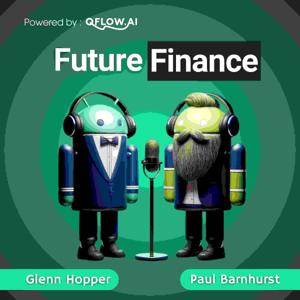


In this episode of Future Finance, hosts Glenn Hopper and Paul Barnhurst reflect on the evolution of AI in finance, the biggest lessons from their podcast, and what lies ahead in 2027. They discuss AI adoption, productivity, governance, and the risks of using AI to build business-critical finance applications.
Glenn and Paul also explore the growing importance of human judgment, the challenges of AI-generated content, and the evolution of AI-powered finance software. They share their perspectives on AI agents, AI-native platforms, and why Excel and financial modeling skills remain essential as technology evolves.
Expect to Learn
The discussion highlights why finance professionals must balance AI innovation with practical expertise, strong controls, and critical thinking to create meaningful business value.
Follow Glenn:
LinkedIn: https://www.linkedin.com/in/gbhopperiii
Follow Paul:
LinkedIn: https://www.linkedin.com/in/thefpandaguy
Disclosure: Portions of this episode (such as the introduction or promotional segments) use AI-generated voice narration produced under human editorial review.
Future Finance is sponsored by QFlow.ai, the strategic finance platform solving the toughest part of planning and analysis: B2B revenue. Align sales, marketing, and finance, speed up decision-making, and lock in accountability with QFlow.ai.
Stay tuned for a deeper understanding of how AI is shaping the future of finance and what it means for businesses and individuals alike.
In Today's Episode
[00:00] - Introduction
[03:17] - Future Finance: A Year in Review
[04:07] - AI Productivity vs. Business Value
[05:49] - AI Adoption, Governance & Security
[10:22] - The Importance of Human Judgment
[11:45] - Challenges with AI-Generated Content
[19:40] - The Evolution of AI in Finance
[22:27] - Build vs. Buy & Vibe Coding Risks
[29:46] - Looking Ahead to 2027
[32:28] - AI Agents, Models & Industry Trends
[37:07] - Is Excel Becoming Obsolete?
[42:04] - Closing Remarks & Thanks
In this highlight episode of Future Finance, hosts Glenn Hopper and Paul Barnhurst discuss Anthropic's reported IPO plans, AI revenue growth, and the financial risks shaping the industry. They explore the company's reported S-1 filing, computing costs, and what its financial performance could mean for the future of AI profitability.
Expect to Learn
Glenn and Paul emphasize why finance professionals should look beyond headline revenue numbers and focus on profitability, operating costs, and financial reporting. Their discussion highlights the importance of understanding AI business models while remaining cautious about long-term growth expectations.
Follow Glenn:
LinkedIn: https://www.linkedin.com/in/gbhopperiii
Follow Paul:
LinkedIn: https://www.linkedin.com/in/thefpandaguy
Disclosure: Portions of this episode (such as the introduction or promotional segments) use AI-generated voice narration produced under human editorial review.
Future Finance is sponsored by QFlow.ai, the strategic finance platform solving the toughest part of planning and analysis: B2B revenue. Align sales, marketing, and finance, speed up decision-making, and lock in accountability with QFlow.ai.
Stay tuned for a deeper understanding of how AI is shaping the future of finance and what it means for businesses and individuals alike.
In Today's Episode
[00:00] - Introduction
[00:57] - Anthropic's IPO & AI Industry Growth
[04:59] - Anthropic's S-1 Risk Disclosures
[06:14] - Financial Performance & Operating Losses
[09:46] - Customer Retention & AI Spending
[13:27] - Principal vs. Agent Accounting
[17:45] - AI Adoption & Future Market Uncertainty
[19:07] - AI Valuations & the Path to Profitability
[22:39] - Closing Remarks & Thanks
In this episode of Future Finance, hosts Glenn Hopper and Paul Barnhurst discuss Anthropic's reported IPO plans, financial performance, and the future of AI profitability. They explore the company's reported S-1 filing, rapid revenue growth, infrastructure costs, and the risks of investing in AI companies.
Glenn and Paul also explain how different revenue accounting methods affect financial reporting, whether current AI valuations are sustainable, and what finance professionals can learn from the industry's growth.
Expect to Learn
The discussion highlights why finance professionals need to look beyond revenue growth and focus on profitability, cash flow, and long-term financial sustainability when evaluating AI companies.
Follow Glenn:
LinkedIn: https://www.linkedin.com/in/gbhopperiii
Follow Paul:
LinkedIn: https://www.linkedin.com/in/thefpandaguy
Disclosure: Portions of this episode (such as the introduction or promotional segments) use AI-generated voice narration produced under human editorial review.
Future Finance is sponsored by QFlow.ai, the strategic finance platform solving the toughest part of planning and analysis: B2B revenue. Align sales, marketing, and finance, speed up decision-making, and lock in accountability with QFlow.ai.
Stay tuned for a deeper understanding of how AI is shaping the future of finance and what it means for businesses and individuals alike.
In Today's Episode
[00:00] - Introduction
[04:26] - Anthropic's IPO & AI Industry Growth
[08:54] - Major Risks in Anthropic's S-1 Filing
[15:24] - Computing Costs & Infrastructure Risks
[20:44] - Revenue Growth & Profitability
[28:31] - Revenue Accounting: Principal vs. Agent
[34:31] - AI Market Growth & Company Valuations
[40:10] - Cash Flow & Long-Term Investment Risks
[44:54] - The Future of AI Economics
[49:52] - Closing Remarks & Thanks
In this episode of Future Finance, hosts Paul Barnhurst and Glenn Hopper discuss how AI is reshaping finance technology, whether traditional SaaS platforms are at risk, and how CFOs should approach software decisions. They explore when to buy existing solutions, build custom workflows, or use AI to improve finance processes without replacing core systems.
In this episode, you will discover:
Paul and Glenn explain that AI can help finance teams automate tasks, connect systems, and access financial information faster. However, businesses still need dependable core software, clear data practices, and appropriate safeguards.
Follow Glenn:
LinkedIn: https://www.linkedin.com/in/gbhopperiii
Follow Paul:
LinkedIn: https://www.linkedin.com/in/thefpandaguy
Disclosure: Portions of this episode (such as the introduction or promotional segments) use AI-generated voice narration produced under human editorial review.
Future Finance is sponsored by QFlow.ai, the strategic finance platform solving the toughest part of planning and analysis: B2B revenue. Align sales, marketing, and finance, speed up decision-making, and lock in accountability with QFlow.ai.
Stay tuned for a deeper understanding of how AI is shaping the future of finance and what it means for businesses and individuals alike.
In Today's Episode:
[01:24] - Is SaaS at Risk?
[03:38] - Choosing Core Finance Systems
[05:52] - Buy vs. Build
[07:55] - Finance Stack Survey
[10:51] - Understanding Agentic AI
[13:57] - AI Adoption & Software Satisfaction
[18:36] - Data Plumbing & Integration Challenges
[20:52] - Survey Findings & Closing Thoughts
In this episode of Future Finance, Paul Barnhurst and Glenn Hopper discuss how AI is changing the finance technology stack and what it means for CFOs deciding whether to buy new software, build custom solutions, or improve their existing systems. They explore whether AI could disrupt traditional SaaS platforms, where agentic AI is delivering value, and why core financial systems remain essential.
In this episode, you will discover:
Paul and Glenn emphasize that finance leaders should focus on solving real business problems rather than chasing new technology. The key is choosing reliable tools, improving data connectivity, and using AI where it delivers meaningful value.
Follow Glenn:
LinkedIn: https://www.linkedin.com/in/gbhopperiii
Follow Paul:
LinkedIn: https://www.linkedin.com/in/thefpandaguy
Disclosure: Portions of this episode (such as the introduction or promotional segments) use AI-generated voice narration produced under human editorial review.
Future Finance is sponsored by QFlow.ai, the strategic finance platform solving the toughest part of planning and analysis: B2B revenue. Align sales, marketing, and finance, speed up decision-making, and lock in accountability with QFlow.ai.
Stay tuned for a deeper understanding of how AI is shaping the future of finance and what it means for businesses and individuals alike.
In Today's Episode:
[00:00] - Trailer
[04:21] - Is SaaS at Risk?
[10:27] - Buy vs. Build: Filling the Gaps
[11:09] - Finance Stack Survey Findings
[14:00] - What Is Agentic AI?
[18:20] - AI Adoption and Software Satisfaction
[23:36] - Data and Integration Challenges
[29:41] - Custom AI Solutions
[36:17] - The Future Finance Stack
[42:51] - Closing Thoughts
In this episode of Future Finance, Paul Barnhurst and Glenn Hopper discuss why finance professionals should stop chasing every new AI model and focus instead on building strong processes, durable skills, and better workflows. They also explore the race toward AGI, AI guardrails, and how quickly the technology landscape is changing.
Paul and Glenn explain that the real advantage is not knowing every new model or benchmark. It is knowing how to use AI effectively, understand processes, and build systems that can adapt as the tools continue to evolve.
In this episode, you will discover:
Paul and Glenn explain that finance professionals do not need to master every new AI release. Instead, they should choose useful tools, learn the fundamentals, and focus on building repeatable processes that can work across platforms.
Follow Glenn:
LinkedIn: https://www.linkedin.com/in/gbhopperiii
Follow Paul:
LinkedIn: https://www.linkedin.com/in/thefpandaguy
Future Finance is sponsored by QFlow.ai, the strategic finance platform solving the toughest part of planning and analysis: B2B revenue. Align sales, marketing, and finance, speed up decision-making, and lock in accountability with QFlow.ai.
Stay tuned for a deeper understanding of how AI is shaping the future of finance and what it means for businesses and individuals alike.
In Today's Episode:
[00:58] - The Race for AGI
[04:31] - AGI Risks, Regulation & Uncertainty
[07:12] - AI Is Moving Too Fast
[10:32] - Astra vs. Claude
[15:09] - Secret CFO’s Take on AI Updates
[21:38] - Wrap-Up
In this episode of Future Finance, Paul Barnhurst and Glenn Hopper discuss the accelerating pace of AI development and why trying to keep up with every new model is becoming a losing battle. They explore what finance professionals should focus on instead, including AI workflows, process design, data, governance, and automation.
Paul and Glenn also discuss how AI is changing the way finance teams work. As tools become more capable, they believe the lasting advantage will come from knowing how to structure processes, give clear instructions, manage AI-powered workflows, and apply human judgment where it matters most.
In this episode, you will discover:
Paul and Glenn explain that finance professionals do not need to constantly switch tools to gain value from AI. Instead, they should focus on building strong processes that can work across different platforms as the technology continues to evolve.
Follow Glenn:
LinkedIn: https://www.linkedin.com/in/gbhopperiii
Follow Paul:
LinkedIn: https://www.linkedin.com/in/thefpandaguy
Disclosure: Portions of this episode (such as the introduction or promotional segments) use AI-generated voice narration produced under human editorial review.
Future Finance is sponsored by QFlow.ai, the strategic finance platform solving the toughest part of planning and analysis: B2B revenue. Align sales, marketing, and finance, speed up decision-making, and lock in accountability with QFlow.ai.
Stay tuned for a deeper understanding of how AI is shaping the future of finance and what it means for businesses and individuals alike.
In Today's Episode:
[00:00] - Welcome
[02:21] - The Race for AGI
[08:28] - AI Is Moving Fast
[17:38] - Stop Chasing Models
[19:43] - Durable AI Skills
[25:03] - Data & Orchestration
[28:08] - Vibe Coding Risks
[32:18] - AI Governance
[34:42] - The Cost of AI
[42:07] - What to Focus On
[44:35] - Closing Thoughts
In this episode of Future Finance, hosts Glenn Hopper and Paul Barnhurst sit down with Matija Nakic, CEO and Co-founder of Farseer, to discuss how AI is changing financial planning, enterprise software, and decision-making. Matija shares why asking the right questions matters, how AI can accelerate planning workflows, and why strong data foundations remain essential.
Matija Nakic is the CEO and Co-founder of Farseer, an AI-native SaaS platform for business modeling, planning, and analysis. With a background in computer engineering, an MBA, and experience across B2B enterprise software, she progressed from developer to product director before co-founding Farseer.
In this episode, you will discover:
Matija also pushes back on the idea that Excel is obsolete. She argues that spreadsheets remain excellent for rapid modeling and individual analysis, but become harder to manage when collaboration, large datasets, version control, and auditability enter the picture
Follow Matija:
LinkedIn: https://hr.linkedin.com/in/matija-nakic
Company: https://www.farseer.com/
Follow Glenn:
LinkedIn: https://www.linkedin.com/in/gbhopperiii
Follow Paul:
LinkedIn: https://www.linkedin.com/in/thefpandaguy
Disclosure: Portions of this episode (such as the introduction or promotional segments) use AI-generated voice narration produced under human editorial review.
Future Finance is sponsored by QFlow.ai, the strategic finance platform solving the toughest part of planning and analysis: B2B revenue. Align sales, marketing, and finance, speed up decision-making, and lock in accountability with QFlow.ai.
Stay tuned for a deeper understanding of how AI is shaping the future of finance and what it means for businesses and individuals alike.
In Today’s Episode:
[02:18] - Why Farseer Was Built
[04:12] - Solving Complex Enterprise Planning
[05:11] - AI, Vibe Coding & Enterprise Software
[06:57] - Building Farseer’s AI Modeler
[10:05] - How AI Accelerates Development
[11:33] - Building for Technical Finance Users
[12:41] - Why Asking the Right Questions Matters
[15:37] - AI Context, Guardrails & Governance
[17:30] - Why Strong Data Foundations Still Matter
[18:23] - Closing Thoughts
In this episode of Future Finance, hosts Glenn Hopper and Paul Barnhurst sit down with Matija Nakic, CEO and Co-founder of Farseer, to discuss how AI is changing financial planning, enterprise software, and decision-making. Matija shares why asking better questions matters, how finance teams can build stronger AI workflows, and where Excel still fits in modern planning.
Matija Nakic is the CEO and Co-founder of Farseer, an AI-native SaaS platform for business modeling, planning, and analysis. With a background in computer engineering, an MBA, and experience across B2B enterprise software, she has progressed from developer to product director and now leads Farseer’s mission to improve how financial professionals plan, model, and make decisions.
In this episode, you will discover:
AI can dramatically accelerate finance work, but speed alone does not create better decisions. Matija explains that effective AI adoption still depends on fundamentals such as clean data, consistent definitions, connected data sources, business logic, and human judgment
Follow Matija:
LinkedIn: https://hr.linkedin.com/in/matija-nakic
Company: https://www.farseer.com/
Follow Glenn:
LinkedIn: https://www.linkedin.com/in/gbhopperiii
Follow Paul:
LinkedIn: https://www.linkedin.com/in/thefpandaguy
Disclosure: Portions of this episode (such as the introduction or promotional segments) use AI-generated voice narration produced under human editorial review.
Future Finance is sponsored by QFlow.ai, the strategic finance platform solving the toughest part of planning and analysis: B2B revenue. Align sales, marketing, and finance, speed up decision-making, and lock in accountability with QFlow.ai.
Stay tuned for a deeper understanding of how AI is shaping the future of finance and what it means for businesses and individuals alike.
In Today’s Episode:
[00:00] - Trailer
[05:22] - Why Farseer Was Built
[08:35] - AI and the Future of Enterprise Software
[13:30] - Building Faster with AI
[17:24] - Why Asking the Right Questions Matters
[22:55] - The Three Levels of AI Adoption
[24:57] - Building a Decision Culture
[32:04] - When Excel Is Still the Right Tool
[35:57] - Governance, Context & Audit Trails
[36:37] - Rapid-Fire Questions
[39:21] - Turning Frustration with Planning Into Farseer
[40:59] - Closing Thoughts
In this episode of Future Finance, Paul Barnhurst speaks with Glenn Hopper about his new book, The AI-Ready CFO, and what finance leaders need to do to successfully adopt AI. Glenn explains why CFOs must take a leadership role in AI strategy, how finance can balance innovation with risk management, and why successful AI implementation starts with data readiness, process improvement, and strong governance.
In this episode, you will discover:
Glenn explains that AI adoption is not just about choosing new tools. Finance leaders need to understand their current processes, establish a baseline, identify opportunities, run focused pilots, and use evidence to decide what should be scaled.
Follow Glenn:
LinkedIn: https://www.linkedin.com/in/gbhopperiii
Glenn’s new book: The AI-Ready CFO
https://robocfo.ai/ai-ready-cfo
Follow Paul:
LinkedIn: https://www.linkedin.com/in/thefpandaguy
Disclosure: Portions of this episode (such as the introduction or promotional segments) use AI-generated voice narration produced under human editorial review.
Future Finance is sponsored by QFlow.ai, the strategic finance platform solving the toughest part of planning and analysis: B2B revenue. Align sales, marketing, and finance, speed up decision-making, and lock in accountability with QFlow.ai.
Stay tuned for a deeper understanding of how AI is shaping the future of finance and what it means for businesses and individuals alike.
In Today’s Episode:
[00:00] - Trailer: The AI-Ready CFO
[03:54] - The AI-Ready CFO Explained
[08:59] - The Changing CFO Role
[13:27] - Why Finance Should Lead AI
[16:46] - AI Change Management
[21:32] - Building an AI Strategy
[27:39] - Trust, Governance & AI
[32:32] - Transparent AI Processes
[36:30] - AI Build vs. Buy
[40:02] - Building AI Agents
[43:21] - Closing Thoughts
From the publisher's feed

227,694 Listeners

6,172 Listeners

123 Listeners

2,425 Listeners

684 Listeners

11,350 Listeners

3,111 Listeners

52 Listeners
107 Listeners

245 Listeners

1,449 Listeners

25 Listeners

15 Listeners

6 Listeners