
Sign up to save your podcasts
Or

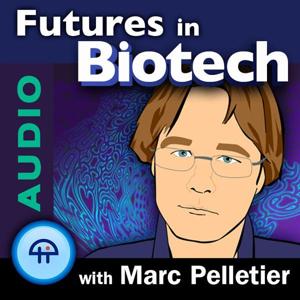


In this episode, we talk about how microarrays are revolutionizing biomedical sciences. Just ten years ago, all genetic and biochemical experiments were performed on a scale of one to a few genes (DNA) or proteins at a time. Now with the advent of microarrays, hundreds of thousands of DNA or protein samples can be analyzed in parallel experiments (side by side on a chip) in a matter of hours. Where once we could only determine whether or not the expression of a single gene was turned on or off using a technique called northern blotting, the dynamic interplay of an entire genome in response to environmental cues or disease states can be monitored in a single experiment. We are slowly transitioning to a new era of individualized medicine, where preventive or therapeutic approaches will be tailored specifically to each individual.
Hosts: Marc Pelletier and Leo Laporte
Guest: Andre Nantel, Ph.D
For more details, visit Marc Pelletier's blog at http://futuresinbiotech.blogspot.com/.
Thanks to CacheFly for providing the bandwidth for this podcast, and to Will Hall for our theme.
Dr. Vidal is working on the next stage in big biotech. Now that we've mapped the human genome it's time to map the interactome, the human protein-protein interaction network. In this episode we talk about the network of interactions, and how closely it mimics other networks, including social networks.
Hosts: Marc Pelletier and Leo Laporte
Guest: Marc Vidal, Ph.D.
Thanks to CacheFly for providing the bandwidth for this podcast.
Dr. Vidal is working on the next stage in big biotech. Now that we've mapped the human genome it's time to map the interactome, the human protein-protein interaction network. In this episode he gives us the groundwork for understanding his work. Next week, in part two, Dr. Vidal explains how the network of protein interactions resembles human social networks.
Hosts: Marc Pelletier and Leo Laporte
Guest: Marc Vidal, Ph.D.
Thanks to CacheFly for providing the bandwidth for this podcast.
Why do living things age? What genes influence longevity? Is it possible to extend youthfulness by means of genetic manipulation? What does the aging of a yeast cell have in common with the aging of a human being or a mouse? Dr. Guarente analyzes these tantalizing questions and others in this episode.
Hosts: Marc Pelletier and Leo Laporte
Guest: Dr. Leonard P. Guarente
Thanks to CacheFly for providing the bandwidth for this podcast.
Dr. Susan Lindquist is a member of the Whitehead Institute for Biomedical Sciences at MIT. Her discoveries in protein folding have lead to paradigm shifts in modern genetics and medicine, including how a protein called HSP90 acts as a capacitor modulate evolution, a process that can even be addressed pharmacologically and possibly used as a strategy in some forms of cancer. Her work also contributes to both our understanding of several protein folding diseases such as Parkinson's and Huntington's and seeks to tackle them head on.
Lastly, we discussed her discovery on how to transform yeast prions (similar to the misfolded proteins linked to mad cow disease) into nanowires as used in nanotechnology.
Hosts: Marc Pelletier and Leo Laporte
Guest: Dr. Susan Lindquist
For more information, links, and discussions visit the Futures in Biotech blog.
From the publisher's feed
Explore the world of cloning, protein folding, genome mapping, and more with the most important researchers in the field.
Although the show is no longer in production at TWiT, you can enjoy episodes from the TWiT Archives.

9 Listeners

34 Listeners
109 Listeners

6 Listeners

139 Listeners

29 Listeners
96 Listeners
35 Listeners

72 Listeners

116 Listeners

94 Listeners
24 Listeners

50 Listeners

15 Listeners
10 Listeners

9 Listeners
0 Listeners
28 Listeners

32 Listeners
0 Listeners