
Sign up to save your podcasts
Or

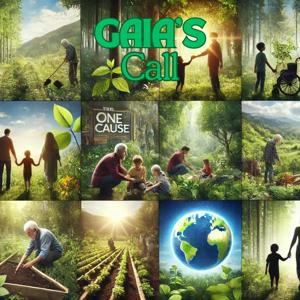


What if Earth is the only place in the entire cosmos where life exists?
For decades, scientists have scanned the stars, listening for distant signals, searching for signs of intelligent civilizations. Telescopes have peered into the vast unknown, mapping a vast number of galaxies, each filled with countless stars and planets. And yet, so far, we have found nothing—not a whisper of life, not a flicker of consciousness beyond our own.
And so we must ask:
What if Earth is not just another planet, but the rarest phenomenon in the universe?
A Living Miracle in a Vast, Silent Universe
In the grand cosmic scale, we are a tiny blue speck orbiting a rather ordinary star. And yet, within this speck, the impossible has happened: life emerged. Not just microbes clinging to survival, but forests that breathe, rivers that sing, creatures that dance, and humans who dream, love, and create.
If life were common—if the universe teemed with civilizations—perhaps our carelessness could be excused. But so far, it seems we are alone. That makes this world not just special, but sacred.
Gaia: More Than Just a Rock in Space
Some might say Earth is just a rock, no different from the lifeless planets that orbit distant stars. But they fail to see the intelligence woven into nature, the wisdom of ecosystems, the way this planet has nurtured and sustained life for over four billion years.
The Gaia Hypothesis, first proposed by scientist James Lovelock, suggests that Earth itself is a self-regulating, living system. The atmosphere, the oceans, the forests—everything interacts in a delicate balance to sustain life. It is as if Gaia herself breathes, adjusting, evolving, and ensuring that life continues.
If we accept this, then we are not separate from nature—we are part of it. We are not mere visitors to Earth; we are Earth, conscious of itself.
The Fermi Paradox: Do Civilizations Destroy Themselves?
If the universe is so vast, then where is everyone?
This is the question at the heart of the Fermi Paradox—if intelligent life is common, why haven’t we found any evidence of it? Some scientists propose a chilling answer: perhaps civilizations do arise—but they don’t last.
Maybe they reach a certain point—a technological tipping point—and self-destruct. Maybe they consume their planet’s resources too quickly, or their greed and divisions lead to collapse.
Maybe they, too, failed to recognize that their world was sacred.
What If Earth Is Our Final Warning?
If no one else has survived long enough to make contact, perhaps this is our moment of reckoning.
We are at the crossroads—one path leads to destruction, the other to regeneration.
Will we follow the civilizations that burned too brightly and faded too soon?Or will we be the first species to wake up in time—to see our planet not as a resource to be exploited, but as a living miracle to be protected?
If there is a Cosmic Intelligence, a God, a great unfolding mystery, what does it mean that this planet—out of trillions—is the only one bursting with life?
What if Earth was uniquely designed—whether by divine hands or cosmic chance—to be the cradle of life?
What if we, humans, were meant to be not conquerors of nature, but its stewards?
What if our greatest purpose isn’t to escape to Mars, but to learn how to live in harmony with the paradise we’ve already been given?
A Walk in the Future That Honors This Truth
Imagine a world that has embraced this sacred responsibility.
* Cities breathe with green spaces, their rooftops alive with plants, their streets shaded by trees.
* Oceans thrive, no longer choked with plastic, but teeming with whales, dolphins, and coral reefs that glow with vibrant color.
* Schools teach reverence for life, not just facts and figures. Children grow up knowing that every breath they take is a gift from the trees, that their well-being is tied to the well-being of all life.
* The economy shifts from endless consumption to regeneration—every product designed to nourish the Earth instead of depleting it.
In this world, we don’t just survive—we flourish.
All of this begins with a shift in consciousness.
The Eco-Guardian Team Reflects
As the Eco-Guardian Team gazes up at the stars, Zak asks, “Do you think there’s anyone else out there?”
Tess tilts her head. “If there is, they’re being awfully quiet.”
Iya, tracing the constellations with her finger, says, “Maybe we were given something rare—something other civilizations didn’t understand in time.”
Ra-Kit stretches, her tail flicking thoughtfully. “Or maybe… we’re the ones meant to be the first. The ones who get it right.”
The fire crackles as they fall into silence, each feeling the weight of that possibility.
What if the greatest adventure of all isn’t waiting beyond the stars… but right here, in our hands?
Instead of seeing ourselves as masters of Earth, what if we saw ourselves as its devoted caretakers?
What if every tree, every river, every creature was seen not as a resource, but as a fellow traveler in this grand cosmic mystery?
What if we understood that protecting Earth is not just an environmental duty—it is a sacred, cosmic responsibility?
This is not just about sustaining human civilization—it is about safeguarding the rarest, most miraculous phenomenon in the known universe: life itself.
And that, dear reader, is a story worth rewriting.
Call to Action
Take a moment to step outside tonight. Look up at the stars. Feel the ground beneath your feet.
What shifts in you when you imagine that Earth might be the only home for life?
What actions will you take to honor the extraordinary gift of this world?
Let’s not be another lost civilization.Let’s be the first to get it right.
Brad(Eco-Author, Grand-Dude, and Co-Creator of One Cause)
We’re creating a collaborative community of Eco-Guardians-in-training. Won’t you join us by subscribing as either a free or paid member?
Decades ago, as Ann and I were preparing to get married, my boss, Pontish Yeramyan, a remarkable woman and the founder of Gap International, gave me a challenge:
“Take a walk with your dog and really be with the predictable future of your marriage.”
At the time, I had two divorces behind me, and Ann had one. Statistically speaking, the odds were not in our favor. The predictable future, based on our past, was clear: things would get hard, resentments would build, and one or both of us would eventually walk away. Another marriage would fail.
I did as Pontish suggested. As I walked, I let myself fully confront that future—what it would feel like to live through another breakdown, to see another relationship dissolve, to fail yet again at what mattered most. It wasn’t an easy walk. But it was a necessary one.
Because here’s the thing:
Once we fully acknowledge the predictable future, we gain the power to choose another one.
And that’s exactly what Ann and I did. Instead of being resigned to repeating history, we created a new unpredictable future—one based on partnership, commitment, and growth.
This year, we celebrate our 35th wedding anniversary.
The Predictable Future of Our World
Right now, humanity stands at a similar crossroads.
If we look honestly at our trajectory—our dependence on fossil fuels, our destruction of ecosystems, our widening inequalities—the predictable future is bleak. It’s a world where extreme weather becomes the norm, where forests continue to vanish, where water and food become scarce, and where the most vulnerable suffer first and most. It’s a world where we deepen our separation—from nature, from each other, and even from our own purpose.
If we do nothing, this is where we are headed.
But just like that walk I took years ago, if we’re willing to truly see this predictable future, we can choose another one.
Choosing the Unpredictable Future
One Cause is about stepping out of the predictable future and creating something entirely new.
It’s about shifting from the 4 Great Untruths that have shaped our world—separation, excess, exploitation, and blind faith in technology—to the 4 Great Truths that can heal it: interconnectedness, sufficiency, reciprocity, and stewardship.
What if, instead of a world defined by competition and depletion, we built one grounded in collaboration and regeneration?
What if our children and grandchildren grew up in a world where clean air and water weren’t luxuries, where forests thrived, where communities flourished—not at the expense of others, but alongside them?
What if we chose a future where we don’t just survive, but thrive?
It won’t happen by accident. And it won’t happen by waiting for someone else to do it for us.
But it can happen—if we make that choice.
Your Walk Forward
I invite you to take a walk of your own.
Find a quiet place and let yourself be with the predictable future of our planet, our society, and our very species. Really see it, feel it, and sit with it. Then, ask yourself:
What would an unpredictable, chosen future look like?
And most importantly…
What’s one step you can take today to start walking toward it?
Why not take just a moment and share that unpredictable future with this community.
Because the future isn’t written. We are writing it now.
Let’s make it a story worth telling.
Brad(Eco-Author, Grand-Dude, and Co-Creator of One Cause)
P.S. A Call to Play Full Out
I credit much of my understanding of this distinction—the predictable future vs. the future we create—to the work of Landmark Worldwide, whose ontological approach to transformation shaped my life in ways I’m still discovering over three decades after being introduced to Landmark’s work by my first coach, Judy Billman.
One of Landmark’s greatest lessons is that transformation doesn’t happen by accident—it happens by declaration.
So, consider this an invitation. A challenge. A call to play full out.
We don’t have to passively walk into the predictable future of destruction, disconnection, and despair.
We can create the future we want—a regenerative, abundant, harmonious world where all life thrives.
The only question is: Are we willing to do what it takes?
And if so…
What’s the first step you’ll take today? Maybe it will include sharing One Cause with some of your loved ones? That would be cool!
We’re creating a collaborative community of Eco-Guardians-in-training. Won’t you join us by subscribing as either a free or paid member?
I’ve been sick these past few days—nothing serious, just one of those stubborn bugs that knocks you off your feet for a bit. But something about being physically run down made it harder to keep my usual perspective, to hold onto the bigger picture. Instead, I found myself staring straight into the turbulence of the world and feeling... lost.
The weight of everything—the climate crisis, political chaos, the sheer scale of the transformation that must take place—felt impossible. The truth is, I’d been carrying around an unconscious assumption:
that this next phase of human evolution is going to be unbearably hard, filled with suffering, and that it will likely remain this way for the rest of my life, maybe even worse for those I love.
Sitting with that realization was sobering. No wonder I was feeling depleted. I’d unknowingly written a script in my mind about what this era had to be.
And then something shifted. It wasn’t a thunderbolt revelation, more like the slow opening of a door. What if it ain’t necessarily so? What if, instead of an era of suffering, this could be the most meaningful, purposeful, and even exciting time to be alive?
What if I get to say?
Reframing the Moment We Are In
As I lay in bed, exhausted but reflective, I thought about the One Cause framework—the Great Untruths (GUTs) and the Great Truths (GTs)—and something clicked.
We’ve spent so much time exposing the GUTs—the myths that have led us to this crisis point—and countering them with the GTs, the deeper truths that point to a different way forward. But what I was struggling with wasn’t just about knowing those truths intellectually. It was about how I personally experience this moment in history.
And that’s where Ken Wilber’s Integral Model came back into focus.
The four quadrants of human experience tell us that transformation isn’t just about changing systems (exterior world) but also about how we see, think, and feel (interior world). If I believe this time is primarily about suffering, then my experience of it will be filled with struggle, resignation, and despair. But if I believe this time is about stepping into my highest purpose, then this could be the most rewarding chapter of my life.
And isn’t that the ultimate lesson of the upper-left quadrant—the inner game of transformation?
A Shift in Perspective: From Crisis to Calling
I realized that I have a choice:
I can see this moment as a slow-motion catastrophe, a downward spiral from which there is no escape. Or, I can see it as a sacred responsibility, an opportunity to bring my wisdom, creativity, and purpose to help guide this transition.
I am not just a 75-year-old man who has benefited from an unsustainable system. I am also a storyteller, a wisdom-keeper, a bridge-builder. And what an honor it is to live at a time when those gifts are needed more than ever.
If I accept that, then this isn’t a time to despair—it’s a time to rise.
And the same is true for all of us.
How Do We Move Forward?
This is where I start to wonder—is there a Fifth Great Truth trying to emerge?
If the first four GTs laid the foundation—Interconnectedness, Sufficiency, Reciprocity, Stewardship—then perhaps what comes next is the bridge to action. Maybe it’s something about how we show up, how we embody these truths, how we move from knowing to doing.
Maybe it’s about Courage—how we step forward even when we don’t have all the answers. Maybe it’s about Emergence—how we trust that the future is co-created in real-time, not pre-determined. Maybe it’s about Purpose—how we each claim our role in this transition.
I don’t have the answer yet. But what I do know is this: we are not powerless in this moment.
I started this reflection in overwhelm, wondering if the scale of change ahead was too vast to comprehend. And I end it with a renewed understanding: I don’t have to see the whole path. I just have to take the next step.
And that step is before us now.
An Invitation
I’d love to hear from you.
* Have you ever caught yourself thinking that this moment in history is only about hardship and struggle?
* What happens when you consider the idea that this might be the most purposeful time to be alive?
* And what do you think? If there were a Fifth Great Truth, what would it be?
Let’s explore this together.
We are shaped by the stories we believe. They influence how we see ourselves, how we treat each other, and how we relate to the Earth. Stories can be invisible cages, reinforcing the Great Untruths (GUTs) and keeping us trapped within cycles of separation, scarcity, and struggle.
But stories can also be keys—opening doors to new ways of being, thinking and acting in our daily lives.
Right now, humanity is at a crossroads. We can keep telling the same old divisive stories—that we are separate from nature (and from each other), that competition is the only way to survive, that growth must be endless, and that technology will save us. Or, we can write new ones.
The Wounds of the Old Stories
Before we move forward, we need to acknowledge the harm of the old narratives—not as a way of getting stuck in blame, but as a way of understanding what needs to heal.
Think about the most damaging stories that have been embedded in our world:
* Nature is something to conquer, not something we belong to.
* Progress means taking more, growing more, having more—no matter the cost.
* There is not enough for everyone, so we must compete and hoard resources.
* Technology will eventually fix everything, so we don’t have to change how we live.
These stories have justified deforestation, overconsumption, inequality, and environmental destruction. They have divided us from the Earth and from each other—convincing us that survival means domination rather than collaboration.
But here’s the truth:
We are not bound by these stories.
New Stories Are Emerging
All over the world, people are telling different stories—stories that bring people together instead of dividing them. Stories of regeneration, reciprocity, and radical possibility. Since the idea to start this One Cause series back in late November, 2024, I’ve been so inspired to learn that there are many other people ready to create a new paradigm of possibilities even as the old dysfunctional one continues its death throes. Here are some examples of the new stories:
Story #1: Indigenous Land Stewardship RevitalizedAcross North America and other countries, Indigenous nations are reclaiming their ancestral lands—not just as a political act, but as a return to a different story about humanity’s role. (#LandBack) From the Yurok Tribe’s restoration of the Klamath River to Australia’s Aboriginal fire management practices, these communities are proving what happens when we live by reciprocity rather than extraction.
Story #2: The End of the Infinite Growth Economy?For centuries, the Gross Domestic Product (GDP- the total value of all goods and services produced in a country during a specific period of time) growth story has driven our economies—at the cost of human and ecological well-being. But today, Doughnut Economics and post-growth movements are rewriting that story. Cities like Amsterdam and Brussels are embedding these ideas into policy, proving that thriving doesn’t require endless expansion.
Story #3: The Youth Who Refuse to Play by the Old RulesFrom climate strikes to mutual aid networks, young people today are rejecting the narrative that their future is already doomed. Instead of falling into despair, they are creating new ways to live, learn, and organize—embracing values of sustainability, equity, and collective care.
These stories disrupt the Great Untruths and lay the groundwork for a new paradigm: the Great Truths.
How Do We Become Storytellers of a New World?
If old stories have shaped the world we have now, then new stories must shape what comes next. But what does it take to create those stories?
First, we must recognize our role as co-creators.Stories don’t come from nowhere. They come from what we say, what we do, and what we choose to believe.
Second, we must practice telling different stories. What happens when we start saying (and acting accordingly):
* We are part of nature, not separate from it.
* Sufficiency is possible when we share wisely.
* We can give back as much as we take.
* Humanity’s role is not to dominate the Earth but to be stewards of it.
Third, we must embody these stories.
A story only becomes real when people live it.
Imagine waking up in a world where these truths have already shaped society. What would it feel like? What would it sound like? What choices would we make differently?
We are about to step into that vision—into the 4 Great Truths—but first, we must say yes to the invitation to leave the old stories behind.
What’s Next? The Sacred Blueprint
We have spent time unpacking the 4 Great Untruths—the stories that have divided us, separated us from the Earth, and led to crisis after crisis.
Now, we begin a new leg of the journey:
The 4 Great Truths—not just as ideas, but as the foundation for a thriving world.A Sacred Blueprint for how we move forward.A vision so clear and compelling that we can already feel it calling us forward.
In the next installment, we’ll step fully into that vision—not just by describing it, but by experiencing it together.
The story of separation is ending. The story of reconnection, regeneration, and joy is already underway. Are you ready to step into it?
I’ll answer that question for myself: Absolutely!
This transition—from the 4 Great Untruths to the 4 Great Truths—is not just an intellectual shift; it’s a seismic transformation in the way we live, think, and relate to one another and the Earth. And as with any transformation, there is resistance, uncertainty, and discomfort.
The Birth Pains of a New Story
As we stand at this crossroads, we are experiencing the clash of two realities. The old paradigm—built on separation, endless consumption, and the illusion of control—is desperate to maintain its grip. Leaders like Trump, and others who benefit from the systems of domination and division, are doing everything they can to keep the old story alive.
Why? Because the old system serves them, and because it is familiar. Because they fear losing power in a world that values equality, sustainability, and interconnection.
But here’s the truth: we are watching a dying paradigm fight to survive. And when old systems crumble, they don’t go quietly. They lash out. They try to convince us that they are the only way.
But they are not.
The contrast we are seeing—the chaos, the corruption, the fear-mongering—isn’t proof that change is impossible. It’s proof that change is already happening. If the 4 Great Untruths were unshakable, there wouldn’t be such a fight to uphold them. The cracks in the old world are widening—and through them, light is shining in.
How Do We Hold Steady in This Time of Contrast?
In moments of uncertainty, it’s natural to feel doubt, exhaustion, and even hopelessness. But let’s take a breath and remember:
This is part of the process. Every great transformation—personal, societal, planetary—comes with resistance. That resistance is not proof of failure, but a sign that something new is emerging. As I learned many years ago:
This is what life looks like when it’s working.
You are not alone. Millions of people around the world are waking up, questioning the old narratives, and choosing to live by new ones. We are part of something much larger than ourselves.
We can choose where to focus. The old world thrives on fear and distraction. The new world thrives on vision and action. Every day, we get to choose: do we give our energy to what is breaking apart, or to what is being built?
The new story is already here. We are not waiting for permission to live by the 4 Great Truths. We are already doing it. Every act of kindness, every moment of stewardship, every connection we make is part of the shift. My family and I are stumbling along this path in what we call our Loving Homestead Experiment. More about this as we continue this journey with you.
A New Reality Is Calling—And We Are Answering
The turmoil of today does not define the future. We do. The contrast we are experiencing is the last desperate gasp of a failing system, not a prophecy of doom. The next chapter of humanity is being written right now—by those of us who refuse to accept the Great Untruths as our destiny.
So if you feel the weight of the world, take heart. We are in the labor pains of something beautiful. This is not the end—it is the beginning of something extraordinary.
And you, dear reader, are part of it.
Let’s hold steady. Let’s hold the vision. Let’s write the future—together.
I Really Want to Hear from You
While I realize that being a writer is often a lonely calling with a lot of solitude, I really do love hearing from you, my readers. It’s for you that I awake each day with an intention to make a difference in your life. And yes, I know we are all busy. Even so, how about leaving a comment below. What one idea of today’s article resonated with you the strongest? What one action will you take today in being more connected to nature and each other?
And while you’re on a roll, how about sharing today’s post with someone you love?
I had an unsettling thought over the weekend.
What if the real reason democracy is slipping away isn’t because of corruption or political polarization or misinformation—but because we, the people, have just become too lazy to care?
Maybe we don’t really want the responsibility of governing ourselves anymore. Maybe we’d rather just hand it all over to someone like Trump—someone who tells us we don’t have to think, we don’t have to decide, we don’t have to engage, because he’ll take care of it for us.
When I shared this with my wife, Ann, she had a different perspective. “It’s not laziness,” she said. “It’s resignation. People have given up because they know the system doesn’t work for them. They’ve been beaten down by a government that seems to serve only the wealthy and powerful, and they’ve realized they have almost no influence over it. It’s not that they don’t care—it’s that they no longer believe their participation will make a difference.”
Maybe we’re both right. Maybe the truth is some toxic mix of the two—resignation feeding complacency, complacency reinforcing resignation, until we find ourselves exactly where we are now: a nation deeply divided, uncertain of its future, and flirting with authoritarianism.
And that’s why I think Donald Trump deserves our thanks. Not for his leadership. Not for his policies. But for making it undeniably clear that freedom and democracy are not free. They require an investment. Not another campaign contribution, but something more valuable: our time and our attention. Not just during elections, but regularly—like brushing our teeth if we want to keep them.
A Short Thank-You Note to Donald Trump
Dear Mr. Trump,
Thank you for waking us up. Thank you for making it painfully obvious that democracy doesn’t run on autopilot. You have shown us that when we disengage, the loudest, most self-serving voices fill the void. You have demonstrated that if we don’t actively participate, the system will default to serving those who crave power above all else.
You have made it clear that we must choose between passive resignation and active responsibility. And for that wake-up call, we owe you our gratitude.
Sincerely,We the People
The Realization That Changed Everything
Like many people, I’ve had fleeting thoughts over the years: Maybe I should run for office. Maybe I should do more. But just as quickly, my mind would produce a thousand reasons why that’s a bad idea. Politics is messy. It’s exhausting. It’s corrupt. I wouldn’t stand a chance.
But here’s the thing—we don’t all have to become politicians. That’s never been the point of democracy. The point is that we must become responsible and caring citizens. Radical idea, right? (Yes, that’s sarcasm.) But somehow, in the daily noise of our lives, we’ve forgotten it.
The question is: What does responsible citizenship look like? And more importantly, how do we make it part of our daily lives, so that democracy doesn’t just survive but thrives?
Bringing the One Cause Perspective to Democracy
For those unfamiliar, One Cause is a framework for understanding and solving the biggest crises facing humanity—not just climate change, but the deep, systemic patterns of thought that have led us here. It’s based on two core ideas:
* The Four Great Untruths (4 GUTs): The false beliefs that have shaped human civilization and caused immense destruction.
* The Four Great Truths (4 GTs): The alternative principles that can guide us toward a regenerative, sustainable future.
Let’s apply these to democracy:
The Four Great Untruths in Politics:
* Separation: We are divided. We must fight to win. My side vs. your side.
* Scarcity: There’s not enough for everyone, so we must hoard power and resources.
* Unquestioned Growth: Winning at all costs is more important than the well-being of the whole. (And that includes our species as well as nature and Earth)
* Domination: Leadership is about control, not service or stewardship.
Sound familiar? These are the foundations of our current political dysfunction—the driving forces behind gridlock, corruption, and the erosion of trust. These are the Great Untruths that have led us to the brink of this existential crisis of humankind.
The Four Great Truths as a Path Forward:
* Interconnection: We are not separate. Democracy only works when we recognize our shared fate.
* Sufficiency: We don’t need to hoard power. A thriving society provides enough for all when we remember how to share.
* Reciprocity: Leadership should be about service, the giving and receiving that support and care for all.
* Stewardship: Democracy is something we must tend to, not something to exploit.
When we shift from the Four Great Untruths to the Four Great Truths, democracy transforms from a battleground into a living system—one that requires care, participation, and a long-term vision.
What Comes Next: The Investment We Must Make
So, if democracy is like brushing our teeth, what does that daily habit look like? Here are some small but meaningful ways we can reinvest in it:
✅ Become News-Literate: Take responsibility for consuming diverse, fact-based information—not just whatever confirms your biases.
Here are a couple of such resources to consider:
1. 1440 Newsletter: The 1440 Newsletter is a daily digest that curates and summarizes the day's most significant stories across various topics, including politics, business, and culture. It aims to present news without bias, allowing readers to form their own opinions. Media Bias/Fact Check rates 1440 as "Least Biased," noting its balanced story selection and minimal editorializing. However, it's important to note that 1440 aggregates news from other sources rather than conducting original reporting.
2. Associated Press (AP) The Associated Press is a longstanding news organization known for its commitment to fast, accurate, and unbiased news reporting across formats. With journalists in nearly 100 countries and all 50 U.S. states, AP emphasizes accurate, fact-based, nonpartisan reporting. Its reputation for neutrality makes it a reliable source for staying informed.
✅ Engage in Conversations: Talk with people outside your political bubble. Remember, in such conversations it’s important to seek understanding, not just victory. (Yes, I’m reminding myself of this important point.)
✅ Show Up Locally: Attend a city council meeting, volunteer for a cause, or support local candidates who align with regenerative values.
✅ Vote in Every Election: Not just the big ones—every local election, every time.
✅ Support the Shift: Help change the conversation from fear-based reaction to future-based creation. That’s how we make politics purposeful again.
✅ Learn how democracy is supposed to work: In my days, students were required to take courses like Civics, and no, they were not a favorite for most of us, but they did provide a foundation for becoming responsible citizens. It’s not too late to teach yourself.
Final Thought: This Is Our Moment
Trump’s rise wasn’t an accident. It was a reflection of where we had already drifted as a society—disengaged, disconnected, resigned. But here’s the good news:
if our inaction helped create this moment, our action can transform it.
Democracy is still ours to reclaim. The future is still ours to build. The question is whether we’ll take that responsibility or let it slip away.
What will you choose?
Let’s talk about it. What’s one small way you’re willing to reinvest in democracy today? Drop a comment or share this with someone who needs to hear it.
Thanks for reading Unleashed - W. Bradford Swift! This post is public so feel free to share it.
I have a confession.
My family and I love the convenience of Amazon. And we’re not alone. Our downstairs neighbor? Same story. The Amazon trucks have a well-worn path to our doorstep, practically part of the neighborhood scenery. There have been days when packages arrived before I even remembered ordering them—like some kind of modern-day magic.
And yet…
There’s something unsettling about how automatic it’s become. The one-click purchases, the never-ending stream of cardboard boxes, the sense that more is always just a tap away. That itch to buy, to accumulate, to solve an inconvenience with a shiny new thing—where does it come from? And more importantly, what would happen if we just… stopped?
On February 28, 2025, thousands of people will participate in No Buy Friday, a 24-Hour Economic Blackout designed to challenge the grip of consumer culture. For one day, we opt out. We refuse to feed the machine that tells us our happiness is just one more purchase away.
But this isn’t about deprivation. It’s about liberation.
Because No Buy Friday isn’t just about not buying—it’s about pausing. Reflecting. Reconnecting.
It’s about asking: What actually makes me happy? What truly adds value to my life?
It’s also about breaking free from some deeply ingrained cultural myths—what I call the Great Untruths (GUTs)—that have shaped our economy, our environment, and our very sense of self.
The Lies We’ve Been Sold (And Why It’s Time to Opt Out)
The world we live in wasn’t designed for sufficiency or sustainability. It was built on myths—stories that benefit corporations but rarely serve us or the planet.
Take a look at these four Great Untruths (GUTs) and see if they sound familiar:
"We Are Separate from Nature" (GUT #1)
We act as if we’re floating above the natural world, rather than deeply intertwined with it. Every time we buy something—whether it’s a gadget, a t-shirt, or a bottle of shampoo—we rarely stop to think about where it came from, what it’s made of, or where it will go when we’re done with it.
But nothing we consume is separate from nature. Every product started as raw materials extracted from the Earth. Every discarded item will outlive us in a landfill (or the ocean).
What if, instead of shopping, we spent No Buy Friday reconnecting with nature? A walk in the woods, barefoot in the grass, breathing in the air and realizing that this, this, is what we’ve been consuming to sustain our lives all along.
"More Is Always Better" (GUT #2 – The Core Theme of No Buy Friday)
This is the one that gets us every time. The lie that happiness is just one more purchase away. That we need the next upgrade, the latest fashion, the flashiest new gadget.
But when has that ever actually worked?
How many times have we bought something we thought would change our lives, only for it to end up gathering dust? How often do we fall into the dopamine trap of “Buy Now” and then feel… nothing?
Instead of chasing “more,” what if we spent this day being grateful for what we already have? What if, instead of scrolling through sales, we took an inventory of all the things in our life that already bring us joy?
"The Earth’s Resources Are Infinite" (GUT #3)
We shop like there’s an endless supply of everything—water, trees, minerals, labor. We throw things away like “away” is an actual place.
But the truth is, we are living on a planet with limits. Every unnecessary purchase contributes to waste, pollution, and depletion. The more we take, the less we leave for future generations.
What if, instead of shopping, we used this day to restore rather than consume? Repair something. Donate something. Or simply sit with the understanding that enough is already here.
"Technology Will Save Us" (GUT #4)
We’ve been sold the idea that the right invention, the next innovation, the perfect “green” solution will fix everything. But tech can’t save us from a mindset of excess and exploitation.
No amount of “sustainable” products will make up for a system built on infinite growth on a finite planet.
Real change starts when we stop looking for an external fix and start shifting how we live.
Which brings us to the Great Truths—the ideas that can help guide us into a different kind of future.
Introducing the Great Truths (GTs): A Sneak Peek
Saying no to corporate-driven consumerism is just the first step. The real shift comes when we start embracing The Great Truths—principles that reconnect us with what actually matters.
We’ll be exploring these deeply in upcoming One Cause articles—follow along here:https://wbradfordswift.substack.com/t/1-cause
Here’s a glimpse:
GREAT TRUTH #1: Interconnectedness – We Are Nature—Not Separate, But OneGREAT TRUTH #2: Sufficiency – There Is Enough—When We Remember How to ShareGREAT TRUTH #3: Reciprocity – Reciprocity Is the Law of LifeGREAT TRUTH#4: Stewardship – Humanity’s Role Is to Care, Not Control
No Buy Friday is a chance to live these truths, even if just for a day.
How to Make No Buy Friday a Day of Gratitude & Reconnection
* Commit to Not Buying Anything from Major Corporations. Opt out of Amazon, Walmart, and other corporate retailers for the day.
* Practice Gratitude. Take an inventory of what you already have. Write down five things you’re grateful for—big or small.
* Go for a Walk in Nature. Experience the wealth that’s always been there, beyond price tags and checkout carts.
* Find Creative Alternatives. Borrow a book instead of buying one. Cook with what’s in your kitchen. Make something instead of ordering it.
* Spread the Word. Share your experience, invite others to join, and use the hashtag #NoBuyFriday to connect with the movement.
Final Thought: This Is Just the Beginning
One day won’t change everything. But it’s a start.
It’s a chance to pause. To reflect. To remember that we are more than what we consume.
And maybe, just maybe, it’s a step toward something bigger.
Join us in this conversation as we continue to explore what a post-consumerist, regenerative future looks like.
Follow One Cause for more: https://wbradfordswift.substack.com/t/1-cause
🚨 SPECIAL ANNOUNCEMENT! 🚨
This Friday, February 28 at 12 PM ET, I’m going LIVE on both Substack and TikTok to continue the No Buy Friday conversation!
We’ll talk about what’s really behind our culture of consumption, how the "More is Always Better" myth drives our choices, and what it means to break free.
Join me and let’s challenge these stories together.
📅 Set a reminder & mark your calendar!📝 Substack Live → Right here on One Cause🎥 TikTok Live → Follow me at @authorwbradfordswift
See you there!
Your Turn
What do you think? Are you in favor of No Buy Friday? Do you plan to participate by not buying from any corporate business? How else are you going to participate. Comment below.
Then share this with others. Let this be the ‘shot heard around the world.’
Join me as an Eco-Guardian by subscribing. Free is great. Paid even better. It’ll provide me with additional resources for sharing this important message. Thanks
It’s comforting to think that somewhere out there, a brilliant invention is about to solve the world’s biggest problems. Electric cars will halt climate change. Carbon-capturing machines will erase our emissions. Geo-engineering will shield us from the sun’s fury. But what if our faith in technology is itself a trap? What if the real solution isn’t in a miracle gadget but in the way we live and the systems we build?
What if we realized that technology is a tool but not our savior?
In this installment of One Cause, we tackle the fourth Great Untruth: the dangerous belief that technology alone will save us. By rethinking our relationship with innovation, we can ensure that technology becomes a tool for regeneration, not an excuse for inaction.
The Great Untruth #4: Technology Will Save Us
While technology offers exciting possibilities, it often fails to address systemic issues like waste and overconsumption. As we explore the limits of technological solutions, let’s consider how deeper systemic changes, like embracing circular economies, can work alongside innovation to create real change.
Here’s the tricky part: while technology is a powerful tool, it can’t replace systemic change. For example, electric vehicles reduce emissions compared to gas-powered cars, but mining for lithium—the metal used in their batteries—comes with its own environmental and social costs. Entire ecosystems are disrupted, water sources are depleted, and local communities often face harmful working conditions. It’s not about rejecting technology but using it wisely, alongside deeper shifts in how we live and consume.
Naomi Klein on the Limits of Innovation
In This Changes Everything, Naomi Klein warns of the dangers of placing blind faith in technological fixes. She writes, “The ‘free market’ ideology of our time, enforced by governments and global institutions, is not compatible with the actions required to avert climate catastrophe.” Relying solely on market-driven innovation risks deepening inequality and environmental harm. Klein argues that the real solutions require systemic change—not just shiny new gadgets.
Kate Raworth echoes this sentiment in Doughnut Economics, urging us to focus on regenerative systems rather than over-reliance on technological fixes. She advocates for circular economies, where materials are reused and recycled rather than discarded.
This aligns with the poignant question raised by environmental advocate Julia Butterfly Hill: "Where is away? When you think about it, there’s really no such thing." Hill’s words remind us that our concept of disposal—whether tossing a plastic bottle or scrapping an old gadget—is an illusion. The waste doesn’t vanish; it simply moves to another place, often becoming someone else’s problem or harming ecosystems far removed from our daily lives.
Claire Eamer, in her book What a Waste!: Where Does Garbage Go?, takes this idea further, exploring the journey of our garbage and challenging us to think critically about the systems that perpetuate waste. Eamer’s work highlights the importance of questioning not only where our waste goes but how we can redesign systems to minimize waste in the first place.
Imagine if every product was designed with its entire lifecycle in mind—from creation to repurposing…you know, just like nature does. In nature, nothing is wasted, everything becomes part of a continuous cycle. Leaves that fall to the forest floor decompose and nourish the soil, which, in turn, feeds new life. This circular system of renewal offers a blueprint for how humanity could reshape its relationship with resources, embracing principles that work with nature rather than against it.
Expanding on Nature’s Systems as Circular Models:Nature’s circularity is not just efficient; it’s regenerative. For example:
* Forest Ecosystems: Dead leaves decompose into rich humus, providing nutrients for new plants to grow. This cycle of decay and renewal ensures the forest thrives over centuries.
* Coral Reefs: Coral polyps build structures that become home to countless species, each contributing to the ecosystem’s health. Even when coral dies, it forms the foundation for new growth.
* Rivers and Streams: As water flows through landscapes, it nourishes plants, carves pathways, and eventually returns to the ocean—only to rise again as rain in an endless loop.
These systems don’t just sustain life; they enrich it. Imagine if our economic and industrial systems mimicked this approach: designing products that biodegrade safely, creating manufacturing processes that recycle materials endlessly, and ensuring energy use comes from renewable sources that replenish themselves.
Nature shows us what’s possible when we prioritize regeneration over exploitation. It’s not just a dream—it’s a roadmap for survival.
At our “Loving Homestead,” we’ve made it a priority to minimize waste and repurpose wherever possible. Organic waste from the kitchen is composted to enrich our garden soil, while cardboard finds a second life either as fuel for our woodstove or in the recycling bin. We also recycle as much plastic, glass, and aluminum as we can.
But here’s the hard truth: much of the plastic that comes into our home isn’t recyclable, so it ends up being thrown “away.” And, like many others, we’re not under the illusion that everything we send to the recycling center is actually reused. The reality is sobering—our systems for managing waste often fall short, leaving us to question how much of what we discard truly gets repurposed. This awareness pushes us to keep asking: how can we do better? How can we align our daily practices more closely with nature’s model of renewal and regeneration?
The Double-Edged Sword of Technology
Technology can also create new problems while solving others. Let’s consider plastics again. Once hailed as a groundbreaking innovation, plastics revolutionized industries but now clog our oceans, poison wildlife, and even harm us. Research has found microplastics—tiny plastic particles—in our water, air, and food. These particles have entered our bodies, where they can cause inflammation, disrupt hormones, and potentially lead to long-term health issues. The very material that made life more convenient now poses serious risks to our health and the environment.
Even renewable energy technologies, like solar panels and wind turbines, come with challenges. What happens to them at the end of their lifespan? Without sustainable end-of-life solutions, these innovations risk becoming tomorrow’s waste, piling up in landfills or creating new ecological problems.
Take, for example, the stack of old MacBook computers sitting in my office closet. I don’t want to throw them “away,” but I haven’t yet found a viable way to recycle them. They’re a personal reminder of how even well-intentioned innovations can leave us grappling with waste.
Here’s my promise to you, dear readers: I’ll look into how to repurpose or recycle these and share what I learn.
The promise of geo-engineering illustrates the danger of over-reliance on technology. Proposals to block the sun’s rays or manipulate weather patterns might seem like science fiction, but they’re gaining traction as potential solutions to climate change. For instance, some experiments propose spraying aerosols into the atmosphere to reflect sunlight and cool the planet. Others suggest creating artificial clouds to slow warming. While these ideas may sound innovative, they carry immense risks. What if altering weather patterns causes droughts in some areas while flooding others? What if these solutions disrupt delicate ecosystems, creating cascading effects we can’t foresee? These are not just hypothetical questions—they’re real concerns that demand careful thought before we proceed.
Bringing It Home: What Can We Do?
Let’s bring this closer to home. Think about your own habits. Are there moments when you wait for a tech solution instead of making a simple, meaningful change? Perhaps it’s opting for a reusable water bottle instead of single-use plastics or choosing to bike rather than drive short distances.
What if we saw technology not as the answer, but as part of a larger story—one where humans and nature collaborate rather than compete? The truth is, technology isn’t a savior—it’s a tool. And like any tool, its impact depends on how we use it. When paired with systemic change, cultural shifts, and a deep respect for the natural world, technology can be a force for good.
The Eco-Guardian Team Reflects
Later that evening, the Eco-Guardian Team sat around a crackling campfire, the light dancing across their faces as they processed the day’s lessons. The stars above seemed to listen as the team’s conversation unfolded.
Tess broke the silence. "This whole idea of being separate from nature really gets to me. I mean, look at us. We’re sitting here under the stars, surrounded by the trees and the night. How could anyone think we’re not a part of this? And yet, everywhere you look, the roads, the cities, the forests we’ve destroyed… it’s like we’ve built a world where that lie is the foundation."
Zak nodded. "Yeah, and 'More Is Always Better' isn’t far behind it. I’ve fallen for it myself… always wanting the latest gear, thinking the next big thing will make me happier. But it doesn’t. It’s like a hamster wheel that never stops. Maybe we don’t need more. Maybe we need less, but better."
Iya added softly, "In the Amazon, my grandfather always told me, 'The river does not ask to be more than it is. It flows because that is its purpose.' He believed that if we remembered how to live with what we need, instead of always chasing what we want, the Earth would heal."
Ra-Kit, perched nearby, swished her tail thoughtfully. "And then there’s the tech savior myth. So tempting, isn’t it? To think that something—or someone—will invent a magic fix. But waiting for a miracle invention doesn’t solve the problem. It’s just another way of passing the buck. Real change starts with us, right here, right now."
Ompa, Iya’s grandfather, spoke up from the shadows where he’d been listening. "The stories we tell shape the worlds we build. If we tell stories of separation, greed, and waiting for others to save us, then those are the worlds we will live in. But if we tell stories of connection, of gratitude, of stewardship… those, too, can become reality. It starts with the stories in our hearts."
The group fell quiet, the weight of his words settling over them. One by one, they began to share ideas for how they could live those new stories—as Eco-Guardians, and as humans. Their words, like the flames of the fire, reached outward, inviting us all to join them.
What’s Next?
So far in the One Cause series, we’ve elaborated on the four Great Untruths that is leading humankind to the brink of extinction:
* We Are Separate from Nature – The false belief that humanity stands apart from and above the natural world, rather than being deeply interconnected with it.
* More Is Always Better – The obsession with constant growth, consumption, and accumulation at the expense of well-being and sustainability.
* The Earth’s Resources Are Infinite – The dangerous assumption that the planet can endlessly provide for our needs, no matter how much we take.
* Technology Will Save Us – The over-reliance on innovation as a cure-all, ignoring the systemic and cultural changes that are equally essential.
Understanding these Great Untruths is the first step, but the journey doesn’t stop here. In the next installment, we’ll delve deeper into how cultural narratives and societal norms perpetuate these myths. More importantly, we’ll explore how to begin rewriting these stories—one idea, one action, and one community at a time.
The work ahead is challenging, but it’s also full of possibility. Together, we can build a future rooted in connection, collaboration, and care for the Earth and each other. Let’s continue this journey toward a new narrative and a thriving, regenerative world.
Closing Reflection
Later, as the campfire burned low, Zak said, “Maybe rewriting the story isn’t just about words. Maybe it’s also about how we live.”Tess nodded. “And how we teach others to live too.”
Their exchange is an invitation—to me, to you, to everyone—to create a future where humanity and nature thrive together. Let’s write a new narrative.
Brad (Eco-author and Eco-Guardian in training)
P.S. Which of these Great Untruths have shaped your actions? Share your thoughts by commenting, and if this resonates with you, please share it with your friends and family. Together, we can grow this community of Eco-Guardians in training. If you haven’t already, subscribe to follow the series. Together, we can rewrite the future.
Thanks for reading Unleashed - W. Bradford Swift! This post is public so feel free to share it.
Unleashed - W. Bradford Swift is a reader-supported publication. To receive new posts and support my work, consider becoming a free or paid subscriber.
This installment of One Cause explores the third Great Untruth: the dangerous myth that the Earth’s resources are infinite. By exposing the stories that drive overconsumption and exploitation, we can begin to rewrite a narrative of balance, stewardship, and regeneration.
The Great Untruth #3: The Earth’s Resources Are Infinite
We live as though the planet has endless resources—an untruth that’s dangerously easy to believe. Water flows from our taps without pause, electricity lights up our homes at the flip of a switch, and forests feel far away from the world of desks and screens. But the truth is, these resources are finite, and we’re using them faster than the Earth can replenish.
For instance, over 15 billion trees are cut down each year. Think about that number for a moment. That’s 15 billion lives—each one a carbon sink, a home for wildlife, a part of a larger ecosystem—gone. This deforestation impacts the air we breathe, the climate we depend on, and countless species that once thrived in these forests.
The imbalance becomes even more stark when we look at the numbers. Humans now make up about 36% of the biomass of all mammals on Earth, while our domesticated livestock—primarily cattle and pigs—constitute about 60%. Wild mammals? They account for just 4%. Let that sink in: the animals we’ve domesticated to feed our consumption vastly outnumber the wildlife that used to roam freely, pointing to how deeply we’ve bought into this untruth.
Kate Raworth’s Doughnut Economics reminds us that this untruth isn’t just about physical resources—it’s about redefining what we consider “enough.” She argues that our obsession with GDP growth has blinded us to the fact that true prosperity must balance meeting human needs within planetary limits. Imagine if our “inner doughnut” ensured everyone had access to basic necessities while our “outer doughnut” protected Earth’s vital systems. This framing invites us to shift from overconsumption to sufficiency, from exploitation to stewardship.
In This Changes Everything, Klein takes it a step further, stating, “What the climate needs to avoid collapse is a contraction in humanity’s use of resources; what our economic model demands to avoid collapse is unfettered expansion.” This tension isn’t theoretical; it’s the battleground on which our future will be decided. Klein’s insights challenge us to rethink not only our consumption patterns but the very systems that drive them.
And the cost isn’t just in the lives of animals or trees—it’s in the quality of our soil, the purity of our water, and the stability of our climate. For example, large-scale livestock farming contributes around 11% of global greenhouse gas emissions. It also consumes vast amounts of water and land, often at the expense of natural ecosystems and biodiversity.
Signs of Hope and a Call to Action
Despite the gravity of this untruth, there are signs of change. The global push to reduce single-use plastics, reforestation projects, and community-driven conservation efforts show that when people recognize the limits of resources, they can act.
But real transformation begins at home. What small change could you make in your own life to honor the planet’s limits? Perhaps it’s being mindful of your water use, choosing local and sustainable foods, or supporting organizations that protect wild spaces. Every action, no matter how small, pushes back against this untruth and helps create a world where balance, not excess, becomes the norm.
What’s Next?
While addressing the myth of infinite resources is crucial, there’s another narrative that shapes our actions in profound ways: our belief that technology will save us. In the next installment, we’ll unpack this Great Untruth and explore what it truly means to innovate wisely.
Stay tuned for Part 4.2: The Tech Savior Myth.
Brad (Eco-author and Eco-Guardian in training)
P.S. Thank you for joining us on this journey to explore the stories that shape our lives—and the future of our planet.
What stories do you see around you that need to change? Share your thoughts by commenting, and if this resonates with you, please share it with your friends and family.
Let’s grow this community of Eco-Guardians in training! If you haven’t already, subscribe to follow the series. Together, we can write a new story.
It’s past time to change the narratives that shape our lives. Join the conversation by subscribing today than sharing this article with someone you love. Thanks
Introducing Interludes of Inspiration
In the One Cause series, we tackle some of the most profound and often challenging topics—examining the stories, systems, and behaviors that have led us to our current crossroads. But navigating these truths can be confronting and even overwhelming. That’s where Interludes of Inspiration come in. These short side trips are here to ground us, remind us of what’s possible, and offer moments of reflection and encouragement. They’re opportunities to take a breath, find inspiration, and move forward with renewed clarity and purpose.
Interlude of Inspiration: A Do-Over for Us All
Have you ever wished for a do-over? A chance to revisit something you didn’t quite get right or an opportunity to pour yourself into something that truly matters? Do-overs aren’t just for games or childhood squabbles—they’re a profound part of life, a reminder that it’s never too late to change course and create something meaningful.
For me, the concept of a do-over resonates deeply as I step into my role as Logan and Piper’s “Grand-dude.” Being their grandfather isn’t just about spoiling them or showing up for birthdays—it’s about being present, sharing the lessons life has taught me, and helping them see the world as a place of wonder, connection, and responsibility. It’s a second chance to engage with life more fully, and maybe even help shape a better future for the ones I love most.
But this isn’t just about me. It’s about all of us, especially those of us in the Baby Boomer generation. We’ve lived through transformative decades—civil rights movements, environmental awakenings, the rise of technology—and now, as elders, we stand at a unique crossroads. We’re being invited to embrace the greatest do-over of all: the chance to help rewrite humanity’s story.
Consider this from Dr. John Izzo of The Way Forward Regenerative Conversations Podcast: “One of the things that is so important to understand is in the developed world, we will be the largest, most highly educated, wealthiest, and longest lived group of elders in human history. So as a percentage of population, we will be in the developed world the largest number that has ever been of older people still alive in human history…and wealthier, will live longer, and have more opportunity to make a difference.”
What Is a Do-Over?
A do-over is an opportunity to revisit, reimagine, and recreate. It’s not about erasing the past but about learning from it and making better choices moving forward. Whether it’s reconnecting with family, revisiting a neglected dream, or advocating for a cause we believe in, a do-over is a powerful act of renewal.
For Baby Boomers, this do-over comes with both challenges and incredible potential. Many of us grew up in a world that celebrated progress at any cost—more technology, bigger cities, faster everything (i.e. we bought into the four Great Untruths previously outlined). But now, we’re seeing the cracks in that narrative as they turn into tectonic fissures. We’ve witnessed the toll it’s taken on the planet, on communities, and on ourselves. The good news? It’s not too late to shift gears. It’s time for a generational do-over.
A Grandparent’s Do-Over
As a parent, I often felt the pressure of time, work, and responsibility. I did my best, but there were moments I wished I could have slowed down, listened more, or been more present and patient. Now, as Logan and Piper’s Grand-dude, I have that chance. We plant seeds together—literal and metaphorical—and I share stories about nature, about the importance of kindness, and about the small choices that ripple outward to create big change.
Some of my favorite moments with my grandkids are sitting on the couch with Logan on one side and Piper on the other as I read them books, often about an assortment of animals, or other aspects of the miracles of nature, subtly teaching them that we are nature, not separate from it—planting seeds that may take years to sprout.
Elders as Wisdom-Keepers
In many Indigenous cultures, elders are revered as wisdom-keepers and guides. They pass down stories, traditions, and values, ensuring that each generation learns from the experiences of those who came before. But in much of modern Western culture, we’ve lost that reverence. As Baby Boomers, we have an opportunity to reclaim it—not through control, but through mentorship and storytelling.
What wisdom do you have to share with the young people in your life? Maybe it’s a lesson about resilience, or a story about how you overcame a challenge. Maybe it’s simply showing them how to plant a tree or cook a meal from scratch. These small acts are seeds of connection and care, and they matter more than we realize.
Let’s face it. We cannot depend upon our educational systems to prepare our children or grandchildren for the future that lay ahead. The current system is not designed for that. It’s designed to train them to be cogs in the great mechanism of progress and unbridled capitalism. So, it’s up to us, the parents and grandparents to teach them creativity, resiliency, and critical thinking—skills they’ll need to navigate an uncertain and rapidly changing world.
Sir Ken Robinson, a leading voice in education reform, argued that traditional educational systems often prioritize conformity over creativity, stifling the very qualities that future generations need to thrive. Robinson famously stated:
“Creativity is as important as literacy in education, and we should treat it with the same status.”
Similarly, Angela Duckworth, author of Grit: The Power of Passion and Perseverance, highlights the importance of resilience, explaining that the ability to persevere through challenges is a better predictor of success than IQ or talent. By fostering these qualities in our children, we empower them to face the future with confidence, adaptability, and the ability to innovate in ways that will shape a better world.
A Do-Over for the Planet
The concept of a do-over isn’t just personal—it’s planetary. The Baby Boomer generation has been both a part of the problem and a part of the solution when it comes to environmental challenges. We witnessed the rise of consumerism, but we also saw the birth of the environmental movement. Now, as elders, we have the chance to guide a global do-over.
What does that look like? It might mean rethinking how we live—embracing simplicity, sustainability, and stewardship. It might mean advocating for policies that protect the environment or mentoring young activists who are leading the charge. And it might mean reflecting on our own stories and asking, “What legacy do I want to leave?”
Reflection Questions for Your Do-Over
Here are a few questions to reflect upon in preparing for your own do-over:
* What lessons have you learned that you wish you’d known earlier? How can you share those with the next generation?
* What small, meaningful changes can you make to align your life more closely with your values?
* How can you model hope, resilience, and connection for your grandchildren—or the young people in your life?
Let’s Embrace the Do-Over
This stage of life isn’t about winding down—it’s about stepping up.
It’s about showing up for the people we love, the planet we call home, and the future we hope to create. It’s about planting seeds we may never see fully grown, trusting that they’ll flourish in the care of those who come after us.
Logan and Piper inspire me to keep going, even when the challenges seem overwhelming. Their laughter, their curiosity, their belief that the world is full of possibilities—it reminds me that this do-over isn’t just a responsibility. It’s a gift.
So, what will your do-over look like? Let’s make it one that transforms not just our own lives, but the lives of everyone we touch. Together, let’s rewrite the story of what it means to be elders, mentors, and co-creators of a thriving, regenerative world.
So, it’s your turn. Let me hear from you. Whether you agree or disagree, share your thoughts by leaving a comment below.
If you enjoyed this post, please share it with a loved one especially if they are part of an eco-conscious family.
Whether you’re a grandparent or just a concerned citizen of the world, join the conversation by subscribing.
The next episode of One Cause will be coming this Friday as usual. However, I felt this was too important to wait. This is a special announcement about how you can actively be part of this growing movement.
Let me start by acknowledging you—those of you who read, engage with, and reflect on the One Cause series. Your curiosity, your concern, and your commitment to exploring new ways of thinking about our place in the world are exactly what this movement is all about.
But let’s take this one step further. You are not just readers. You are collaborators, co-creators, and changemakers. And today, I want to invite you into an even more active role in this growing movement.
So what is this movement?
At its core, One Cause is about shifting the way we think, feel, and act in relation to the Earth. It’s also one way this Grand-Dude is out to leave a more inhabitable planet for his grandkids, Logan and Piper.
It’s about moving beyond fear, resignation, or confusion about climate change and stepping into the role of Eco-Guardians-in-training—those who are committed to re-learning how to live in harmony with the planet and inspiring others to do the same.
My ideal readers are eco-conscious families with young members between the ages of 10-25. This isn’t an exclusive group, but I believe young people are at the heart of the change we need for the choices we make today will define the world they inherit. And parents, grandparents, aunts, uncles, mentors, and educators—we are all part of this. It is up to us to shape the next generation of Eco-Guardians and guiding them toward a future that is thriving, regenerative, just, and spiritually fulfilling.
If you are a parent (or was ever a child), you know our actions speak far more loudly than our words, and it’s especially powerful when our words and actions are in alignment with each other.
Your Role in This Movement
You are here because something in this work resonates with you. Maybe you already see yourself as an active participant in building a regenerative future, or maybe you’re just beginning to step onto this path. Either way, I want to ask you for something simple yet powerful:
Take 15-30 seconds to share the One Cause series.
Each time you share an article, forward a newsletter, or mention One Cause to a friend, you help grow this community. You help bring this message to people who may be looking for exactly this kind of perspective—a way to take action and feel hopeful about the future.
Think about the people in your life—Who do you know who might find value in this series?
* A parent?
* A teacher?
* A young person looking for purpose?
* A grandparent concerned about the world their grandkids will inherit?
If this work speaks to you, chances are you know others who would also benefit from it. I invite you to be an ambassador of this movement.
Join the conversation. Share the vision. Help grow the movement.
So, your mission, should you choose to accept it
https://wbradfordswift.substack.com/t/1-cause
To make it even easier, here’s a simple message you can copy, adapt, and send via email, text, or social media:
Suggested Message to Share:"Hey [Friend’s Name], I just discovered One Cause—a thought-provoking series about rethinking our relationship with the Earth and creating a regenerative future. It’s inspiring, action-oriented, and well worth checking out. I think you’d really appreciate it! Here’s the link: https://wbradfordswift.substack.com/t/1-cause"
We are not observers of change—we are the co-creators of a new story for humanity and the Earth. Let’s keep going.
And here are a couple more pics of my beautiful grandkids.
Join the Movement of Movements - Become a free or paid subscriber. Let’s go - we have humanity to save.
From the publisher's feed