
Sign up to save your podcasts
Or

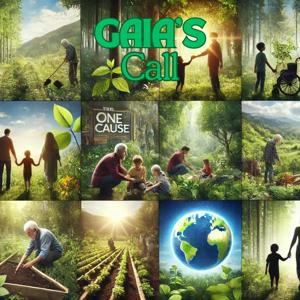


Today in the third installment of One Cause: Rethinking Our Relationship with Nature to Create a Thriving Future we’ll explores the cultural narratives—our collective stories—that have sustained and perpetuated the Great Untruths (GUTs). Through myths, media, education, and societal norms, these stories have shaped our worldview, deepening the Gap between humanity and a regenerative future. By understanding these divisive stories, we can begin rewriting them with narratives of connection, collaboration, and transformation.
So, let’s get started.
Zak Bates and Tess Barkley sat quietly on a hillside overlooking what once was a vibrant, thriving forest, now a barren urban sprawl. The silence between them felt heavy, weighed down by the view. Tess broke it, her voice soft but tinged with frustration. “Humans tell themselves stories to make sense of the world. But somewhere along the way, the stories stopped serving the Earth and started destroying it.” She gestured toward the gray, lifeless horizon. How do you change a story that everyone believes?” (By the way, if you’re new to my writing, Zak and Tess are two of my fictional characters that appear in my eco-fiction and head up the Eco-Guardian team. We’ll be hearing from them throughout this series.)
Zak glanced at her, thoughtful, his brow furrowing as he tried to answer. Finally, he said, “Maybe you start by asking who’s telling the story… and why.”
Their conversation lingered in the air as they watched the wind carry dust across the empty landscape, setting the stage for this exploration of the power of stories: how they shape our reality and why rewriting them is essential.
The Power of Stories
Stories have always been the threads that weave our understanding of the world. They tell us who we are, what matters, and how we should live. But stories are not neutral; they can guide us toward harmony, or lead us astray.
Take a moment to think about a campfire. It’s warm, inviting, and brings people together, but if untended, it can spark a wildfire. Stories function much the same way. When rooted in balance and wisdom, they can inspire us to care for each other and the planet. But when shaped by fear, greed, or disconnection, they can divide us and justify harm.
For much of human history, stories celebrated our connection with nature. Indigenous myths often spoke of balance and reciprocity—an understanding that humans are one part of a vast, interdependent web of life. But as civilizations expanded, these narratives shifted. Take, for example, the biblical idea that humans have dominion over the Earth. This story placed humans above nature, fostering an attitude of control and exploitation.
I still remember my journey to the Ecuadorian rainforest in 2022. Walking among towering trees, hearing the symphony of life all around me, I felt something shift within. Indigenous guides spoke of their belief that every tree, every stream, every creature is alive and sacred. It was a reminder of the stories we’ve forgotten, and it deepened my commitment to rewriting the story of humanity’s relationship with the Earth.
The Stories That Perpetuate the Gap
"Words do not label things already there. Words are like the knife of a carver: they free the idea, the thing, from the general formlessness of the outside." —Attributed to the Inuit People
Stories don’t just describe our reality—they create it. The narratives we tell ourselves about nature and progress influence everything: our beliefs, our actions, and the world we shape as a result. Many of these cultural stories, however, are rooted in what I call the Great Untruths (GUTs).
(A reminder: this is a phrase and distinction I borrowed from Gret Lukianoff and Johnathan Haidt, authors of The Coddling of the American Mind: How Good Intentions and Bad Ideas Are Setting Up a Generation for Failure.)
“While many propositions are untrue, in order to be classified as a Great Untruth, an idea must meet three criteria:
1. It contradicts ancient wisdom (ideas found widely in the wisdom literatures of many cultures).
2. It contradicts modern psychological research on well-being.
3. It harms the individuals and communities who embrace it.”
These untruths perpetuate a disconnect between humanity and nature, driving us further from the regenerative future we need to build.
The Great Untruth #1: We Are Separate from Nature
This untruth tells us that humans are somehow above and apart from nature—a perspective that’s deeply ingrained in many cultural stories. Wilderness is often portrayed as something to be conquered, as if the natural world exists only to serve human ambitions. This mindset has shaped countless actions, from clearing forests for agriculture to draining wetlands for urban expansion.
Think of how history lessons describe “taming the land” or how films like The Revenant show nature as an adversary, harsh and hostile. These stories make it harder to see ourselves as part of the natural world, woven into its fabric.
But here’s a contrasting thought: Indigenous cultures have long told stories that celebrate interconnection, reminding us that we are not separate from nature—we are nature. What would it look like to reclaim those kinds of stories in our daily lives?
Have you ever felt a moment of awe in nature, like watching a sunset or hearing birdsong? Those moments remind us of the truth: we are part of this world, not above it. It’s one of the reasons I start my days with a “sun salutation” as a stand out on my deck welcoming the sun and being grateful for the beauty that surrounds me.
The Great Untruth #2: More Is Always Better
“Bigger is better.” “You can never have too much.” These phrases sum up the heart of this untruth, which fuels overconsumption and environmental harm. Advertisers constantly promise happiness through the latest gadget, the trendiest clothes, or the biggest house. But do those things actually bring us lasting satisfaction?
Take Black Friday as an example. People camp outside stores, rush through aisles, and fight over discounted TVs. And for what? Often, these purchases are driven by the thrill of the hunt rather than real need. Advertisers and marketers know how to tap into this frenzy, convincing us that “more” will make us happier, more successful, or more fulfilled.
But here’s the truth: studies have shown that more doesn’t always equate to more happiness. Research from Princeton University found that day-to-day happiness increases with income up to about $75,000, after which the returns diminish. Beyond that point, additional income provides little added joy. Personally, I believe that number could be far lower, especially when we focus on what truly matters in life—relationships, purpose, and experiences.
Consider this too: many products are designed to fail. “Designed obsolescence” ensures that items like smartphones and appliances have short lifespans, forcing us to replace them often. This cycle of consumption leads to overflowing landfills and wasted resources. Meanwhile, industries thrive on our compulsion to buy more than we need. In the U.S., the self-storage industry has exploded, with over 50,000 facilities offering more than 2.1 billion square feet of rentable space. That’s about 6.1 square feet for every person in the country. Around 9.4% of households rent storage units, pointing to how much we’ve bought into this untruth. And let’s not forget the growing issue of hoarding, which affects an estimated 2% to 6% of the population, further highlighting our attachment to “stuff.”
So, what happens when we step off this treadmill? What if we questioned the belief that more is always better? A simple meal shared with friends, a book that’s been read and re-read, or a quiet walk in nature—these bring joy without the cost of “more.” Reflect on the things in your life that already bring you happiness without adding clutter or stress.
What would change if we redefined “enough” and focused on experiences, relationships, and purpose over possessions? The answers might surprise you—and they might just free you from the cycle of chasing “more.”
To Be Continued...
In the next installment, we’ll dive deeper into the belief that Earth’s resources are limitless and the myth that technology alone will save us. Together, we’ll explore how to challenge these Great Untruths and rewrite the story of humanity’s future. Stay tuned!
Brad (Eco-author and Eco-Guardian in training)
P.S. Thank you for joining us on this journey to explore the stories that shape our lives—and the future of our planet.
What stories do you see around you that need to change? Share your thoughts by commenting, and if this resonates with you, please share it with your friends and family.
Let’s grow this community of Eco-Guardians in training! If you haven’t already, subscribe to follow the series. Together, we can write a new story.
Thanks for reading! Now, please share it with someone else. That’s how movements happen!
Have you subscribe yet, either free or paid? Why not? I don’t bite though I admit a few of my articles do.
We are living in a time of profound consequence, where the existential crisis of climate change looms larger every day. It is not simply another problem on a long list of human challenges; it is the issue that underpins and exacerbates nearly all others. Social injustices, economic instability, immigration challenges—all are interconnected with the climate crisis. Yet, our political and societal focus often diverts us toward these individual symptoms, ignoring the root of the issue.
Here’s the paradox: the climate crisis itself is not the cause of our troubles. It is the effect—the result of centuries of collective actions. To truly address it, we must understand its origins through a lens I call the “On Purpose Perspective.”
The "On Purpose Perspective": A New Way of Seeing
The On Purpose Perspective asks us to view the climate crisis not simply as a problem to be fixed, but as a profound opportunity to reimagine our place in the world. This perspective stems from three interconnected domains of life:
* Being (our experience of being human).
* Doing (our actions).
* Having (the results of those actions).
The Feedback Loop of Life:In today’s world, most people focus their energy on the doing-having cycle. We act (do) to accumulate more possessions, achievements, or status (have). However, what often gets overlooked in this cycle is being—the foundational state where we connect with purpose, meaning, and our interdependence with all life.
The Role of Being in Climate Change
The climate crisis exists in the domain of having—it is the result of unsustainable actions, many which are labeled as consumerism (doing), which are, in turn, driven by our collective state of being. Our choices reflect how we see ourselves and our relationship to the Earth. When this foundational "being" is shaped by fear, disconnection, and a scarcity mindset, it leads to harmful patterns of consumption and exploitation.
Zak Bates’ Reflection:"It’s like trying to fix a broken branch without realizing the tree’s roots are poisoned," Zak says in one of his early adventures. "If we don’t heal the roots, the tree won’t survive."
Introducing the Eco-Guardian Team
As we embark on this journey together, you’ll be hearing from Zak Bates and his Eco-Guardian Team—an extraordinary group dedicated to protecting the planet and inspiring others to do the same. Zak, a teen zookeeper, is joined by Ra-Kit, a wise and magical cat; Sampson, the loyal and spirited flying dog; Iya, an empathic youth connected to ancient wisdom; Tess, a bold advocate for harmony with nature; and Argos, a visionary thinker from beyond the ordinary (Yes, he’s also a dog but don’t tell him that). Their insights and stories will help us explore what it means to live with purpose and create a regenerative future.
The True Root Cause: Our Collective Being
Our actions (doing) and their results (having) are shaped by our collective being—our shared thoughts, emotions, and beliefs. Unfortunately, for centuries, humanity’s collective being has been dominated by Great Untruths—erroneous beliefs that distort our relationship with the world.
Drawing inspiration from The Coddling of the American Mind by Greg Lukianoff and Jonathan Haidt, we can define a Great Untruth by three criteria:
* Contradicts Ancient Wisdom.
* Contradicts Modern Psychological Research.
* Harms Individuals and Communities.
Let’s explore the Four Great Untruths at the heart of the climate crisis.
The Four Great Untruths
* We Are Separate from Nature
* Contradiction: Indigenous cultures teach interconnectedness, while modern science confirms the interdependence of all life.
* Harm: This belief justifies domination and exploitation, leading to environmental destruction.
* Eco-Guardian Insight: Ra-Kit reminds us, “Everything is connected. When one strand of the web of life is cut, the whole web is weakened.”
* More Is Always Better
* Contradiction: Simplicity and sufficiency have been hallmarks of ancient wisdom, while psychology shows that more possessions do not increase happiness beyond a certain point.
* Harm: Overconsumption depletes finite resources and deepens inequality.
* Eco-Guardian Insight: Sampson quips, “If you always chase more, you never enjoy what you have.”
* The Earth’s Resources Are Infinite
* Contradiction: Ancient wisdom emphasizes balance, and science highlights the rapid depletion of soil, water, and biodiversity.
* Harm: This belief fuels unsustainable practices that jeopardize future generations.
* Eco-Guardian Insight: Iya shares that her people in the Amazon believe every resource taken must be returned in some way.
* Technology Will Save Us
* Contradiction: While wisdom traditions stress responsibility, modern solutions often over-rely on unproven technologies.
* Harm: Delays systemic change and creates overconfidence in quick fixes.
* Eco-Guardian Insight: Tess asks, “What if the best innovation isn’t a machine, but rediscovering how to work with nature?”
The Problem with Problem-Solving
Another wise man, Albert Einstein once said: “We cannot solve our problems with the same kind of thinking we used when we created them.”
Treating the climate crisis as a "problem to solve" keeps us locked in the same mindset that created it—a mindset shaped by the Four Great Untruths. Efforts like banning plastics or planting trees address symptoms, not the root cause. These actions, while necessary, are not enough.
Argos’ Voice:"We’re not here to patch holes in a sinking ship," Argos declares. "We’re here to design a whole new way of sailing."
Where Do We Go From Here?
In the next chapter, we’ll explore the Great Truths—the antidotes to the Great Untruths—and how they can guide us toward a regenerative future. These truths aren’t just principles; they are invitations to rethink, reconnect, and reimagine humanity’s role on Earth.
Our Eco-Conscious Readers
This series is for eco-conscious families and especially for those with young members between the ages of 10 and 25—future Eco-Guardians in training. Together, we’ll uncover ways to reimagine our relationship with nature, challenge harmful beliefs, and take inspired action to create a thriving world.
A Call to Readers
This series invites you to join Zak, Ra-Kit, and the Eco-Guardian Team as they uncover the roots of disconnection and envision a world of collaboration. Together, we’ll learn to step into a new story—one rooted in connection, reciprocity, and purpose.
Let’s not just solve problems. Let’s create the future.
Brad (aka W. Bradford Swift, Eco-Author)
P.S.We’ve explored the root causes of the climate crisis and the Great Untruths that shape our collective actions. But where do these untruths come from? The answer lies in the stories we tell—stories that have divided us from nature, from each other, and even from our own potential.
In the next chapter, Stories That Divide Us, we’ll uncover how cultural narratives like “dominion over nature” have perpetuated harmful beliefs and deepened the Gap. Join Zak, Tess, and the rest of the Eco-Guardian Team as they uncover the power of stories—both to divide and to inspire transformation. Together, we’ll begin rewriting the narratives that shape our future.
Introduction: The Origin Story of 1 Cause
What if the Climate Crisis isn’t the problem we think it is? What if it’s not simply about carbon emissions, deforestation, or rising seas—but a symptom of something far deeper, embedded in how we see the world and our place in it?
This is the question at the heart of One Cause—a project, a book, and a purpose-driven journey that I believe could transform how we approach not just the Climate Crisis but life itself.
As we step into 2025—a year ripe for renewal and recommitment—I invite you to join me in exploring the root causes of our disconnection from nature and the extraordinary opportunity we have to create a future of connection, collaboration, and regeneration.
This article is the first in a series dedicated to uncovering the deeper truths behind the Climate Crisis and how we can shift from a mindset of problem-solving to one of future-creating. Together, we’ll explore the root causes, the transformative potential of Great Truths, and how we can each take meaningful action to create a sustainable, enriching future for all life on Earth.
The Spark of a Revelation
Every meaningful journey begins with a spark, and mine came from an unexpected connection. While exploring eco-fiction communities online, I discovered Marla Lise’s work on Substack and her Eco-Chapter on Skool.
It felt like finding a kindred spirit. Marla’s posts and the conversations within her community resonated deeply with me—like puzzle pieces falling into place. I felt an electric sense of possibility, as if the Universe was nudging me toward something greater.
Then, on the morning of November 29, 2024, came the dream.
The Dream That Changed Everything
I’m not one to put much stock in dreams, but this one hit me like a bolt of lightning. In the dream, I was at a meeting—political, perhaps—where people were practicing what to say while canvassing. A woman leading the group interrupted, her voice ringing with conviction:"That’s it. That’s what we need to focus on."
Her words ignited something in me. When it was my turn to speak, I felt an overwhelming wave of emotion as I said:"I’ve had such a great year… no, a great life. And I’m terrified that my grandchildren, Logan and Piper, won’t have the same opportunity because of the Climate Crisis."
The fear in my voice was raw, but so was the clarity. This wasn’t an ordinary dream. It was a call to action, and that call has stayed with me ever since.
The Birth of One Cause
As I reflected on the dream, I realized something profound.
The Climate Crisis is not the cause—it’s the effect.
It’s the result of centuries of actions, shaped by a deeper root cause: our collective belief that we are separate from nature. It’s about how we, as a species, see ourselves in relation to the Earth.
For centuries, humanity has operated under the illusion of separation—dominating, exploiting, and controlling nature for short-term gain. This mindset has driven our systems, our behaviors, and ultimately, our crisis. If we want to address the Climate Crisis, we must start with the source.
One Cause begins here—with the work of transforming how we think, feel, and act as a species.
Why This Matters
I’ve lived a life of purpose and Eudaimonic Joy [LINK]. But as I look at my grandchildren, Logan and Piper, I feel an undeniable responsibility. They deserve more than a livable planet—they deserve a thriving one, filled with the beauty and abundance I’ve been privileged to experience.
As we will explore more deeply in a later article, this isn’t about fixing what’s broken. It’s about creating something new. It’s about shifting from a mindset of separation to one of connection, from domination to collaboration, and from fear to possibility.
Over the coming months, this series will delve into:
* The root causes behind the Climate Crisis and how they shape our actions.
* The Great Truths that can guide us toward a regenerative, harmonious future.
* Practical steps each of us can take to bridge the gap between the world we have and the world we want to create.
Through stories, insights, and actionable ideas, we’ll explore not just how to address the symptoms but how to transform the systems—and ourselves.
The new year of 2025 is the perfect time for this journey—to reflect, to renew, and to recommit—to ourselves, to each other, and to the Earth.
The Climate Crisis is much more than an environmental issue. It’s a call to awaken, to connect, and to act. It’s an opportunity for each of us to become heroes, visionaries, and collaborators in shaping a thriving future.
An Invitation to Transformation
If you join me on this journey through One Cause, know that this is an opportunity for transformation at both the personal and collective level. I know I have already started experiencing that myself and yes, it’s not all that comfortable. Moving beyond our comfort zone never is. By the end of this journey, it is my intention that something profound will have shifted within us. Not just in our understanding, but in the very essence of how we see ourselves, our role in the world, and the possibilities that lie ahead.
Together, we will:
* Face the Great Untruths: We will come to see the survivalist ways of thinking and being—rooted in fear, separation, and domination—that have shaped our collective crisis. And together we’ll face these truths with courage, clarity, and compassion. That’s the power of community.
* Take Responsibility: Not with guilt or blame, but with the empowering realization that change begins here, with each of us, one choice at a time.
* Envision a New Possibility: We will step into a vision of a regenerative, sustainable future where humanity collaborates with nature, thriving in harmony with all life. This isn’t some unreachable pollyana dream; it’s a co-creation, waiting for us to begin.
* Acknowledge the Challenge: The road ahead will not be easy. It will be long, uncertain, and fraught with obstacles. But together we will discover that the journey itself—imperfect, messy, and deeply human—is what makes it meaningful.
* Step Onto the Path: Simply by being here, by engaging with these ideas, you are already taking the first step. And by the end, it is my hope and prayer that we will be ready to take the next, and the next—sparking conversations, making new choices, and inspiring others to join you.
There are no quick fixes or easy answers here. This is the beginning of a hero’s journey. It’s about igniting a deeper commitment to creating a world where life can flourish—not just for us, but for generations to come.
By the time we finish One Cause, we won’t be the same human beings. We will be fellow collaborators, co-creators, and leaders in a movement toward a thriving, sustainable world.
The First Step: Share the Vision
Change begins with connection. As you step onto this path, I invite you to share One Cause with those you love—your family, your friends, your community. Together, we’ll create ripples of change that spread far beyond what any one of us can do alone.
Please share this article and the vision within it with those you care about and those who care about our Earth.
The journey is daunting, yes. But it is also vital, urgent, and profoundly worth it. By the time we’re done, you’ll see that this journey is about so much more than a Climate Crisis. It’s an invitation to rise, to grow, and to create a future that we can all be proud of.
Will you take the next step with me? The world is waiting. Let’s begin.
P.S.
I’ll be honest with you: as excited as I am about One Cause, I’m also deeply aware of the magnitude of the challenge ahead. After over 35 years of writing and publishing, I’ve seen the power of words and stories to shape our reality. But I’ve also seen how daunting it can be to tackle something as vast and urgent as this.
Transformation isn’t easy—it’s often messy, uncomfortable, and full of doubt. And yet, it’s in those very moments of uncertainty that the most profound changes can take root.
So here I am, stepping into this work with a mix of excitement and trepidation, fully committed to the journey ahead. I don’t pretend to have all the answers, but I do know this: we cannot afford to sit idly by.
This project is my way of standing up and saying, “Let’s do this together.” I hope some of you reading this will feel inspired to stand alongside me—to take this journey, embrace the challenges, and help co-create a future we can all believe in.
Let’s take the next step, one cause, one truth, and one action at a time.
Unleashed - W. Bradford Swift is a reader-supported publication. Join us on this wild ride of transformation by becoming a free or paid subscriber. Thank you for the honor of your attention.
To all my readers, both those who’ve been with me for a while and those who are just finding their way here: welcome! This is the beginning of something new and deeply important—a series dedicated to exploring how we can transform our relationship with the Earth and each other. I envision One Cause as more than just a Substack series which will evolve into a book. I see it as a movement, an invitation to rethink the stories we live by, and a call to action for everyone who dreams of a thriving, regenerative world.
This series will be your introduction to the themes, stories, and strategies at the heart of One Cause. Whether you’re a parent, mentor, or young reader, there’s something here for you. Together, we’ll explore not just what’s wrong with the way things are but what’s possible when we begin to write a new narrative—one rooted in connection, collaboration, and care.
To the parents, grandparents, teachers, and mentors reading this: THANK YOU! Your presence in the lives of young people makes such a difference. This series is about tackling the challenges of our planet; but more than that, it’s about creating a movement of empowerment, one where young people are supported to step into their roles as leaders of a regenerative future. You are their guides, their sounding boards, and often their biggest champions.
This book is for them—but it’s also for you.
For decades, we’ve told ourselves stories about our place in the world, and many of those stories no longer serve us. We’ve separated ourselves from nature, believing we are above it rather than a part of it. We’ve bought into the idea that more is always better, that the Earth’s resources are limitless, and that technology will save us from our own mistakes. These stories have shaped the systems and cultures that now threaten our planet.
But stories can change. And when they do, they have the power to reshape our world. And I say it’s time to make that change. Game on!
As a parent or mentor, you’re in a unique position to help rewrite those stories. Your role isn’t to lecture or enforce—it’s to model, to collaborate, and to create opportunities for young people to discover their power. Sometimes that looks like planting a tree together. Sometimes it’s sharing your own challenges and failures to show that learning is a lifelong process. Sometimes it’s just listening.
David Yeager, PhD, whose work in 10 to 25 inspired much of the approach in this series, talks about “wise feedback”—a balance of high expectations and strong support. It’s about believing in someone’s ability to grow and backing that belief with guidance and encouragement. That “growth mindset” is so important, especially now. That’s what we’re inviting you to bring to this journey.
This series will offer you ideas, stories, and tools to spark conversations with the young people in your life. It’s designed to inspire action, not just understanding. Because the truth is, we can’t wait for the next generation to grow up to start making a difference. They’re ready now. And with your support, they can lead the way.
Your Time to Rise
To the young readers: you are the reason this series was written. The future of our planet depends on bold, creative, and compassionate thinkers like you. I know, no pressure, right? But really, we’re in this together for as the saying goes, “there is no plan(et) B.”
Want a simple action that will nudge us forward? Share this post forward. Movements are more fun with friends.
The world is facing some big challenges right now. You probably know that already. But here’s something you might not hear enough: you have the power to make a difference. You don’t have to wait until you’re older, richer, or more experienced. The change starts with you, right here, right now.
This series will guide you through some of the stories we’ve all been told—stories that keep us disconnected from nature, from each other, and even from ourselves. These stories aren’t your fault, but they’re your challenge to overcome. One of the first steps is to identify these disempowering untrue stories. This isn’t always easy because they’ve become the water we all swim in. But here’s the good news—the story of humanity isn’t finished yet. And the next chapter? That’s up to you…well, really all of us.
You’re not alone in this. Throughout this series, you’ll meet the Eco-Guardian Team, a group of young heroes like you who are stepping up to protect the planet. Led by Zak Bates, Tess Barkley, and Iya, they’re learning to challenge the harmful narratives they’ve inherited and create new ones rooted in connection, collaboration, and courage. You’ll hear their stories, their struggles, and their triumphs. And along the way, you’ll find your own place in this journey.
You’ll also meet the Greens family, an ordinary household grappling with what it means to live sustainably in a world that often pushes against it. Sarah and Daniel, the parents, are navigating how to model eco-conscious values while managing everyday challenges. Their children, Emma (10) and Caleb (16), represent the perspectives of younger generations trying to reconcile personal passions with the reality of climate change. And then there are the grandparents, Nancy and Robert, whose reflections on past choices and shifting cultural norms bring invaluable wisdom to the mix.
Where the Eco-Guardian Team focuses on action and leadership, the Greens show how these principles play out in everyday life. Together, they highlight that change isn’t limited to one kind of person or one kind of action. Whether you’re taking big, bold steps to lead or making smaller, meaningful changes in your home and community, it all matters.
We’ll also share small, simple actions you can take to start making a difference today. Change doesn’t happen all at once. It’s a series of choices, each one building on the last. And every choice you make to care for the Earth, to challenge an outdated story, to inspire someone else—it all matters.
The future needs you. Not a perfect version of you, but the real you, with your ideas, your energy, and your passion. This is your time to rise, to lead, and to rewrite the story. Are you ready?
Game on!
It’s the New Year! Let’s start out not only as friends but as fellow subscriber. Join today as a free or even better, paid member.
Have you ever felt the quiet hum of purpose when you add to your compost bin, plant a tree, or teach your kids to marvel at the beauty of a sunrise? Have you wondered if these small, everyday actions are enough? What if they’re not just enough—they’re the foundation of something bigger? Something world-changing?
Let me introduce you to a vision. It’s a call to action for every eco-conscious family member out there—parents, kids, grandparents, teachers, librarians, coaches, mentors—all hands on deck. Together, we have the power to go beyond awareness and step into a bold new role: Eco-Guardians.
But first, let’s start with where we are today.
What is an Eco-Conscious Family?
An eco-conscious family is more than just a household that composts, repurposes items, and drives a hybrid car (although those are great starts). It’s a family that:
* Chooses to see themselves as part of a larger whole, deeply connected to nature and each other.
* Actively teaches and models care for the Earth—whether that’s through conserving water, planting pollinator-friendly gardens, or encouraging kids to use reusable lunch containers.
* Has multigenerational wisdom to draw on, with grandparents sharing stories of simpler times and children reminding us of their unfiltered wonder at the world.
It’s not a family that’s perfect or does everything right. It’s a family that tries, that shows up every day to make choices that align with their values.
Imagine the Greens, a fictional family you’ll meet in the upcoming One Cause series. They’re your neighbors, your friends—maybe they’re you. Busy parents working hard to make ends meet, a teenage son constantly on his phone, a ten-year-old daughter learning about the climate crisis in school. They’re joined by two loving grandparents who live nearby and pitch in wherever they can. Like many of us, they’re doing their best.
Their routines reflect their eco-consciousness in small but meaningful ways:
* Packing school lunches in reusable containers.
* Walking or biking when possible.
* Composting food scraps.
* Reading books that inspire connection with nature—like The Lorax or Braiding Sweetgrass. (Maybe even the Zak Bates Eco-Adventure series books.)
* Choosing experiences over possessions, like camping trips that cultivate a love for the outdoors.
But being eco-conscious is just the beginning. The time has come to move beyond awareness and into action. The time has come to become Eco-Guardians.
Why Now? All Hands on Deck
The planet is calling. The rising seas, burning forests, and melting glaciers are not distant tragedies—they’re urgent alarms. And it’s not just about the planet; it’s about us. Our children. Our grandchildren. The generations that will either thrive or struggle based on what we do today.
It’s time to channel our eco-consciousness into more meaningful action. It’s time for all hands on deck.
Being an Eco-Guardian means taking responsibility for our shared future. It means:
* Turning knowledge into action.
* Moving from individual efforts to collective impact.
* Stepping into leadership—not just for ourselves, but for the communities and ecosystems we’re part of.
Let me give you an example. My wife, Ann, took the Pachamama Alliance’s Game Changer Intensive a few years ago. That experience inspired her to start a Repair Café in Henderson County, NC—an international movement that brings people together to fix broken items instead of discarding them. Through this simple but powerful initiative, she’s helping reduce waste and strengthen community connections.
That’s what it means to move from eco-consciousness to being an Eco-Guardian. It’s action.
(By the way, I’ve registered to retake the Game Changer Intensive for my third time. It’s that impactful, so let me know if you’d be interested in taking it with me. One of the coolest things about it is their tuition arrangement. You pay at the end based on the value you received and what fits your budget.)
Let me know if you’re interested in knowing more about the Game Changer Intensive or want to share anything else from this article.
Join the Journey: One Cause
Starting January 3rd, I’ll be launching the One Cause series here on Substack—a journey into the deeper truths behind the climate crisis and how we, as families and communities, can step into the role of Eco-Guardians. Along the way, you’ll meet a cast of fictional (or are they?) characters from my eco-adventure stories:
* Zak Bates: A teenager thrust into the role of an Earth ambassador.
* Ra-Kit & Sampson: A wise feline with magical powers and her flying dog companion who together with Zak makes up the Eco-Adventure team.
* Tess Barkley and Argos: A young girl and her fiercely loyal canine companion who first appears in book one of my eco-fiction series, Eco-Guardians: The Awakening.
* Iya and her Shaman Grandfather: Keepers of ancient wisdom from the Amazon who appear in Rainforest Shaman, my eco-fantasy inspired by my own spiritual journey to the Ecuadorian Amazon Rainforest.
* Luk Bates: Zak’s older brother, navigating his own journey to purpose.
These stories will intertwine with real-world insights and actionable ideas, creating a roadmap for how each of us can contribute to a regenerative future.
Are You Ready?
I envision One Cause to be much more than just a series of articles. It’s an invitation and an opportunity to explore what it means to live with purpose, to inspire the next generation, and to take tangible steps toward creating a thriving future.
If you’ve ever wondered what more you can do—or how to help your family and community join the effort—this is your moment. Let’s explore it together. Let’s take action. Let’s be the Eco-Guardians the Earth needs right now.
Will you join me?
The journey starts January 3rd. Together, we’ll turn the ordinary into the extraordinary, one family, one action, and one cause at a time.
P.S. Share this article with your family and friends. You never know who might be waiting for the spark to become an Eco-Guardian themselves. Use the hashtag #OneCause to join the conversation!
Calling All Eco-Conscious Families. It’s Game On!
Ready to become an Eco-Guardian. Start by becoming a free or paid subscriber.
From the publisher's feed