
Sign up to save your podcasts
Or

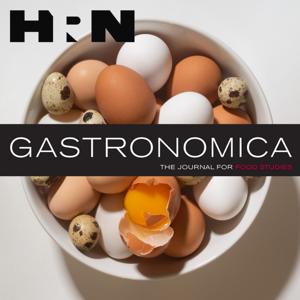


What happens to traditions of fermentation when state regulations prohibit their sale and distribution? And can these ferments and their value to people help create more just, inclusive, and equitable food systems? Inspired by their research on the importance of fermentation for marginalized communities in Arizona, food scholars Sara El-Sayed and Christy Spackman sit down with Gastronomica Editorial Collective member Dan Bender to explain what happens in the microbial and cultural world of regulated and unregulated fermentation.
Photo courtesy of Nalini Chhetri.
Hosted by Simplecast, an AdsWizz company. See pcm.adswizz.com for information about our collection and use of personal data for advertising.
Before the 2000s, Japanese cuisine was almost absent from the Perth, Australia food scene, but within a decade, it could be found everywhere. In this episode, Gastronomica Editorial Collective member Jaclyn Rohel talks with anthropologist Satomi Fukutomi about how the increasing availability of Japanese cuisine in Perth changed how people considered what is “authentic” about these foods. Drawing on social media analysis and fieldwork at eateries in Perth, Fukutomi discusses why authenticity is meaningful, or not so meaningful, in this changing foodscape.
Hosted by Simplecast, an AdsWizz company. See pcm.adswizz.com for information about our collection and use of personal data for advertising.
In this episode, Gastronomica editorial collective member Jaclyn Rohel highlights new titles from the world of food studies. She is joined by Michael Classens, Assistant Professor in the School of the Environment at the University of Toronto and author of the recently published book, From Dismal Swamp to Smiling Farms: Food, Agriculture, and Change in the Holland Marsh (UBC Press, 2021). Michael digs into the historical, social, and environmental processes that enabled the transformation of a wetland just north of Toronto into Ontario’s salad bowl. Highlighting contemporary issues in human-environment relations, this story has important lessons for farmland protection efforts. Michael also discusses how his work combines both research and advocacy for food system change.
Photo courtesy of Michael Classens.
Hosted by Simplecast, an AdsWizz company. See pcm.adswizz.com for information about our collection and use of personal data for advertising.
In this episode, Joel Rodrigues talks with Gastronomica Editorial Collective member Signe Rousseau about the Goan dishes of his childhood and the limits of “classical” dishes. Joel reflects on nostalgia and melancholy as he tells the story of how he learned to cook. Casting aside the pursuit of perfection, he highlights how everyday experiences of cooking can shape notions of cuisine.
Hosted by Simplecast, an AdsWizz company. See pcm.adswizz.com for information about our collection and use of personal data for advertising.
Does technology change local eating? In this episode, Gastronomica Editorial Collective member Krishnendu Ray and anthropologist Tulasi Srinivas consider how taste connects material, spatial, and virtual worlds. Drawing on her ethnography of "gastro apps" in Bangalore during the Covid-19 pandemic, Tulasi sheds light on how online food delivery has changed what it means to eat locally in India.
Photo courtesy of the Radcliffe Institute.
Hosted by Simplecast, an AdsWizz company. See pcm.adswizz.com for information about our collection and use of personal data for advertising.
Can the language of a menu help produce food system change? In this episode, Gastronomica Editorial Collective member Melissa Fuster hosts Carole Counihan in a discussion on activism and alimentary language. Drawing on her research on Italian food activism and the Slow Food Movement, Carole explores how a dinner menu can promote critical consumption and a commitment to food democracy.
Photo Courtesy of James Taggart.
Hosted by Simplecast, an AdsWizz company. See pcm.adswizz.com for information about our collection and use of personal data for advertising.
Is Amy Trubek still mad about the ducks? One year ago, Gastronomica Editorial Collective member Amy Trubek chanced upon a gift of raw duck parts. In this episode, Amy traces the circulation of the duck parts through her local community and shares how a series of unexpected exchanges landed them on her dinner plate at home. Amy is joined in this episode by her husband, Brad, who talks about how he drew on his culinary training to craft a plethora of delicious dishes out of the gifted duck.
Hosted by Simplecast, an AdsWizz company. See pcm.adswizz.com for information about our collection and use of personal data for advertising.
In this special Gastronomica episode, Chef Malcolm Mitchell talks about his experience as a chef, a culinary artist, and an advocate for Black chefs in the American hospitality industry. In conversation with Daniel Bender, a member of Gastronomica's Editorial Collective and a professor of food studies, labor, and American history, Chef Mitchell shares his story of becoming a chef, discusses what motivated him to publish his June 2021 open letter to Black Chefs in The Progressive magazine and the response that his letter has received, and reflects on the work that still needs to be done to build just and inclusive pathways in the culinary profession.
Gastronomica's theme song is by Robert T. Valgenti.
Heritage Radio Network is a listener supported nonprofit podcast network. Support Let’s Talk About Food by becoming a member!
Hosted by Simplecast, an AdsWizz company. See pcm.adswizz.com for information about our collection and use of personal data for advertising.
From the publisher's feed
3 Listeners

122 Listeners

40 Listeners
2 Listeners
30 Listeners

6 Listeners

4 Listeners

63 Listeners
18 Listeners
64 Listeners

14 Listeners
6 Listeners
28 Listeners
32 Listeners
2 Listeners
8 Listeners

770 Listeners
10 Listeners
6 Listeners
10 Listeners
10 Listeners