
Sign up to save your podcasts
Or

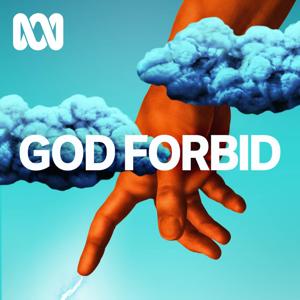


Who would dare to take the English Catholic Church out from under the Pope's power and put it under King Henry VIII in 16th Century England?
Thomas Cranmer was the Archbishop of Canterbury who led the English reformation away from the Pope and the Catholic Church, and cleared the legal path for Henry's marriage to Anne Boleyn.
He also made it cool to be Protestant in a deeply Catholic country.
“Ashes to ashes, dust to dust.” “Till death us do part.” Did you know it was Cranmer who wrote them?
Cranmer wrote a book of common prayer, not in priestly Latin, but English.
As Britain’s empire expanded, Cranmer’s English church with it's English prayer book, spread around the world. Australia included.
And it changed England, and everyone in every continent it touched.
GUESTS:
Dr Lauren Mackay Historian of early modern Europe; Her books include The Wolf Hall Companion and Inside the Tudor Court
This is episode 1 of our 5 part season 2 of Religious Rebels. You can find season 1 here. Stay tuned to Radio National, find us on the Listen App or wherever you get your podcasts as we bring you the next four episodes week by week.
This program was recorded on the lands of the Gadigal People of the Eora Nation
Artwork by Bec Cushway
Muhammad Ali was the wittiest, the prettiest, the bravest, and of course the greatest!
But should we think of this world champion boxer as a religious rebel too? The man who sacrificed his career and liberty for his religious beliefs?
Muhammad Ali was always on a journey - born Cassius Clay, a Baptist in segregated Louisville Kentucky, he found a home in the Nation of Islam. Then Sunni Islam. Then Sufi Islam.
He won and then was stripped of his title as world champion heavyweight boxer. And was sentenced to jail for avoiding the Vietnam War draft.
Ali then won the "Thrilla in Manila" and the "Rumble in the Jungle" to become the first ever three time world heavyweight champion, and finally become a champion for all Americans.
GUESTS:
This program was made on the lands of the Gadigal People of the Eora Nation
Artwork by Bec Cushway
Depending on who you ask, Artificial Intelligence will bring Heaven or hell. Salvation or extinction…
And this weekend – Halloween, then All Saints' Day, the old festivals of the dead and the saints – we're asking whether the newest technology on earth is telling one of the oldest stories.
Because if you listen to the people building artificial intelligence, even or especially the atheists, you hear something strange.
Some promise paradise. An end to disease. To drudgery. An end even to death.
Others preach the end of the world is nigh. We’ll be doomed by a mind greater than ours. And choose now because there’ll be no second chances.
Two stories. Opposite endings. But the same old vocabulary.
Is AI the religion that dare not speak its name?
GUESTS:
We live in a universe that sustains life – but what are the chances of that?
And scientists now believe that if the laws of physics were different by just a fraction – our universe would be either empty, simple, or long ago extinct.
If the strength of gravity or the mass of an electron was different by even the tiniest amount, the universe as we know it would not exist. So tiny even that the difference itself is almost beyond comprehension.
Why has this cosmic fine tuning come about?
The philosophical and even religious implications are so profound, that this is one of the most exciting questions in astrophysics.
This is our final in our short series on science, religion and belief.
Over the past 3 weeks we've explored the relationship between science and religion, the persistence of the idea of creationism...and now...why are we here at all? Can science ever answer that fundamental question?
And it’s so exciting that this week on the God Forbid panel, we have two internationally acclaimed astrophysicists to tackle this and much more.
GUESTS:
This program was made on the land of the Gadigal People of the Eora Nation
It was first broadcast in August 2025
Charles Darwin published his theory of evolution nearly 170 years ago.
So why are there still creationists?
While mainstream Christianity holds that evolution and faith are compatible, a minority of Christians believe they are not.
Last week on God Forbid we looked at the entangled relationship between science and religion, and how, when the scientific revolution began, the two not always but often worked in harmony.
Priests were sometimes themselves scientists.
And scientists often saw themselves as trying to understand God’s creation.
But in the 20th and now 21st century, observation and measurement is left strictly to science. Values, and the world unseen is the realm of religion and philosophy.
Yet for a minority of believers – the new arrangement does not work. They insist on a forced and literal mixing of two.
GUESTS:
In 1927, a Catholic priest told Albert Einstein the universe was expanding. Einstein though that was a crazy idea. But the priest was right.
And when the Pope claimed this as proof of creation, the tables were turned again. The priest told the pontiff, keep your religion out of my physics.
There’s the simple idea that we had religion to explain the world, until we upgraded to science, which did the trick far more effectively.
But as the priest and Einstein anecdote illustrates, that simple idea does not explain the very complex story: the relationship between science and religion.
Nick Spencer is Senior Fellow at the London think tank Theos. His latest book is The Landscapes of Science and Religion – What are we disagreeing about?
Peter Harrison is Professorial Research Fellow at the University of Notre Dame Australia and Emeritus Professor at UQ. His latest book is Some New World: Myths of Supernatural Belief in a Secular Age
They’ll both be Keynote speakers opening the 2026 ISCAST biennial Conference on Science and Christianity.
This program was made on the lands of the Gadigal People of the Eora Nation.
The world has trust issues with its media.
Three in five Australians trust TV and radio news, and what's in the newspapers.
But in North America it is fewer than three in ten.
Are we doing something better here, OR are we just a decade behind them?
Is it an economic problem? After all, ownership of our media has been contracting to just a few players. That alone has had some huge implications for the quality of news and who it speaks to.
The online podcast world has arguably meant a democratisation of the way people are finding their news.
How can lost trust in media be regained?
GUESTS:
This program was recorded on the lands of the Gadigal People of the Eora Nation
Is intolerance tightening its grip on public life?
The twentieth century was among the most intolerant in human history; the Holocaust, Stalinism, empires collapsing in blood.
So why, in the twenty-first century, is tolerance still so elusive?
In the final episode of a two-part series on toleration, God Forbid looks at the ever-growing allure of tribalism, cementing division along contentious political fault lines.
Guests:
Dr Shaun Blanchard, Senior Lecturer in Theology, University of Notre Dame Australia. Author of the forthcoming Catholicism and Enlightenment.
Dr Devleena Ghosh, Professor, School of Communication and Social Sciences, University of Technology Sydney.
Dr Abdullah Kunde, Founder and President of the Muslim Debate Initiative Australia.
This program was made on the lands of the Gadigal People of the Eora Nation
Rulers throughout history have used tolerance and intolerance in their pursuit of power.
In our modern context, tolerance is often lauded as an unqualified good, but are there limitations? Should we extend tolerance to those who commit acts of violence?
In the first of two episodes on the rise and fall of tolerance, God Forbid looks at the religious roots of tolerance and intolerance.
Can lessons of the past be applied today, in an increasingly divided world?
GUESTS:
Shaun Blanchard, Senior Lecturer in Theology, Notre Dame University.
Jürgen Overhoff, Professor of the History of Educational, University of Münster, Germany.
Francisco (Paco) Garcia-Serrano, Professor of History, Saint Louis University, Madrid.
This program was made on the lands of the Gadigal People of the Eora Nation
What is the place of religion in a pluralist society?
Australia calls itself a secular country, yet it has never been more religiously diverse.
Whether you're religious or secular, whether you support multi or mono-culturalism, it seems we all claim the authentic mantle of modern Australian identity.
Yet none of us agree on what it is, much less who owns it.
How should we grapple with our identity as a secular nation in a diverse and ever-changing world?
GUESTS:Renae Barker, Senior Lecturer, UWA Law School, author of State and Religion: The Australian Story.
Greg Melleuish, Professorial Fellow, Robert Menzies Institute; Fellow, Campion College. Co-author of Understanding Piety and Theology in the Culture of the West: The Poetic Life. See him in conversation at the Berry Writer's Festival in November.
Enqi Weng, Research Fellow, Alfred Deakin Institute for Citizenship and Globalisation, Deakin University. Author of Media Perceptions of Religious Changes in Australia: Of Dominance and Diversity.
This program was made on the lands of the Gadigal People of the Eora Nation
From the publisher's feed

202 Listeners

103 Listeners

64 Listeners
121 Listeners

95 Listeners

17 Listeners

45 Listeners

1,735 Listeners

789 Listeners

757 Listeners

126 Listeners
53 Listeners

62 Listeners
44 Listeners
158 Listeners

318 Listeners

809 Listeners

11 Listeners

200 Listeners

115 Listeners

233 Listeners

1,006 Listeners

51 Listeners