
Sign up to save your podcasts
Or

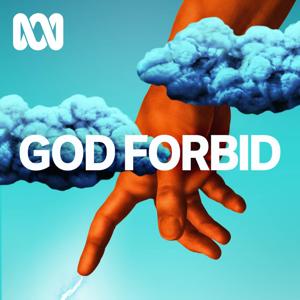


Mother Earth. Mother Mary. The "good mother." Is there a more impossible standard than motherhood itself?
Every culture seems to believe in a mother who is endless. Endlessly patient, endlessly giving, endlessly present.
In Christianity she's Mary, the sinless virgin, the giving and eternal mother of the church.
In psychology she's the "Good Mother", always available and calm, never faltering.
In real life, she's the woman who looks like she's got motherhood handled, but who, if you asked her, would tell you she falls short like everyone else.
Where does that ideal come from? What does it cost the women who try to live up to it?
And what does it cost the women who, by choice or by circumstance, never become the good mother at all?
GUESTS:
Your phone will tell you the time, and that number has an extraordinary history.
And hasn't always been there.
Time used to be whatever the church bell said it was.
Time was rung, sung and prayed. It belonged to God.
Then we put time in a box on the wall. Then on our wrist. Now in our pocket and on our satellites.
Yet – there’s no expert consensus on whether time even flows from past present to future.
GUESTS:
This program was recorded on the lands of the Gadigal People of the Eora Nation
Its the third in our History Of... series
History of Emotionsand
History of RealityEvery civilisation that's ever existed has asked the same question: what's actually real?
Plato made the point that it's more than we can see with our own eyes.
Then came Newton, and reality became a clock with time.
Then came Einstein, and time started to bend. Then came quantum mechanics — and reality gets stranger still!
Two astrophysicists go back to the beginning of humanity to ask "what did humans even mean by "real", before anyone had the maths to check?"
And is there a creator behind it all?
GUESTS:
If you hit your finger with a hammer, would you feel it the same way a medieval carpenter did, doing exactly the same thing?
Well, apparently not.
We think of our feelings as the most private and immediate things we own.
Hit your thumb, and YOU know pain when YOU feel it.
But historians of emotion say that's a modern conceit. Pain, grief, love, loneliness — none of them are fixed.
They're made, by religion, by culture and science, and most of all by the stories we tell each other about what a feeling is supposed to be.
Lets look into the history of feeling itself.
Were the emotions of the past even the same species of experience as ours?
GUESTS:
Is racism about the colour of your skin, the history of colonialism, or the size of your bank account?
The White House has a cage fight on the Whitehouse front lawn while, somewhere, a father rose at 3am to feed a crying baby.
In 2026, what does it mean to be a good father, or a good man?
Does God, or any religious tradition, see men as something distinct? Or is “be a good man” just “be a good person”?
The manosphere claims religious sanction. Is that a corruption of these traditions, or an expression of them?
Three fathers, three frameworks. What do you or can you actually hand onto your son?
GUESTS:
Do to a dog what we do to a factory-farmed pig, and you’d be arrested.
Do it to ten thousand pigs in a shed, and it’s breakfast.
Most of us say cruelty to animals is wrong.
And then most of us are happy to have them killed and eat them.
Both our panellists think the way we treat animals is a moral catastrophe.
But they get there by opposite roads. One says animals matter because they suffer. The other says they matter because they’re God’s creatures.
GUESTS:
Peter Singer
Emeritus Professor of Bioethics, Princeton University. Host of the podcast Lives Well Lived. 50 years ago exactly, his book Animal Liberation launched the modern animal liberation movement as we know it.
David Clough
Professor of Theology and Applied Sciences, University of Aberdeen. Author of the two-volume work On Animals. He’s a Methodist Preacher and Co-founder of CreatureKind which aims to transform Christian attitudes and practices toward animals.
We are, it turns out, a species that refuses to believe its own birth certificate.
Australia is ageing, fast. This is not new here, or in Europe and North America where the trend has existed for decades.
But even in China and now India, the fertility rate has dropped below replacement levels – even the two most populous nations on earth are getting older.
Yet we’ve built a world — our economies, our cities, our pension systems, our cultures — around the young and the productive. So, what happens when that's no longer who we are?
GUESTS:
Prof Paul Komesaroff is a philosopher at Monash University. And a practising endocrinologist. And Director of the Centre for Ethics in Medicine and Society.
Dr Lee-Fay Low is Professor in Ageing and Health at University of Sydney. She’s also a registered psychologist and chairs the Sydney Dementia Network.
You heard that someone had come unstuck. A rival. A bully. Someone overconfident, or two-faced, or just a bit too pleased with themselves. And something in you was glad.
You won't say it out loud. You might barely admit it to yourself.
But the Germans have a word for it. And it turns out, so did the ancient Greeks.
Schadenfreude. The pleasure we take in others' misfortune.
Is it a moral failing? A sign of deficient character? Or is it a window into what we actually believe about justice, equality — and each other?
GUESTS:
Tiffany Watt-Smith is a cultural historian and author of Schadenfreude: The Joy of Another's Misfortune. She joins us from London.
Nick Haslam is Professor of Psychology at the University of Melbourne, and the man who's been thinking hard about Australia's national variant — tall poppy syndrome.
Whether or not you believe in - or even know about "the Rapture", "the Tribulation", "the End Times", and "Armageddon", your life is influenced by the idea that Jesus Christ will not only return, he’ll go to Jerusalem, and from there, for exactly one thousand years, he’ll rule the world.
Yet, this concept is not in the Bible...at least not directly.
But a bible, published in America in 1909, and written by an American made it the most influential concepts in American Christian fundamentalism.
The story of the Scofield Reference Bible is an extraordinary one.
Not least because it lies at the heart of Christian Zionism which is more consequential today than ever.
GUESTS:
From the publisher's feed

202 Listeners

104 Listeners

65 Listeners
122 Listeners

96 Listeners

20 Listeners

48 Listeners

1,736 Listeners

807 Listeners

756 Listeners

125 Listeners
63 Listeners

56 Listeners
46 Listeners

164 Listeners

321 Listeners

1,003 Listeners

9 Listeners

195 Listeners

114 Listeners

240 Listeners

1,009 Listeners

57 Listeners