
Sign up to save your podcasts
Or



Based on Podcast App listening data
Sign up for Nature's Newsletter: https://www.pbs.org/wnet/nature/newsletter/
This is a special episode from Sea Change, the nature podcast from WWNO and WRKF. Sea Change brings you stories that illuminate, inspire – and sometimes enrage – as they dive deep into the environmental issues facing coastal communities on the Gulf Coast and beyond.
In this specific episode, they take you on a journey to the remote Chandeleur islands to try to find the most endangered sea turtle on the planet, Kemp’s Ridley. After 75 years, these mysterious turtles have been discovered on the shores of Louisiana. It’s a story of loss and restoration – of hope and heartbreak.
To listen to more important stories like this one, follow Sea Change on Apple Podcasts, Spotify or wherever you get podcasts.
Sign up for Nature's Newsletter: https://www.pbs.org/wnet/nature/newsletter/
Kris Tompkins has spent a lifetime fighting tooth and nail to protect wild lands. In 1993, she stepped down as CEO of outdoor apparel brand Patagonia, and moved to the edge of a windswept road-less fjord in the northern end of Patagonian Chile with her late husband Doug Tompkins (the founder of North Face).
There, they began to dream up one of the most audacious conservation visions ever conceived. It would culminate, more than 25 years later, in the largest private land donation in history, the creation of one of the most spectacular national parks in the world and the launch of the wildest road trip on the planet: the Route of Parks. This story is about the realization of that vision.
Sign up for Nature's Newsletter: https://www.pbs.org/wnet/nature/newsletter/
This week, we're featuring an episode of Women Who Travel with Tracee Ellis Ross:
Tracee Ellis Ross’ earliest memories involved traveling the world with her mother, Diana Ross, but it was at the age of 22 that she discovered what solo travel could give her. This episode, Lale sits down with Tracee to discuss how solo travel can be an act of radical self-care, her upcoming Roku show, Solo Traveling With Tracee Ellis Ross, and her flamboyant and joy-filled packing lists. Listen to more Women Who Travel here: swap.fm/l/cnt-wwt-YUyg6t
As a climate solutions advocate, Dr. Ayana Elizabeth Johnson is often asked “What are some small things people can do to reduce climate change that don’t require sacrifices?” But the truth is electric cars and solar panels won’t be enough. Climate success will require us to change our relationship with the natural world. We must not view nature as resources to manage, but as kin.
In this final episode of the season, we’ll explore solutions to our climate emergency via a conversation with close friends Dr. Rae Wynn-Grant and Dr. Johnson. They dive deep into how we can actually protect our bodies of water.
Follow Dr. Ayana Elizabeth Johnson, Marine biologist, policy expert, writer, and author of What If We Get It Right? on her Website and on Instagram. Credit for the photo used in this podcast art: Marcus Branch.
Thanks for listening to Going Wild. You can learn more about season three HERE and catch up on seasons one and two HERE.
If you want to support us, you can follow Going Wild on your favorite podcast-listening app. And while you're there, please leave us a review. It really helps.
You can also get updates and bonus content by following me, Dr. Rae Wynn-Grant, and PBS Nature on Instagram, TikTok, Twitter, and Facebook. You can find more information on all of our guests this season in each episode's show notes. And you can catch new episodes of Nature, Wednesdays at 8/7 Central on PBS, pbs.org/nature, and the PBS app.
Going Wild is a podcast by PBS Nature. NATURE is an award-winning series created by The WNET Group and made possible by all of you.
Views and opinions expressed during the podcast are those of the individuals expressing them and do not necessarily reflect those of THIRTEEN Productions LLC/The WNET Group.
In a city that loves celebrities, one mountain lion became the mascot for conservation efforts that eventually led to the creation of California’s first wildlife corridor. But one wildlife corridor, even if it’s the largest in the world, isn’t enough.
Some populations of mountain lions in Southern California are struggling to survive — threatened by habitat loss caused by urban developments, lack of genetic diversity, and vehicle collisions.
As wildlife conservationists are working to save these endangered mountain lion populations, another debate is ensuing over how to include indigenous perspectives in the conservation efforts. Because mountain lions aren’t the only native beings struggling to survive in a world with an unchecked appetite for sprawl and urbanization.
Follow Desireé Reneé Martinez, Tongva Tribal Archaeologist and the President of Cogstone Resource Management on Facebook and LinkedIn and follow Miguel Ordeñana, Natural History Museum wildlife biologist, and environmental educator on Instagram.
Photo credit for Miguel's episode art: Noé Montes / High Country News.
Thanks for listening to Going Wild. We're really excited to share the rest of this season with you! You can learn more about season three HERE and catch up on seasons one and two HERE.
If you want to support us, you can follow Going Wild on your favorite podcast-listening app. And while you're there, please leave us a review. It really helps.
You can also get updates and bonus content by following me, Dr. Rae Wynn-Grant, and PBS Nature on Instagram, TikTok, Twitter, and Facebook. You can find more information on all of our guests this season in each episode's show notes. And you can catch new episodes of Nature, Wednesdays at 8/7 Central on PBS, pbs.org/nature, and the PBS app.
Going Wild is a podcast by PBS Nature. NATURE is an award-winning series created by The WNET Group and made possible by all of you.
Views and opinions expressed during the podcast are those of the individuals expressing them and do not necessarily reflect those of THIRTEEN Productions LLC/The WNET Group.
In 2016, Hurricane Earl devastated Belize, causing over $100 million worth of damage and displacing thousands of Belizeans across the country. But humans were not the only victims of the storm. Deep in the mangroves, an infant manatee was separated from her mother and washed onto the mainland. She was so tiny when Jamal Galves found her, with her umbilical cord still attached. He named her Hope.
After 7 years in rehabilitation, Hope the Manatee is soon to be released back into the wild. But as development and climate change continue to affect the waterways she calls home, what will her future hold?
Hope's savior, Jamal Galves, also known as The Manatee Man, was just 11 years old when he began his journey in manatee conservation, volunteering with a crew of scientists in the small Belizean fishing village where he grew up. At one time, manatees were such a common sight in the area that the village of Gales Point Manatee itself was named after them. But today there are less than 1,000 Antillean Manatees left in this part of the world. In the 25 years since his first volunteer expedition, Galves has worked with hundreds of these animals, but Hope holds a special place in his (and the nation's) heart.
Follow Jamal on Instagram.
Photo credit for this episode art: Clearwater Marine Aquarium Research Institute.
Thanks for listening to Going Wild. We're really excited to share the rest of this season with you! You can learn more about season three HERE and catch up on seasons one and two HERE.
If you want to support us, you can follow Going Wild on your favorite podcast-listening app. And while you're there, please leave us a review. It really helps.
You can also get updates and bonus content by following me, Dr. Rae Wynn-Grant, and PBS Nature on Instagram, TikTok, Twitter, and Facebook. You can find more information on all of our guests this season in each episode's show notes. And you can catch new episodes of Nature, Wednesdays at 8/7 Central on PBS, pbs.org/nature, and the PBS app.
Going Wild is a podcast by PBS Nature. NATURE is an award-winning series created by The WNET Group and made possible by all of you.
Views and opinions expressed during the podcast are those of the individuals expressing them and do not necessarily reflect those of THIRTEEN Productions LLC/The WNET Group.
Long before the infamous Central Park incident went viral (where a white woman called the cops on him during a birdwatching outing), Christian Cooper had been obsessed with birds. It was a love nurtured through his involvement in The Audubon Society, an environmental organization dedicated to bird conservation.
But recently, Christian’s dedication to and love for this organization has been put to the test. We’ll hear how growing up as a closeted queer person in the 80s, a career contributing to Marvel comics, and a life spent paying attention to birds has prepared Christian to navigate controversies and side with what is right.
Follow Christian Cooper on Instagram.
Thanks for listening to Going Wild. We're really excited to share the rest of this season with you! You can learn more about season three HERE and catch up on seasons one and two HERE.
If you want to support us, you can follow Going Wild on your favorite podcast-listening app. And while you're there, please leave us a review. It really helps.
You can also get updates and bonus content by following me, Dr. Rae Wynn-Grant, and PBS Nature on Instagram, TikTok, Twitter, and Facebook. You can find more information on all of our guests this season in each episode's show notes. And you can catch new episodes of Nature, Wednesdays at 8/7 Central on PBS, pbs.org/nature, and the PBS app.
Going Wild is a podcast by PBS Nature. NATURE is an award-winning series created by The WNET Group and made possible by all of you.
Views and opinions expressed during the podcast are those of the individuals expressing them and do not necessarily reflect those of THIRTEEN Productions LLC/The WNET Group.
When Samuel Ramsey was a child, he was afraid of bugs. But a trip to the library with his mother changed everything and led him to become a bee entomologist. He grew up gay in a non-affirming religious community, he was the only Black entomologist in his Doctoral program, and today he’s both a Christian AND a scientist in a world that often asks him to choose between his faith and his practice. But Dr. Buggs (his media nickname) recently made a breakthrough discovery in the fight against one of the biggest global pandemics in history: the Varroa Destructor; a mite that is threatening bee colonies all over the world. And with them, our very future on the planet.
Follow Dr. Samuel Ramsey aka Dr. Sammy Buggs on his website, Instagram, or YouTube.
Thanks for listening to Going Wild. We're really excited to share the rest of this season with you! You can learn more about season three HERE and catch up on seasons one and two HERE.
If you want to support us, you can follow Going Wild on your favorite podcast-listening app. And while you're there, please leave us a review. It really helps.
You can also get updates and bonus content by following me, Dr. Rae Wynn-Grant, and PBS Nature on Instagram, TikTok, Twitter, and Facebook. You can find more information on all of our guests this season in each episode's show notes. And you can catch new episodes of Nature, Wednesdays at 8/7 Central on PBS, pbs.org/nature, and the PBS app.
Going Wild is a podcast by PBS Nature. NATURE is an award-winning series created by The WNET Group and made possible by all of you.
Views and opinions expressed during the podcast are those of the individuals expressing them and do not necessarily reflect those of THIRTEEN Productions LLC/The WNET Group.
In a remote part of the Amazon rainforest in Peru, there’s a river with water so hot, it actually boils. In fact, it's so extreme and so remote that for a long time people thought the river was a myth. Dr. Rosa Vásquez Espinoza risked life and limb journeying to this boiling river, called Shanay-Timpishka or La Bomba, to explore some of the smallest microorganisms on Earth. Why?? Because the untapped microbes that live in that extreme environment could save our planet!
There are more microbes on Earth than stars in the galaxy, and yet only 1% of Earth’s microbe species have been thoroughly studied. Considering that several antibiotics, cancer treatments, and other medicines come from that tiny percentage, Dr. Espinoza is on a mission to unlock the potential of the remaining 99%. Microbes are a universe of microorganisms hiding in plain sight, proving that even the tiniest living things can have a huge impact. In fact, as the first microorganisms released oxygen, microbes literally made our existence on the planet possible. So what else can they do?
Thanks for listening to the first episode of season three of Going Wild. We're really excited to share the rest of this season with you! You can learn more about season three HERE and catch up on seasons one and two HERE.
Follow Dr. Rosa Vásquez Espinoza on Instagram or on her website. Photo credit for this episode's art is by Ana Sotelo.
If you want to support us, you can follow Going Wild on your favorite podcast-listening app. And while you're there, please leave us a review. It really helps.
You can also get updates and bonus content by following me, Dr. Rae Wynn-Grant, and PBS Nature on Instagram, TikTok, Twitter, and Facebook. You can find more information on all of our guests this season in each episode's show notes. And you can catch new episodes of Nature, Wednesdays at 8/7 Central on PBS, pbs.org/nature, and the PBS app.
Going Wild is a new podcast by PBS Nature. NATURE is an award-winning series created by The WNET Group and made possible by all of you.
Views and opinions expressed during the podcast are those of the individuals expressing them and do not necessarily reflect those of THIRTEEN Productions LLC/The WNET Group.
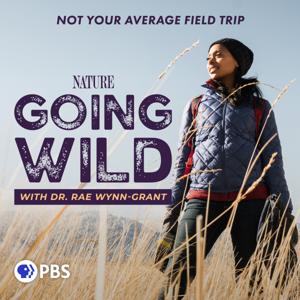
Welcome back to Going Wild, a podcast about the human drama behind saving animals. This season, on top of stories about animals, we’re going to take a journey through the entire ecological web — from the tiniest of life forms to apex predators.
We’ll be guided by one central question: How can we, humans, look at our relationship to nature differently?
Rae will speak to scientists, activists, and adventurers as they find all the different ways the natural world is interconnected. Explore the hidden world of extreme microbes thriving in the Boiling River in Peru. Listen to the man behind the infamous Central Park “Black birder” incident on how growing up gay in the 80’s has led to his lifelong love of birds and nature. Hear about how California's mighty predator, the mountain lions, aren't the only native inhabitants of Los Angeles who are struggling to survive.
Each episode will invite us to reconsider our long-held views of: What is conservation? What is nature and what’s our relationship to it? And how can we ensure the survival of all beings on our planet?
Let’s explore our place in the wild with Season 3 of “Going Wild with Dr. Rae Wynn-Grant.”
For more, follow us at www.pbs.org/nature
From the publisher's feed
Ranked by our users in the last 21 days

78,256 Listeners

43,845 Listeners

43,374 Listeners

1,475 Listeners

1,255 Listeners
2,118 Listeners

12,154 Listeners
566 Listeners

659 Listeners

24,517 Listeners

16,317 Listeners

3,435 Listeners

878 Listeners

2,308 Listeners
48 Listeners