
Sign up to save your podcasts
Or



Based on Podcast App listening data
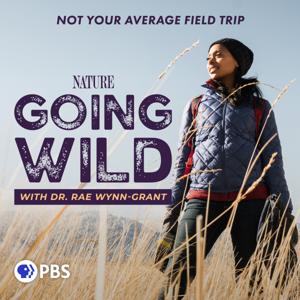
Hyenas might be the most misunderstood animal – Are they dogs? Big cats? Evil, trouble-making sidekicks? (Thanks, Lion King!) Dr. Christine Wilkinson relates to this ambiguous perception as a bi-racial woman, especially one working in the fields of science and conservation. She couldn’t wait to go to Kenya to study hyenas, but once there, she was labeled a “Mzungu,” a term often used to describe white foreigners. Hear about how she fought to save hyenas from being misunderstood (and even started a conservation effort for the animals considered a nuisance), and in doing so, found a community where she was accepted.
Thanks for listening! If you want to support us, you can follow “Going Wild” on your favorite podcast listening app. While you’re there, please leave us a review - it really helps.
You can also get updates and bonus content by following me, Dr. Rae Wynn-Grant, and PBS Nature on Instagram, TikTok, Twitter, and Facebook. And you can catch new episodes of Nature Wednesdays at 8/7c on PBS, pbs.org/nature and the PBS Video app.
Follow Dr. Christine Wilkinson, The Scrappy Naturalist, on Instagram, Twitter, and TikTok.
This episode of “Going Wild” was hosted by me, Dr. Rae Wynn-Grant. Production by Caroline Hadilaksono, Danielle Broza, Nathan Tobey, and Great Feeling Studios. Editing by Rachel Aronoff and Jakob Lewis. Sound design by Cariad Harmon.
Danielle Broza is the Digital Lead and Fred Kaufman is the Executive Producer for Nature.
Art for this podcast was created by Arianna Bollers and Karen Brazell.
Special thanks to Amanda Schmidt, Blanche Robertson, Jayne Lisi, Chelsey Saatkamp, and Karen Ho.
NATURE is an award-winning series created by The WNET Group and made possible by all of you. Funding for this podcast was provided by grants from the Anderson Family Fund, the Corporation for Public Broadcasting, and PBS.
Views and opinions expressed during the podcast are those of the individuals expressing them and do not necessarily reflect those of THIRTEEN Productions LLC/The WNET Group.
What do you do when you get a once-in-a-lifetime opportunity to study Jaguars in the Panama rainforest but you can’t find childcare? Bring your kid along! In the first episode of season 2 of Going Wild, Dr. Rae Wynn-Grant tells of an expedition searching for an elusive creature in the rainforest with her toddler in tow, but not everything goes as planned.
Thanks for listening! If you want to support us, you can follow “Going Wild” on your favorite podcast listening app. While you’re there, please leave us a review - it really helps.
You can also get updates and bonus content by following me, Dr. Rae Wynn-Grant, and PBS Nature on Instagram, TikTok, Twitter, and Facebook. And you can catch new episodes of Nature Wednesdays at 8/7c on PBS, pbs.org/nature and the PBS Video app.
This episode of “Going Wild” was hosted by me, Dr. Rae Wynn-Grant. Production by Caroline Hadilaksono, Danielle Broza, Nathan Tobey, and Great Feeling Studios. Editing by Rachel Aronoff and Jakob Lewis. Sound design by Cariad Harmon.
Danielle Broza is the Digital Lead and Fred Kaufman is the Executive Producer for Nature.
Art for this podcast was created by Arianna Bollers and Karen Brazell.
Special thanks to Amanda Schmidt, Blanche Robertson, Jayne Lisi, Chelsey Saatkamp, and Karen Ho.
NATURE is an award-winning series created by The WNET Group and made possible by all of you. Funding for this podcast was provided by grants from the Anderson Family Fund, the Corporation for Public Broadcasting, and PBS.
Views and opinions expressed during the podcast are those of the individuals expressing them and do not necessarily reflect those of THIRTEEN Productions LLC/The WNET Group.
This season, you'll hear from wildlife scientists who are doing all kinds of amazing work like studying hyenas in Kenya or working with coyotes in California, and even tracking sharks in Florida. And just like me, they run into all kinds of drama in their work. The animals they study are great, but who they are as people and how that affects their work is just as interesting.
We have brand new episodes starting September 27th. Subscribe now to Going Wild, wherever you get your podcasts, and follow along on www.pbs.org/nature.
Explore more at https://www.pbs.org/wnet/nature/podcasts/going-wild/
Breaking glass ceilings, breaking down barriers, breaking molds: it’s exhilarating. And exhausting. This episode is about what it’s really, truly like to be a Black, female scientist in America.
Since this is the last episode of the season. I want to say, thanks to you. Hosting the show and sharing my stories has been an incredible experience and quite a wild ride. And I'm so glad that you're here on this journey with me. Go back and listen to all of the episodes again here: https://www.pbs.org/wnet/nature/podcasts/going-wild/
If you’re new to “Going Wild”, welcome. You’ve found us at the perfect time. Right now, we’re rebroadcasting the very first episode of the season. It’s all about how I went from an asthmatic teenager, who had never even been on a hike, to the person I am today: a scientist who studies wild animals and practically lives outdoors.
I want to give you a chance to get to know me before we hit you with the season finale, which is intense. So if you’ve already heard this story, be sure to come back next week – on November 30th – to listen to that final episode.
When I was living in Kenya, I learned a lot about animals and conservation, and I also learned about people and culture, sometimes through my own horribly embarrassing mistakes. I told you about one of those moments last week. This week I'm bringing you another story.
If you want to go back and listen to part one, it's here: https://www.pbs.org/wnet/nature/podcast/misunderstandings-with-masaai-one/
For more episodes: https://www.pbs.org/wnet/nature/podcasts/going-wild/
New episodes of "Going Wild with Dr. Rae Wynn-Grant" are released on Tuesdays. Want a season 2 or a story about a specific animal or location? Contact us at [email protected]
In part one of two, I share some embarrassing cross-cultural misunderstandings from my time living in East Africa. Hear about two of the biggest ones– and what they taught me about the country, the people, and myself.
A dead bear shows up in an unlikely place, and the discovery of how it died and how it got there makes me question my life’s work. A warning: This episode contains details of performing a necropsy of the bear in the woods. It contains language that may not be acceptable for young listeners or those with queasy stomachs.
Please like and follow us (and give us a review!) if you like the show!
For more episodes: https://www.pbs.org/wnet/nature/podcasts/going-wild/
New episodes of "Going Wild with Dr. Rae Wynn-Grant" are released on Tuesdays. Want a season 2 or a story about a specific animal or location? Contact us at [email protected]
Happy Halloween week! There are major risks that come with being a wildlife ecologist– from sleeping with poisonous snakes to provoking hungry bears. Here are a few of my scariest encounters in the field.
Please like and follow us (and give us a review!) if you like the show!
For more episodes: https://www.pbs.org/wnet/nature/podcasts/going-wild/
New episodes of "Going Wild with Dr. Rae Wynn-Grant" are released on Tuesdays. Want a season 2 or a story about a specific animal or location? Contact us at [email protected]
In the last episode, I told you the story about a giraffe - a dead giraffe, actually - in Tarangire National Park, but I didn't get to share any stories about lions. So, let me take you back to my first day in Tanzania, in the middle of the bush, and introduce you to two very unique lions I still think about to this day. This is a special short episode of "Going Wild."
From the publisher's feed
Ranked by our users in the last 21 days

78,256 Listeners

43,845 Listeners

43,374 Listeners

1,475 Listeners

1,255 Listeners
2,118 Listeners

12,154 Listeners
566 Listeners

659 Listeners

24,517 Listeners

16,317 Listeners

3,435 Listeners

878 Listeners

2,308 Listeners
48 Listeners