
Sign up to save your podcasts
Or



Based on Podcast App listening data
Hi everyone! We’re still a little ways away from the next season of Going Wild, but today we're sharing an episode of a great new podcast called The Class of 1989. In this episode, Len and Vincent talk about the representation of Black women in the films of 1989 — and how Black women directors would help transform the film world throughout the 1990s and into the present.
It's been a challenging couple of years during the pandemic but we are starting to travel again. Host Lale Arikoglu determines that she needs to challenge herself and goes hiking in Chilean Patagonia in a misty, rainy, and isolated landscape. Closer to home she’s trying to stay upright on a surfboard at New York’s Rockaway beach even though she’s skittish in waves and talks to author Dorthe Nors about moving from Copenhagen to live along the wild North Sea coast of Denmark, a place known as ‘Cold Hawaii’ and home to a longstanding community of international surfers. Plus, we hear from listeners who hike pilgrimage trails in the depths of winter and scale the Alps in the 95-degree summer heat.
For more from Condé Nast Traveler's Women Who Travel, visit our website or subscribe to our email newsletter.
For a transcript of this episode, please follow this link.
This week we're sharing a riveting episode from NHPR's show, Outside/In. Take a listen and let us know what you think!
A debate about evolutionary “success.” Who should wear the crown of GSOAT (greatest species of all time), and are humans even in the running?
Humans have had an impressive run thus far; we’ve explored most of the planet (the parts that aren’t underwater anyway), landed on the moon, created art and music, and made some pretty entertaining Tik-Toks.
But we’ve survived on the planet for just a fraction of the time horseshoe crabs and alligators have. And we’re vastly outnumbered by many species of bacteria and insects.
So who is the most successful species on Earth? And how do you measure that, anyway? From longevity to happiness, to sheer numbers, we put a handful of different organisms under the microscope in hopes of better understanding what exactly it means to succeed at life on a collective and individual scale.
Featuring: Stephen Giovannoni, Rashidah Farid, and Steward Pickett
This week, we're sharing an episode from our friends at the Wildlife Conservation Society. Take a listen and let us know what you think!
Their second season launches in conversation with Mariana Varese, the Peru-based director of WCS’s Amazon Landscapes Program. Mariana describes a new initiative, “Together for Conservation,” that seeks to conserve biodiversity while preventing environmental crime in the Amazon. The project brings Indigenous Peoples and local communities together with journalists, private companies, and civil society groups to develop conservation solutions that can be expanded or replicated across the Amazon.
*Content warning: this episode briefly mentions the topic of suicide.*
From the kitchen floor to the remote jungles of the Congo, Rae grapples with divorce and single-motherhood on an international trip to study lowland gorillas.
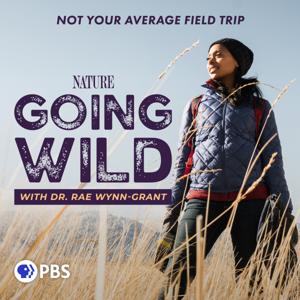
For the last episode of season 2, Dr. Rae Wynn-Grant talks about a career-changing opportunity to track down one of the most elusive creatures in Central Africa — lowland gorillas. But when things don’t go as planned, Rae ends up uncovering something else that changes the trajectory of her life.
Since this is the last episode for this season, we want to thank all of our guests for sharing their amazing wild stories. And you, our dedicated listeners, for coming back for season 2. We’re so glad to have you on this journey with us! What would you like to see in the third season? Let us know at [email protected].
Thanks for listening! If you want to support us, you can follow “Going Wild” on your favorite podcast-listening app. While you’re there, please leave us a review - it really helps.
You can also get updates and bonus content by following me, Dr. Rae Wynn-Grant, and PBS Nature on Instagram, TikTok, Twitter, and Facebook. And you can catch new episodes of Nature Wednesdays at 8/7c on PBS, pbs.org/nature and the PBS Video app.
This episode of “Going Wild” was hosted by me, Dr. Rae Wynn-Grant. Production by Caroline Hadilaksono, Danielle Broza, Nathan Tobey, and Great Feeling Studios. Editing by Rachel Aronoff and Jakob Lewis. Sound design by Cariad Harmon.
Danielle Broza is the Digital Lead and Fred Kaufman is the Executive Producer for Nature.
Art for this podcast was created by Arianna Bollers and Karen Brazell.
Special thanks to Amanda Schmidt, Blanche Robertson, Jayne Lisi, Chelsey Saatkamp, and Karen Ho.
NATURE is an award-winning series created by The WNET Group and made possible by all of you. Funding for this podcast was provided by grants from the Anderson Family Fund, the Corporation for Public Broadcasting, and PBS.
Views and opinions expressed during the podcast are those of the individuals expressing them and do not necessarily reflect those of THIRTEEN Productions LLC/The WNET Group.
Ornithologist (bird scientist), poet, and author Drew Lanham was recently awarded the Macarthur Genius Grant—$800,000 with no strings attached. But despite his deep love for birds he almost never studied the creatures at all. As a young man, he won a full-ride scholarship to any school he wanted, only this award did have strings attached. Drew would have to give up his dreams of ecology and instead be an engineer. Hear how Drew was saved first from a career he loathed by the lilting song of a prairie warbler and then how a chicken saved Drew from going into the military to be a pilot. Instead, it set him on the true path of his heart, to study the magical flying creatures we call birds.
Thanks for listening! If you want to support us, you can follow “Going Wild” on your favorite podcast listening app. While you’re there, please leave us a review - it really helps.
You can also get updates and bonus content by following me, Dr. Rae Wynn-Grant, and PBS Nature on Instagram, TikTok, Twitter, and Facebook. And you can catch new episodes of Nature Wednesdays at 8/7c on PBS, pbs.org/nature and the PBS Video app.
Follow J. Drew Lanham on Twitter and Instagram and listen to more "Going Wild" HERE.
This episode of “Going Wild” was hosted by me, Dr. Rae Wynn-Grant. Production by Caroline Hadilaksono, Danielle Broza, Nathan Tobey, and Great Feeling Studios. Editing by Rachel Aronoff and Jakob Lewis. Sound design by Cariad Harmon.
Danielle Broza is the Digital Lead and Fred Kaufman is the Executive Producer for Nature.
Art for this podcast was created by Arianna Bollers and Karen Brazell.
Special thanks to Amanda Schmidt, Blanche Robertson, Jayne Lisi, Chelsey Saatkamp, and Karen Ho.
NATURE is an award-winning series created by The WNET Group and made possible by all of you. Funding for this podcast was provided by grants from the Anderson Family Fund, the Corporation for Public Broadcasting, and PBS.
Views and opinions expressed during the podcast are those of the individuals expressing them and do not necessarily reflect those of THIRTEEN Productions LLC/The WNET Group.
*Content warning: this episode contains descriptions of violence that might be disturbing to some listeners.*
Herpetologists do a lot of unique things while studying lizards—cut their toes, pump their stomachs, and capture them by lassoing their necks. That one small word, “lasso,'' wasn't always the word used in the discipline. Herpetologist Earyn McGee, one of the few Black, female scientists in the field, proposed researchers stop using the word “noose” to describe capturing lizards, and start using a more accurate, less oppressive word, like “lasso.”
Thanks for listening! If you want to support us, you can follow “Going Wild” on your favorite podcast listening app. While you’re there, please leave us a review - it really helps.
You can also get updates and bonus content by following me, Dr. Rae Wynn-Grant, and PBS Nature on Instagram, TikTok, Twitter, and Facebook. And you can catch new episodes of Nature Wednesdays at 8/7c on PBS, pbs.org/nature and the PBS Video app.
Follow Earyn McGee on Twitter and Instagram and listen to more "Going Wild" HERE.
This episode of “Going Wild” was hosted by me, Dr. Rae Wynn-Grant. Production by Caroline Hadilaksono, Danielle Broza, Nathan Tobey, and Great Feeling Studios. Editing by Rachel Aronoff and Jakob Lewis. Sound design by Cariad Harmon.
Danielle Broza is the Digital Lead and Fred Kaufman is the Executive Producer for Nature.
Art for this podcast was created by Arianna Bollers and Karen Brazell.
Special thanks to Amanda Schmidt, Blanche Robertson, Jayne Lisi, Chelsey Saatkamp, and Karen Ho.
NATURE is an award-winning series created by The WNET Group and made possible by all of you. Funding for this podcast was provided by grants from the Anderson Family Fund, the Corporation for Public Broadcasting, and PBS.
Views and opinions expressed during the podcast are those of the individuals expressing them and do not necessarily reflect those of THIRTEEN Productions LLC/The WNET Group.
Jasmin Graham loves sharks. I mean, really loves sharks. And she always dreamed of becoming a university professor to encourage other people of color interested in shark science. But then, something happened to Jasmin in grad school that caused her to give up her dream. So what does she do when she realizes she has nothing left to lose?
Listen to more "Going Wild" HERE.
Thanks for listening! If you want to support us, you can follow “Going Wild” on your favorite podcast listening app. While you’re there, please leave us a review - it really helps.
You can also get updates and bonus content by following me, Dr. Rae Wynn-Grant, and PBS Nature on Instagram, TikTok, Twitter, and Facebook. And you can catch new episodes of Nature Wednesdays at 8/7c on PBS, pbs.org/nature and the PBS Video app.
Follow Jasmin Graham on Twitter and learn more about MISS here.
This episode of “Going Wild” was hosted by me, Dr. Rae Wynn-Grant. Production by Caroline Hadilaksono, Danielle Broza, Nathan Tobey, and Great Feeling Studios. Editing by Rachel Aronoff and Jakob Lewis. Sound design by Cariad Harmon.
Danielle Broza is the Digital Lead and Fred Kaufman is the Executive Producer for Nature.
Art for this podcast was created by Arianna Bollers and Karen Brazell.
Special thanks to Amanda Schmidt, Blanche Robertson, Jayne Lisi, Chelsey Saatkamp, and Karen Ho.
NATURE is an award-winning series created by The WNET Group and made possible by all of you. Funding for this podcast was provided by grants from the Anderson Family Fund, the Corporation for Public Broadcasting, and PBS.
Views and opinions expressed during the podcast are those of the individuals expressing them and do not necessarily reflect those of THIRTEEN Productions LLC/The WNET Group.
*Content warning: this conversation contains mentions of animal injuries, death, and the topic of suicide.*
Veterinarians deal with death so frequently that they have some of the highest suicide rates of any occupation. Dr. Hollis Stewart has worked with many animals – from domesticated pets in New York City and Fez, Morocco, to wild animals in the Middle East and Africa. Because of that, she’s also worked with humans (other vets, clients, and civilians) from all over the world. In this episode, Hollis shares stories of how treating animals in different countries taught her about the concept of “Inshallah” or “God’s Will” and “Whatever will be will be,” which in turn, taught her valuable lessons about living and accepting death.
Thanks for listening! If you want to support us, you can follow “Going Wild” on your favorite podcast listening app. While you’re there, please leave us a review - it really helps.
You can also get updates and bonus content by following me, Dr. Rae Wynn-Grant, and PBS Nature on Instagram, TikTok, Twitter, and Facebook. And you can catch new episodes of Nature Wednesdays at 8/7c on PBS, pbs.org/nature and the PBS Video app.
Follow Dr. Hollis Stewart on Instagram and Facebook.
This episode of “Going Wild” was hosted by me, Dr. Rae Wynn-Grant. Production by Caroline Hadilaksono, Danielle Broza, Nathan Tobey, and Great Feeling Studios. Editing by Rachel Aronoff and Jakob Lewis. Sound design by Cariad Harmon.
Danielle Broza is the Digital Lead and Fred Kaufman is the Executive Producer for Nature.
Art for this podcast was created by Arianna Bollers and Karen Brazell.
Special thanks to Amanda Schmidt, Blanche Robertson, Jayne Lisi, Chelsey Saatkamp, and Karen Ho.
NATURE is an award-winning series created by The WNET Group and made possible by all of you. Funding for this podcast was provided by grants from the Anderson Family Fund, the Corporation for Public Broadcasting, and PBS.
Views and opinions expressed during the podcast are those of the individuals expressing them and do not necessarily reflect those of THIRTEEN Productions LLC/The WNET Group.
Why are coyotes showing up all over the place? Spoiler alert: evolution can work fast. If you live in the United States, chances are you’ve seen a coyote in the wilderness, or in more unexpected places like on a train, in your backyard, or even in a sandwich shop. But coyotes haven’t always been so bold. Back in the 1900s, coyotes were more like wolves – you mostly found them in forests and other areas far away from humans. Now, coyotes are everywhere, and Dr. Christopher Schell decided to find out why. Through his research, Chris learned a lot about coyotes, and some things really surprised him. But what makes this story even more unique is that by studying coyotes, Chris ended up learning even more about himself.
Thanks for listening! If you want to support us, you can follow “Going Wild” on your favorite podcast listening app. While you’re there, please leave us a review - it really helps.
You can also get updates and bonus content by following me, Dr. Rae Wynn-Grant, and PBS Nature on Instagram, TikTok, Twitter, and Facebook. And you can catch new episodes of Nature Wednesdays at 8/7c on PBS, pbs.org/nature and the PBS Video app.
Follow Dr. Christopher Schell on Twitter.
This episode of “Going Wild” was hosted by me, Dr. Rae Wynn-Grant. Production by Caroline Hadilaksono, Danielle Broza, Nathan Tobey, and Great Feeling Studios. Editing by Rachel Aronoff and Jakob Lewis. Sound design by Cariad Harmon.
Danielle Broza is the Digital Lead and Fred Kaufman is the Executive Producer for Nature.
Art for this podcast was created by Arianna Bollers and Karen Brazell.
Special thanks to Amanda Schmidt, Blanche Robertson, Jayne Lisi, Chelsey Saatkamp, and Karen Ho.
NATURE is an award-winning series created by The WNET Group and made possible by all of you. Funding for this podcast was provided by grants from the Anderson Family Fund, the Corporation for Public Broadcasting, and PBS.
Views and opinions expressed during the podcast are those of the individuals expressing them and do not necessarily reflect those of THIRTEEN Productions LLC/The WNET Group.
From the publisher's feed
Ranked by our users in the last 21 days

78,256 Listeners

43,845 Listeners

43,374 Listeners

1,475 Listeners

1,255 Listeners
2,118 Listeners

12,154 Listeners
566 Listeners

659 Listeners

24,517 Listeners

16,317 Listeners

3,435 Listeners

878 Listeners

2,308 Listeners
48 Listeners