
Sign up to save your podcasts
Or

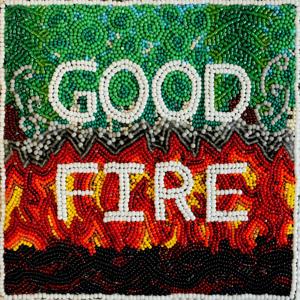


Good Fire Podcast by Amy Cardinal Christianson and Matthew Kristoff
Stories of Indigenous fire stewardship, cultural empowerment and environmental integrity
Episode highlight
In this episode, Ron W. Goode talks about his journey stewarding the land using fire and the importance of ceremony.
Resources
Ron Goode’s Profile
Tribal-Traditional Ecological Knowledge
Sponsors
The Canadian Partnership for Wildland Fire Science
Support from:
● California Indian Water Commission
● Firesticks Alliance Indigenous Corporation
Quotes
46.26 - 46.29: “Your voice is not carrying but you keep singing”.
Takeaways
Living on the land (4.37)
Ron is the Tribal Chairman of the North Fork Mono Tribe. He describes how his grandparents were born before the land was colonized, and his grandmother lived just off the land beyond the age of 100.
Understanding nature (7.24)
Ron points out that there are 10,000 meadows in the Sierra Nevada mountain ranges in California, where wild animals and humans coexist. They also have natural medicines they prepare and trade.
Tending the garden (16.12)
Ron laments that mega-fires have increased the canopy of the forest so much that rain does not reach the roots of trees, and what does hit the floor, runs off. Thinning the forest thus plays an important part in keeping the forest healthy.
The right way to do a cultural burn (23.34)
Ron is mindful to burn using the right techniques, in the right area and during the right season. A cultural burn will not burn the root system, but a wildfire does.
Cultural resources are the brush (31.37)
When Ron does a burn, he has a vision of what the landscape will look like a few years from now, and what harvest will be ready.
“We don’t do anything that is not spiritual first” (40.23)
Working on the landscape means making an offering to Mother Earth and all its inhabitants. Ron shares that when an offering is made from the spirit, all of nature responds well to it.
Fire is ceremonial (49.43)
Ron explains that cultural fire is called ceremonial fire because it begins with a prayer or song. They have been successfully burning on the land with no real accidents.
Consultation is the way forward (56.21)
The California government has been charged with creating a strategic plan for natural resources and is hiring a tribal liaison for each tribe. However, consultation becomes complicated with the hiring of non-tribal liaisons who do not have a connection to the tribe.
“I’m burning for the sustainability of our culture” (1.00.39)
Ron burns with the intention to sustain his culture first and then to contain wildfires and improve biodiversity.
Take care of your backyard (1.10.20)
Ron shares his experiences with Aboriginal leaders in Australia, exchanging knowledge and cultural guidance.
Send in your comments and feedback to the hosts of this podcast via email: [email protected] and [email protected].
Season 2 | Episode 1 | Good Fire Podcast
Title: Cultural Fire Is Back with Bhiamie Williamson
In our first episode of Season 2, Amy Cardinal Christianson and Matthew Kristoff sit down with Bhiamie Williamson to discuss the connection of Indigenous peoples to the land, and how cultural burning is a way to preserve the environment and cultural heritage.
Quotes
12.00 - 12.10: “There is so much trauma in our communities, people have never had the opportunity, I feel, to kind of pick themselves up and dust themselves off from colonization.”
Takeaways
Fire is a shared resource (5.58)
As an Aboriginal child growing up in Australia surrounded by his culture, Bhiamie “always had a love for country”. He studied environmental and political sciences at university, and discovered the benefits of cultural burning.
Land is at the center of healing (11.26)
Bhiamie points out that fire plays an important role in Indigenous healing practices. Cultural burning can also prevent wildfires, thus preventing the trauma of losing ancestral lands.
Sharing the load (19.04)
Bhiamie has written an article that has inspired governments and agencies to provide trauma-informed support to Aboriginal peoples after natural disasters.
The land is a living museum (24.42)
Bhiamie informs that Aboriginal peoples have connections to land, and the animals, trees, stones, and petroglyphs are all part of the cultural heritage.
“The best form of protecting is prevention” (30.22)
Bhiamie recommends engaging Indigenous peoples in emergency management and prevention conversations which can help in high-pressure conditions.
“Think ahead and be happy to be unsettled” (38.37)
Bhiamie comments on the impacts of colonization and “centuries of oppression”, and the need to overturn it.
True reconciliation (46.59)
Bhiamie expresses his preference to have Indigenous peoples design their own emergency management programs across different lands in Australia.
Children of the future (59.19)
A majority of the Aboriginal population is young, which brings up the need to provide educational and developmental support along with family and social support.
“It’s just not good enough to ignore us anymore” (1.02.37)
Bhiamie observes that even when Indigenous peoples are invited to share their opinion, they are marginalized, with tokenized opportunities that contain the impact they can have.
Indigenizing masculinity (1.08.41)
Bhiamie’s Ph.D. research is on Indigenous men and masculinity, exploring masculinity from an Indigenous perspective.
“You can call that decolonization, I just call that common sense” (1.14.13)
In Bhiamie’s opinion, the first step to decolonization is to employ Indigenous peoples in senior roles. Land justice and repossession by Indigenous peoples, as well as cultural burning to manage climate change, are the next steps.
Have comments or want to give feedback? Send it to the hosts of this podcast via email at: [email protected] or yourforestpodcast@gmail.com.
Resources
Strength from perpetual grief: how Aboriginal people experience the bushfire crisis
Royal Commission into National Natural Disaster Arrangements
Sponsor
The Canadian Partnership for Wildland Fire Science
Support from
California Indian Water Commission
Firesticks Alliance Indigenous Corporation
Hosted by Amy Cardinal Christianson, and Matthew Kristoff. Amy is a Métis woman from Treaty 8 territory, currently living in Treaty 6, and a research scientist with the Canadian Forest Service, Natural Resources Canada. Matthew grew up in Treaty 8 territory and now lives in Treaty 6. He is a forester in the province of Alberta, Canada and the creator of YourForest Podcast.
Episode highlight
In this podcast, Bhiamie Williamson discusses the connection of Indigenous peoples to the land, and how cultural burning is a way to preserve the environment and cultural heritage.
Resources
Strength from perpetual grief: how Aboriginal people experience the bushfire crisis
Royal Commission into National Natural Disaster Arrangements
Sponsors
The Canadian Partnership for Wildland Fire Science
Support from:
● California Indian Water Commission
● Firesticks Alliance Indigenous Corporation
Quotes
12.00 - 12.10: “There is so much trauma in our communities, people have never had the opportunity, I feel, to kind of pick themselves up and dust themselves off from colonization.”
Takeaways
Fire is a shared resource (5.58)
As an Aboriginal child growing up in Australia surrounded by his culture, Bhiamie “always had a love for country”. He studied environmental and political sciences at university, and discovered the benefits of cultural burning.
Land is at the center of healing (11.26)
Bhiamie points out that fire plays an important role in Indigenous healing practices. Cultural burning can also prevent wildfires, thus preventing the trauma of losing ancestral lands.
Sharing the load (19.04)
Bhiamie has written an article that has inspired governments and agencies to provide trauma-informed support to Aboriginal peoples after natural disasters.
The land is a living museum (24.42)
Bhiamie informs that Aboriginal peoples have connections to land, and the animals, trees, stones, and petroglyphs are all part of the cultural heritage.
“The best form of protecting is prevention” (30.22)
Bhiamie recommends engaging Indigenous peoples in emergency management and prevention conversations which can help in high-pressure conditions.
“Think ahead and be happy to be unsettled” (38.37)
Bhiamie comments on the impacts of colonization and “centuries of oppression”, and the need to overturn it.
True reconciliation (46.59)
Bhiamie expresses his preference to have Indigenous peoples design their own emergency management programs across different lands in Australia.
Children of the future (59.19)
A majority of the Aboriginal population is young, which brings up the need to provide educational and developmental support along with family and social support.
“It’s just not good enough to ignore us anymore” (1.02.37)
Bhiamie observes that even when Indigenous peoples are invited to share their opinion, they are marginalized, with tokenized opportunities that contain the impact they can have.
Indigenizing masculinity (1.08.41)
Bhiamie’s Ph.D. research is on Indigenous men and masculinity, exploring masculinity from an Indigenous perspective.
“You can call that decolonization, I just call that common sense” (1.14.13)
In Bhiamie’s opinion, the first step to decolonization is to employ Indigenous peoples in senior roles. Land justice and repossession by Indigenous peoples, as well as cultural burning to manage climate change, are the next steps.
You can get in touch with the hosts of this podcast via email: [email protected] and [email protected].
Season 2 Teaser 2 and How To | Good Fire Podcast
Resources
Canada Wildfire: https://www.canadawildfire.org/
Firesticks Alliance Australia: https://www.firesticks.org.au/
Coalition of Prescribed Fire Councils: http://www.prescribedfire.net/
Prescribed Fire Training Exchanges: https://www.conservationgateway.org/ConservationPractices/FireLandscapes/HabitatProtectionandRestoration/Training/TrainingExchanges/Pages/Upcoming-Training-Exchanges.aspx
TREX Prescribed Fire Training Exchange Facebook Group: https://www.facebook.com/TREXprescribedfiretrainingexchange/
The right to burn: barriers and opportunities for Indigenous-led fire stewardship in Canada: https://www.facetsjournal.com/doi/10.1139/facets-2021-0062
Current Barriers to the Expansion of Cultural Burning and Prescribed Fire in California and Recommended Solutions: https://karuktribeclimatechangeprojects.com/good-fire/
https://www.canadawildfire.org/
https://www.firesmartcanada.ca/product/blazing-the-trail-celebrating-indigenous-fire-stewardship/#:~:text=Blazing%20the%20Trail%3A%20Celebrating%20Indigenous%20Fire%20Stewardship%20is%20designed%20for,and%20senior%20community%20managers%2Fadministrators.
Season 2 Teaser 1 | Good Fire Podcast
We are so excited to bring you a second season of Good Fire. It only took us 2 years to figure it out. But now, here it comes. Coming in the first half of 2022, discussions from people around the world about Indigenous cultural burning, getting fire back on the land, social justice, and cultural empowerment.
Canada Wildfire
FIRESMART BOOK: Blazing the Trail – Celebrating Indigenous Fire Stewardship
Season 1 | Episode 10 | Good Fire Podcast
Title: Cultural Fire in Brazil and Venezuela with Jay Mistry
The final episode of Season 1 of the Good Fire Podcast is an incredible conversation that helps to try and summarize some of the ideas we have discussed over the last 10 episodes. Jay Mistry has been working with and doing research in South America with Indigenous peoples for years, and she has a great perspective on many of the issues we have discussed. We talked about the role of cultural fire in Brazil and Venezuela, indigenous lead fire programs, and the challenges with colonial governments and how we can start to shift the conversation.
Quotes
30.58 - 31.07: “Fire is not just a tool but it’s actually part of people’s culture as well and it’s actually quite linked into every… bit of their culture.”
Takeaways
Fire used differently in different ecosystems (01.27)
Though Jay had set out to study the effects of fire on vegetation, her research led her to the Indigenous peoples who conducted cultural burning, and their practices in the savannas.
Changing the fire paradigm (8.48)
Jay recalls that due to the strong focus on firefighting and fire prevention, Indigenous burning in Brazil was not well-received in the 90s, and in some cases, it still isn’t.
Making the case for Indigenous fire management (14.10)
Jay and Bibiana Bilbao of Simón Bolívar University in Venezuela have organized discussion groups and trust workshops for Indigenous peoples, government and academics.
Creating a safe space (20.33)
Jay highlights that the key to success in their workshops was that the Indigenous peoples trust them due to their long-term relationship.
The importance of Indigenous fire management in preventing climate change (26.23)
Jay speaks about a workshop held in Venezuela which brought Indigenous leaders to look at how Indigenous fire management could inform climate change mitigation policies.
Learning from Indigenous knowledge (35.07)
Jay cites a UN report that states that we must learn from Indigenous peoples’ sustainable practices, which can prevent the mass extinction of biodiversity.
Community and solutions (40.24)
Jay suggests adopting a positive and inquisitive approach in learning from local people how they practice conservation and natural resource management.
Paving the way forward with reconciliation (45.25)
Jay and her colleagues have received a grant to create an international Centre for Wildfires, Environment and Society to research global wildfires.
Our land, our rights (49.48)
Jay notes that since Indigenous knowledge is tied to the land, land tenure and land rights become important considerations to maintain biodiversity and reduce greenhouse gases.
Collective connectedness (54.46)
Jay has observed that Indigenous peoples “see themselves completely connected” as a collective, with the physical and spiritual ecosystems within nature.
If you liked this podcast, please check out YourForest podcast too, rate and review it on Instagram and Facebook and tag a friend.
You can get in touch with the hosts of this podcast via email at: [email protected]or [email protected].
Resources
Jay Mistry, Royal Holloway University of London
Sponsor
The Canadian Partnership for Wildland Fire Science
Support from
California Indian Water Commission
Firesticks Alliance Indigenous Corporation
Season 1 | Episode 9 | Good Fire Podcast
Title: Aboriginal women and caring for country in NSW, Australia with Vanessa Cavanagh
When most people imagine a firefighter they picture a man. Women, it would seem, are still trying to shake the stigma of historical gender roles. Across the colonized world these gender roles have created a mold through which we all perceive and think about our world. Vanessa is trying to break that mold. Through her own life experiences climbing the ladder of the western fire model, as well as through her research, Vanessa has great perspective and insight into the importance of women in cultural fire. In this episode, Vanessa Cavanagh shares her journey as an Aboriginal woman in cultural burning and firefighting.
Quotes
1.01.23 - 1.01.32: “We never know all the answers, it’s always just an ongoing experience and … that’s the work and the process where we're trying to change as we go along.”
Takeaways
Reconciliation (1.45)
Vanessa is passionate about maintaining her mother tongue from the Bundjalung country in New South Wales.
On the shoulders of other women (5.55)
Vanessa shares her career journey, and how fire forms a part of the belief systems that were founded on a relationship with the land.
The role of women in cultural burning (13.47)
Vanessa acknowledges that gender roles do come into effect at work, and encourages more space for Aboriginal women in her cultural burning research.
The social dynamics of gender (22.07)
In Vanessa’s experience, “Indigenous men working in cultural burning have always promoted the position of Aboriginal women’s roles in cultural burning”.
Cultural change (28.45)
Vanessa points out how people are more open to learning from Aboriginal knowledge and land management practices today.
Change is uncomfortable (31.57)
Vanessa states that since social structures promote the privilege of one group, they become resistant to change. It takes energy and political effort to change the dominant narrative.
Celebration of learned individual success (38.59)
Vanessa considers maintaining her connection with the community as one of the reasons people find her inspiring.
Lifelong learning and teaching (46.01)
In her workshops, Vanessa finds that people are excited and eager to learn about Aboriginal fire when given the opportunity to engage with it.
Three-pronged approach (52.04)
Vanessa outlines the 3 questions she is seeking to address in her Ph.D. within an Indigenous methodological approach:
1) How do Aboriginal women engage in cultural burning in New South Wales?
2) How do Aboriginal women want their knowledge and narratives of cultural burning to be presented and shared?
3) Are there barriers or challenges to the full participation of Aboriginal women in cultural burning that can be addressed through policy implementation or development? If yes, how can those be developed to help assist more participation?
Knowledge sharing opportunity (55.17)
Vanessa has developed a huge network through her work in the national parks’ annual meetings of Aboriginal staffers and had women approaching her about burning when she shared her Ph.D. topic.
If you liked this podcast, please check out YourForest podcast too, rate and review it on Instagram and Facebook and tag a friend, and send your feedback and comments to [email protected]or [email protected].
Sponsor
The Canadian Partnership for Wildland Fire Science
Support from
California Indian Water Commission
Firesticks Alliance Indigenous Corporation
From the publisher's feed
In this podcast we explore the concept of fire as a tool for ecological health and cultural empowerment by indigenous people around the globe. Good Fire is a term used to describe fire that is lit…

91,018 Listeners

43,827 Listeners

37,641 Listeners
229 Listeners

25,145 Listeners
24,539 Listeners
99 Listeners

9,266 Listeners

3,358 Listeners

16,365 Listeners

2,992 Listeners

13,626 Listeners

304 Listeners

657 Listeners

12,497 Listeners