
Sign up to save your podcasts
Or

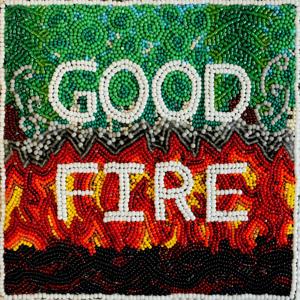


Season 1 | Episode 8 | Good Fire Podcast
Title: Fire Ecology and Indigenous Knowledge with Frank Lake
Wildfire management has long been the domain of colonial governments. Despite a rich history of living with, managing, and using fire as a tool since time immemorial, Indigenous people were not permitted to practice cultural fire and their knowledge was largely ignored. As a result, total fire suppression became the prominent policy. With the most active force of natural succession abruptly halted, Indigenous communities suffered as the land changed. Today, western society has recognized the ecological problem a lack of fire has created, however, the cultural impact has been largely ignored. In this episode, Frank Lake talks about how fire management should be done in consultation with Indigenous peoples and how it can benefit the land and the community. Frank Lake has spent a great deal of time contemplating the role of Indigenous people in fire management, and he has some great insight into how we can begin to change fire management for the benefit of all people.
Quotes
12.44 - 12.59: “[There is] the myth of the pristine wilderness and that this ecological diversity was just inherently there when really a lot of our forests and our fire-prone ecosystems, where there are Indigenous peoples, are the legacy of that complex Indigenous fire stewardship.”
Takeaways
Frank finding fire (1.19)
Frank’s mixed Native American and white background influences and informs his work with Indigenous and Tribal Peoples in California.
Fire-dependent culture (7.22)
Frank combines his cultural knowledge with his academic training to bring a more effective understanding and awareness of benefits, issues and policies in fire management.
Indigenous fire sovereignty (12.42)
Frank contemplates how Indigenous peoples can have an equal voice to share Indigenous knowledge as a remedy to the vulnerabilities or stressors of environmental processes.
Consultation in cultural burning (17.53)
Fire management agreements can mandate the consultation and coordination of Indigenous and Tribal peoples in firefighting and controlled burning.
Stakeholder management (21.07)
Frank underscores the importance of Indigenous and Tribal peoples having a direct relationship with the government to provide consultation in partnership.
Fire is medicine (25.29)
Frank’s research has shown how cultural burning reduces evaporation, increases spring flow and rejuvenates materials for habitats.
Corrective or maintenance fire (32.50)
Frank speaks about corrective fires addressing the absence of cultural burning using maps to show the difference Indigenous fire stewardship can make on different landscapes.
Fire-adapted communities (40.49)
“Having Indigenous people share the importance of fire increases our public’s awareness”, Frank says.
Consultation, communication, and coordination (48.30)
Frank discusses the Tribes he works with and the Tribal governments through National Forest Agreements, who appoint a representative to work with the management team in a wildfire.
The agroforestry perspective (55.03)
Frank outlines how active fire management agreements facilitate joint prescribed burns between agencies, organizations and Tribes using the example of oak in California.
Curating knowledge (59.03)
Frank believes that he has a responsibility to honour the knowledge that his Elders have gifted him with time and care, which includes thought around bringing fire back onto the landscape.
If you liked this podcast, please check out YourForest podcast too, rate and review it on Instagram and Facebook and tag a friend, and send your feedback and comments to [email protected]or [email protected].
Resources
Maintaining the Mosaic: The Role of Indigenous Burning in Land Management
Putting Fire on the Ground
Sponsor
The Canadian Partnership for Wildland Fire Science
Support from
California Indian Water Commission
Firesticks Alliance Indigenous Corporation
Season 1 | Episode 7 | Good Fire Podcast
Title: Interior Fire Keepers Workshop in Merritt BC, Canada: Second live recording with Pierre Kruger
In this live episode recorded at the Interior Fire Keepers Workshop in Merritt BC, Canada, Amy Cardinal Christianson and Matthew Kristoff speak with Pierre Krueger, a traditional fire-keeper and Penticton Indian Band Elder, who debriefs us about a cultural burn that was done at the workshop.
Quotes
13.58 - 14.15: “We have a responsibility. If someone knew what I know or any of my family knows, they could be billionaires within 2 years because they’d exploit our knowledge.”
Takeaways
Burn debrief (1.55)
Pierre brought his own tools for the cultural burn but says that he would have preferred to wait a few days because it was not dry enough to burn. Every year is different due to the seasons and that affects the window of burning available. He normally tests the grass and does a clean burn.
“Everyone gets a chance at everything” (3.48)
Pierre’s mother looked at burning as an act of togetherness and encouraged everyone to participate to the best of their ability. Burning is also an act of communication, as animals would be forewarned to clear the areas to be burned.
Safety is the fire-keeper’s responsibility (7.47)
Pierre believes firefighters have a lot to learn from his family’s way of fire-keeping since their practice has never seen a fire go astray. He shares instances of using fire to regulate the cultivation, and how food made him and his brother strong enough to run 115 miles a day!
Land and water (13.19) Pierre wants to teach cultural burning to the youth and other people who care for Mother Earth, to help clean the waterways. His people know how to spot the streams which are drinkable, and they consider it their responsibility to inform others if they find a bad stream to avoid.
Weather whisperers (17.35) Pierre shares how his family has the ability to control the weather and sees great possibility in others learning this art to make a difference to the environment. He narrates an incident when his mother created a 100-foot circle of protection around them to keep the rain away.
If you liked this podcast, please check out YourForest podcast too, rate and review it on Instagram and Facebook and tag a friend, and send your feedback and comments to [email protected]or [email protected].
Resources
Prescribed Burn: An Indigenous burning story featuring Pierre Krueger
Sponsor
The Canadian Partnership for Wildland Fire Science
Support from
California Indian Water Commission
Firesticks Alliance Indigenous Corporation
Season 1 | Episode 6 | Good Fire Podcast
Title: Fire and Water in California, USA with Don Hankins
In this episode of the Good Fire Podcast, hosts Amy Cardinal Christianson and Matthew Kristoff sit down with Don Hankins, President of the California Indian Water Commission to talk about the connection between fire and water. Cultural burning is important for many reasons, from berry production to habitat creation it promotes sustainable ecosystems and communities. Water is one giant part of that equation. What is the connection between fire and water? How can burning more or less often, higher or lower intensities, affect water quality and fish habitat? Don Hankins has studied these questions and has answers for us.
Quotes
20.03 - 20.14: “In Indigenous ways of thinking, we’re not just thinking about ourselves; we’re connecting to our ancestors and we are connecting down to generations unborn.”
Takeaways
Don’s journey (01.22)
Don is Plains Miwok and has been involved in fire restoration and research for more than 20 years, informed by his understanding of community needs.
Rekindling fire (06.33)
Don speaks about how they have been bringing local tribes to re-engage with fire and regenerate interest by creating a learning lab.
Reliving fire stories (14.18)
Don highlights the importance of the fire stories he was taught since they teach about tools to start and tend a fire and Indigenous fire laws.
Safety first (19.35)
Don has been taught that fire-keeping is an obligation handed down to Indigenous peoples at the time of creation, “to care for and tend to our landscape”.
Fire and water (22.51)
Within Indigenous knowledge systems, there is an inherent relationship between water and fire. An important aspect of Don’s knowledge system is the ability of a burn to bring rain.
Risk mitigation (31.47)
Don points out that the context of the knowledge base, the seasons chosen for burning, the objectives of a burn and fire laws distinguish Indigenous burning from agency burning.
Ecological grief (35.48)
Don describes the ecological grief that countless generations of Indigenous peoples experience.
This land is our land (43.12)
Don believes that agencies have a responsibility to uphold Indigenous peoples’ rights to steward their lands, and shares how tribes are reclaiming their rights to the land.
Care of the land (45.47)
Don shares that caring for the land is a cultural obligation for Indigenous peoples. Following Indigenous laws is important to live sustainably on the land.
Healing powers of burning (47.27)
As a fire/burn boss, Don says his knowledge is not acknowledged by agencies. When he takes any group of people to burn, he shares his knowledge of techniques and tools.
Universal cultural fire (59.15)
Don believes in the power of Indigenous peoples developing their own standards and qualifications for fire practice that champion Indigenous sovereignty.
Carrying the torch (1.03.48)
Don delineates the difference between the way Indigenous peoples and agencies perceive fire. He hopes to pass cultural burning responsibilities to the next generation.
If you liked this episode, please rate and review Good Fire on Apple Podcasts, Spotify or wherever you listen to podcasts.
Sponsor
The Canadian Partnership for Wildland Fire Science
Support from
California Indian Water Commission
Firesticks Alliance Indigenous Corporation
Season 1 | Episode 5 | Good Fire Podcast
Title: Interior Fire Keepers Workshop in Merritt BC, Canada with Nklawa
In this episode of the Good Fire Podcast, hosts Amy Cardinal Christianson and Matthew Kristoff sit down with Fire Keeper Nklawa. He provides insight helping people to better understand burning and it’s importance from a cultural perspective.
Quotes:
21.36 - 21.43: “The benefits far outweigh the bad part about… [the fire].”
Takeaways
Fire legend (1.49)
Nklawa’s people from the Okanagan believed that early people were more instinctual like animals, and did not have the ability to think or make decisions. He narrates the story of how the creator gave all animals jobs to prepare for the coming of humans during the winter. Coyote was sent first, and he asked the Elders about the fire which was being protected by fire monsters at the top of a mountain.
The tale of the tails (4.55)
Coyote scouted the mountain stealthily so the fire monsters didn’t consider him a threat, until he learned about their duty and sleep schedules and one day, stole the clay bowl with the fire in it. As he ran with the bowl, the tip of his tail hit the clay pot and caught fire. That is why coyotes have a white-tipped tail. As Coyote got tired, he passed the clay pot to Possum, whose entire bushy tail caught fire as he ran. That is why possums don’t have hair on their tails.
How people were gifted fire (9.55)
Possum passed the clay pot to Squirrel, who ran with it on its back until he felt the clay pot burning his back. He stopped and brought his tail up to cover the spot, which is why squirrels have upright tails. When the squirrel got tired, he threw the clay pot to Wood, who swallowed the fire. The fire monsters tried everything to retrieve fire from him, but couldn’t. Coyote then took Wood to the human village and showed them how to get fire from Wood, so they were not cold.
Indigenous relationship with fire (14.22)
Nklawa shares that until 200 years ago, people respected fire and were not afraid of it. He highlights the contrast between how fire was lit in the past to protect forests and resources, and how people are viewing putting out fires today as a way to do so. Indigenous peoples look at fire as a resource to replenish and cleanse the land, burning until the fire extinguishes naturally. Communities are relearning the skills of harvesting medicines in burn areas today.
Forest as a shared resource (18.45)
While people today are trying to make forests a sustainable resource to make them more economically viable in regards to timber sales, Nklawa says the food and medicines the forest provided made it economically viable for his people. Nklawa explains that Indigenous peoples need to provide referrals about good spots for fire. He believes consultation with traditional people is missing from land management. Forests need to be looked at as a shared resource for everyone to take what they need.
If you liked this episode, please rate and review Good Fire on Apple Podcasts, Spotify or wherever you listen to podcasts.
Resources
A history of fire featuring Nklawa
Sponsor
The Canadian Partnership for Wildland Fire Science
Support from
California Indian Water Commission
Firesticks Alliance Indigenous Corporation
Season 1 | Episode 4 | Good Fire Podcast
Title: Firesticks Alliance in Australia with Oliver Costello
In this episode of the Good Fire Podcast, hosts Amy Cardinal Christianson and Matthew Kristoff sit down with Oliver Costello to talk about re-invigorating the use of cultural burning by facilitating cultural learning pathways to fire and land management. For generations, since colonization, authority over the land and how to manage it has been held firmly by colonial governments, despite that land being sustainably managed for thousands of years prior to European contact by Indigenous peoples. Firesticks is an organization that aims to change the system and create more opportunities for Indigenous lead fire management. A more inclusive management system serves multiple purposes, benefiting all walks of life from indigenous to non-Indigenous peoples, as well as a more sustainable landscape.
Quotes
31.10 - 31.20: “You develop all these safety mechanisms for risk management, and risk management is important. Our people had risk management too - it was called knowledge and they used it”.
Takeaways
Cultural burning (01.24)
Oliver is a Bundjalung man from Northern New South Wales. He sits on the board of Firesticks Alliance Indigenous Corporation, which began as a way to bring the community together using fire and building recognition around cultural fire management.
Right fire (06.00)
Oliver speaks about how Aboriginal fire knowledge was lost due to colonization, but that assets and values can be used to create possibilities for the future. He thinks of fire as a tool to understand what the land teaches and how to support the relationship with the land.
Teaching the right way to burn (12.38)
Oliver talks about the reach of Firesticks, with fire workshops being conducted in different parts of Australia. This helps to engage agencies to understand regulation and policies and engage with cultural burning. The response and outcomes have mostly been positive.
Build confidence and relationships (23.09)
Oliver acknowledges that there is some tension between the Aboriginal communities and the agencies. Indigenous community mentorship and recognition of Indigenous knowledge through the cultural connection to the land are the pillars of Firesticks’ approach.
Cultural Learning Pathways (29.01)
Oliver shares how ancestral knowledge has been lost over the years, but that there is an opportunity for Aboriginal youth to lead the way. Firesticks aims to work with people who are connected with their ancestors and are present and aware of ways to burn to manage risks.
Healthy country, healthy people (38.00)
Oliver emphasizes the relationship of people to the land - the more you engage with the land, the more you are rewarded - physically, mentally, spiritually, and culturally.
“You don’t take more than you give” (42.20)
Oliver urges listeners to tune into the land to do what is healthy for the land as well as for the people. He believes mismanagement of land is killing the land, and that resources are finite.
Fire teaches us patience and presence (51.56)
Oliver feels inspired meeting people through the increasing number of fire workshops, learning about the different languages and traditions of the other Nations.
If you liked this episode, please rate and review Good Fire on Apple Podcasts, Spotify or wherever you listen to podcasts.
Sponsor
The Canadian Partnership for Wildland Fire Science
Support from
California Indian Water Commission
Firesticks Alliance Indigenous Corporation
From the publisher's feed
In this podcast we explore the concept of fire as a tool for ecological health and cultural empowerment by indigenous people around the globe. Good Fire is a term used to describe fire that is lit…

91,018 Listeners

43,827 Listeners

37,641 Listeners
229 Listeners
25,145 Listeners
24,539 Listeners
99 Listeners

9,266 Listeners
3,358 Listeners

16,365 Listeners
2,992 Listeners
13,626 Listeners
304 Listeners
657 Listeners
12,497 Listeners