
Sign up to save your podcasts
Or

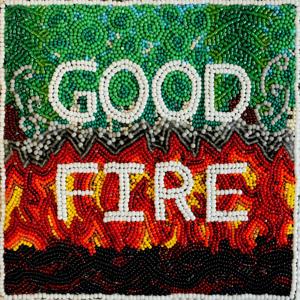


Season 1 | Episode 3 | Good Fire Podcast
Title: Interior Fire Keepers Workshop in Merritt BC, Canada with Pierre Kruger
In this episode of the Good Fire Podcast, hosts Amy Cardinal Christianson and Matthew Kristoff sit down with Pierre Kruger. Indigenous people have a rich history of working with and understanding fire. Pierre Kruger remembers a time when burning was common and has countless stories describing the lessons learned. This is the first of three Fire-Keeper stories we will release during the course of this podcast series. These stories consist of traditional knowledge and describe an understanding of fire that may be different from what some have come to understand. In this episode, Pierre Krueger remembers a time when burning was common and has countless stories describing the lessons learned.
Quotes
3.19 - 3.24: “Fire is like a snowflake; there ain’t no two fires the same.”
Takeaways
Fire safety (02.11)
Pierre Krueger’s family members have been fire-keepers for over 10,000 years. He narrates the story from the 60s when Pierre and his uncle surveyed the land during a wildfire to ensure safety and saved the lives of 70 to 100 settler firefighters by cutting down the trees that could have spread the fire.
The journey of a fire-keeper (8.04)
Pierre shares that the first lesson in Indigenous burning is how to light a fire with what is available in the short window for burning. Safety is the most important consideration in burning because losing one’s life from burning has impacts on reincarnation, he says. He highlights that fire-keepers are also responsible for taking care of the garden (mountains, valleys and water bodies).
Understanding fire (10.39)
Pierre recalls that in the 60s to the 80s, Indigenous peoples “were the best firefighters around”. They were dropped from moving helicopters onto steep hills since they were trained, experienced and knowledgeable in what needed to be done to control a wildfire. He explains the many reasons that fires are created - real estate, road development, clear-cutting - and how cleaning up after a fire is important.
“We don't have a fear of fire” (13.17)
A few years ago, Pierre and his son took a forest fire crew out to the forest and lit the backfire at their request. When the wind came in, Pierre warned the crew not to go ahead, but they didn’t listen and it led to casualties on the crew. Good firefighting “takes time and common sense”, he states. He has invited the Penticton firefighting unit to learn how to understand fires from the experience of the Indigenous peoples so that they don’t fear fire.
Fire-keeping in his blood (16.56)
Pierre was taught how to be a fire-keeper from childhood, with the ability to call on the weather being an important part of the teachings. He laments that the practice is slowly being lost because the younger generation is “becoming tunnel-visioned”. His vision is to teach many people about fire-keeping so that they can use technology to work with their enhanced knowledge and understanding of fire.
If you liked this episode, please rate and review Good Fire on Apple Podcasts, Spotify or wherever you listen to podcasts.
Resources
Prescribed Burn: An Indigenous burning story featuring Pierre Krueger
Sponsor
The Canadian Partnership for Wildland Fire Science
Support from
California Indian Water Commission
Firesticks Alliance Indigenous Corporation
Indigenous people have a rich history of working with and understanding fire. Pierre Kruger remembers a time when burning was common and has countless stories describing the lessons learned. This is the first of three Fire-Keeper stories we will release during the course of this podcast series. These stories consist of traditional knowledge and describe an understanding of fire that may be different from what some have come to understand.
In this podcast, Pierre Krueger remembers a time when burning was common and has countless stories describing the lessons learned.
Resources
An Indigenous burning story featuring Pierre Krueger: https://thenib.com/prescribed-burn-forest-fires/?fbclid=IwAR1eAANy5RBrRSdqBd-gojxUefSjMNbDsgmmL2UVMP5cVFGT19LlYeJ4IfA
Sponsors
The Canadian Partnership for Wildland Fire Science
Support from:
● California Indian Water Commission
● Firesticks Alliance Indigenous Corporation
Quotes
3.19 - 3.24: “Fire is like a snowflake; there ain’t no two fires the same.”
Takeaways
Fire safety (02.11)
Pierre Krueger’s family members have been fire-keepers for over 10,000 years. He narrates the story from the 60s when Pierre and his uncle surveyed the land during a wildfire to ensure safety and saved the lives of 70 to 100 settler firefighters by cutting down the trees that could have spread the fire.
The journey of a fire-keeper (8.04)
Pierre shares that the first lesson in Indigenous burning is how to light a fire with what is available in the short window for burning. Safety is the most important consideration in burning because losing one’s life from burning has impacts on reincarnation, he says. He highlights that fire-keepers are also responsible for taking care of the garden (mountains, valleys and water bodies).
Understanding fire (10.39)
Pierre recalls that in the 60s to the 80s, Indigenous peoples “were the best firefighters around”. They were dropped from moving helicopters onto steep hills since they were trained, experienced and knowledgeable in what needed to be done to control a wildfire. He explains the many reasons that fires are created - real estate, road development, clear-cutting - and how cleaning up after a fire is important.
“We don't have a fear of fire” (13.17)
A few years ago, Pierre and his son took a forest fire crew out to the forest and lit the backfire at their request. When the wind came in, Pierre warned the crew not to go ahead, but they didn’t listen and it led to casualties on the crew. Good firefighting “takes time and common sense”, he states. He has invited the Penticton firefighting unit to learn how to understand fires from the experience of the Indigenous peoples so that they don’t fear fire.
Fire-keeping in his blood (16.56)
Pierre was taught how to be a fire-keeper from childhood, with the ability to call on the weather being an important part of the teachings. He laments that the practice is slowly being lost because the younger generation is “becoming tunnel-visioned”. His vision is to teach many people about fire-keeping so that they can use technology to work with their enhanced knowledge and understanding of fire.
If you liked this podcast, please check out YourForest podcast too, rate and review it on Instagram and Facebook and tag a friend, and send your feedback and comments to [email protected]m.
Season 1 | Episode 2 | Good Fire Podcast
Title: Burning on territory in Victoria, Australia with Trent Nelson and Tim Kanoa
Cultural burning exists around the world. In this episode of the Good Fire Podcast, hosts Amy Cardinal Christianson and Matthew Kristoff sit down with Trent Nelson and Tim Kanoa about the huge forward strides they have taken to get cultural burning back on the landscape on the other side of the globe in Australia. We discuss the deep cultural ties to burning, what has been lost, and what can be gained by having it back on the land. We could learn a lot from their experience.
Quotes
18.02 - 18.08: “When the world evolves, so does the culture… If we didn’t evolve as a culture, we wouldn’t be the longest living culture in the world.”
25.31 - 25.36: “It’s not just about burning the landscape, it's about healing your people as well.”
Takeaways
Get to know Trent and Tim (5.29)
Trent is Yorta Yorta and Dja Dja Wurrung. He works in land management with the parks agency. Tim is from Gunditjmara First Nation and works for the environment department.
Trent’s history of cultural burning (07.46)
Trent believes that continuing the custom of cultural burning is a way of paying respect to their ancestors. Fire was brought back to the landscape of their nation 3 years ago.
Tim’s history of cultural burning (16.27)
For Tim’s nation, fire means many different things. He speaks of the diversity in Aboriginal groups in their languages and customs.
Native Title (25.41)
Tim talks about Native Title in Australia which protects the Aboriginal peoples' rights and interests to their land that derive from traditional laws and customs.
Fire as a positive force (32.20)
Tim emphasizes the importance of communication between non-Aboriginal people and Aboriginal peoples. Fire has become a positive tool for people to connect.
“Nothing is lost” (36.05)
Trent says that even though Aboriginal peoples' way of living in society has been disrupted, the knowledge of using fire still lies with them.
Cultural protocols (40.48)
Trent shares that cultural protocols are carried in their hearts as passed down through generations. They now invite Elders to every burning site to take their permission.
Respect fire (48.08)
Trent laments that even though fire gives us life and is an important part of ceremony, it has been viewed as a fearful threat.
Collaborative governance (54.06)
The state government of Victoria is committed to Aboriginal self-determination and to achieving a treaty with the Victorian Aboriginal community.
RSA (57.12)
Trent expounds on the Recognition and Settlement Agreement in Victoria. He and Tim narrate how Aboriginal fire management is being restored through advocacy work.
Aboriginal cultural landscape (1.11.30)
Tim explicates how fire has helped Aboriginal mobs by registering the Aboriginal cultural landscape with UNESCO.
If you liked this episode, please rate and review Good Fire on Apple Podcasts, Spotify or wherever you listen to podcasts.
Resources
Native Title
Recognition and Settlement Agreement
Budj Bim Cultural Landscape
The Victorian Traditional Owner Cultural Fire Strategy
Sponsor
The Canadian Partnership for Wildland Fire Science
Support from
California Indian Water Commission
Firesticks Alliance Indigenous Corporation
Season 1 | Episode 1 | Good Fire Podcast
Title: Welcome to the Good Fire Podcast in Alberta, Canada
On this first episode of the Good Fire Podcast, hosts Amy Cardinal Christianson and Matthew Kristoff explore the concept of fire as a tool for ecological health and cultural empowerment by Indigenous peoples around the globe.
Hosted by Amy Cardinal Christianson, and Matthew Kristoff. Amy is a Métis woman from Treaty 8 territory, currently living in Treaty 6, and a research scientist with the Canadian Forest Service, Natural Resources Canada. Matthew grew up in Treaty 8 territory and now lives in Treaty 6. He is a forester in the province of Alberta, Canada and the creator of YourForest Podcast.
Quotes
04.06 - 4.21: “Any time you talk to an Elder about good fire, it’s about cleaning up the landscape, about using fire as a tool and also as something that sustains their culture so that they can live in that area.”
13.06 - 13.22: “Our role is … given down from the Creator, to look after the earth, to steward the earth… So if you can’t do that, it basically takes away who you are as a person… Why are you here, then, if you can’t look after your territory or your land?”
Takeaways
What is good fire? (01.04)
Amy, a fire research scientist, is Métis from Northern Alberta, currently living in Treaty 6 territory. She differentiates good fire, the fire the forest needs, from wildfires, which are dangerous and threaten people’s health, safety and property. Many Indigenous nations Nations use fire as a tool, serving a cultural, subsistence and safety purpose.
How good fire helps (03.05)
Amy explains that good fire earns its name because it is used “to get rid of the dead trees, dry grass, things that can contribute to a bad fire”. She states that bringing back good fire can reduce the risk of wildfire.
The history of fire exclusion (5.37)
When settlers first came to Indigenous lands, they were terrified by the fires that damaged timber and watersheds. However, Indigenous people have been conducting regular repeated intervals of low-intensity burning to maintain and steward the land.
“You are never going to defeat wildfires” (09.53)
Amy believes that aiming to get rid of wildfire is unnatural. She finds that Indigenous peoples burn for many more reasons than reducing fuel risk - they do it to restore the health of forests and communities.
The fight for fire (11.33)
Many Indigenous communities are aware of the positive effects of controlled burning and are committed to safeguarding the land through good fire. Amy shares examples from different Indigenous cultures where burning is considered a familial responsibility.
A sharing circle on fire (15.05)
Amy wanted to create the Good Fire podcast to learn from Indigenous peoples around the world who work in Indigenous fire management. She speaks about the different aspects of fire management from Indigenous and western perspectives.
Keep the fire burning bright (19.32)
Amy hopes this podcast inspires listeners to seek out Indigenous firekeepers and Elders in the community to learn about the environment around them. She looks at this podcast as a way to share what fire means to Indigenous peoples and to bring good fire back.
If you liked this episode, please rate and review Good Fire on Apple Podcasts, Spotify or wherever you listen to podcasts. _
From the publisher's feed
In this podcast we explore the concept of fire as a tool for ecological health and cultural empowerment by indigenous people around the globe. Good Fire is a term used to describe fire that is lit…

91,018 Listeners

43,827 Listeners

37,641 Listeners

229 Listeners

25,145 Listeners

24,539 Listeners
99 Listeners

9,266 Listeners

3,358 Listeners

16,365 Listeners

2,992 Listeners
13,626 Listeners

304 Listeners
657 Listeners

12,497 Listeners