
Sign up to save your podcasts
Or

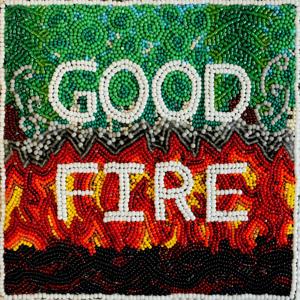


Season 2 | Episode 7 | Good Fire Podcast
Title: Fire Futures with Indigenous Researchers
In this episode of the Good Fire Podcast, hosts Amy Cardinal Christianson and Matthew Kristoff sit down at the International Association of Wildland Fire (IAWF) Fire & Climate Conference in Pasadena CA, featuring early career researchers who are re-kindling cultural burning.
Quote
16.25 - 16.29: “Indigenous people don’t need us to speak on their behalf, they can speak on their own behalf.”
Takeaways
“In a good way” (05.02)
Melinda Adams, San Carlos Apache Tribal member, and PhD candidate at UC Davis, shares how agency representatives took a step away from fire suppression in one of the first CalFire cultural fire workshops at Cache Creek Conservancy in Woodland, CA.
The benefits of cultural fire (06.42)
Melinda narrates how the burn was concentrated on restoring tule, an ecologically and culturally significant plant. This highlights how cultural fire is important for long-term carbon storage, water holding potential and cultural reunification.
Collaboration, consultation and consent (07.57)
Melinda hopes for burning to take place with Indigenous peoples, to undo the impacts of colonialism and unburden future generations from climate change.
Good relations (11.11)
Carly Dominguez is of Indigenous Mexican heritage. Her work with cultural fire is inspired by her desire to improve water health.
Fire has always been good (13.30)
Carly is being trained through the Indigenous Cultural Burn Network.
“Fire has a special place in my heart” (17.41)
Deniss Martinez is a Ph.D. candidate at UC Davis. Learning from local Indigenous communities helped her reconnect with her Indigenous roots and relearn fire.
Getting stuff done (19.54)
William Madrigal Jr., or Will, is associated with Climate Science Alliance, a nonprofit based in San Diego that supports and collaborates with Indigenous tribes in addressing climate change disparities.
Facing climate change (22.19)
Nina Fontana is a postdoctoral researcher at the University of California, Davis in collaboration with the USGS Southwest Climate Adaptation Science Center.
Relationships over acres (26.10)
Deniss observes that when relationships are built and in place, more equitable decision-making takes place during a crisis.
Trust takes time (30.57)
Carly suggests approaching practices and policies with openness and Nina advises including the community in all aspects of the project from the beginning.
Researching back to life (35.59)
Melinda notes that Indigenous peoples conducting research helps move their initiatives and collaborations forward. She is excited about young people getting involved in burning and the openness of other researchers to this learning.
“We have to have hope” (40.16)
As a native person whose ancestors survived so much, Melinda believes it is her duty to lead with hope.
“Connection brings me hope” (43.22)
Understanding the traditional way humans can fulfil our responsibilities to the following seven generations gives Will hope for a better future. Nina finds hope in hearing about species coming back to landscapes.
Have comments or want to give feedback? Send it to the hosts of this podcast via email at: [email protected] or yourforestpodcast@gmail.com.
If you liked this podcast, please check out YourForest podcast too, rate and review it on Instagram and Facebook and tag a friend, and send your feedback and comments to [email protected].
Resources
International Association of Wildland Fire
Sponsor
The Canadian Partnership for Wildland Fire Science
Support from
California Indian Water Commission
Firesticks Alliance Indigenous Corporation
Good Fire Podcast by Amy Cardinal Christianson and Matthew Kristoff
Stories of Indigenous fire stewardship, cultural and social empowerment, and environmental integrity
Early Career Panel
Episode highlight
This episode is a recording of a session at the IAWF Fire & Climate conference in Pasadena CA, featuring early career researchers who are re-kindling cultural burning.
Resources
International Association of Wildland Fire
Sponsors
The Canadian Partnership for Wildland Fire Science
Support from:
● California Indian Water Commission
● Firesticks Alliance Indigenous Corporation
Quotes
16.25 - 16.29: “Indigenous people don’t need us to speak on their behalf, they can speak on their own behalf.”
Takeaways
“In a good way” (05.02)
Melinda Adams, San Carlos Apache Tribal member, and PhD candidate at UC Davis, shares how agency representatives took a step away from fire suppression in one of the first CalFire cultural fire workshops at Cache Creek Conservancy in Woodland, CA.
The benefits of cultural fire (06.42)
Melinda narrates how the burn was concentrated on restoring tule, an ecologically and culturally significant plant. This highlights how cultural fire is important for long-term carbon storage, water holding potential and cultural reunification.
Collaboration, consultation and consent (07.57)
Melinda hopes for burning to take place with Indigenous peoples, to undo the impacts of colonialism and unburden future generations from climate change.
Good relations (11.11)
Carly Dominguez is of Indigenous Mexican heritage. Her work with cultural fire is inspired by her desire to improve water health.
Fire has always been good (13.30)
Carly is being trained through the Indigenous cultural burn network.
“Fire has a special place in my heart” (17.41)
Deniss Martinez is a Ph.D. candidate at UC Davis. Learning from local Indigenous communities helped her reconnect with her Indigenous roots and relearn fire.
Getting stuff done (19.54)
William Madrigal Jr., or Will, is associated with Climate Science Alliance, a nonprofit based in San Diego that supports and collaborates with Indigenous tribes in addressing climate change disparities.
Facing climate change (22.19)
Nina Fontana is a postdoctoral researcher at the University of California, Davis in collaboration with the USGS Southwest Climate Adaptation Science Center.
Relationships over acres (26.10)
Deniss observes that when relationships are built and in place, more equitable decision-making takes place during a crisis.
Trust takes time (30.57)
Carly suggests approaching practices and policies with openness and Nina advises including the community in all aspects of the project from the beginning.
Researching back to life (35.59)
Melinda notes that Indigenous peoples conducting research helps move their initiatives and collaborations forward. She is excited about young people getting involved in burning and the openness of other researchers to this learning.
“We have to have hope” (40.16)
As a native person whose ancestors survived so much, Melinda believes it is her duty to lead with hope.
“Connection brings me hope” (43.22)
Understanding the traditional way humans can fulfil our responsibilities to the following seven generations gives Will hope for a better future. Nina finds hope in hearing about species coming back to landscapes.
Season 2 | Episode 6 | Good Fire Podcast
Title: Cultural Fire in California with Don Hankins
In this episode of the Good Fire Podcast, hosts Amy Cardinal Christianson and Matthew Kristoff sit down with Don Hankins, Plains Miwok from the central valley of California’s Sacramento-San Joaquin Delta, to talk about new developments around cultural burning in California and his hopes for the future.
Quote
24.52 - 24.53: “We definitely have to connect culture to fire.”
Takeaways
Cultural torch bearers (01.52)
Don is Plains Miwok from the central valley of California’s Sacramento-San Joaquin Delta. He believes that due to the wildfires in California, initiatives are taking place that recognize the place of Indigenous fire.
Revitalizing cultural fire (4.37)
Various policy barriers - access to land and funding and permission to burn using traditional laws - are being addressed through the creation of a tribally chartered non-profit organization to support learning, advance policy efforts and act as a refunding and redistribution entity.
Building and empowering the youth (07.16)
Don looks to the youth to carry Indigenous knowledge of fire into the future and seeks young people from his Nation to mentor. Knowledge holders training the youth to understand the cultural reasons for burning, read the landscape and maintain culture will enable the youth to step into decision-making roles and policy arenas.
Enabling cultural burning (11.49)
Don speaks about California Bill SB 332 which allows certified burn bosses and cultural burners to burn, and that if they meet certain conditions, they shall not be liable for any fire suppression or other costs otherwise recoverable for a burn.
Spreading like good fire (16.05)
Don also speaks about California Bill AB 642 which primarily codifies the definitions of cultural fire and incentivizes agencies to work with cultural burners to implement plans and enable Indigenous stewardship.
Cultural fire progress (20.21)
Don lists some challenges to advancing cultural fire - the criteria for declaring someone trained and the sensitivities around tribal sovereignty for that declaration. If someone is not exposed to cultural fire training, errors in the process could occur.
Learning from fire (23.42)
Don shares that if you are gentle with fire and approach it in a good way, you can learn from it, or you can learn the lessons the hard way. Thinking about the reasons for burning helps look for learning opportunities in burning. Don’s approach to burning changes according to the requirement, but praying and acknowledging the land is always a part of it.
Have comments or want to give feedback? Send it to the hosts of this podcast via email at: [email protected] or yourforestpodcast@gmail.com.
If you liked this podcast, please check out YourForest podcast too, rate and review it on Instagram and Facebook and tag a friend, and send your feedback and comments to [email protected].
Resources
California’s Strategic Plan for Expanding the Use of Beneficial Fire
Sponsor
The Canadian Partnership for Wildland Fire Science
Support from
California Indian Water Commission
Firesticks Alliance Indigenous Corporation
Good Fire Podcast by Amy Cardinal Christianson and Matthew Kristoff
Stories of Indigenous fire stewardship, cultural empowerment and environmental integrity
Update: Cultural Fire in California with Don Hankins
Episode highlight
In this podcast, Don Hankins talks about new developments around cultural burning in California and his hopes for the future.
Resources
California’s Strategic Plan for Expanding the Use of Beneficial Fire
Sponsors
The Canadian Partnership for Wildland Fire Science
Support from:
● California Indian Water Commission
● Firesticks Alliance Indigenous Corporation
Quotes
24.52 - 24.53: “We definitely have to connect culture to fire.”
Takeaways
Cultural torch bearers (01.52)
Don is Plains Miwok from the central valley of California’s Sacramento-San Joaquin Delta. He believes that due to the wildfires in California, initiatives are taking place that recognize the place of Indigenous fire.
Revitalizing cultural fire (4.37)
Various policy barriers - access to land and funding and permission to burn using traditional laws - are being addressed through the creation of a tribally chartered non-profit organization to support learning, advance policy efforts and act as a refunding and redistribution entity.
Building and empowering the youth (07.16)
Don looks to the youth to carry Indigenous knowledge of fire into the future and seeks young people from his Nation to mentor. Knowledge holders training the youth to understand the cultural reasons for burning, read the landscape and maintain culture will enable the youth to step into decision-making roles and policy arenas.
Enabling cultural burning (11.49)
Don speaks about California Bill SB 332 which allows certified burn bosses and cultural burners to burn, and that if they meet certain conditions, they shall not be liable for any fire suppression or other costs otherwise recoverable for a burn.
Spreading like good fire (16.05)
Don also speaks about California Bill AB 642 which primarily codifies the definitions of cultural fire and incentivizes agencies to work with cultural burners to implement plans and enable Indigenous stewardship.
Cultural fire progress (20.21)
Don lists some challenges to advancing cultural fire - the criteria for declaring someone trained and the sensitivities around tribal sovereignty for that declaration. If someone is not exposed to cultural fire training, errors in the process could occur.
Learning from fire (23.42)
Don shares that if you are gentle with fire and approach it in a good way, you can learn from it, or you can learn the lessons the hard way. Thinking about the reasons for burning helps look for learning opportunities in burning. Don’s approach to burning changes according to the requirement, but praying and acknowledging the land is always a part of it.
Send in your comments and feedback to the hosts of this podcast via email: [email protected] and [email protected].
If you liked this podcast, please check out YourForest podcast too, rate and review it on Instagram, Twitter and Facebook and tag a friend, and send your feedback and comments to [email protected]m.
Good Fire Podcast by Amy Cardinal Christianson and Matthew Kristoff
Stories of Indigenous fire stewardship, cultural and social empowerment, and environmental integrity
Episode highlight
In this episode, Ntando Nondo talks about Indigenous land stewardship and fire management practices in Zimbabwe.
Resources
Ntando Nondo’s Profile
Southern Africa Fire Network (SAFNET)
Sponsors
The Canadian Partnership for Wildland Fire Science
Support from:
● California Indian Water Commission
● Firesticks Alliance Indigenous Corporation
Quotes
42.08 - 42.16: “If there is a fire, you better use the little water you have to save your property.”
Takeaways
Fire management strategies (05.49)
Ntando shares that the fire management plan involves protecting the ecological regions depending on the amount of rainfall received, the wildlife living in the region and the kind of farming done there.
The many uses and sources of fire (12.45)
For Indigenous peoples, fire is the primary source of energy and a cultural entity. Wildland fires can be started by a locomotive, electrical faults, or lightning.
Good fire (19.30)
Ntando explains that previously, communities were in charge of fire management on their own lands but fire now has regulations associated with it. They do their burning in designated areas ahead of the fire season, to reduce the fuel available to burn and reduce fire intensity.
Indigenous partnership with the government (25.58)
The 15+ Indigenous groups in Zimbabwe manage their lands on a day-to-day basis in consultation with the government.
Coming together to avert disasters (33.39)
Zimbabwe is a member of the Southern Africa Fire Network (SAFNET), a voluntary organization that shares strategies on fire management and developments across borders using remote sensing to alert neighbouring countries.
Beating the fires (39.26)
Ntando describes a fire beater as a wooden stick of 1.5m to 2m with a 40 X 60 cm piece of rubber on one end used to beat the fire grounds to remove oxygen from the fire. They also use sprayers, sprinklers and other tools to disperse chemicals and water.
Prepare for the worst, expect the best (43.29)
Ntando recalls the 2010 fire in the Midlands province lasted for 3 days, killing 7 elephants and several donkeys and domesticated animals. Fire breaks allow for effective demarcation of lands and timely fire management before the entire community is affected.
Fire then and now (47.01)
Ntando observes that fire used for indoor purposes like cooking or cultural ceremonies continues, but fire outside the home or in agriculture is restricted, especially during Zimbabwe’s fire season from 31st July to 31st October. He envisions consulting with Indigenous communities on fire management so that the fire can continue to play a central role in their culture.
The future of fire (55.06)
Satellite technology and remote sensing can be helpful in presenting a graphical summary of the success of fire management plans and inform further refinements to the plan.
Send in your comments and feedback to the hosts of this podcast via email: [email protected] and [email protected].
Season 2 | Episode 4 | Good Fire Podcast
Title: Cultural Safety with Joe Gilchrist and Natasha Caverley
In this episode of the Good Fire Podcast, hosts Amy Cardinal Christianson and Matthew Kristoff sit down with Joe Gilchrist and Natasha Caverley to talk about how Indigenous and Western ways of knowing can come together to bring cultural burning back on the land: a study exploring cultural safety of Indigenous wildland firefighters in Canada.
Takeaways
Sparking passion (04.16)
Joe began firefighting at age 15 and became a squad boss in 1991 in Merritt. He narrates the travels and training they did, and how his experience firefighting and cultural burning for plant health helped him.
Glowing embers (11.55)
Natasha is the President of Turtle Island Consulting and was part of a specialized team funded by the BC Ministry of Forests to work with First Nations that were dealing with the mountain pine beetle infestation.
Two-eyed seeing approach (18.28)
Joe outlines the wages and structure of the crews involved in firefighting, as well as the demanding schedules of firefighters. Natasha’s work has been to formally capture such anecdotes from a national perspective.
Cultural safety (31.37)
Joe wants to share his experience and lessons learned as a firefighter but has always been a doer more than a talker. Natasha realized that Indigenous peoples do not feel safe accessing quality services in wildland firefighting as well.
Systemic racism (41.06)
Joe looks back at the systemic racism he faced as a firefighter and recounts instances when the Indigenous firefighters were tested through difficult tasks and their firefighting style was mocked.
The best way to work is to have fun (50.20)
Joe was diagnosed with PTSD in 1994 from the exhaustion of always having to be available or on standby as a firefighter. He informs that PTSD can affect anyone, can be hard to fight on one’s own, and warrants professional help, as difficult as it is to ask for.
Wildland firefighting as a career choice (01.05.05)
Joe believes knowledge of the land, its inhabitants, the wind patterns on the land, and the way fire burns through it are important requirements to be a firefighter. He is working with some universities to add an Indigenous perspective to the learning.
Cultural burning needs to come back (1.14.30)
Natasha is working with Amy in Saskatchewan to curate promising practices to bring fire back on the land by interviewing Elders and fire-keepers. Joe is inspired to continue making connections with knowledge keepers and Elders and share his knowledge in firefighting with others.
Have comments or want to give feedback? Send it to the hosts of this podcast via email at: [email protected] or yourforestpodcast@gmail.com.
Resources
Joe Gilchrist describes how fire has changed the landscape
Natasha Caverley of Turtle Island Consulting
Giving Voice to Cultural Safety of Indigenous Wildland Firefighters in Canada
Revitalizing Cultural Burning
Sponsor
The Canadian Partnership for Wildland Fire Science
Support from
California Indian Water Commission
Firesticks Alliance Indigenous Corporation
Good Fire Podcast by Amy Cardinal Christianson and Matthew Kristoff
Stories of Indigenous fire stewardship, cultural empowerment and environmental integrity
Cultural Safety with Joe Gilchrist and Natasha Caverley
Episode highlight
In this podcast, Joe Gilchrist and Natasha Caverley talk about how Indigenous and Western ways of knowing can come together to bring cultural burning back on the land a study exploring cultural safety of Indigenous wildland firefighters in Canada.
Resources
Joe Gilchrist describes how fire has changed the landscape
Natasha Caverley of Turtle Island Consulting
Giving Voice to Cultural Safety of Indigenous Wildland Firefighters in Canada
Revitalizing Cultural Burning
Sponsors
The Canadian Partnership for Wildland Fire Science
Support from:
● California Indian Water Commission
● Firesticks Alliance Indigenous Corporation
Takeaways
Sparking passion (04.16)
Joe began firefighting at age 15 and became a squad boss in 1991 in Merritt. He narrates the travels and training they did, and how his experience firefighting and cultural burning for plant health helped him.
Glowing embers (11.55)
Natasha is the President of Turtle Island Consulting and was part of a specialized team funded by the BC Ministry of Forests to work with First Nations that were dealing with the mountain pine beetle infestation.
Two-eyed seeing approach (18.28)
Joe outlines the wages and structure of the crews involved in firefighting, as well as the demanding schedules of firefighters. Natasha’s work has been to formally capture such anecdotes from a national perspective.
Cultural safety (31.37)
Joe wants to share his experience and lessons learned as a firefighter but has always been a doer more than a talker. Natasha realized that Indigenous peoples do not feel safe accessing quality services in wildland firefighting as well.
Systemic racism (41.06)
Joe looks back at the systemic racism he faced as a firefighter and recounts instances when the Indigenous firefighters were tested through difficult tasks and their firefighting style was mocked.
The best way to work is to have fun (50.20)
Joe was diagnosed with PTSD in 1994 from the exhaustion of always having to be available or on standby as a firefighter. He informs that PTSD can affect anyone, can be hard to fight on one’s own, and warrants professional help, as difficult as it is to ask for.
Wildland firefighting as a career choice (01.05.05)
Joe believes knowledge of the land, its inhabitants, the wind patterns on the land, and the way fire burns through it are important requirements to be a firefighter. He is working with some universities to add an Indigenous perspective to the learning.
Cultural burning needs to come back (1.14.30)
Natasha is working with Amy in Saskatchewan to curate promising practices to bring fire back on the land by interviewing Elders and fire-keepers. Joe is inspired to continue making connections with knowledge keepers and Elders and share his knowledge in firefighting with others.
Send in your comments and feedback to the hosts of this podcast via email: [email protected] and [email protected].
Season 2 | Episode 3 | Good Fire Podcast
Title: Fire and Carbon with Russell Myers Ross and William Nikolakis
In this episode of the Good Fire Podcast, hosts Amy Cardinal Christianson and Matthew Kristoff sit down with Russell Myers Ross and William Nikolakis to speak about the work of the Gathering Voices Society on revitalizing traditional fire management in Tsilhqot’in Territory and the potential around carbon offsets.
Takeaways
Valuing Indigenous knowledge and experience (7.59)
Will created the Gathering Voices Society to support “a stewardship model, where First Nations manage the land in ways that are consistent with their values for their own goals and their own ways”.
Practical action (10.54)
Will shares that their goal is to support the community by employing people for the fire programs, and they are guided by their motto to learn by doing. Cultural burning can involve everyone in the community, not just firefighters, to begin seeing fire as a friend.
Learning by doing (14.58)
Will met Russ at a governance conference in 2015. They hosted Victor Steffensen in 2018 for knowledge exchange on different ways of practising cultural burning which led to them doing their first spring burn in 2019.
Balancing benefits, mitigating effects (25.07)
Even though many people hold misconceptions about cultural burning, Russ knows that the benefits will be visible in due time, and healthy land can be enjoyed by all. The community has been excited about reconnecting to the land and the energy is infectious.
2017 wildfires (33.52)
The Gathering Voices Society has secured funding to finance the fire stewardship in Russ’ community. Russ speaks about the aftermath of the 2017 wildfires and the hope for development and education in this space ever since.
Changing the world, one fire at a time (42.37)
Will and Russ discuss the different tools used in cultural burning. Other communities are looking to him for inspiration on land management today. Will is working towards compiling scientific evidence of the validity and importance of this practice.
Carbon (48.56)
Will talks about working with NAILSMA, where they witnessed the growth of well-documented formal Indigenous fire programs that are groundbreaking in understanding the effect of fire across the landscape.
Passing on the torch (54.46)
Russ states that piloting the program in the community was important to measure practicality and interest, and they are now planning on how it can be expanded. He envisions this work to be intergenerational, keeping the community immersed in the knowledge.
Have comments or want to give feedback? Send it to the hosts of this podcast via email at: [email protected] or yourforestpodcast@gmail.com.
Resources
Russell Myers Ross’ Story
William Nikolakis’ Profile
Gathering Voices Society
The North Australian Indigenous Land and Sea Management Alliance Ltd (NAILSMA)
Intact Foundation
Wildfire governance in a changing world: Insights for policy learning and policy transfer
Goal setting and Indigenous fire management: a holistic perspective
Sponsor
The Canadian Partnership for Wildland Fire Science
Support from
California Indian Water Commission
Firesticks Alliance Indigenous Corporation
Episode highlight
In this episode, Russell Myers Ross and William Nikolakis speak about the work of the Gathering Voices Society on revitalizing traditional fire management in Tsilhqot’in Territory and the potential around carbon offsets.
Resources
Russell Myers Ross’ Story
William Nikolakis’ Profile
Gathering Voices Society
The North Australian Indigenous Land and Sea Management Alliance Ltd (NAILSMA)
Intact Foundation
Wildfire governance in a changing world: Insights for policy learning and policy transfer
Goal setting and Indigenous fire management: a holistic perspective
Sponsors
The Canadian Partnership for Wildland Fire Science
Support from:
● California Indian Water Commission
● Firesticks Alliance Indigenous Corporation
Takeaways
Valuing Indigenous knowledge and experience (7.59)
Will created the Gathering Voices Society to support “a stewardship model, where First Nations manage the land in ways that are consistent with their values for their own goals and their own ways”.
Practical action (10.54)
Will shares that their goal is to support the community by employing people for the fire programs, and they are guided by their motto to learn by doing. Cultural burning can involve everyone in the community, not just firefighters, to begin seeing fire as a friend.
Learning by doing (14.58)
Will met Russ at a governance conference in 2015. They hosted Victor Steffensen in 2018 for knowledge exchange on different ways of practising cultural burning which led to them doing their first spring burn in 2019.
Balancing benefits, mitigating effects (25.07)
Even though many people hold misconceptions about cultural burning, Russ knows that the benefits will be visible in due time, and healthy land can be enjoyed by all. The community has been excited about reconnecting to the land and the energy is infectious.
2017 wildfires (33.52)
The Gathering Voices Society has secured funding to finance the fire stewardship in Russ’ community. Russ speaks about the aftermath of the 2017 wildfires and the hope for development and education in this space ever since.
Changing the world, one fire at a time (42.37)
Will and Russ discuss the different tools used in cultural burning. Other communities are looking to him for inspiration on land management today. Will is working towards compiling scientific evidence of the validity and importance of this practice.
Carbon (48.56)
Will talks about working with NAILSMA, where they witnessed the growth of well-documented formal Indigenous fire programs that are groundbreaking in understanding the effect of fire across the landscape.
Passing on the torch (54.46)
Russ states that piloting the program in the community was important to measure practicality and interest, and they are now planning on how it can be expanded. He envisions this work to be intergenerational, keeping the community immersed in the knowledge.
Send in your comments and feedback to the hosts of this podcast via email: [email protected] and [email protected].
Season 2 | Episode 2 | Good Fire Podcast
Title: Cultural Fire and Ceremony with Ron Goode
In this episode of the Good Fire Podcast, hosts Amy Cardinal Christianson and Matthew Kristoff sit down with Ron W. Goode to talk about his journey stewarding the land using fire and the importance of ceremony. Ron is the Tribal Chairman of the North Fork Mono Tribe. Ron shares his experiences with Aboriginal leaders in Australia, exchanging knowledge and cultural guidance.
Quotes
46.26 - 46.29: “Your voice is not carrying but you keep singing”.
Takeaways
Living on the land (4.37)
Ron is the Tribal Chairman of the North Fork Mono Tribe. He describes how his grandparents were born before the land was colonized, and his grandmother lived just off the land beyond the age of 100.
Understanding nature (7.24)
Ron points out that there are 10,000 meadows in the Sierra Nevada mountain ranges in California, where wild animals and humans coexist. They also have natural medicines they prepare and trade.
Tending the garden (16.12)
Ron laments that mega-fires have increased the canopy of the forest so much that rain does not reach the roots of trees, and what does hit the floor, runs off. Thinning the forest thus plays an important part in keeping the forest healthy.
The right way to do a cultural burn (23.34)
Ron is mindful to burn using the right techniques, in the right area and during the right season. A cultural burn will not burn the root system, but a wildfire does.
Cultural resources are the brush (31.37)
When Ron does a burn, he has a vision of what the landscape will look like a few years from now, and what harvest will be ready.
“We don’t do anything that is not spiritual first” (40.23)
Working on the landscape means making an offering to Mother Earth and all its inhabitants. Ron shares that when an offering is made from the spirit, all of nature responds well to it.
Fire is ceremonial (49.43)
Ron explains that cultural fire is called ceremonial fire because it begins with a prayer or song. They have been successfully burning on the land with no real accidents.
Consultation is the way forward (56.21)
The California government has been charged with creating a strategic plan for natural resources and is hiring a tribal liaison for each tribe. However, consultation becomes complicated with the hiring of non-tribal liaisons who do not have a connection to the tribe.
“I’m burning for the sustainability of our culture” (1.00.39)
Ron burns with the intention to sustain his culture first and then to contain wildfires and improve biodiversity.
Take care of your backyard (1.10.20)
Ron shares his experiences with Aboriginal leaders in Australia, exchanging knowledge and cultural guidance.
Have comments or want to give feedback? Send it to the hosts of this podcast via email at: [email protected] or yourforestpodcast@gmail.com.
Resources
Ron Goode’s Profile
Tribal-Traditional Ecological Knowledge
Sponsor
The Canadian Partnership for Wildland Fire Science
Support from
California Indian Water Commission
Firesticks Alliance Indigenous Corporation
From the publisher's feed
In this podcast we explore the concept of fire as a tool for ecological health and cultural empowerment by indigenous people around the globe. Good Fire is a term used to describe fire that is lit…

91,018 Listeners

43,827 Listeners

37,641 Listeners
229 Listeners

25,145 Listeners
24,539 Listeners
99 Listeners

9,266 Listeners

3,358 Listeners
16,365 Listeners

2,992 Listeners
13,626 Listeners

304 Listeners
657 Listeners

12,497 Listeners