
Sign up to save your podcasts
Or

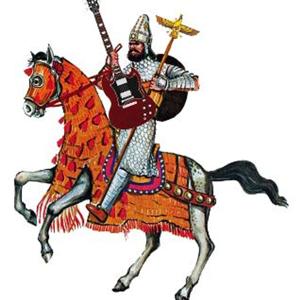


In the epic conclusion to the Greco-Persian Wars series, the fate of mainland Greece is finally decided. Following the naval clash at Salamis, the Persian general Mardonius and the Hellene alliance led by the Spartan regent Pausanias face off in the ultimate land showdown at the Battle of Plataea. After weeks of tactical stalemates, fierce cavalry skirmishes along the Asopus River, and a chaotic night maneuver that fractured the Hellene lines, the two massive armies finally clash. The brutal close-quarters hoplite engagements ultimately lead to the fall of Mardonius and a catastrophic, decisive defeat for the Achaemenid land forces.
Meanwhile, across the Aegean, the Hellene fleet strikes a simultaneous blow at the Battle of Mycale, igniting a second Ionian revolt and destroying the remnants of the Persian naval threat on the beaches of Asia Minor. The campaign then pushes north to the grueling Siege of Sestos, culminating in the symbolic dismantling of the cables from Xerxes's grand bridge across the Hellespont, exactly where Herodotus chose to end his Histories. Ultimately, the aftermath of the conflict shifts the balance of power, leading to the rise of the Delian League and the debated Peace of Callias—a treaty that brought an end to a half-century of war while inadvertently setting the stage for the dawn of the Athenian Empire.
Contents:
0:00 Marching to the Final Showdown
7:54 First Blood: The Fall of Masistius
15:28 Drawing the Battle Lines at Plataea
27:11 Choking the Alliance: The Supply Pass Massacre
41:32 Fouling the Spring: A Fight for Survival
46:29 Mutiny and a Fractured Night Retreat
53:07 Mardonius Takes the Bait: The Clash Begins
1:03:45 The Decisive Blow: The Death of Mardonius
1:11:59 A Splendid Victory and the Spoils of Gold
1:21:22 Igniting the Rebellion: The Battle of Mycale
1:33:41 Dismantling Xerxes's Dream and the War's End
1:41:11 Thank You and Patrons
Special thanks to Farya Faraji for the following musical compositions featured throughout the program:
"Rise of Arsaces"
"March of Achaemenes"
"Apranik's Charge"
"Riders of Ariana"
"Spantodhata's Warning"
"Mater"
"To Phrygia"
"Olympos"
"In Sappho's Mind"
"Achaemenes"
"Ahriman's Wrath"
"In Pythagoras' Mind"
"Fratres"
"Aima"
Check out more of his work that spans across many countries, cultures and time periods:
https://www.youtube.com/@faryafaraji.and.worldmusicians
Support the show
In the immediate aftermath of the Battle of Salamis (480 BC), both the Greek city-states and the Persian Empire are left facing a critical question: what comes next?
In this episode, we explore the tense and uncertain months that followed one of the most decisive naval battles in ancient history. While the Athenians celebrate their victory, they must also confront the reality that the war is far from over. Themistocles, ever the strategist, takes to the Aegean—seeking to punish those accused of medizing and to strengthen Athens’ position among the Greek world.
Meanwhile, the Persian king Xerxes I withdraws, leaving behind a powerful army under his cousin and general Mardonius. From central Greece, Mardonius prepares for the next phase of the conflict, as a fragile Hellenic coalition gathers at the Isthmus of Corinth—determined to defend the Peloponnese at all costs.
But beneath the surface, political tensions, rivalries, and strategic disagreements threaten to fracture the Greek alliance.
Will the Persians strike again?
Or will they wait for Xerxes to return with an even greater force?
*Contents:*
00:00 Xerxes' Decision
11:59 Themistocles the Cunning
23:06 The Long and Deadly March Home
30:27 Mardonius' Grand Strategy for Greece
39:28 An Achaemenid-Athenian Alliance?!?
55:45 Mardonius Marches on Athens Again
01:00:55 The Honorable Men of Sparta!
01:10:03 Thank You and Patrons
Special thanks to *Farya Faraji* for the following musical compositions featured throughout the program:
"Rise of Arsaces"
"Achaemenes"
"Mater"
"To Phrygia"
"Under Iranian Stars"
"In Pythagoras' Mind"
"Fratres"
"Aima"
"Legends of Sparta"
Check out more of his work that spans across many countries, cultures and time periods:
https://www.youtube.com/@faryafaraji.and.worldmusicians
You can also find them on the albums:
*Songs of Old Iran Vols. I & II*
*Voices of the Ancients Vols. I & II*
Additional Music:
Epidemic Sound
"Pepper Seeds"
"Interstate 895"
"A Glimmer of Hope"
"Can I Reach You"
"On the Lookout"
"Keeping up with the Tarahumaras"
"The Trustee"
"Zero Remorse"
"Dark Premonitions"
"Where Kings Walk"
"Checkmate"
"Deer Hunt"
Support the show
In 480 BC, following the fall of Thermopylae, the Greek fleet withdrew from Artemisium and regrouped at Salamis. At the same time, Xerxes advanced through Boeotia virtually unopposed, while Athens prepared for evacuation under the so-called Decree of Themistocles. Ancient sources speak of a Persian attempt to plunder Delphi, but modern scholarship generally regards this as later propaganda intended to protect the sanctuary’s reputation.
At Salamis, the Greek alliance faced difficult choices. Many Peloponnesian commanders favored retreat to the Isthmus, but Themistocles argued successfully for battle in the straits. His strategy, coupled with a ruse that compelled Xerxes to commit his fleet, brought the Persians into waters where their numbers offered little advantage. Among the notable figures at Salamis was Artemisia of Halicarnassus, whose role Herodotus highlights with particular interest.
The Battle of Salamis was a turning point in the Greco-Persian Wars. Though the conflict was far from over, the outcome would decide the course of the war going forward.
*Contents:*
00:00 After Thermopylae and Artemisium
00:45 Persians Passing through Delphi
03:55 The Themistocles Decree
12:05 Preparing for the Persians
14:09 Catalog of Ships
18:45 Evacuating Athens
21:51 The Sack of Athens
27:14 Debating with Themistocles
37:20 The Persians Arrive at Salamis
50:26 The Battle of Salamis
01:07:40 Aftermath of Salamis
01:09:58 Thank You and Patrons
Support the show
It is the year 480 BC and the massive army and navy of the Great King of Persiam, Xerxes, is on the move. The Great King himself is personally leading the campaign and eager to witness his armed forces' triumph as they advance through northern and central Greece.
Two battles, fought on land and sea, will test the resolve of a fragile but determined anti-Persian Greek alliance hastily formed to check the Great King's advance. Despite deep rivalries and a history of conflict among themselves, this group of Greeks unite against overwhelming odds in an effort to defend their homeland.
At Thermopylae, a narrow pass between mountain and sea becomes the stage for one of history’s most iconic last stands. At Artemisium, Greek triremes clash with the vast Persian fleet in a desperate attempt to hold the line.
But these battles were more than tactical delays—they were symbolic declarations. Against the might of the largest invasion force the ancient world had seen, a few city-states stood their ground not for conquest or glory, but for something deeper: identity, freedom, and the soul of Greece itself.
Contents:
00:00 Xerxes in Greece
11:46 The Pythia Speaks
14:53 Themistocles
39:33 Leonidas
52:12 Thermopylae: Day 1
57:31 Artemisium: Day 1
58:31 Artemisium: Day 2
01:00:45 Thermopylae: Day 2
01:06:02 The Last Stand of Leonidas and the 300
01:19:05 Thank You and Patrons
Support the show
In this episode, we’ll explore the critical decade between the Greek victory at the Battle of Marathon in 490 BC and Xerxes’ invasion of Greece in 480 BC—a period that shaped the course of the Greco-Persian Wars. Following their defeat at Marathon, the Persians, under King Darius I, began preparing for a renewed campaign, but internal challenges, including rebellions and Darius’ death in 486 BC, delayed their plans.
With the ascension of Xerxes I, the Persian Empire moved decisively. Xerxes crushed revolts in Egypt and Babylonia and set his sights on Greece, organizing one of the largest invasion forces in ancient history to fulfill his father’s uncompleted ambitions of conquest.
Meanwhile, growing awareness of the Persian threat pushed some Greek city-states toward greater unity. Despite internal rivalries, alliances began to form, with Athens and Sparta taking the lead in preparing for the storm to come. But would this fledgling cooperation be enough to stand against Xerxes’ colossal forces?
Let's find out.
Contents:
00:00 Recap and Introduction
01:07 Darius' Legacy
04:07 Xerxes becomes King
06:38 The Great Debate: Mardonius
15:47 The Great Debate: Artabanus
19:45 On to War!
27:15 The Grand Army of Xerxes
35:07 Gelon of Sicily and the Search for Allies
45:52 Thank You and Patrons
Support the show
In the last episode of this series, we covered the rise of the Achaemenid Persian Empire under Cyrus the Great and its expansion into Anatolia and the eastern Aegean, including the predominantly Greek-speaking region of Ionia. Though much of Ionia prospered under their new overlords, in 499 BC, the Ionians revolted with their help of their allies, including the city-states of Athens and Eritrea. By 493 BC, what become known as the Ionian Revolt had been crushed, and order restored to the western fringes of the Persian Empire. However, the empire’s king, Darius I, vowed to punish Athens and Eretria for their involvement in the uprising. The Great King of Persia sent several of his most trusted commanders to subdue both city-states and any others who opposed him, resulting in the first major armed encounter in Europe between the Greeks and Persians on the plains of Marathon.
Drawing on historical sources and the latest archaeological research, this series will explore everything from the causes of the conflict to its key figures, the various phases of leading up to this epic encounter and its aftermath.
Contents:
00:00 Recap and Introduction
01:45 The Northern Aegean Campaigns of Mardonius
05:10 Looking to the West
08:18 Athens and Eretria
09:49 How many Men and Ships?
14:30 Island Hopping Around the Aegean
16:33 Euboea and Eretria
19:23 Onward to Athens
22:21 Decisions
27:07 War it is!
29:33 The Battle of Marathon
35:44 Counting the Dead
38:57 If not by Land, then by Sea!
40:00 Aftermath of Marathon
44:41 Thank You and Patrons
Support the show
The great conflict that we know today as the Greco-Persian Wars between a few independent city-states of ancient Greece and mighty Achaemenid Persian Empire is, in my opinion, one of the most fascinating and consequential in all of history. More than just battles for territory and glory - they were clashes of culture, ideology, and power between East and West. The war saw legendary figures such as Leonides, The Great King Xerxes, Themistocles, Darius the Great, Miltiades, Mardonius, Artemisia, Kleomenes, and countless others in action. Since most accounts of the conflict available to us come from Greek and Roman historians and writers of antiquity such as Herodotus, Plutarch, Diodorus Siculus, Aeschylus, the traveler Pausanias, Justin and others, our modern perspective is often shaped by their portrayal of a struggle between the freedom-loving Greeks and the tyrannical rulers of Achaemenid Persia—a narrative further popularized by films like 300. However, as we will explore, the reality was far more complex.
Drawing on historical sources and the latest archaeological research, this series will explore everything from the causes of the conflict to its key figures, the various phases of the war, and its aftermath.
This is the first of a series of 5 or 6 podcasts that will be released over the next few months. Stay tuned for future episodes.
Contents:
00:00 Rise of Cyrus the Great and the Persian Achaemenid Empire
05:27 Ionians and Greeks in the Persian Empire
14:29 A bit about Herodotus
16:49 Trouble in Athens
23:52 Earth and Water
28:04 Sparta (almost) Attacks!
36:25 Aristagoras' Plan
44:21 The Ionian Revolt
49:10 The Battle of Lade
50:09 Aftermath
57:10 Thank You and Patrons
Special thanks to Farya Faraji for the following musical compositions featured throughout the program:
"Spantodhata's Warning"
"To Phrygia"
"In Pythagoras' Mind"
"The Apadana's Shadows"
"Immortals"
"Mater"
"In Sappho's Mind"
"Spring in Persepolis"
"Aíma"
"Apranik's Charge"
"March of Achaemenes"
"Hyrcanian Lullaby"
Check out more of his work that spans across many countries, cultures and time periods:
https://www.youtube.com/@faryafaraji
You can also find them on the albums:
*Songs of Old Iran Vols. I & II*
*Voices of the Ancients Vols. I & II*
Additional Music:
Epidemic Sound
"Genie's Bane"
"Interstate 895"
"One with the Tribe"
"Pepper Seeds"
"Keeping up with the Tarahumaras"
"Blood in Water"
"The Golden Spiral"
"The Sewers"
"Deer Hunt"
"Zero Remorse"
Support the show
This is the episode that several of you have requested – a one stop shop on the history of ancient Canaan and its people, the Canaanites. In this program we’ll look at the history of this region and how it developed from the Bronze Age, Canaan’s relationship with Egypt and other parts of the world, and various Canaanite kingdoms such Moab, Edom, Ammon, Israel and Judah, as well as the Phoenician cities of Sidon, Tyre and Byblos. If you want a general history of ancient Canaan and the Canaanite people, then this program is for you.
Contents:
00:00 Introduction to Canaan
01:45 Early Bronze Age History of Canaan
06:40 Canaan, Egypt, Mitanni and the Hittites
22:23 Life in Canaan during the Bronze Age
25:53 Canaan and the Bronze Age Collapse
32:39 Canaanite Religion
34:51 Moab
37:15 Edom
39:27 Ammon
41:05 Israel and Judah
49:21 Sidon
1:00:36 Tyre
1:14:30 Byblos
1:26:49 Thank You and Patrons
Support the show
In this video we'll take a look at the pivotal period of Greek history known as the Archaic Period. It's this time frame that gave rise to the polis, hoplite warfare, increased colonization around the coasts of the Mediterranean and Black Seas, oligarchies, tyrannies and lot of other really interesting aspects of life in the Greek-speaking world from 750-500 BC.
Contents:
00:00 Introduction and Context
02:07 A Hard Life for Many
07:27 The Polis
11:00 Oligarchies
16:35 Hoplite Warfare
20:57 Greek Society during the Archaic Period
24:55 Greek Colonization of the Mediterranean and Black Seas
30:38 Tyrants
33:58 A New Threat
35:12 Thank You and Patrons
Support the show
The Greek Dark Age, spanning roughly from 1100 to 750 BC, marks a mysterious chapter in the history of ancient Greece. Characterized by a sharp decrease in population, the abandonment of the once might Mycenaean palatial centers, disruption of trade networks, the loss of literacy and a steep decline in artistic endeavors, this time period was generally one of economic hardship and political fragmentation. However, amidst the darkness there were pockets of prosperity and social changes that eventually allowed for the rise of powerful Greek city-states and the dawn of Archaic Greek civilization.
Contents:
00:00 Introduction and Context
02:50 What was the Greek Dark Age
08:36 Greece enters the Iron Age
09:59 Greece starts to Recover
11:15 Chiefs and Chiefdoms
15:51 The Geometric Period
17:35 The Greek Alphabet
18:33 Panhellenism
21:53 Thank You and Patrons
Support the show
From the publisher's feed

227,492 Listeners

17,264 Listeners

6,476 Listeners

87,116 Listeners
5,235 Listeners
52 Listeners

26,011 Listeners
3,380 Listeners
20 Listeners

546 Listeners