
Sign up to save your podcasts
Or

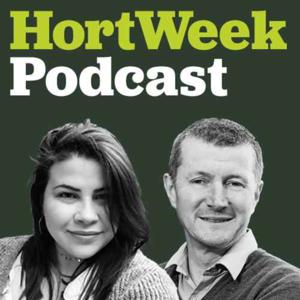


HortWeek presents The End of Peat, a new four-part podcast series that will hear from leading horticulturists and garden retailers as they navigate a transition to peat-free that is piling pressure on a sector facing stresses on all sides.
Over the four episodes, Christina Taylor explores the story of the UK peat ban, how the horticulture industry is facing up to the challenge, and how it might shape the future of the sector.
In Episode 4 we hear from growers who have successfully made the leap to peat-free. Christina asks whether growers are ready for legislation and industry figures voice how it could work without destroying the horticulture industry in the process.
Written, produced and presented by Christina Taylor
Hosted on Acast. See acast.com/privacy for more information.
HortWeek presents The End of Peat, a new four-part podcast series that will hear from leading horticulturists and garden retailers as they navigate a transition to peat-free that is piling pressure on a sector facing stresses on all sides.
Over the four episodes, Christina Taylor explores the story of the UK peat ban, how the horticulture industry is facing up to the challenge, and how it might shape the future of the sector.
In Episode 3: The cost of trial and error, Christina explores the two particular challenges faced by UK horticultural growers.
Where peat-free might cause an amateur gardener to lose a batch of lettuce seedlings, professional growers face the loss of entire crops as many attempt to trial new, and quite alien, growing media mixes.
Professional growers tell us their stories of trial and error, what they have learned in the process and discuss the fears that some plants and specialist nurseries will be lost to the UK for good.
Series writer, producer and presenter is Christina Taylor
Hosted on Acast. See acast.com/privacy for more information.
HortWeek presents The End of Peat, a new four-part podcast series that will hear from leading horticulturists and garden retailers as they navigate a transition to peat-free that is piling pressure on a sector facing stresses on all sides.
Peat is one of the most popular and reliable types of growing media for plants, but peatlands are also a valuable store for carbon and as the UK Government tries to meet net zero targets, a peat ban is on the agenda.
Over the four episodes, Christina Taylor explores the story of the UK peat ban, how the horticulture industry is facing up to the challenge, and how it might shape the future of the sector.
Christina asks:
In Episode 2: From multi-purpose to pick 'n' mix, Christina explores the two particular challenges faced by garden centres.
The first is the transition from selling peat-based compost to peat-free mixes. Challenges here include the variable quality of peat-free compost mixes, fears over supply of new ingredients, the higher price of these mixes and how they can help educate amateur gardeners learn to grow their plants.
Many have found difficulties in germinating seeds prompting fears that thousands of customers, particularly those trying to Grow-Your-Own fruit and veg, may give up, costing garden centres valuable customers in the process.
We hear about the initiatives from thought leaders in the industry on how these challenges can and should be addressed.
The second challenge relates to the sourcing of plants that have been grown in peat-free compost. This is where the interests of retailers intersect with the growers as peat-free adds to cost pressures. Ways to grow so-called tricky plants continue to be elusive prompting fears that we may lose the ability to buy whole categories of plants in the UK.
Hosted on Acast. See acast.com/privacy for more information.
HortWeek presents The End of Peat, a new four-part podcast series that will hear from leading horticulturists and garden retailers as they navigate a transition to peat-free that is piling pressure on a sector facing stresses on all sides.
Peat is one of the most popular and reliable types of growing media for plants, but peatlands are also a valuable store for carbon and as the UK Government tries to meet net zero targets, a peat ban is on the agenda.
Over the four episodes, Christina Taylor explores the story of the UK peat ban, how the horticulture industry is facing up to the challenge, and how it might shape the future of the sector.
Christina asks:
In Episode 1: Do we need a peat ban? Christina unearths why a peat ban is being proposed and outlines some of the arguments for and against.
It examines the history of peat use in the UK, the properties of peat and peat-free growing media, and begins to unearth why the topic has so bitterly divided the horticulture industry.
The End of Peat was written, produced and presented by HortWeek digital content manager Christina Taylor
Hosted on Acast. See acast.com/privacy for more information.
Bob Askew was Garden Media Guild award winner a year ago for his new writer work for Hortweek. He works for Kernock Park Plants as production director and was previously at Darby Nursery Stock and Brinkmans.
Here he names his top three tree genera for gardens, three underused tree genera and top five skinny trees for small gardens.
He believes the reliance of nurseries and garden centres on too few ornamental tree cultivars is a bad thing and is critical of overuse of Betula utilis var. jacquemontii and Crataegus Paul's Scarlet, and offers alternatives to them.
Askew also names three awful crab apple cultivars and five brilliant ones for gardens, as well as five brilliant but below-the-radar flowering cherries.
He delves into the pros and cons of growing trees in solid pots, versus airpots, or slotted pots.
Hosted on Acast. See acast.com/privacy for more information.
This week the HortWeek Podcast meets Imogen Bell, supervisor at Thomson's Garden Centre and a YPHA Southeast regional coordinator
In her article for HortWeek 'Despite CITES, not all doom and gloom for houseplant sales' Imogen reflects on how the reinterpretation of CITES "meant practically a third of my stock became unavailable overnight".
One of the "Brexit benefits" often quoted was the possibility that more friction across the borders would encourage clients to buy British and boost British-grown plants. As tightening border controls cause unprecedented chaos at BCPs Imogen might be feeling a degree of relief that she took the decision to switch to British houseplant nurseries months ago.
"Cacti, carnivorous plants, the majority of orchids... it's almost impossible to import, which is obviously quite a large part of most houseplant departments.
"Luckily, I was already having looking into UK growers after Brexit - just in case anything got super difficult to import. And at the same time a lot of UK nurseries then opened up to garden centres - Oppenman's plants, Double H, Hills Brothers all opened up to garden centres about the same time.I was already ordering from them so I just got to order in much higher volume.
The only plants she's struggled with are more unusual orchids, she says, but initiatives such as Horti House which allows nurseries to trade as one unit is helping.
"You get some great nurseries in there like Dibley's who do Streptocarpus and Begonia.. and where before you would have to order either half a trolley or a whole trolley, you can now just order by the tray which means you can get a good range of more unusual things without having to kind of put all your eggs in one basket with a specific supplier."
She talks about the challenge of competing with supermarkets with their economies of scale, "but on the other hand, I think if you look at any supermarket at their house plant department, it is all half-dead... where garden centers and other plant shops really stand out is the level of knowledge and customer service they can offer".
At Thomson's she has added labels showing the air miles for plants on sale: "I'd like to introduce UK suppliers and just extend that so you can say this orchid or Monstera or whatever has come from 40 miles away and it's come from this nursery and it's a family -run business. I think it just adds to the value of the plant to be able to give it that origin."
It surprises her that, given the huge rise in popularity of houseplants in recent years, many garden centres fail to put on a good display.
New trends she is seeing include Marimo moss balls. They grow like a couple of millimetres a year. But for some reason they were flying off the shelves." The appeal for many customers she says, are plants that "thrive off neglect".
On peat-free, Imogen says customers are asking for it and garden centres are moving in that direction, ban or no ban. "Horti House is peat-free and again out of necessity I guess the other ones will come into line" she says.
On peat-free composts, she says: "I've noticed more and more people are mixing their own soils. So instead of just getting a packet off the shelf, they're buying a base and then they're buying perlite or coir or coco husk and then blending it for the specific plant".
And will the houseplant boom continue?
"I'm not sure we'll quite get the sky high sales we had during the lockdowns...They've plateaued since, but the interest is consistent. I don't think house plants will go away."
Hosted on Acast. See acast.com/privacy for more information.
HortWeek is delighted to present the Cultivate Your Future podcast, in partnership with the Colegrave Seabrook Foundation and sponsor Westland Horticulture.
At a time when horticulture needs to encourage a new wave of young people to come into the industry, this podcast is designed to highlight the multiple and varied career opportunities available.
Hear from people who have found their way into their chosen career through different paths, what their job involves and what it means to them.
In this episode Neville Stein catches up with students from Sparsholt College to discuss their recent experience of exhibiting at RHS Chelsea Flower Show and how they felt about it.
As the Colegave Seabrook Foundation supports students studying horticulture, we were very proud to be sponsors of their exhibit and are thrilled at their success.
Hosted on Acast. See acast.com/privacy for more information.
This week's guests are James Cairncross and Angela Lewis from the Midlands Parks Forum which has its annual conference on the 17th of October at the National Memorial Arboretum in Staffordshire. Highlights include keynote speaker Dr. William Bird, a GP who contributed to a select committee report on access to green space who will speak on health benefits of physical activity and green spaces.
"Other speakers include people from MHCLG, the Ministry of Housing, Communities and Local Government, Heritage Lottery Fund, and also some experience from out in the real world, such as Islington Borough Council" Angela explains and she outlines workshops also to be run at the event.
James addresses the "perennial problem" of parks budget cuts. "Despite there being quite a clear return on any investment in parks, local authority officers are still struggling to protect what they've got, let alone improve the funding for green spaces.
"Our chair of trustees Liz Stuffins attended the previous Government's DEFRA inquiry into urban parks, and they found that both the quality and the quantity of urban parks are in quite serious decline.
This exacerbates the skills shortages suffered by the parks sector but The Midlands Park Forum aims to help overcome this by offering learning events, the conference and webinars "focused on the skills and competencies in a framework that aligns with the Landscape Institute's framework on competencies identifying over 60 skills in six categories, which we've identified as being important for a good park manager. And it's not just about cutting grass. This is people skills, environmental stewardship, income and finance, future visioning and planning, and all the competencies that go with being a professional."
The lack and loss of expertise in the sector combined with budget cuts means some parks "are already losing their green flag awards because the authorities can just no longer attain the quality that's needed to keep those award...some councils now can't even afford the cost of the application, let alone the quality".
With a new Government installed, James acknowledges parks will have to "join the queue" when asking for more state funding but top of his list of asks is "a national urban parks strategy and it needs to be integrated into public health because the benefits of that are both obvious." Close behind is a wish that the Green Jobs Task Force be expanded to include the green spaces sector.
They discuss best practice in the sector and for Angela it means "local spaces that can become the hub of the local community and making sure that people do look at different collaborations locally, whether that's with local charities providing physical activity and exercise or local charities that provide volunteers to look after the green spaces and just making sure that all those things are considered in terms of local people having that space that they've got within 15 minutes of home".
For the future, the Forum wants to "continue to deliver quality service to members" including CPD offerings, via learning events and knowledge sharing.
Hosted on Acast. See acast.com/privacy for more information.
Both our guests on the HortWeek Podcast broadly agree with the reasons for a peat ban and agree there is a need to reduce carbon emissions to help fight climate change. But they are not equally convinced a peat ban is the way to do it.
In the 'for' corner is cosmos and hollyhocks national collection holder and lobbyist Jonathan Sheppard.
Sheppard says: "You only have to look at places like Hampton Court where they have the peat-free garden where the plant list was massive. I've never seen a plant list as long which showed people that you can grow without peat. So I'm just wholly not convinced that you can't be a successful grower. But then I guess it depends on what do we mean by a successful grower. I just don't want to see rewards being given when there's an RHS sustainability strategy when using peat...It must be the wrong thing to do, given the science that we know about how much CO2 digging this cheap product up emits."
And in the 'not so sure' corner we have dahlia and sweet pea grower Darren Everest.
Darren argues: "Just for example in the National Dahlia Society, you try finding me one of the top elite growersn that don't use peat and I think you'll struggle to find any...growing flowers to national level requires a lot of time and years of knowledge and experience growing and I haven't found anybody online yet, certainly in the dahlia world, that has found a suitable non-peat-based product. "
HortWeek editor Matthew Appleby hosts the discussion which focuses on efforts to end peat use by growers and RHS exhibitors.
The pair reflect on their experience of using peat free and debate how significant the carbon emissions cuts achieved by ending peat use in horticulture will be.
The RHS plans to end peat use from 2026 and they ponder how this ban will affect different growers, awards, whether shows will attract fewer exhibitors and crucially, how it can be policed.
For more information on growers and garden retailers going peat free, see https://www.rhs.org.uk/advice/peat
Hosted on Acast. See acast.com/privacy for more information.
ICL's Sam Rivers digs down into Integrated Pest Management and speifically IPM planning.
Sam describes what the current situation in the industry is with regards to IPM planning and details the 'hierarchy of control', which includes cultural, biological, physical and chemical methods.
He gives examples of the different types of controls and talks about regulations for biological control.
Sam warns that chemical control is a last option and lists some of the many new restrictions on chemicals that are coming in.
Hosted on Acast. See acast.com/privacy for more information.
From the publisher's feed
…

2,107 Listeners

2,015 Listeners

1,978 Listeners
64 Listeners

282 Listeners

102 Listeners

238 Listeners

252 Listeners

105 Listeners

267 Listeners
84 Listeners
293 Listeners

194 Listeners

173 Listeners

171 Listeners