
Sign up to save your podcasts
Or

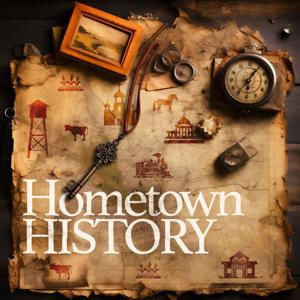

On April 29, 1879, Cleveland, Ohio became the first city in America to install public electric streetlights when Charles Brush's revolutionary arc lamps illuminated Monument Square. While Thomas Edison would later claim fame for the light bulb, it was Brush who first proved electricity could transform urban life. His 12 towering carbon arc lights—each burning with the intensity of 4,000 candles—turned night into day and sparked a revolution that would reshape cities worldwide.
But Brush's innovation went far beyond streetlights. This self-taught Ohio inventor pioneered the dynamo that made it all possible, built America's first wind turbine for home electricity, and demonstrated that one brilliant engineer with determination could illuminate the world. From Cleveland's Monument Square to cities across America and Europe, discover how Charles Brush's "first light" changed everything. New episodes every Tuesday.
The InnovationOn an April evening in 1879, Cleveland's Monument Square transformed from gas-lit gloom to brilliant electric daylight when 12 massive carbon arc lamps flickered to life. Charles Brush's system—powered by a dynamo of his own design—produced light equivalent to 48,000 candles, stunning
the 10,000 spectators who gathered to witness history.
The InventorCharles Francis Brush (1849-1929) wasn't your typical inventor:
Before Brush's system, American cities relied on dangerous gas lamps that:
Brush's arc lights were so bright that Cleveland residents initially complained they couldn't sleep. The system proved electricity's commercial viability and triggered a lighting revolution across America.
The TechnologyArc Lighting Explained:
Why Arc Lights Came First:
While Brush was lighting cities, Thomas Edison was developing the incandescent bulb:
Cleveland's Electrical Firsts:
Brush's Later Achievements:
Today, LED streetlights have replaced both arc lights and incandescent bulbs, but Brush's Monument Square demonstration site remains a Cleveland landmark. The principles he pioneered—centralized power generation and electrical distribution—still power our cities. And his 1888 wind turbine? It was generating clean energy a century before climate change made renewable power urgent.
Visit the Site: Monument Square (now Public Square) in downtown Cleveland commemorates the spot where American cities first saw electric light. The Western Reserve Historical Society maintains Brush's Cleveland mansion, "The Lighthouse," though the original wind turbine is no longer standing.
 View all episodes
 By Shane Waters

4.5
138138 ratings
On April 29, 1879, Cleveland, Ohio became the first city in America to install public electric streetlights when Charles Brush's revolutionary arc lamps illuminated Monument Square. While Thomas Edison would later claim fame for the light bulb, it was Brush who first proved electricity could transform urban life. His 12 towering carbon arc lights—each burning with the intensity of 4,000 candles—turned night into day and sparked a revolution that would reshape cities worldwide.
But Brush's innovation went far beyond streetlights. This self-taught Ohio inventor pioneered the dynamo that made it all possible, built America's first wind turbine for home electricity, and demonstrated that one brilliant engineer with determination could illuminate the world. From Cleveland's Monument Square to cities across America and Europe, discover how Charles Brush's "first light" changed everything. New episodes every Tuesday.
The InnovationOn an April evening in 1879, Cleveland's Monument Square transformed from gas-lit gloom to brilliant electric daylight when 12 massive carbon arc lamps flickered to life. Charles Brush's system—powered by a dynamo of his own design—produced light equivalent to 48,000 candles, stunning
the 10,000 spectators who gathered to witness history.
The InventorCharles Francis Brush (1849-1929) wasn't your typical inventor:
Before Brush's system, American cities relied on dangerous gas lamps that:
Brush's arc lights were so bright that Cleveland residents initially complained they couldn't sleep. The system proved electricity's commercial viability and triggered a lighting revolution across America.
The TechnologyArc Lighting Explained:
Why Arc Lights Came First:
While Brush was lighting cities, Thomas Edison was developing the incandescent bulb:
Cleveland's Electrical Firsts:
Brush's Later Achievements:
Today, LED streetlights have replaced both arc lights and incandescent bulbs, but Brush's Monument Square demonstration site remains a Cleveland landmark. The principles he pioneered—centralized power generation and electrical distribution—still power our cities. And his 1888 wind turbine? It was generating clean energy a century before climate change made renewable power urgent.
Visit the Site: Monument Square (now Public Square) in downtown Cleveland commemorates the spot where American cities first saw electric light. The Western Reserve Historical Society maintains Brush's Cleveland mansion, "The Lighthouse," though the original wind turbine is no longer standing.
17,325 Listeners
2,790 Listeners
10,972 Listeners
958 Listeners
2,825 Listeners
2,863 Listeners
1,016 Listeners
1,926 Listeners
19,133 Listeners
47,718 Listeners
375 Listeners

17,948 Listeners

8,022 Listeners
3,982 Listeners
10,359 Listeners

75 Listeners
61 Listeners
136 Listeners

378 Listeners
896 Listeners

8 Listeners
3 Listeners

11 Listeners
336 Listeners