
Sign up to save your podcasts
Or

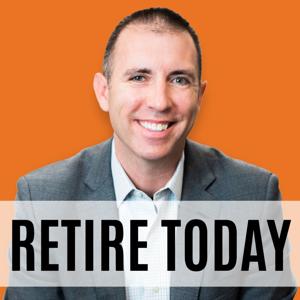

Check out Jeremy’s latest podcast on retirement planning by listening on “Apple Podcasts” or “Google Podcasts” or read below for How to Protect Your Money in the Bank.
[142] – Banks are supposed to make our money make more money, but what have you been getting in a bank? You probably haven’t received much of anything. When it comes to banks, everyone is talking about inflation and interest rates.
In this episode, Jeremy Keil explains how you can protect your money in the bank. He breaks down three main things you can do to protect your money: how to protect your money in the bank, how to earn more interest, and the various available alternatives to keeping your money in a bank account.
Jeremy discusses:
It’s important to ensure that your bank is covered by the FDIC or NCUA. There is a $250,000 limit per depositor per account type, and there are calculators available on fdic.gov for banks and ncua.gov for credit unions to determine if you are fully protected.
The second step is to make sure you get the most coverage possible at that one bank. Places like bankrate.com and depositaccounts.com show you some high interest rates, different account types and the different banks you can go to. If you have over a million dollars, you can look into multiple banks or use services like maxmyinterest.com or americandeposits.com that can open multiple accounts for you and move your money to higher interest rates automatically. IntraFi Network’s ICS for cash service and CSCDA for holding deposits in multiple banks are also great alternatives.
Paying attention and being proactive in finding higher interest rates is key. Some banks offer close to zero interest rates, while others offer rates as high as 4%. If you’re a do-it-yourself type of person, depositaccounts.com and bankrate.com seem to be the best places I can find that have a listing of where you can get a one-year CS, a 6-month CD and 18-month CD with links to where you can go and open an account.
By looking around and locking in money at a higher rate, you can get two percentage points higher than the national average of 3% for one-year CDs. It is important to explore different markets for money, such as treasury bills that you can buy directly through treasurydirect.gov, treasury bonds, stable value funds in 401(k)s, and old annuities with guaranteed minimum interest rates.
The bottom line is you deserve to get more interest and you need to plan to do that, so look at those CDs and different banking services because it’s not about finding one bank and hoping they give you some good interest. It’s creating a plan and looking for the different areas that give you a much higher interest rate.
There are several alternatives to keeping your money in the bank that you should consider. With interest rates being low, it’s important to explore other options. Here are a few alternatives:
It used to be simple where you probably just used one bank with a checking account and savings account, maybe you had some CDs or went to the bank down the street because they had a CD special and you wanted to get some extra interest on that. But interest rates got incredibly low from 2009 to 2022.
According to depositaccounts.com, right now the national average on savings accounts is about 0.4% and the top rates are 4.4% which is a huge difference where you can do nothing and get close to zero, or do something and get 4% higher. When it comes to CDs, the national average is around 3% and the high is 5%, so you can get two percentage points higher by looking around and locking in your money at a higher rate because you took the time to look around.
Overall, it is important to consider the money market and explore different markets for money.
___________________________________________________________________________
To learn more about protecting your money in the bank, check out the resources below!
If you have any questions, feel free to contact us using the contact information provided below!
Disclosures
Videos/Podcasts/Blogs (media) published prior to June 30, 2025, were recorded and approved while the advisor was affiliated with Thrivent Advisor Network. These media reflect the advisor’s views and interpretations at that time. The information and disclosures contained in those media were believed to be accurate and complete as of the date of recording, but may not reflect current market conditions or Alongside, LLC, policies.
All content is provided for educational purposes only and does not constitute personalized investment advice. Read below for current disclosures and potential conflicts of interest.
This media is provided for informational and educational purposes only and does not consider the investment objectives, financial situation, or particular needs of any consumer. Nothing in this program should be construed as investment, legal, or tax advice, nor as a recommendation to buy, sell, or hold any security or to adopt any investment strategy.
The views and opinions expressed are those of the host and any guest, current as of the date of recording, and may change without notice as market, political or economic conditions evolve. All investments involve risk, including the possible loss of principal. Past Performance is no guarantee of future results.
Legal & Tax Disclosure
Consumers should consult their own qualified attorney, CPA, or other professional advisor regarding their specific legal and tax situations.
Advisor Disclosures
Alongside, LLC, doing business as Keil Financial Partners, is an SEC-registered investment adviser. Registration does not imply a certain level of skill or expertise. Advisory services are delivered through the Alongside, LLC platform. Keil Financial Partners is independent, not owned or operated by Alongside, LLC.
Additional information about Alongside, LLC – including its services, fees and any material conflicts of interest – can be found at https://adviserinfo.sec.gov/firm/summary/333587 or by requesting Form ADV Part 2A.
The content of this media should not be reproduced or redistributed without the firm’s written consent. Any trademarks or service marks mentioned belong to their respective owners and are used for identification purposes only.
For important disclosures visit: https://keilfp.com/disclosures/
===
 View all episodes
 By Jeremy Keil

4.9
5858 ratings
Check out Jeremy’s latest podcast on retirement planning by listening on “Apple Podcasts” or “Google Podcasts” or read below for How to Protect Your Money in the Bank.
[142] – Banks are supposed to make our money make more money, but what have you been getting in a bank? You probably haven’t received much of anything. When it comes to banks, everyone is talking about inflation and interest rates.
In this episode, Jeremy Keil explains how you can protect your money in the bank. He breaks down three main things you can do to protect your money: how to protect your money in the bank, how to earn more interest, and the various available alternatives to keeping your money in a bank account.
Jeremy discusses:
It’s important to ensure that your bank is covered by the FDIC or NCUA. There is a $250,000 limit per depositor per account type, and there are calculators available on fdic.gov for banks and ncua.gov for credit unions to determine if you are fully protected.
The second step is to make sure you get the most coverage possible at that one bank. Places like bankrate.com and depositaccounts.com show you some high interest rates, different account types and the different banks you can go to. If you have over a million dollars, you can look into multiple banks or use services like maxmyinterest.com or americandeposits.com that can open multiple accounts for you and move your money to higher interest rates automatically. IntraFi Network’s ICS for cash service and CSCDA for holding deposits in multiple banks are also great alternatives.
Paying attention and being proactive in finding higher interest rates is key. Some banks offer close to zero interest rates, while others offer rates as high as 4%. If you’re a do-it-yourself type of person, depositaccounts.com and bankrate.com seem to be the best places I can find that have a listing of where you can get a one-year CS, a 6-month CD and 18-month CD with links to where you can go and open an account.
By looking around and locking in money at a higher rate, you can get two percentage points higher than the national average of 3% for one-year CDs. It is important to explore different markets for money, such as treasury bills that you can buy directly through treasurydirect.gov, treasury bonds, stable value funds in 401(k)s, and old annuities with guaranteed minimum interest rates.
The bottom line is you deserve to get more interest and you need to plan to do that, so look at those CDs and different banking services because it’s not about finding one bank and hoping they give you some good interest. It’s creating a plan and looking for the different areas that give you a much higher interest rate.
There are several alternatives to keeping your money in the bank that you should consider. With interest rates being low, it’s important to explore other options. Here are a few alternatives:
It used to be simple where you probably just used one bank with a checking account and savings account, maybe you had some CDs or went to the bank down the street because they had a CD special and you wanted to get some extra interest on that. But interest rates got incredibly low from 2009 to 2022.
According to depositaccounts.com, right now the national average on savings accounts is about 0.4% and the top rates are 4.4% which is a huge difference where you can do nothing and get close to zero, or do something and get 4% higher. When it comes to CDs, the national average is around 3% and the high is 5%, so you can get two percentage points higher by looking around and locking in your money at a higher rate because you took the time to look around.
Overall, it is important to consider the money market and explore different markets for money.
___________________________________________________________________________
To learn more about protecting your money in the bank, check out the resources below!
If you have any questions, feel free to contact us using the contact information provided below!
Disclosures
Videos/Podcasts/Blogs (media) published prior to June 30, 2025, were recorded and approved while the advisor was affiliated with Thrivent Advisor Network. These media reflect the advisor’s views and interpretations at that time. The information and disclosures contained in those media were believed to be accurate and complete as of the date of recording, but may not reflect current market conditions or Alongside, LLC, policies.
All content is provided for educational purposes only and does not constitute personalized investment advice. Read below for current disclosures and potential conflicts of interest.
This media is provided for informational and educational purposes only and does not consider the investment objectives, financial situation, or particular needs of any consumer. Nothing in this program should be construed as investment, legal, or tax advice, nor as a recommendation to buy, sell, or hold any security or to adopt any investment strategy.
The views and opinions expressed are those of the host and any guest, current as of the date of recording, and may change without notice as market, political or economic conditions evolve. All investments involve risk, including the possible loss of principal. Past Performance is no guarantee of future results.
Legal & Tax Disclosure
Consumers should consult their own qualified attorney, CPA, or other professional advisor regarding their specific legal and tax situations.
Advisor Disclosures
Alongside, LLC, doing business as Keil Financial Partners, is an SEC-registered investment adviser. Registration does not imply a certain level of skill or expertise. Advisory services are delivered through the Alongside, LLC platform. Keil Financial Partners is independent, not owned or operated by Alongside, LLC.
Additional information about Alongside, LLC – including its services, fees and any material conflicts of interest – can be found at https://adviserinfo.sec.gov/firm/summary/333587 or by requesting Form ADV Part 2A.
The content of this media should not be reproduced or redistributed without the firm’s written consent. Any trademarks or service marks mentioned belong to their respective owners and are used for identification purposes only.
For important disclosures visit: https://keilfp.com/disclosures/
===
2,001 Listeners

449 Listeners

813 Listeners

1,306 Listeners

452 Listeners
551 Listeners
755 Listeners

560 Listeners
693 Listeners
192 Listeners

832 Listeners

204 Listeners

595 Listeners

1,066 Listeners

357 Listeners