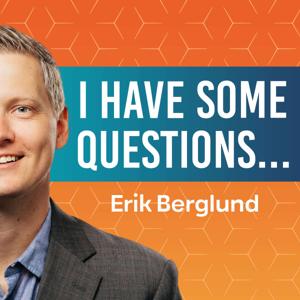
I Have Some Questions...

I Have Some Questions...

Download on the App Store

I Have Some Questions... episodes

  • 013: What If Motivation Isn’t the Problem?

    🎙️ Episode Snapshot

    In this solo episode, Erik takes a sledgehammer to one of the most overused and misunderstood leadership questions: “How do I motivate my people?” He breaks down why motivation isn’t your job, and how alignment is the real lever leaders should be pulling. From hiring to training, development to retention, Erik reframes every step of the employee journey through the lens of alignment and shares the practical conversations that make it possible.

    ❓ The Big Question

    What if the problem isn’t that your people lack motivation, but that your leadership lacks alignment?

    💡 Key Takeaways

    • You can’t motivate people. Motivation is internal. You can inspire, but inspiration fades fast.
    • Alignment is the lever. Match what your people naturally want with what the business needs.
    • Three alignment questions revolutionize interviews: 
      1. What skills do you want to grow?
      2. What experiences do you want to live through?
      3. What responsibilities do you want to bear?
    • Training fails when it lacks connection. Tie learning and feedback to what matters to the individual.
    • Retention thrives on trust. The best way to keep your team is to understand their evolving motivations and speak directly to them.

    🧠 Concepts, Curves, and Frameworks

    • The Alignment Loop: 
      1. Hire for it
      2. Train into it
      3. Develop through it
      4. Retain because of it
    • Rules of Engagement: Questions to ask your team to understand how they operate, what drives them, and how to give feedback that actually lands.
    • Misalignment ≠ failure: Acknowledging misalignment with honesty builds more trust than false positivity ever will.

    🔁 Real-Life Reflections

    • Erik shares the frustration he felt in early interviews hearing everyone say they wanted to be a manager until he changed the question set.
    • He walks through powerful real examples of using alignment to shape feedback: reframing “you’re late” as a barrier to earning peer trust.
    • Reflects on a personal turning point—realizing that trying to "motivate" people was exhausting and ineffective. Alignment made the job feel energizing again.

    🧰 Put This Into Practice

    • Update your interview flow: Start asking about skills, experiences, and responsibilities.
    • Build alignment profiles: Know what each team member is actually trying to get out of work.
    • Lead with why it matters to them when giving feedback, not just why it matters to you or the company.
    • Have alignment check-ins: Especially for team members in year 2–5, when coasting and quiet quitting often sneak in.
    • Be honest about misalignment: It’s okay to say “this task doesn’t align with your goals—but we still need to crush it.”

    🗣️ Favorite Quotes

    “Inspiration expires. Alignment sustains.”

    “Most people work to live not live to work. Leadership is about making work worth it.”

    “Acknowledging misalignment can build more trust than pretending it doesn’t exist.”
    29 min
  • 012: “Are You Settling for ‘Good Enough’ on Your Team?” (lessons from Alex Kudelka)

    🧠 Erik’s Take

    In this reflection, Erik breaks down his conversation with Alex Kudelka and extends the dialogue into a deeper meditation on one of the hardest (and most human) aspects of business: adding the right people. Whether it's a co-founder or a hire, getting the “who” right is make-or-break—and Erik’s vulnerable look at how pressure can lead to premature decisions is a powerful leadership check-in. This episode is a mirror for every founder and operator navigating the tension between urgency and fit.

    🎯 Top Insights from the Interview

    • The “New Color” Phenomenon: When you finally hire the right person, it’s like seeing a color you didn’t know existed. You can’t believe you ever settled for less.
    • Mental Readiness > Job Description: Before writing the external job spec, leaders need to do the internal work, clarifying what they really want, and whether they’re willing to wait for it.
    • Co-Founders vs. Hires: If you can name the deliverables, it’s a job. If it’s about mindset or relational complement, then it might be a co-founder.
    • Rules of Engagement Matter: Whether it’s hiring or partnering, success often depends on how well you’ve defined the rules for when things get hard.
    • The Universal Lesson: Whether in business, friendships, or life, being intentional about who you bring close is worth slowing down for.

    🧩 The Personal Layer

    Erik opens up about his own past pressures in hiring—especially in sales roles—and how easy it is to “cave” when urgency outweighs clarity. His honesty about never having a co-founder is refreshing and prompts meaningful reflection about the risks and rewards of sharing the entrepreneurial load. This episode captures Erik’s growing conviction that the people decisions in business are the deepest, hardest, and most impactful.

    🧰 From Insight to Action

    Erik suggests these real-life applications of the episode’s lessons:

    • Pressure Test Yourself First: Ask, Am I willing to wait for the right person, or am I just trying to solve a short-term problem?
    • Create Your Rules of Engagement: Whether hiring or partnering, define how you’ll handle conflict, misalignment, and tough calls.
    • Revisit Your People Circle: Are you intentionally curating the right people in your business and in your personal life?
    • Practice Better Questions: Vetting people well is a learnable skill. It starts with the right questions and active listening.

    🗣️ Notable Quotes

    “Don’t write the job description until you’ve had the internal conversation with yourself.”

    “Am I willing to bear the pressure and not make the wrong hire? That’s the first question.”


    🔗 Links & Resources

    • Outdo Growth – Alex's company helping digital founders scale
    • Alex Kudelka on LinkedIn – Follow for startup wisdom and leadership insight
    8 min
  • 011: “Can You Scale a Business Without Diluting Your Magic?” ft. Alex Kudelka

    🎙️ Episode Snapshot

    Erik sits down with startup builder and Outdo Growth founder Alex Kudelka for a deeply honest and tactical conversation on what it really takes to build early-stage ventures. From co-founder dynamics to hiring pitfalls, from founder-led sales to the myths of scaling too early—this episode is a goldmine for founders navigating the messy middle of growth. The conversation balances strategic frameworks with hard-won lessons, all wrapped in Alex’s direct, insightful delivery.

    👤 About the Guest

    Alex Kudelka is the founder of Outdo Growth, a startup builder and marketing services company powering the growth engines behind multiple digital entrepreneurs. A multi-time founder with exits and failures under his belt, Alex thrives in the zero-to-one stage, bringing an unmatched ability to build, test, pivot, and scale emerging ventures. He’s commercially minded, operationally savvy, and refreshingly transparent about what works (and what doesn’t).

    🧭 Conversation Highlights

    • Startup Love Language: Alex thrives in the pre-50M, pre-500 employee zone where curiosity, chaos, and creativity collide.
    • Iteration with Paranoia: Testing quickly is vital, but over-pivoting kills momentum. The magic is in data and discipline.
    • Co-Founders Are Like Spouses: Your partner must be battle-tested, supportive, and complementary. Otherwise, it won’t work.
    • Founder-Led Sales Isn’t Optional: Until you've sold it yourself (a lot), you don't have product-market fit.
    • Hiring Fails and Frameworks: Outdo hired 50 people in 6 months. Only 18 remained. The lesson? Hire slow, ask better questions, and match energy to the actual role.

    💡 Key Takeaways

    • Love the Process, Not the Outcome: Founders who fall in love with testing and tinkering—not just the end goal—have more success (and fun).
    • Healthy Debate Builds Stronger Startups: Co-founders must disagree well. Set “rules of engagement” for how to spar and commit.
    • You Can’t Skip PMF: Selling something 10 times doesn’t mean it’s ready to scale. Rinse and repeat until signals are undeniable.
    • Scope Creep Kills Service Businesses: Don’t be everything to everyone. Know your lane and stay ruthlessly focused.
    • Responsibility is Revealing: In interviews, ask about the skills they want to build, the experiences they enjoy, and the responsibilities they crave.

    ❓ Questions That Mattered

    • “How do you know when you’ve found true product-market fit?”
    • “What do too few founders ask themselves before scaling?”
    • “How should co-founders disagree, and how often should they?”
    • “What do you listen for in a great interview answer?”

    🗣️ Notable Quotes

    “Startup building is childlike creativity mixed with healthy paranoia.”

    “Most founders either over-pivot or scale too soon. Both can kill a business.”

    “Just because someone bought it once doesn’t mean you’ve nailed it.”


    🔗 Links & Resources

    • Outdo Growth – Alex's company helping digital founders scale
    • Alex Kudelka on LinkedIn – Follow for startup wisdom and leadership insight
    1 hr 2 min
  • 010: Are You Ready to Lead an AI-Empowered Team?

    🎙️ Episode Snapshot

    In this solo episode, Erik unpacks the deeper leadership challenge that AI is creating—not just how to use the tools, but how to lead people who are using them. From data aggregation to automation to creation (and now even talent development), Erik lays out the evolving landscape and what it demands of leaders. He calls on listeners to ask better questions, adopt new hierarchies, and build resilient, QA-rich systems that keep humans accountable, creative, and connected.

    ❓ The Big Question

    How do you lead people who are armed with AI superpowers without losing clarity, accountability, or culture?

    💡 Key Takeaways

    • AI isn’t just a toolset—it’s a leadership test. The speed and scale of AI output challenges how leaders assess, guide, and trust their teams.
    • The top three business uses of AI today—aggregation, automation, and creation—each carry serious leadership risks.
    • The fourth emerging use of AI—talent development—is a game-changer and a hopeful counterpoint to fears of job loss.
    • Leadership structures must evolve: Think more editors, fewer creators, more QA layers, and a rethink of how strategy is built.
    • If you lose your talent pipeline, you lose your future leaders. AI could flatten that path unless you actively rebuild it.

    🧠 Concepts, Curves, and Frameworks

    • 3 Primary AI Functions: Assimilation & aggregation, automation, and creation.
    • 4 Core Leadership Risks in an AI-augmented workplace: 
      1. Data without understanding (false insights)
      2. Automation without purpose (efficiency ≠ effectiveness)
      3. Content without clarity (more ≠ better)
      4. Team structures that don’t evolve (hierarchy misalignment)
    • QA/QC Layer: Not optional. Needed to catch hallucinations, false causality, and mission drift.
    • The Strategic Pyramid Shift: From strategist → creator → editor… to strategist → agent → many editors.

    🔁 Real-Life Reflections

    • Erik shares a cautionary tale from a global manufacturing firm that measured the wrong data for 10 years—up and to the right… until it wasn’t.
    • He reflects on his early experiences at Yahoo! and the long tail of technological adoption lag in the workforce.
    • Compares historical tech transitions (Internet, smartphones) to what we’re seeing with AI now and how the leadership failure modes are eerily familiar.

    🧰 Put This Into Practice

    • Install a QA layer: Don’t trust AI outputs blindly—teach your team how to verify, synthesize, and question.
    • Don’t automate confusion: Only automate what’s been clarified and vetted.
    • Rethink your hierarchy: Especially in creative teams, consider where you need editors and where strategy needs to scale.
    • Protect the development path: Find ways for people to learn the craft before they wield the super tools.
    • Invest in AI-powered learning: Tools like Erik’s Speechcraft offer a powerful counterweight to skill erosion.

    🗣️ Favorite Quotes

    “Just because your team can create more content doesn’t mean they’re creating the right content.”

    “The person using the tool might be wildly talented with AI and know absolutely nothing about your business.”

    “Two things can be true: AI might replace your job and help you rapidly re-skill into your next one.”
    40 min
  • 009: “Are You Committed to the Process or Just the Result?” (lessons from Alex Boyd)

    🧠 Erik’s Take

    Coming off a powerful interview with Alex Boyd, Erik takes a moment to unpack the core themes that resonated most. This reflection is a masterclass in translating deep conversation into leadership action. What stood out was Alex’s but his clarity, vulnerability, and the fearless questions he asks himself. For Erik, this was a model of self-aware leadership worth emulating.

    🎯 Top Insights from the Interview

    • Self-Reflection without Shame: Alex models the power of examining yourself honestly, without layering guilt or judgment. That subtle but crucial distinction makes real growth possible.
    • Don’t Over-Forecast: Inspired by Warren Buffett, Alex warns against getting too specific in future predictions. Planning matters, but adaptability wins.
    • Commitment to Process: From daily financial check-ins to larger business rhythms, Alex’s success is built on intentional, repeatable systems.
    • Ease ≠ Comfort: A powerful juxtaposition. Ease allows for flow and clarity; comfort often signals stagnation. Leaders should know the difference.
    • Rethinking AI & Talent Development: The episode opened with a strong take on how AI will reshape organizational structures, leadership, and skill-building. Alex and Erik challenge us to design with intention.

    🧩 The Personal Layer

    Erik doesn’t just observe Alex’s ideas—he tests them against his own life and leadership. His resistance to daily financial reviews? That’s real. But so is his recognition that routines—like workouts and journaling—are his equivalent “process.” He reflects on the tension between his desire to engineer outcomes and the reality of unpredictability. This episode became a mirror: how are you setting up your process? Are you confusing comfort with ease?

    🧰 From Insight to Action

    Here’s how Erik suggests applying this episode to your own leadership:

    • Audit Your Self-Talk: Are you layering judgment onto your reflections? Practice nonjudgmental awareness.
    • Define Your “Process Stack”: Identify 3–5 processes that consistently help you perform at your best—personally and professionally.
    • Revisit Forecasting: Be specific in effort, flexible in outcome. Don’t build brittle projections.
    • Ease vs. Comfort Check: Where are you staying “comfortable” at the expense of real progress?
    • Rethink Your Organization for AI: If you’re using AI, are your leadership systems adapting alongside your tools?

    🗣️ Notable Quotes

    “Comfort might be a yellow flag. Ease, on the other hand, is a signal of systems working well.”

    “Don’t over-forecast. Be specific with effort, flexible with outcome.”

    “Be a kind leader, not a nice leader. That’s the difference between long-term care and short-term comfort.”


    🔗 Links & Resources

    • 💼 Connect with Alex Boyd on LinkedIn
    • 📈 RevenueZen
    • 🧠 Wildfront (coming soon)
    10 min
  • 008: “What’s the Secret to Sales That Don’t Suck?” ft. Alex Boyd

    🎙️ Episode Snapshot

    In this layered and laugh-filled conversation, Erik sits down with multi-time founder and investor Alex Boyd to talk about the collision of AI, leadership, and personal transformation. What begins as a conversation about technology and team-building morphs into a masterclass on intentional leadership, career evolution, and building with clarity. From building software tools in 20 minutes to learning when (and how) to fire someone, this episode is equal parts real talk and roadmap for the next-gen leader.

    👤 About the Guest

    Alex Boyd is a founder, investor, and product strategist with deep roots in the startup and agency world. He’s the co-founder of:

    • Wildfront – a micro PE firm focused on product-led growth and lean teams.
    • Aware – a tool for managing relationship-based influence on LinkedIn.
    • RevenueZen – an agency known for thought-leadership marketing.

    Alex blends technical curiosity with a philosopher’s mindset. With a background in philosophy and a long career in GTM strategy, Alex brings rigor, creativity, and deeply human insight to how products—and people—grow.

    🧭 Conversation Highlights

    • The three primary applications of AI—and why only one of them really excites Alex.
    • Why AI isn’t killing creativity, but is redefining what counts as creative value.
    • How to avoid “perception gaps” when AI creates the illusion of competence.
    • Alex’s evolution from agency operator to product investor, and how he built a life of ease, not hustle.
    • Why the most dangerous employees are the ones you know should go—but feel like you can’t fire yet.
    • Erik and Alex unpack what it means to lead imperfectly but powerfully in the face of complexity.

    💡 Key Takeaways

    • AI requires a team re-architecture. The best companies are replacing typers with thinkers and editors, not just automating.
    • Output isn’t everything. Quality still trumps quantity, and leaders must coach teams through false confidence from AI-generated work.
    • You don’t need a five-year plan. You need a strong feedback loop and the courage to pivot when the data tells you to.
    • Leadership is learning to tolerate storms. Holding discomfort while staying honest and curious is the real job.

    ❓Questions That Mattered

    • What happens when creativity becomes editing, not ideation?
    • Are we eliminating the training grounds that once produced great leaders?
    • How do you build a business that supports your best thinking?

    🗣️ Notable Quotes

    “The problem isn’t AI—it’s the perception gap it creates in people who think it did the job.”“We’re replacing thinkers with editors, and it changes everything about how you build a team.”“You don’t have to lie—but you don’t have to answer every question someone asks you, either.”“I’m not comfortable, but I have ease. That’s the life I want.”“I don’t plan 10 years out—but I do check my QuickBooks twice a day.”

    🔗 Links & Resources

    • 💼 Connect with Alex Boyd on LinkedIn
    • 📈 RevenueZen
    • 🧠 Wildfront (coming soon)
    1 hr 34 min
  • 007: Are You Leading the Person or Fighting the Generation?

    In this unfiltered, freewheeling solo riff, Erik tackles a controversial leadership question: How do you lead Millennials and Gen Z? Not from a place of judgment, but of lived experience. As a millennial himself, Erik offers a deep and human-centered take on why these generations behave differently at work, what they’re really optimizing for, and how leaders of all ages can unlock their performance by honoring their context, not criticizing it. This isn’t a generational rant, it’s a leadership reframe.

    ❓The Big Question

    What if Millennials and Gen Z aren’t lazy or entitled but simply responding rationally to a world that changed underneath them?

    💡 Key Takeaways

    • Generational distrust is earned. Millennials and Gen Z watched institutions crumble so loyalty isn’t assumed, it’s earned.
    • Security no longer makes sense. These generations don’t chase pensions—they chase alignment, autonomy, and joy.
    • They will give you their best but only if it aligns with what matters to them.
    • True leadership means meeting people where they are, not where you wish they were.

    🧠 Concepts, Curves, and Frameworks

    • “The Ground is Not Stable”: The mental model shaping Millennial and Gen Z risk-taking.
    • Corporate Loyalty is Dead: Because people watched it die.
    • The North Star Test: If you don’t know what really motivates them, you can’t lead them.
    • Surfer vs. Farmer Mindset: 
      • Boomers/X: Cultivate the land.
      • Millennials/Z: Read the waves.

    🔁 Real-Life Reflections

    • Erik shares his own decision to walk away from a high-paying, low-effort corporate role to coach soccer and be present for his daughters.
    • From music festivals to side hustles, Erik sees deep intentionality where others see distraction.
    • His challenge: Stop asking “What’s wrong with them?” and start asking, “What matters to them?”

    🧰 Put This Into Practice

    • Ask This First: “What are you optimizing your life for right now?”
    • Reframe Career Conversations: Lead with values and autonomy.
    • Build Incentives Around Life Goals: Help your people earn what they care about, not just more salary.
    • Stop Managing, Start Surfing: Build systems that flex with volatility because that’s what they expect.
    • Ditch the Judgment Lens: Curiosity and context always outperform critique.

    🗣️ Favorite Quotes

    “The problem isn’t that Gen Z is lazy. The problem is you don’t know what they’re optimizing for.”

    “If you know what lights someone up, you can align their fire with your mission. That’s leadership.”

    “Most of us aren’t disengaged. We’re just not going to kill ourselves for a system we don’t trust.”
    22 min
  • 006: What The F Is Accountability?

    In this no-BS episode, Erik breaks down a word that everyone uses but few truly understand: accountability. Born from a career-defining moment when he couldn’t answer the question in a final interview, Erik shares the story that sparked his obsession with this misunderstood leadership cornerstone. He unpacks the real definition of accountability, why most leaders default to consequences instead of coaching, and how to build a culture where expectations are clear, feedback is proactive, and accountability is transformational.

    ❓The Big Question

    What does it actually mean to be accountable and how do you create that in yourself and others?

    💡 Key Takeaways

    • Accountability is not perfection. It’s a process of owning, communicating, diagnosing, and solving.
    • True accountability happens before the deadline, not after it.
    • Consequences ≠ accountability. You can have accountability without punishment.
    • Holding someone accountable is a conversation, not a confrontation.
    • To get accountability, you must first set expectations that include clarity, confirmation, and commitment.

    🧠 Concepts, Curves, and Frameworks

    • The 5 Steps of Accountability: 
      1. Do what you said you'd do.
      2. If you can’t, proactively communicate before the deadline.
      3. Self-diagnose the failure—what broke down?
      4. Solve for the future—what will you do differently?
      5. Finish the job—take corrective action and communicate the next step.
    • The Accountability Conversation: Ask questions that guide people through these 5 steps.
    • Set-Up for Accountability: 
      • Clarity: What’s the goal?
      • Confirmation: What’s your plan?
      • Commitment: When will you start or finish?
      • Consent: How can I hold you accountable?

    🔁 Real-Life Reflections

    • Erik revisits the gut-punch of a job interview that he didn’t get because he couldn’t clearly define how he held people accountable.
    • He shares the evolution of his thinking: from vague expectations and blame to crystal-clear frameworks that create buy-in and growth.

    🧰 Put This Into Practice

    • Use the “When Did You Realize?” Question: This single prompt can transform reactive excuses into proactive awareness.
    • Don’t just assign, ask for their plan. Make sure people tell you how they’ll meet your expectations.
    • Make accountability normal. Use neutral, curious tone and open-ended questions to de-escalate defensiveness.
    • Always ask: “How can I hold you accountable to that?” It changes everything.

    🗣️ Favorite Quotes

    “Doing what you said you’d do is only step one. The real question is: What do you do when you don’t?”

    “We’ve confused accountability with consequences. They are not the same thing.”

    “Clarity is kindness, but confirmation is power. Get them to say it back to you.”
    47 min
  • 005: "What If You’re One Swing Away from Breakthrough?” ft. Brian Lofrumento

    In this energizing and deeply reflective conversation, Erik sits down with serial entrepreneur, podcaster, and speaker Brian Lofrumento, whose 17-year journey has taken him from a soccer blog started in college to over 1100 podcast episodes and a newly launched nonprofit. They unpack what really drives entrepreneurs past the wantrepreneur stage, why "just ship it" is more than a Nike slogan, and how self-awareness and leadership begin with better questions.

    👤 About the Guest

    Brian Lofrumento is the creator and host of The Wantrepreneur to Entrepreneur Podcast, author, and founder of multiple ventures including a new nonprofit dedicated to empowering change through entrepreneurship. He’s obsessed with helping people take imperfect action, embrace discomfort, and discover clarity through doing. With over 1100 podcast episodes under his belt, he brings a unique lens on leadership, growth, and how to create momentum that lasts.

    🧭 Conversation Highlights

    • 💡 Beyond Passion: Why passion is a great start, but not the whole story, and how curiosity and consistency are more predictive of success.
    • 🧱 “Just Ship It” Culture: The overlooked importance of publishing over perfecting, and how feedback from the market refines your ideas.
    • 🛠️ The Leadership Litmus Test: How understanding others’ (and your own) love languages creates trust, alignment, and long-term success.

    💡 Key Takeaways

    • Consistency outpaces brilliance: Most people quit too early; success often comes to those who simply stick around.
    • Start small, but start: Even a half-baked blog post or idea can become a catalyst for exponential growth.
    • Lead with reflection: Weekly rituals like solo coffee dates with deep questions can shape who you become.
    • Legacy is a choice: Building something that outlasts you starts with what you prioritize today.

    ❓ Questions That Mattered

    • “What patterns have you seen in the entrepreneurs who actually make it?”
    • “What do you want your life to look like in a year?”
    • “How do you differentiate between noise and true signal as an entrepreneur?”
    • “What’s a powerful question you ask yourself consistently?”

    🗣️ Notable Quotes

    “Do anything long enough and it won’t be the wrong thing.”

    “If you want someone to understand you, you have to speak in their love language.”

    “Entrepreneurs are just people who keep swinging the axe one more time.”


    🔗 Links & Resources

    • Follow Brian on LinkedIn
    • Check out the Wantrepreneur to Entrepreneur Podcast
    • Find out more about Brian's nonprofit, Through Entrepreneurship
    49 min
  • 004: How Do People Get Better at Things?

    In this solo episode, Erik Berglund takes on one of the most critical and misunderstood leadership questions: How do people get better at things? With bold clarity, he dismantles the myths we cling to about time, motivation, and talent, and offers a precise, actionable framework for building growth into your organization. Whether you lead a team of 3 or 300, this episode is a blueprint for unlocking human potential and building a feedback-rich culture that actually works.

    ❓The Big Question

    How do people really improve their performance and what’s your role in making it happen?

    💡 Key Takeaways

    • Time ≠ growth. People don’t get better just because time passes, they improve through feedback loops, not calendars.
    • Feedback only comes from 3 places: competition, self-awareness/motivation, and the leader.
    • Breakthroughs matter. High-impact feedback creates step-function gains, not slow burns.
    • Three feedback sources you can use today: direct observation, deep inquiry, and data.

    🧠 Concepts, Curves, and Frameworks

    • The Transition Curve: From uninformed optimism → crisis of meaning → crisis of engagement → informed optimism.
    • The Peter Principle: Everyone rises to their level of incompetence, your job is to help them keep climbing competently.
    • The Peanut Butter & Jelly Analogy: Why people stop improving when the task is “good enough.”
    • Skill + Commitment = Performance: A clear formula for what drives real progress.
    • Three Sources of Feedback: 
      1. Market/Competition (natural)
      2. Self-awareness/Motivation (rare)
      3. External Feedback (yours—and the most effective)

    🔁 Real-Life Reflections

    • Erik pulls from his own experience as a coach, sales leader, and father to illustrate how tiny tweaks create powerful breakthroughs.
    • He revisits the “PB&J Effect”: most people plateau because there’s no pressure to improve what’s already “fine.”
    • He challenges leaders to ask: “Has anyone ever given you feedback on how you give feedback?”
    • Erik reveals the invisible leadership gap—why most leaders are never trained to train others.

    🧰 Put This Into Practice

    • Audit Your Feedback Sources: When was the last time you gave performance-based feedback from a direct observation?
    • Map the Curve: Think of one team member and assess where they are on the transition curve.
    • Use the Formula: Start giving feedback framed around skill and commitment, not just results.
    • Reframe Feedback as Normal: Shift your culture from “feedback as correction” to “feedback as fuel.”

    🗣️ Favorite Quotes

    “Skill plus commitment equals performance. Performance over time creates outcomes.”

    “Feedback should be based on how they got there,not just what they got.”

    “You might need to get better at how you get other people better. That’s your real job.”
    35 min

About I Have Some Questions...

From the publisher's feed

Most people know the headline of a leader’s story. Few know the path it took to get there. This podcast goes beyond titles, book launches and business wins, to explore the lived journey behind the…