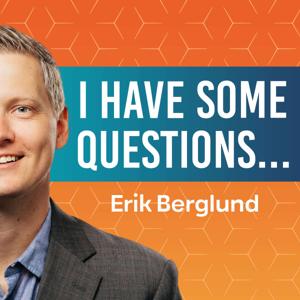
I Have Some Questions...

I Have Some Questions...

Download on the App Store

I Have Some Questions... episodes

  • 003: “Are You Asking Too Much of Your Team… Without Realizing It?” (lessons from Tim Whitmire)

    In this reaction episode, Erik unpacks the deeply resonant conversation he just had with Tim Whitmire, co-founder of F3 Nation. What starts as a personal reflection on F3's impact morphs into a vulnerable and strategic look at leadership, sustainability, and what it really means to see the people we lead clearly. From the power of micro-origin stories to the gift of context-aware leadership, Erik distills the conversation into actionable insights anchored in both experience and empathy.

    🎯 Top Insights from the Interview

    • Organic beginnings can lead to transformational outcomes. F3 was a simple response to a real need. Now it's a nationwide movement impacting tens of thousands of men.
    • Sustainable effort beats constant hustle. Tim’s “91% Rule” is a powerful counterpoint to burnout culture—and Erik adds his own twist: even 80% effort, consistently, from the right people is a win.
    • People don’t fail—contexts do. Sometimes the job changes. Sometimes they change. Either way, hanging on too long helps no one.

    🧩 The Personal Layer

    Erik reflects candidly on his own leadership journey—how he nearly became toxic in a job he’d once thrived in, and how his perspective shifted from “fixer” to “founder.” He connects Tim’s philosophies to his own experiences running a sales team, where stepping back meant creating space for others to grow. He also shares the story of a group he once started—Potentially Productive Shenanigans—as a what-if moment that mirrored F3’s humble origin.

    🧰 From Insight to Action

    • Audit Your Expectations: Are you expecting 100% effort from someone who’s living through a 60% season?
    • Create the Off-Ramp: Don’t delay difficult transitions. Instead, plan for them with empathy, transparency, and dignity.
    • Lead with Context: What has changed in this person’s world? How can you adapt without lowering the bar for excellence?
    • Human > Heroics: Show your team that you see them and that leadership isn’t about squeezing more, but unlocking better.

    🗣️ Notable Quotes

    “Maybe they're a rockstar, you just can't see it because they're in the wrong seat.”
    “You can build an off-ramp that earns undying respect and still protect your company's needs.”
    “If you're not willing to adapt your expectations to someone's season, you're not leading them, you're managing a machine.”


    🔗 Links & Resources

    • 🌐 CXN Advisory – Book a Call
    • 🏋️‍♂️ F3 Nation Website
    9 min
  • 002: “Can a Free Workout Teach You How to Be a Better Man?” ft. Tim Whitmire

    In this powerful conversation, Erik sits down with Tim Whitmire, co-founder of F3 Nation and a seasoned leader across journalism, finance, consulting, and operations, to unpack what it takes to build decentralized leadership, sustain impact at scale, and lead with humility and purpose. From the sweaty roots of a Saturday workout in Charlotte to the formation of a nationwide brotherhood, Tim shares timeless insights on human development, organizational growth, and what it really means to step back so others can step up.

    👤 About the Guest

    Tim Whitmire is the co-founder of F3 Nation, a grassroots network of free, peer-led workouts that emphasize Fitness, Fellowship, and Faith. He is Executive Vice President of Growth and Strategic Development at the Doeswell Operating Group and the Founder & CEO of CXN Advisory. With a background in journalism (15 years with the Associated Press), Tim brings a rare blend of storytelling, operational thinking, and values-based leadership to every endeavor. He’s also co-author of Freed to Lead, the foundational book on F3’s leadership ethos.

    🧭 Conversation Highlights

    • Why everyone should be expected to lead (even just once).
    • F3’s core idea: Fit and friended men naturally turn outward.
    • The Starfish vs. Spider model: How decentralized leadership created a global movement.
    • The 91% Rule: Why we should never expect 100% effort all the time.
    • What it takes to actually replace yourself as a leader and why many organizations fail at it.

    💡 Key Takeaways

    • Leadership is contextual: The same person can be a rockstar in one environment and toxic in another.
    • Decentralization wins: Pushing tools and ownership to the edge builds resilience and scale.
    • Effort ≠ burnout: Peak performance requires sustainable pacing—not constant 100% output.
    • Letting go is leadership: The greatest test of a leader is their ability to walk away well.
    • Seasons matter: Acknowledging life phases (like parenthood, grief, or burnout) creates humane leadership cultures.

    ❓ Questions That Mattered

    • What does it take to lead something that outgrows you?
    • How do you know when it’s time to step back?
    • What happens when you stay in a leadership role too long?
    • How can you help someone transition out of the wrong role without harming them?

    🗣️ Notable Quotes

    “If you're not developing your replacement, you're probably blocking your own promotion.”
    “We’re not wired to go 100% all the time. I want 91%—and the ability to peak when it counts.”
    “Fitness is the magnet. Fellowship is the glue. Faith is the dynamite.”

    🔗 Links & Resources

    • 🌐 CXN Advisory – Book a Call
    • 🏋️‍♂️ F3 Nation Website
    55 min
  • 001: What Does It Mean to Be a Leader?

    In this solo episode, Erik takes us deep into one of the most deceptively simple and misunderstood questions in leadership: What does it mean to be a leader? This is not about personality traits or lofty vision statements—it’s about one clear, powerful definition that transforms how you show up, lead, and grow others. If you’ve ever felt the tension of being too nice, too controlling, or just unsure how to unlock your team's potential this one’s for you.

    ❓The Big Question

    What does it truly mean to lead someone and how can we know if we’re doing it well?

    💡 Key Takeaways

    • Leadership is a verb: to lead is to influence someone toward an advantage.
    • Influence means being the proximal cause of change. You disrupt the status quo in service of growth.
    • Advantage must be defined by the person being led, not the leader.
    • Many leaders fail by being overly relational, overly rational, or by simply “leading by example.”
    • Great leadership lives in adaptability, tuning your approach to the individual, not your preference.

    🧠 Concepts, Curves, and Frameworks

    • F3 Definition of Leadership: To lead is to influence someone toward an advantage.
    • The Influence + Advantage Matrix: 
      • Relational Leader: Kind but ineffective; avoids discomfort.
      • Rational Leader: Logical but uninspiring; misses buy-in.
      • Lead-by-Example Leader: Hardworking but misaligned; leads only themselves.
    • Golden Rule 2.0: Don’t lead others how you want to be led, lead them how they need to be led.
    • Leadership as Conversation: Leadership emerges in everyday conversations whether they’re verbal, written, asynchronous.

    🔁 Real-Life Reflections

    • Erik shares a personal leadership fail: giving team members heads-up messages he thought were helpful, only to find they eroded trust.
    • He recounts how discovering the F3 leadership definition reshaped his entire approach to coaching and accountability.
    • Sports coaches like Nick Saban and Steve Kerr illustrate that the best leaders unlock, not overpower.
    • You should aim to be the worst individual contributor on your team, that’s how you know you’re empowering others.

    🧰 Put This Into Practice

    • Audit Your Conversations: Were you talking or listening more? Did you ask open-ended questions?
    • Ask This Question Today: “What can I do to be a better leader for you?”
    • Shift to Influence Mode: Identify one person on your team and ask yourself, “How can I influence them toward their advantage today?”
    • Ditch the Traits Checklist: Focus on practicing the skill of asking powerful, open-ended questions.
    • Identify Your Bias: Are you too relational, too rational, or defaulting to “lead by example”? Adjust accordingly.

    🗣️ Favorite Quotes

    “If all you’ve got is a hammer, every problem looks suspiciously like a nail.”
    “Nice bosses keep people happy until the layoff list hits. Kind bosses care about long-term good.”
    “Leadership isn’t about how you want to lead. It’s about how they need to be led.”
    32 min
  • 000: Welcome to “I Have Some Questions…”

    In this launch episode of I Have Some Questions…, Erik Berglund sets the stage for a podcast built on one radical belief: that great leadership begins not with answers, but with better questions. He shares the personal journey that led him to this insight, the mission behind the show, and what listeners can expect from future episodes—interviews, solo deep dives, and a whole lot of leadership exploration.

    ❓ The Big Question

    What if asking better questions is the most powerful leadership skill no one ever taught us?

    💡 Key Takeaways

    • Curiosity, not charisma, is the underrated cornerstone of great leadership.
    • Most pivotal leadership moments begin with a powerful question—not a polished answer.
    • Many essential leadership skills (like balancing empathy with accountability) aren’t taught, but they can be explored through inquiry.
    • Lead with Questions will blend interviews with solo explorations to uncover the “why” behind powerful leadership decisions.

    🧠 Concepts, Curves, and Frameworks

    • Language of Leadership: A business Erik founded to help leaders refine what they say and how they say it.
    • Speechcraft: A tool using AI roleplay to enhance soft skills like leadership and difficult conversations.
    • The Unspoken Curriculum: The leadership lessons no one teaches—like how to unlock others’ potential or what “accountability” really means.

    🔁 Real-Life Reflections

    • Erik’s leadership journey began at 18, managing a house painting crew, which planted the seeds of his curiosity-driven approach.
    • He later scaled to leading sales teams and eventually left corporate to coach and build leadership-focused ventures.
    • Key turning points often came from internal questions, not external accolades.

    🧰 Put This Into Practice

    • Reflect on your own leadership journey: What moments were shaped by powerful questions?
    • Ask yourself: What have I been told to do as a leader that no one actually taught me how to do?
    • Identify one question you’d love to hear answered on the podcast and send it Erik’s way.
    • Challenge your team with a curiosity-driven prompt this week—see what emerges.

    🗣️ Favorite Quotes

    “I think curiosity and good questions is the core skill for leadership.”
    “I can’t guarantee we’ll always get to the bottom of an answer. But ideally, we’ll build better frameworks—and better questions.”
    6 min

About I Have Some Questions...

From the publisher's feed

Most people know the headline of a leader’s story. Few know the path it took to get there. This podcast goes beyond titles, book launches and business wins, to explore the lived journey behind the…