
Sign up to save your podcasts
Or

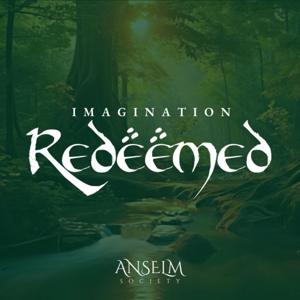


Many of the conditions of Middle-earth in its Third Age mirror those of our own day: grapples for power, technological advances used for good and ill, and a high opinion in many circles of efficiency and maximized production. What does a feast signify and entail in such times?
Earlier this fall the Anselm Society had the privilege of gathering for our fall retreat. Part of this retreat was focused on extended workshops; a time to be filled, to grow in knowledge or craft, and connect our vocations to the life of God. What you are about to hear is one of our speakers from our morning workshops, Amy Baik Lee. Amy takes the time to linger at three festal tables in The Lord of the Rings, drawing what we can learn from them about the practice of sharing art, celebration, and fellowship — and ponder why this practice is vital to the journey of the Church and its saints.
We are delighted to share this incredible talk. If you want access to the other five and a half hours of content from the fall retreat workshops, consider becoming a monthly partner at any level, and we will send you the complete video recordings as a ‘thank you.’ (Anselmsociety.org/fallgiving)
Should we be afraid of Halloween? What about death? What about just…the past? Whether it's our own trauma, fears of the occult, family history, or that big scary word tradition, many of us feel caught between two extremes: either cutting ourselves off from it all, or feeling so surrounded by it that we feel trapped.
In this episode, we journey back to medieval England to discover what Hallowtide—the three-day feast that became Halloween—actually looked like, and why it might hold keys to a healthier relationship with all of it–death, tradition, and the past.
Along the way, we'll mythbust everything you think you know about Halloween, explore the meaning of “honor your father and mother,” and discover practical ways to connect our own stories to the Great Story.
Brian Brown, Matthew Clark, and Terri Moon continue their conversation, exploring the concept of 'we songs' in worship, songs that connect congregants to God and each other. In this episode, we discuss the importance of melody, accessibility, and the role of instruments in creating a hospitable worship environment, one that instills confidence in the normal congregant and that inherently prioritizes the voice of the congregation. Within that framework, we delve into how singing serves as a spiritual discipline, the significance of familiar songs, and the need for crafting music that encourages congregational participation.
Chapters
00:24 Introduction to We Songs
01:32 The Purpose of We Songs
02:01 The Composition of We Songs
02:51 Melody and Accessibility
03:39 The Role of Instruments in Worship
04:48 Hospitality in Worship
06:13 The Voice of the People
07:03 Worship Wars and Music Choices
07:30 Cultural Context in Worship Music
08:57 Fostering Congregational Singing
09:31 The Role of the Worship Leader
10:18 Musical Hosting and Participation
11:19 Different Musical Traditions
12:45 Call and Response in Worship
13:38 Learning and Growth in Worship
14:54 Navigating Musical Preferences
16:32 Voice First Composition
17:08 The Importance of Simplicity
18:40 The Role of the Organ
20:00 Historical Context of Worship Music
22:19 Fostering Confidence in Singing
23:29 The Challenge of New Songs
25:20 The Structure of Worship Songs
26:38 Familiarity and Participation
28:51 Songwriting for Accessibility
29:05 The Songwriting Process and Accountability
31:09 The Role of Corporate Singing in the Church
35:34 Singing as a Spiritual Discipline
39:35 The Importance of Familiar Songs
43:12 Crafting Songs for Congregational Participation
47:03 The Relationship Between Melody and Lyrics
50:12 Understanding Sacred and Common Art
53:55 The Vision of the Church and the Role of Music
In 386 AD, an Italian bishop taught his congregation to sing—and their voices held off an imperial army.
Why do some songs have the power to unite us, remind us who we are, and give us courage in dark times? And how can we get more of them?
Join Brian Brown, Matthew Clark, and Terri Moon as they explore the lost art of "we" songs—hymns and ballads that connect us to God, to each other, and to the great story we're all part of.
In this episode (part 2 of 2), Brian Brown, Gustav Hoyer, and Benjamin Harding talk about the intergenerational nature of Christian creativity, and explore how film scores and children's stories show us how that works.
The discussion includes:
A bonus episode cross-posted from the Beauty Through Faith podcast! In this episode, part 1 of 2, Brian joins Benjamin Harding and Gustav Hower to say as many provocative things as possible, as quickly as possible.
Things we talked about:
Join renowned Canadian artist Josh Tiessen for an inspiring evening at the Anselm Society as he shares his artistic journey and explores the intersection of Christian faith, wildlife art, and environmental stewardship.
Special edition in partnership with the Rabbit Room: how a healed relationship with food forms us to renew the world.
Want to participate in Housemoot? Learn more.
We were meant for life together. But the fallen world seeks to drive apart things that were meant to be together. People from God. Sexes and generations and tribes and individuals from each other. And the image of God from the rest of the creation (including food; through body image issues, food allergies, and McDonald's).
Meanwhile, food features prominently in so many of our favorite stories—like Lord of the Rings, Wingfeather, Redwall, and Harry Potter. Why?
In this episode, we'll delve into these fantastical realms to find a healed relationship with food—and reveal how eating can literally change how we do Christianity.
The world around us is quick to dismiss the past. And we Christians have sometimes been too quick to join our neighbors in writing things off that 'don't last.' But autumn is an opportunity to do something different: to recognize that our timeless God works in things that appear to be fleeting, and to consecrate moments for eternity.
In this episode, Sarah and Brian talk with Anselm outreach coordinator Caroline Williams about our episode plans for the fall--what you can expect, and how to get YOUR questions answered on the show!
Follow us on Substack:
We are called to participate in creation through communion, not control.
Join us as we consider living in a world with talking trees. Through C.S. Lewis’s disenchanted Narnia, Brian Brown, Amy Baik Lee, and Sarah Howell explore the relationship between humanity and creation from a Christian perspective. This conversation unpacks the importance of recognizing the goodness of creation, the role of beauty in understanding God, and the need for a re-enchanted view of the world. And that ultimately, human beings were made to not only be present to the created order, uncover the layers of meaning within it, but also to participate in creation as an act of worship.
__
Get tickets now for "A Long Expected Feast" -- Sept 19-20 2025 in Colorado Springs!
From the publisher's feed

3,365 Listeners
2,972 Listeners
531 Listeners

1,109 Listeners

3,083 Listeners

1,479 Listeners

7,103 Listeners
878 Listeners

71 Listeners

5,359 Listeners
475 Listeners
1,196 Listeners
218 Listeners
429 Listeners
913 Listeners